

Georgian Serpentine Front Commode
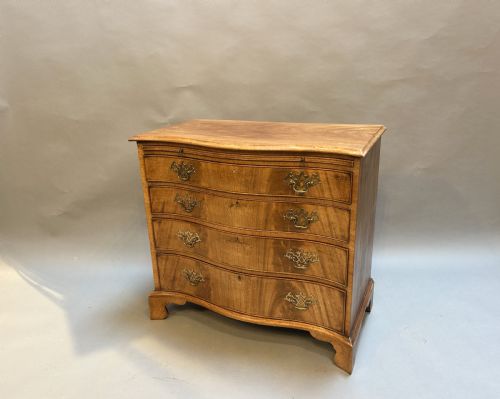
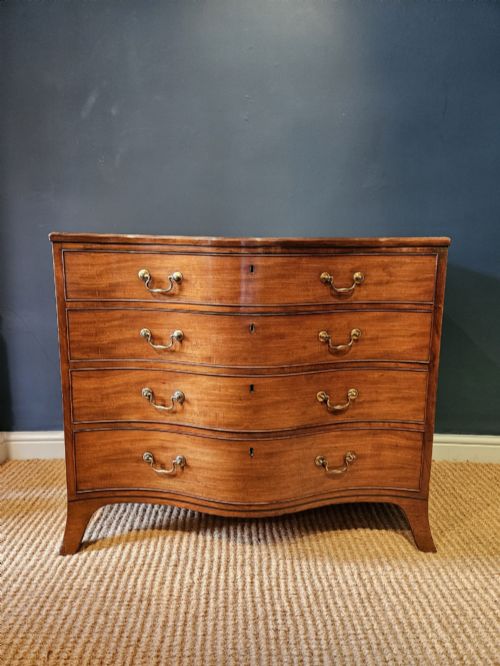
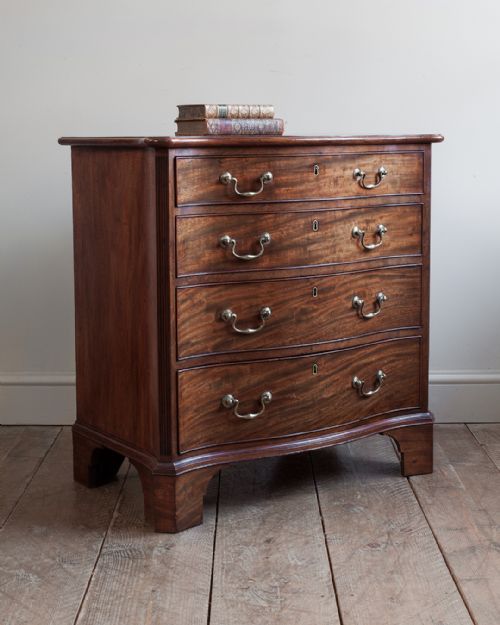
A georgian serpentine front commode offers a sweeping, undulating silhouette that brings elegance and sophisticated storage to a traditional interior.
Georgian Serpentine Front Commode
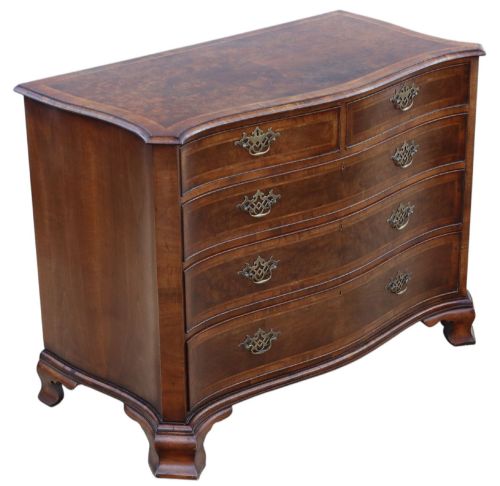
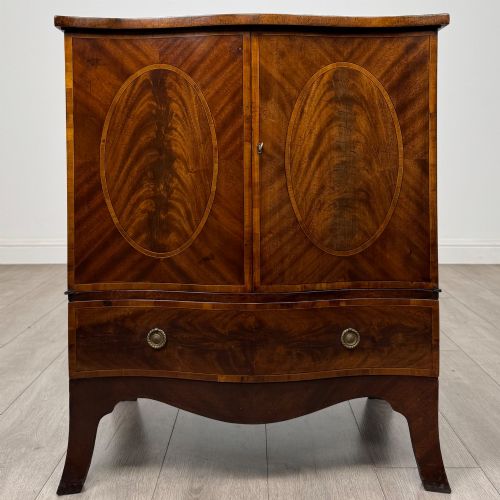
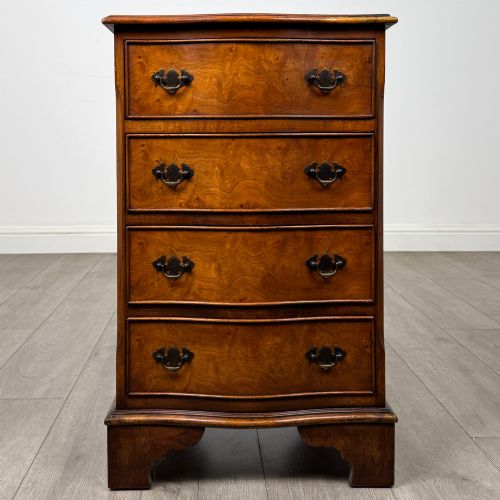
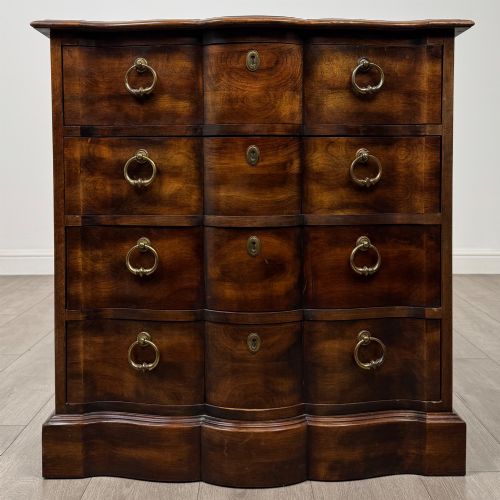
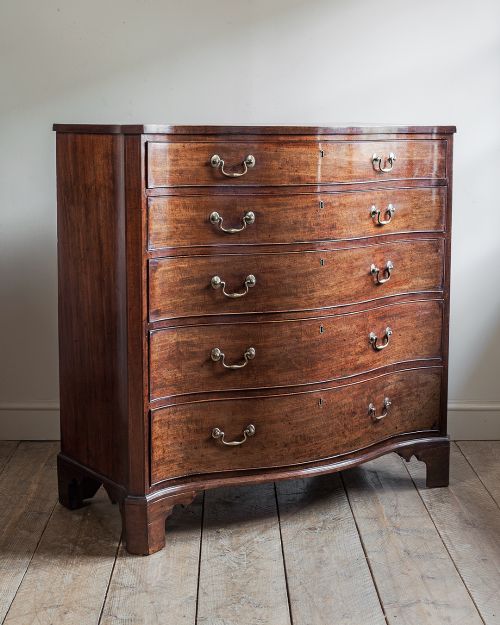
A georgian serpentine front commode primarily takes the form of a chest of drawers, though bedside tables and cabinets also appear across the listings. These items emerge from eighteenth-century origins through to later revival periods, including Edwardian and twentieth-century interpretations.
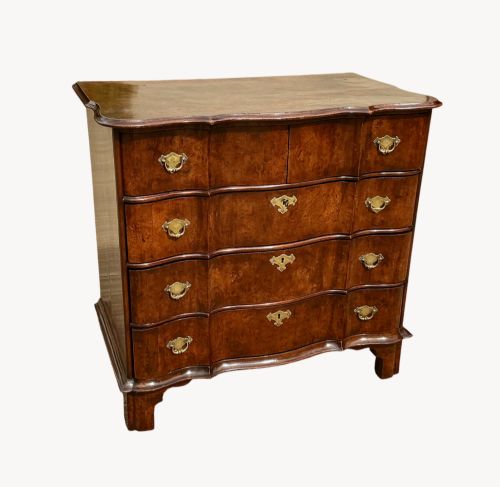
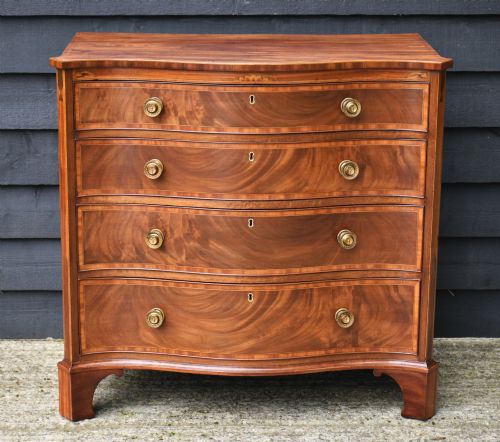
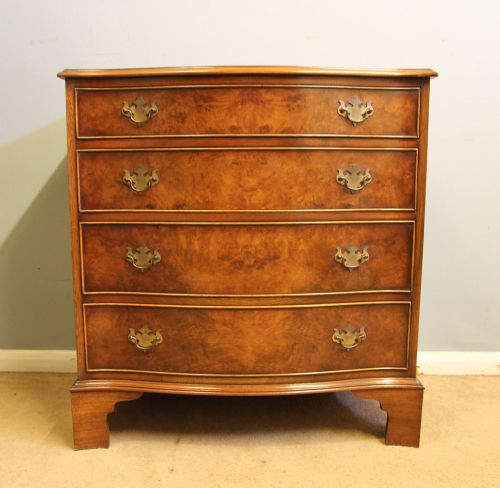
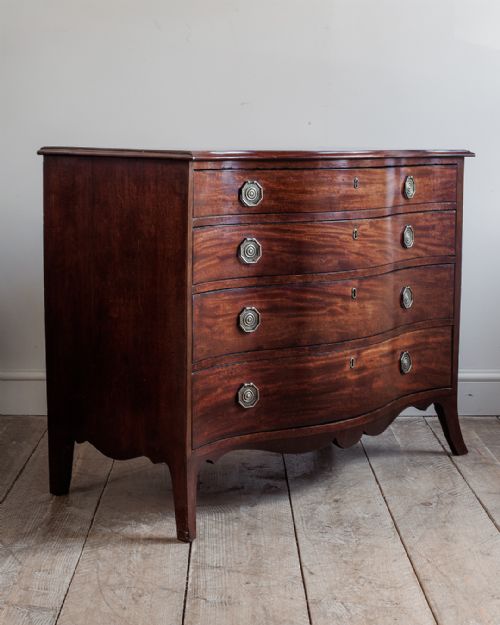
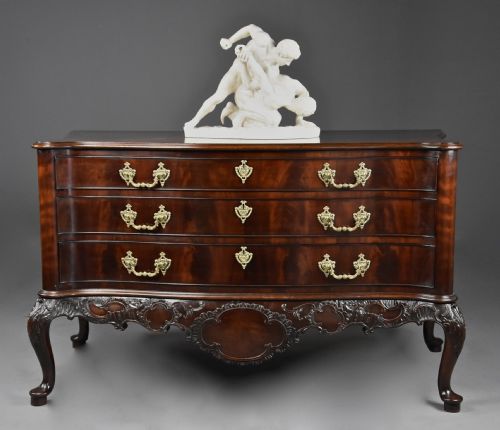
The version most commonly met on this page is the mahogany chest of drawers from the Georgian period, often displaying the characteristic curving front profile. Walnut, burr walnut, and satinwood examples appear alongside oak and painted wood alternatives.
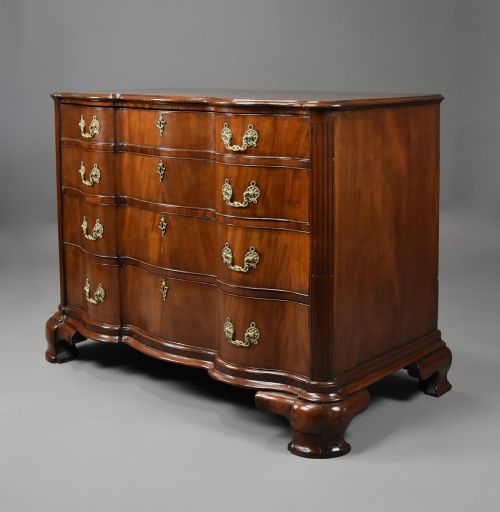
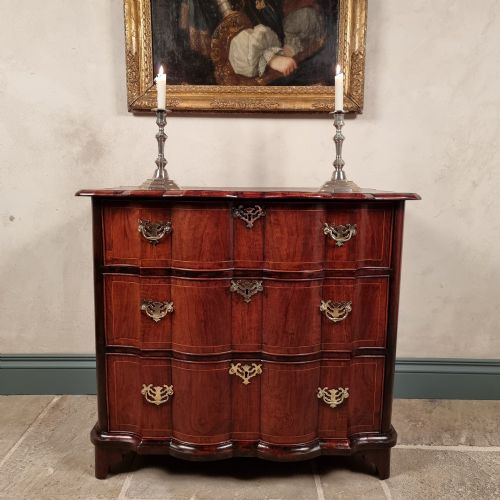
Makers and craftsmen from continental workshops and British traditions alike produced these shaped case pieces. Continental examples frequently utilise burr walnut and Dutch Baroque styling, while British pieces favour figured mahogany and inlay.
How they were made
Cabinetmakers constructed these pieces from dense timbers such as mahogany, oak, and walnut, frequently applying decorative veneers like burr walnut or satinwood across the curved drawer fronts. Boxwood inlay and marquetry provide linear and botanical ornamentation on select examples.
Shaping the serpentine outline required substantial timber thickness to allow woodworkers to carve and plane the convex centre and concave ends. Brass hardware, including drop handles and key escutcheons, secures the functional fronts of the drawers and cupboards.
Listings span the eighteenth century to the 1930s, featuring mahogany, walnut, burr walnut, oak, and satinwood.
What varies in quality
The visual impact often depends on the selection of timber figure, such as highly figured mahogany, fiddleback grain, or richly patterned burr walnut veneer. Figured woods demand careful book-matching across the curving drawer fronts to maintain visual harmony.
Construction nuance shows in the execution of the serpentine curve itself and the precision of the boxwood inlay or marquetry. Early eighteenth and nineteenth-century pieces display hand-cut dovetailing and cabinetmaking techniques that differ from later revival production.
The Georgian Serpentine Front Commode Glossary
- Serpentine front
- A furniture front characterised by a convex central section flanked by two concave curves. This undulating shape requires skilled woodworking to construct.
- Commode
- A low cabinet or chest of drawers designed for domestic storage. In eighteenth-century usage, the term often describes decorative case furniture.
- Crossbanded
- A method of applying veneer where the grain runs perpendicular to the main panel edge. This technique frames the drawer fronts with a contrasting border.
- Marquetry
- Inlaid patterns formed from pieces of coloured wood, shell, or ivory fitted into a veneer background. It decorates the top and drawer surfaces of select pieces.
- Oxbow form
- A variation of the serpentine front featuring a concave centre flanked by convex ends. This profile creates a reverse curve to standard serpentine shapes.
Georgian Serpentine Front Commode: Frequently Asked Questions
How do I spot a revival piece?
Revival pieces date from later periods such as the Edwardian era or the early twentieth century while emulating eighteenth-century styles. Examination of the interior secondary woods and construction methods helps determine the age.
Stylistic markers like Georgian Revival or Chippendale Style indicate later interpretations made long after the original Georgian period.
Where were these commodes placed?
These case pieces served primarily as domestic storage for clothing and personal items within bedrooms and living spaces. Bedside tables offered smaller scale storage next to sleeping quarters.
Generous proportions allowed larger chests to function as principal focal points in reception rooms and hallways.
What woods were used?
Mahogany served as the predominant timber for British production, frequently paired with oak drawer linings. Walnut and burr walnut appeared extensively in continental and revival examples.
Satinwood and boxwood inlay provided lighter contrasting elements for decorative marquetry and banded borders.