



Georgian Satinwood Side Cabinet
A georgian satinwood side cabinet brings refined timbers and classical proportion into a room, offering both display space and discreet storage.
Georgian Satinwood Side Cabinet
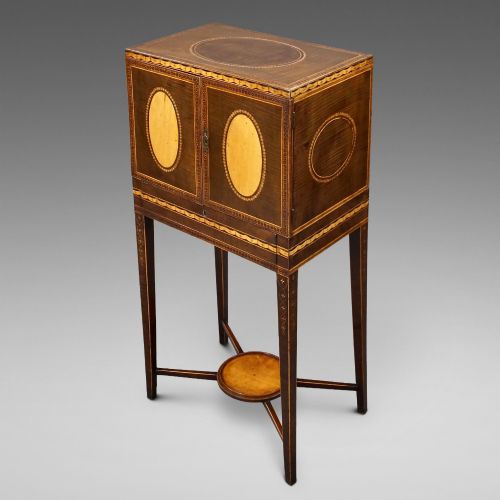
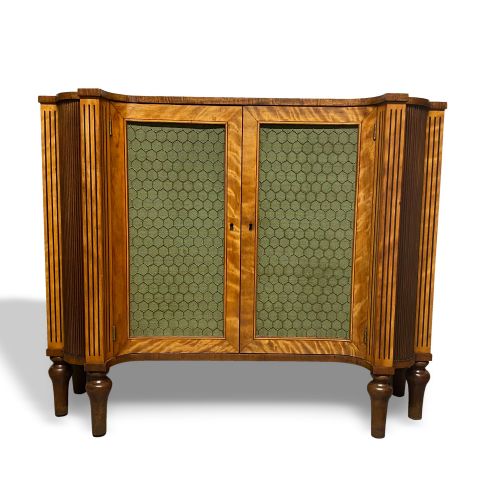
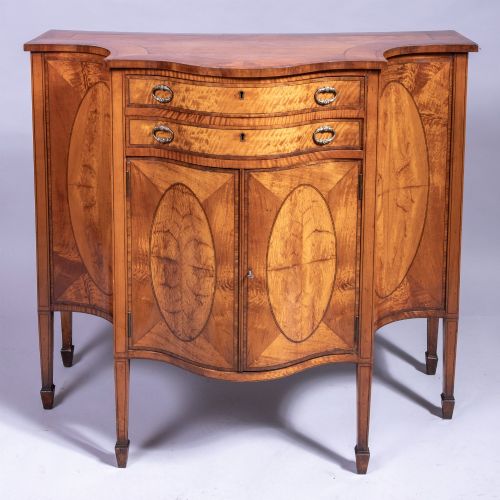
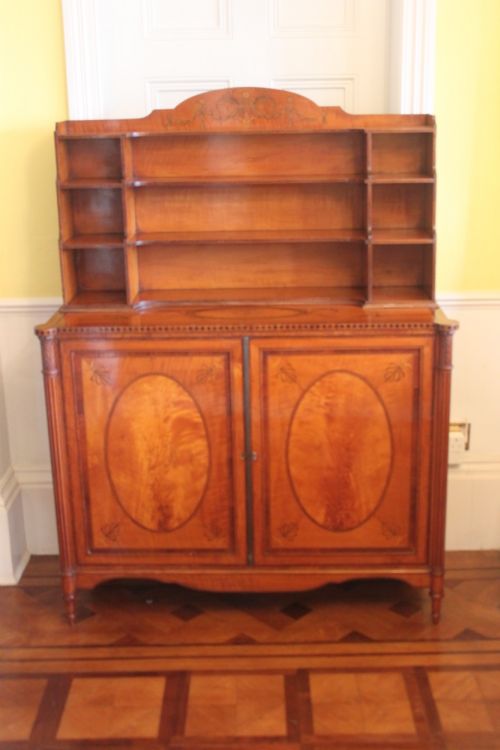
A georgian satinwood side cabinet encompasses sophisticated pieces produced across the eighteenth and nineteenth centuries, alongside later revival interpretations. Buyers encounter varying forms, from demi-lune commodes and half-round cabinets to breakfront shapes and bedside proportions.
The material vocabulary spans authentic period items from the seventeen-fifties through to the late nineteenth and early twentieth centuries, including Sheraton Revival and Adam Revival examples. Side cabinets, commodes and cabinets on stand dominate the selection.
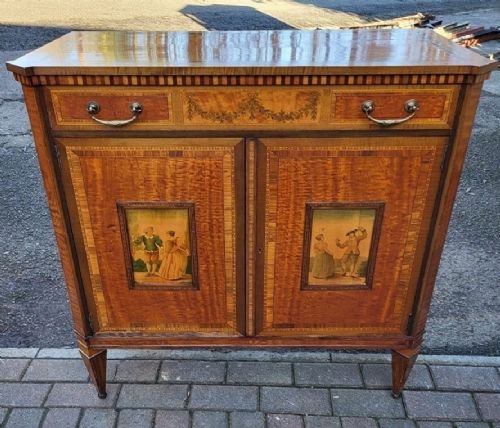
Originating predominantly from British cabinet-making traditions, these pieces frequently incorporate satinwood surfaces enriched with contrasting timbers and hand-painted classical panels.
Materials and construction
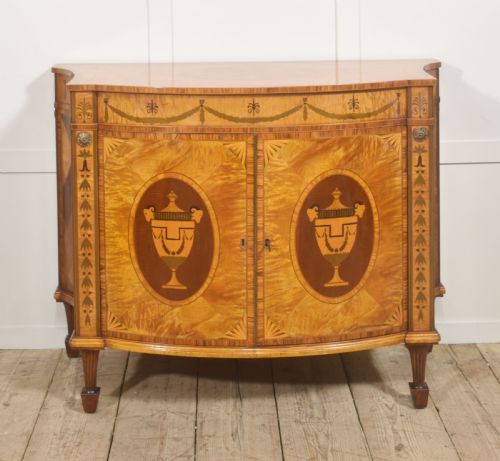
Construction relies heavily on solid wood carcasses veneered in figured satinwood, often complemented by secondary timbers such as mahogany, rosewood, burr elm and burr yew. Inlaid details utilise boxwood and various dark woods to form delicate stringing and geometric motifs.
Surface decoration frequently involves hand-painted detailing and marquetry panels depicting classical motifs. Cabinet hardware incorporates brass fittings, while structural support relies on finely tapered legs or bracket feet suited to the cabinet forms.
Cabinetmakers occasionally concealed small secret compartments behind curved tambour doors to hide sentimental correspondence from inquisitive guests.
Craftsmanship and distinction
Quality rests upon the choice of timber figures and the precision of the marquetry inlay. Superior examples display seamless grain matching across curved demi-lune fronts and crisp execution of painted classical panels.
Internal joinery and the retention of original brass hardware further distinguish the finer pieces in this range. The integration of revival styling with period cabinet-making techniques dictates the standing of individual items.
Maple & Co.·Ince & Mayhew·Kaufman
The Georgian Satinwood Side Cabinet Glossary
- Demi-lune
- Half-moon shape. This semicircular form is common in side cabinets and commodes designed to sit flush against a wall.
- Marquetry
- Fitted wood veneer patterns. Artisans create pictorial or geometric designs by assembling thin pieces of various coloured timbers.
- Satinwood
- A durable tropical hardwood with a lustrous sheen. It serves as the primary decorative veneer on these cabinets.
- Sheraton Revival
- A late nineteenth-century design movement. It reinterprets the light, elegant furniture forms associated with the eighteenth-century designer Thomas Sheraton.
- Inlay
- Contrasting material set into a surface. Craftsmen sink boxwood and other woods into the satinwood ground to create borders and motifs.
Georgian Satinwood Side Cabinet: Frequently Asked Questions
Where should I place a demi-lune cabinet?
The curved profile of a demi-lune cabinet makes it well-suited for hallways, landings, or living room walls where floor space is limited. Their flat backs allow them to sit securely against vertical surfaces.
Positioning them away from direct sunlight protects the delicate satinwood veneer and hand-painted panels from fading.
What is the difference between a commode and a side cabinet?
Historically, a commode refers to a low chest of drawers or cabinet with doors, while a side cabinet encompasses a broader category of storage furniture. In practice, makers used the terms interchangeably for decorative pieces placed against walls.
Both forms utilise fine veneers and painted detailing intended for formal entertaining spaces.
How do I care for antique satinwood?
Maintaining satinwood requires stable room humidity and protection from direct heat sources to prevent veneer lifting. Dusting with a soft, dry cloth preserves the polished surface.
Occasional application of appropriate wax feeds the timber without building up excess residue on the hand-painted details.