



Georgian Satinwood Chest
A georgian satinwood chest brings pale, figured timber and subtle inlay into a room with the quiet authority of the eighteenth and early nineteenth centuries.
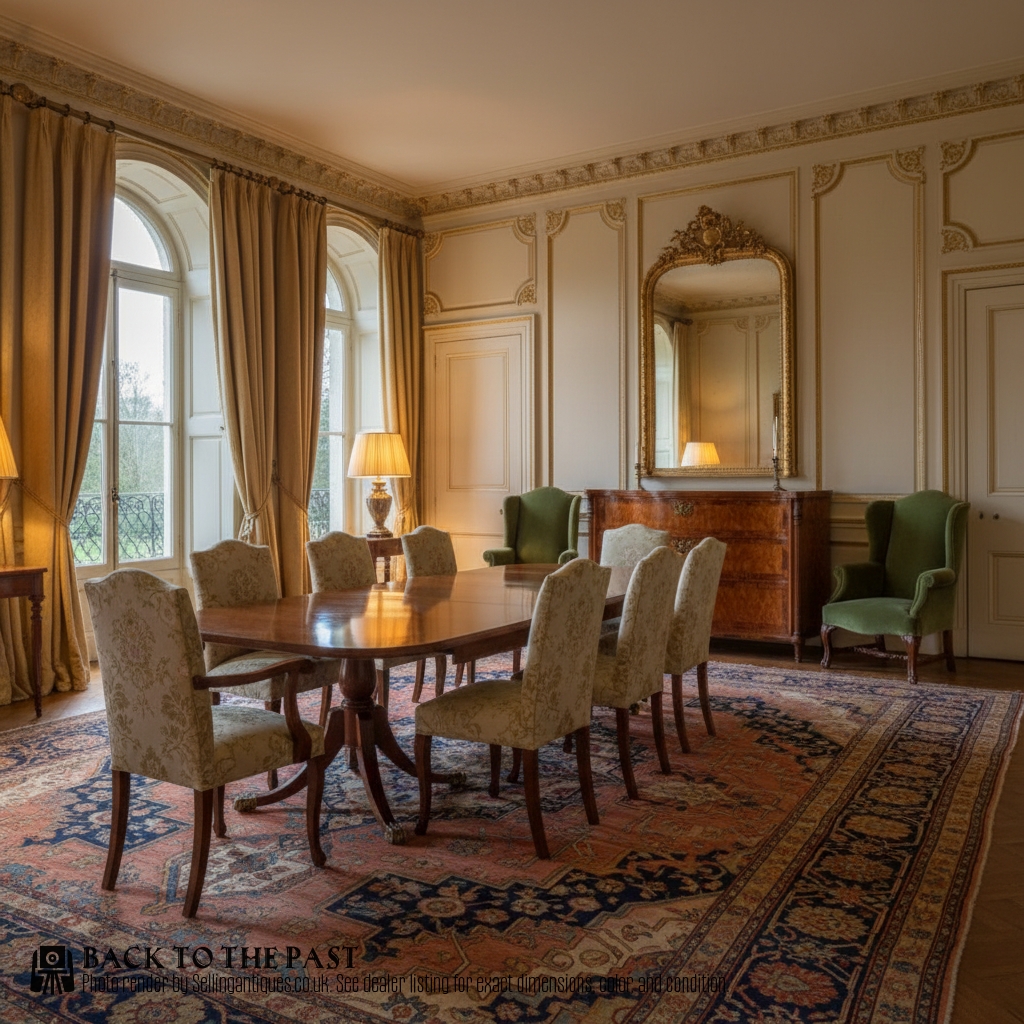
Georgian Satinwood Chest
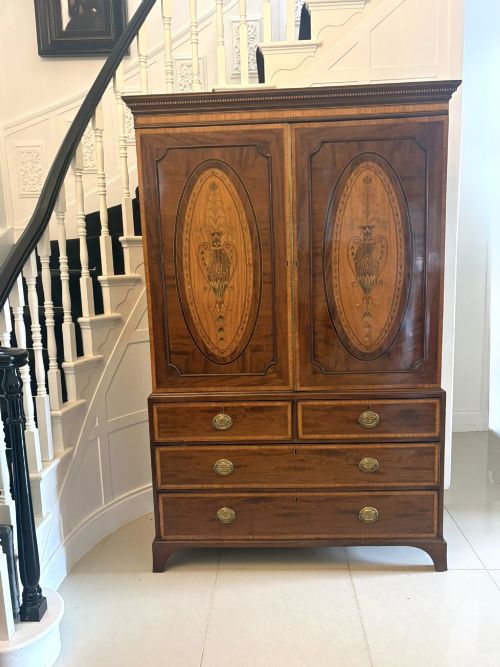
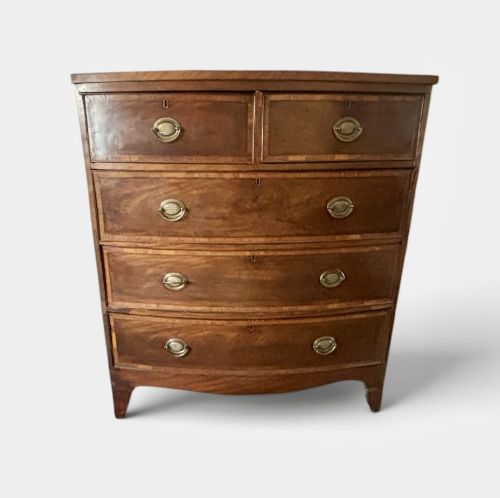
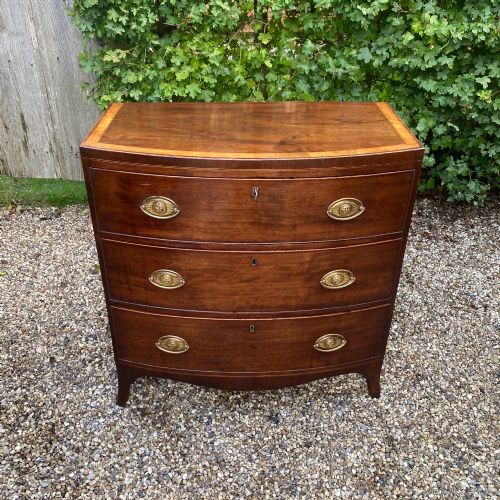
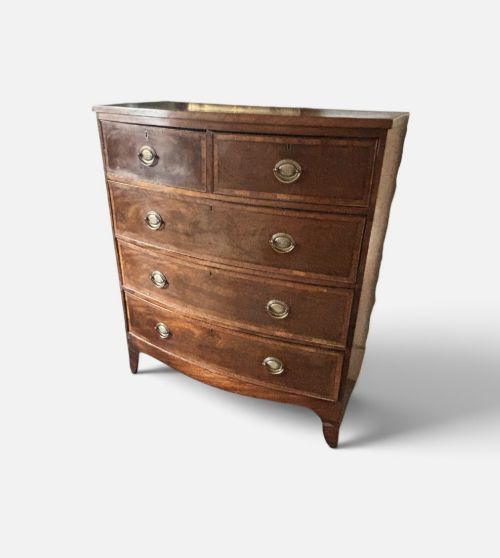
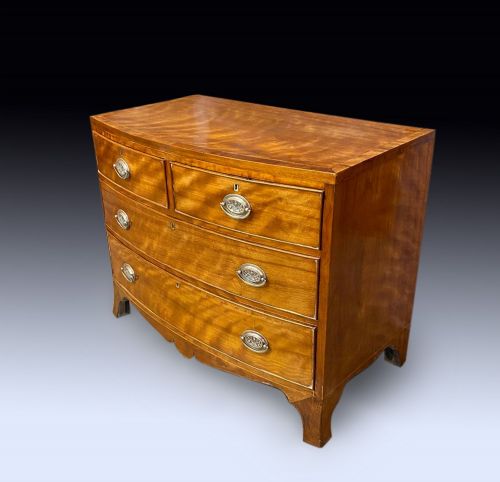
A georgian satinwood chest usually takes the form of a bow front, serpentine, or straight front chest of drawers, often enriched by contrasting bandings and fine stringing. These pieces range from substantial tallboys and linen presses to smaller commodes and dressing chests produced during the eighteenth and nineteenth centuries.
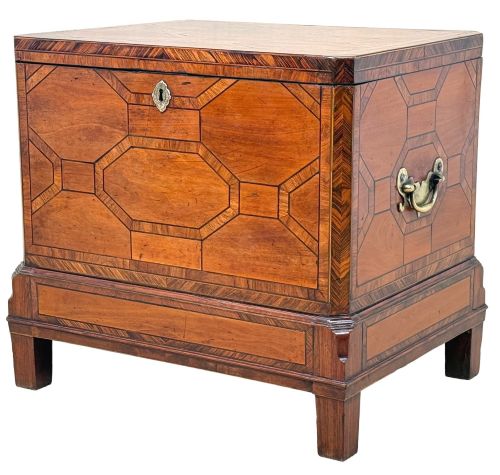
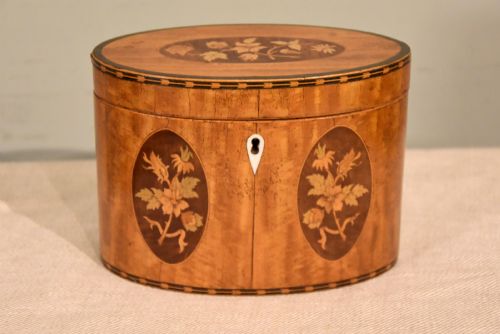
Beyond the standard chests of drawers, the broader family includes smaller items sharing the same timber vocabulary, such as tea caddies, teapoys, and decorative boxes. Buyers meeting these pieces on this page will most frequently encounter bow front chests of drawers combining mahogany carcass work with satinwood banding.
Origins stretch across the Georgian, Regency, and early Victorian periods, with later revival pieces echoing the Sheraton and Hepplewhite styles of the late eighteenth century. Each form utilises the golden-yellow lustre of satinwood to catch the light in a way darker timbers cannot.
How they were made
Cabinet makers built these pieces using solid timbers and carefully selected veneers laid over a secondary wood base, employing mahogany, walnut, or pine for the primary carcass. Satinwood was applied as a fine veneer or banding to create luminous panels and contrasting borders.
Wood inlay, including boxwood, ebony, harewood, and bone, formed delicate line inlays, butterfly motifs, and shell centrepieces. Crossbanding and stringing required high precision to frame the drawer fronts and top surfaces cleanly.
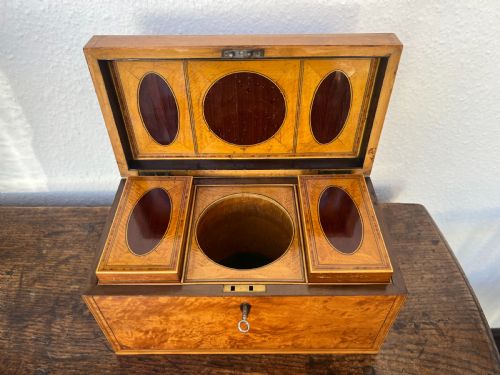
Brass hardware, such as original drop handles and escutcheons, completed the construction, whilst specialised items like tea caddies incorporated interior foil linings or fitted compartments.
Several tea caddies retain their original glass mixing bowls and wooden sugar-crushing sticks inside, ready for a tea party that went out of fashion two centuries ago.
What varies in quality
The natural figuring and grain selection of the satinwood set the baseline for visual merit, ranging from plain straw-coloured timber to highly chatoyant, rippled surfaces that catch the eye from across a room. The crispness of the inlay work, particularly where boxwood and ebony meet the pale background, distinguishes skilled metropolitan workshops from provincial output.
Proportion and structural restraint define the finer examples, where serpentine or bow front contours maintain harmonious lines without appearing heavy-handed. The survival of original brasses, smooth drawer actions, and undisturbed surface patination elevates a piece far above one that has undergone excessive modern intervention.
Edwards and Roberts
The Georgian Satinwood Chest Glossary
- Satinwood
- A hard, durable tropical timber with a natural golden sheen and pronounced chatoyant grain. It became the defining decorative wood of the late eighteenth century.
- Crossbanding
- A border veneer applied around the perimeter of a drawer front or tabletop so that the grain runs perpendicular to the main panel. This frames the primary timber with a neat contrasting border.
- Bow front
- A convex, curved cabinet front that projects outward in the centre. It softens the rigidity of standard case furniture.
- Serpentine
- A gently undulating front or tabletop that curves outward in the middle and inward at the sides. This shape demands exceptional skill from the cabinet maker.
- Stringing
- Thin lines of contrasting wood inlay used to outline drawers, legs, and tabletops. It adds linear definition to geometric surfaces.
- Teapoy
- A small stand or table fitted with internal caddies for storing tea. They often sat in the drawing room during the Georgian era.
Georgian Satinwood Chest: Frequently Asked Questions
How do I clean satinwood?
Dust regularly with a soft, dry cloth to prevent particulate accumulation on the delicate veneer surface. Avoid modern silicone polishes, which dull the historical wax finish over time.
Apply a traditional beeswax sparingly once or twice a year to nourish the timber. Buff gently with a clean cloth to restore the natural golden lustre without risking the inlay.
Are these chests suitable for daily use?
These pieces served practical storage functions for centuries and continue to hold clothing, linens, or personal items reliably in modern homes. The drawers operate smoothly when properly fitted to their original chambers.
Protect the top surface from direct sunlight, excessive heat, and moisture to preserve the fragile satinwood veneers. Placing felt pads beneath heavy decorative objects prevents scratching the polished timber.
How can I tell a Georgian chest from a Victorian copy?
Examine the secondary woods inside the drawers, such as oak or pine, alongside the method of dovetailing. Eighteenth-century construction typically displays smaller, hand-cut dovetails and timber characteristics consistent with the period.
Look closely at the colour and patination of the satinwood veneer. Later nineteenth-century revival pieces often feature a harder, more uniform orange tone compared to the mellow, golden-straw warmth of original Georgian examples.
What is the difference between a tallboy and a chest on chest?
A chest on chest consists of two distinct carcass sections stacked vertically, usually featuring a larger lower chest beneath a slightly narrower upper chest. This provides extensive drawer space while maintaining a manageable footprint.
A tallboy traditionally refers to a single tall chest of drawers, though the terms are sometimes used interchangeably in trade descriptions. Both forms maximise vertical storage in period interiors.