


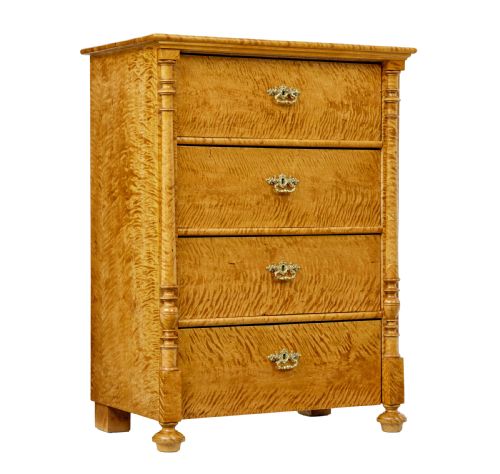


Biedermeier Style Chest
A biedermeier style chest brings restrained nineteenth-century elegance to a room through clean lines and figured timber.
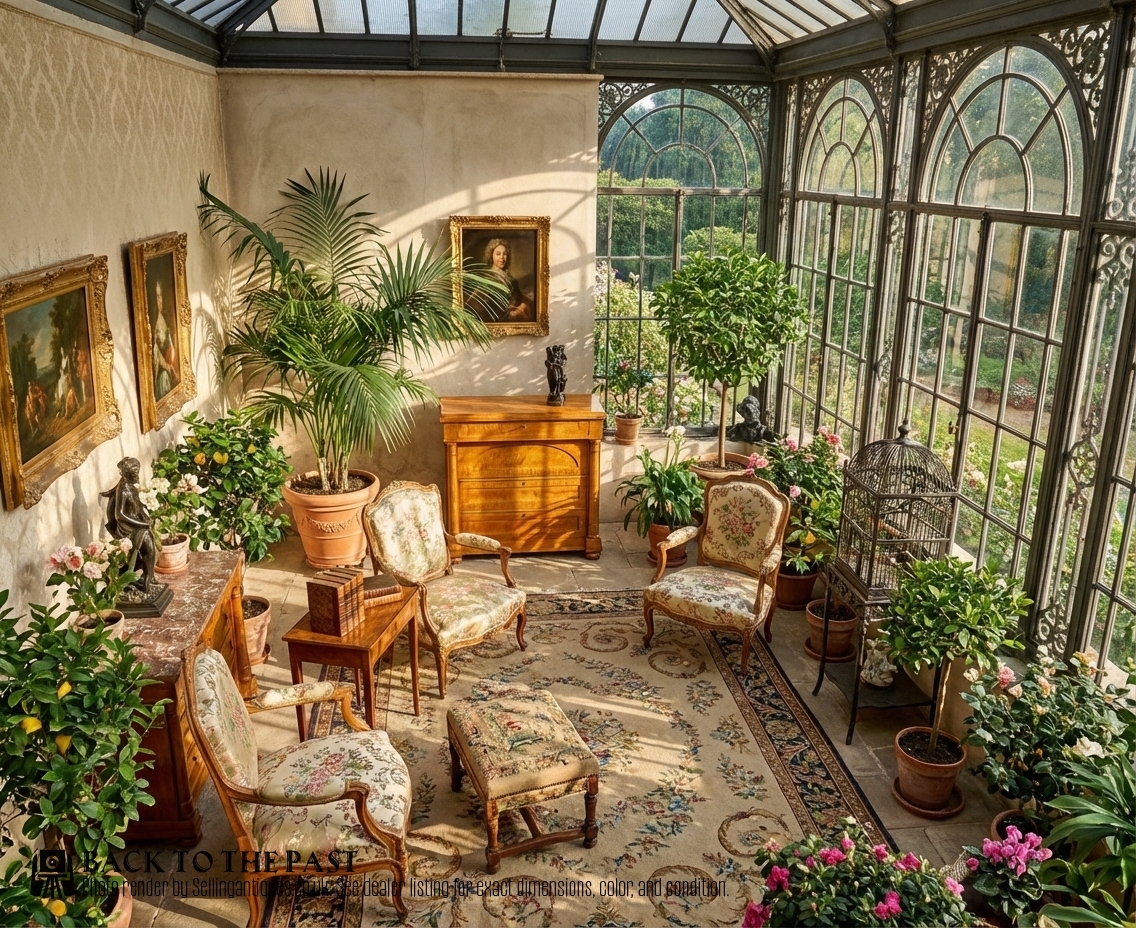
Biedermeier Style Chest
A biedermeier style chest delivers practical storage through the clean lines and warm timber tones characteristic of nineteenth-century design. Buyers exploring this phrase encounter a variety of forms ranging from commodes and secretaire commodes to tall chests of drawers.
The pieces on this page span the nineteenth century, including Victorian examples and specific regional interpretations such as Swedish biedermeier, Scandinavian country, and French Charles X pieces. These chests balance functional drawer space with refined surfaces.
Makers and cabinetmakers across Europe utilised native and exotic woods to create these storage pieces, favouring architectural simplicity over heavy ornamentation. The selection reflects diverse European workshops working within the broader biedermeier and empire revival traditions.
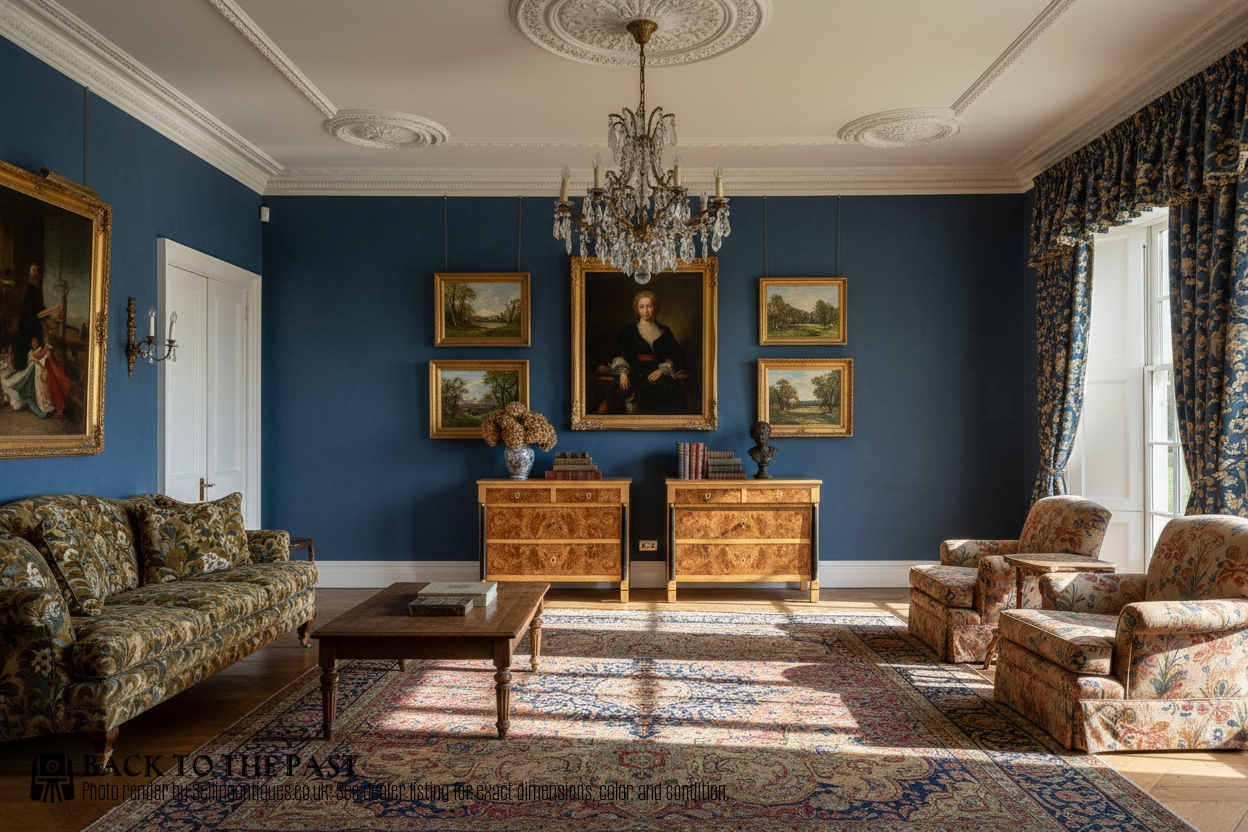
How they were made
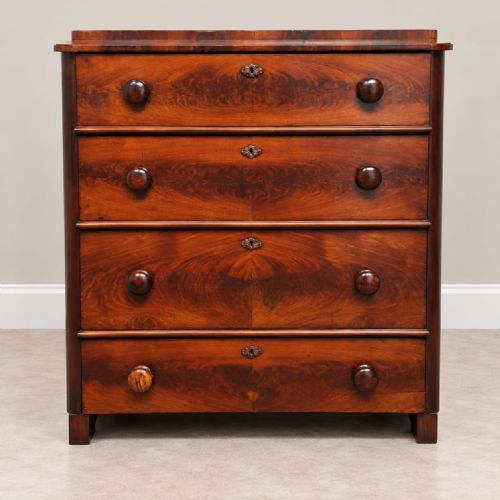
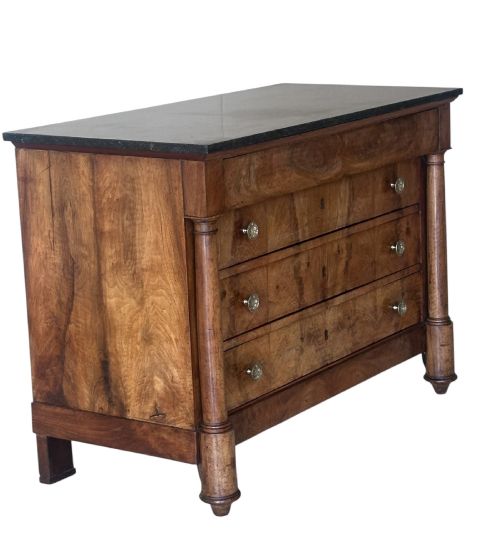
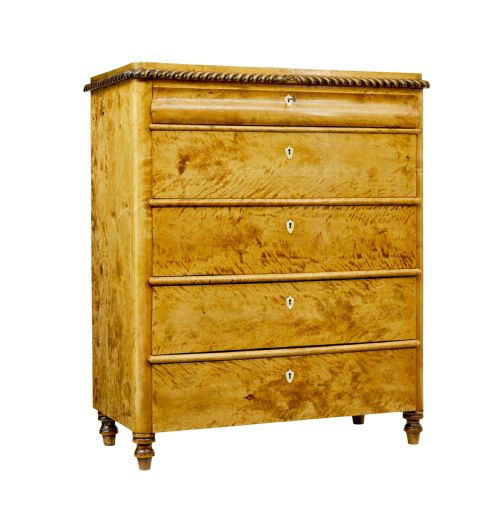
Cabinetmakers constructed these chests using solid pine or mahogany carcases overlaid with decorative veneers including birch, satin birch, tiger birch, burr elm, and burr walnut. This technique displayed the natural grain patterns of the timber across wide drawer fronts.
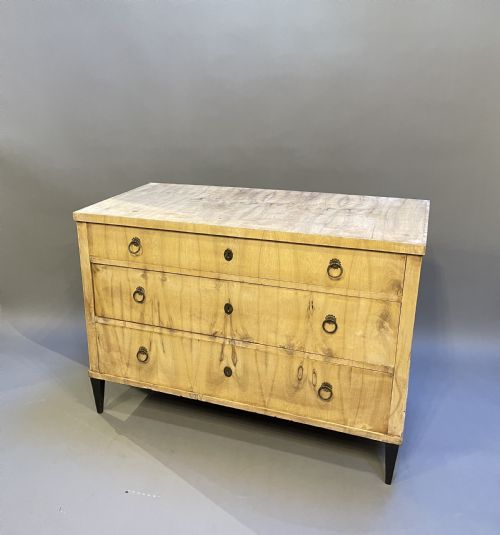
Detailing often involved ebonised wood highlights and brass mounts or escutcheons to punctuate the pale or dark wood surfaces. Carved elements appear on specific regional pieces, adding texture to the otherwise smooth structural planes.
Biedermeier Style Chest Retail Price Guide 2026
Typical asking prices for biedermeier style chest among the pieces listed under this phrase on Sellingantiques today, from the lower quarter to the upper quarter. They describe what is for sale here now, not the wider market.
What varies in quality
The selection of timber veneer determines much of the visual impact, with striking grain figures such as tiger birch and burr walnut setting higher grade pieces apart from plain mahogany or standard birch. Craftsmanship shows in the seamless application of veneer over curved or serpentine drawer fronts.
Structural complexity also differentiates the pieces, distinguishing straightforward drawer arrangements from more intricate forms like secretaire commodes with fitted writing compartments.
The Biedermeier Style Chest Glossary
- Commode
- A low chest of drawers or cabinet originating in France, often used as a bedroom or living space storage piece. These items frequently feature decorative veneer work and prominent brass hardware.
- Secretaire commode
- A chest of drawers incorporating a fitted writing drawer that drops down to reveal small compartments and a writing surface. This dual-purpose furniture form combines storage with a compact desk.
- Veneer
- A thin layer of figured wood applied over a secondary timber carcase to create a decorative surface. Master cabinetmakers selected woods like birch and walnut for their striking grain patterns.
- Serpentine
- A curved furniture front characterised by a convex centre flanked by concave sides. This undulating shape requires precise woodworking skill during construction.
- Ebonised
- Wood treated with a dark finish to imitate ebony, commonly used for contrasting mouldings and details on nineteenth-century furniture. This technique provides a sharp visual border against lighter birch timbers.
Biedermeier Style Chest: Frequently Asked Questions
What is a biedermeier style chest?
A biedermeier style chest is a nineteenth-century storage piece defined by clean architectural lines and prominent wood veneers. These chests focus on the natural beauty of timber rather than heavy carving.
They appear in various forms including commodes, tall drawer chests, and secretaire units across Swedish, French, and British traditions.
How do I use a commode at home?
A commode serves as practical storage in a bedroom, hallway, or living room while offering a flat surface for lamps and decorative objects. The drawers accommodate clothing, linens, or household items.
Pieces with drop-front writing drawers also function as compact writing desks in smaller studies or sitting rooms.
What woods were used for these chests?
Cabinetmakers utilised a broad selection of timbers including birch, satin birch, tiger birch, mahogany, burr walnut, and burr elm. Pine often served as the secondary wood for carcase construction and drawer linings.
Many pieces combined light birch surfaces with dark ebonised wood details and brass mounts for visual contrast.
How do I tell Swedish pieces apart?
Swedish nineteenth-century chests frequently feature pale blond birch veneers, caddy tops, or simplified neoclassical proportions influenced by empire revival styles. Regional pieces may also incorporate subtle carved details or lighter framing.
Continental and British examples often lean towards darker mahogany or walnut timbers with different proportions and hardware arrangements.