


Georgian Sarcophagus Tea Caddy
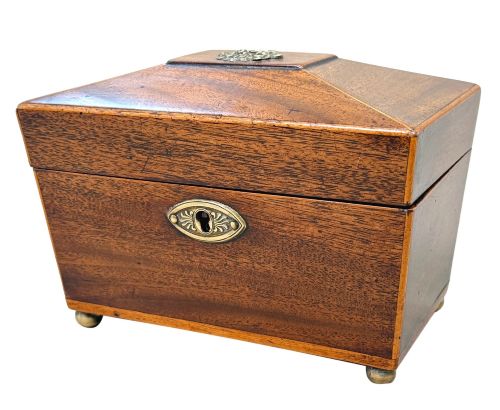
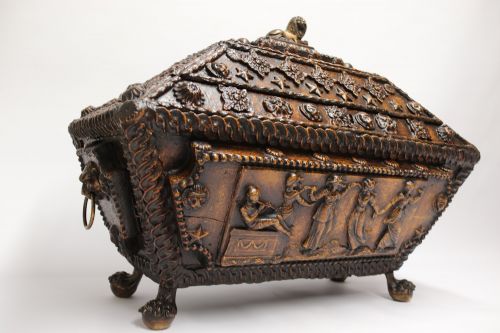
A georgian sarcophagus tea caddy is a classical box designed for storing precious dried leaves, shaped like a Roman tomb and built to sit proudly on a drawing room table.
Georgian Sarcophagus Tea Caddy
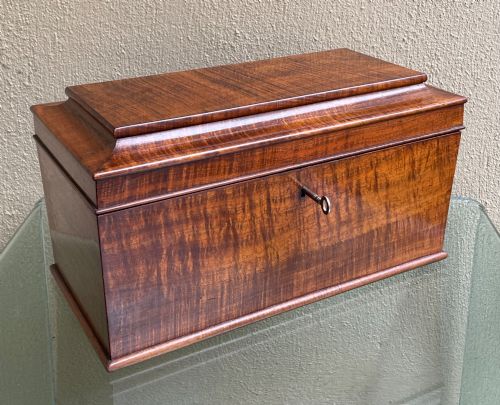
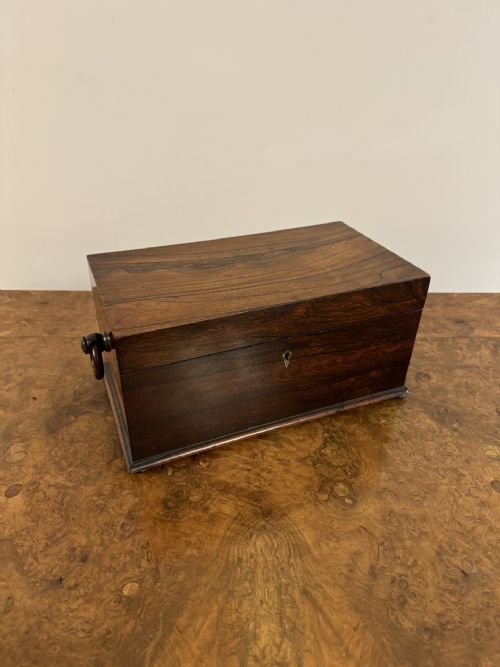
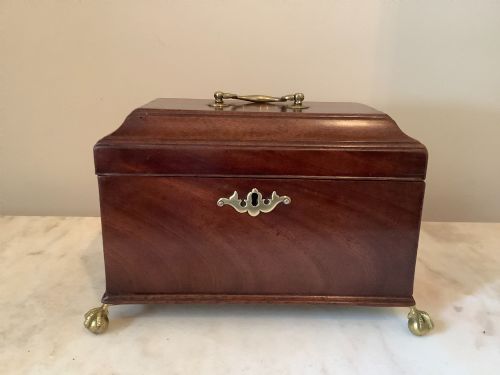
A georgian sarcophagus tea caddy takes the architectural form of a classical tomb, scaled down to hold leaf tea securely under lock and key. These pieces date principally from the Georgian, Regency, and early Victorian periods, spanning the eighteenth and nineteenth centuries.
The versions most commonly met on this page are constructed from rich hardwoods like mahogany and rosewood, often featuring a sarcophagus shape with stepped bases and ring handles.
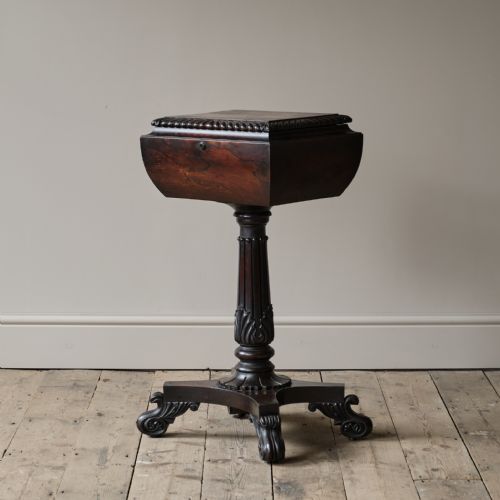
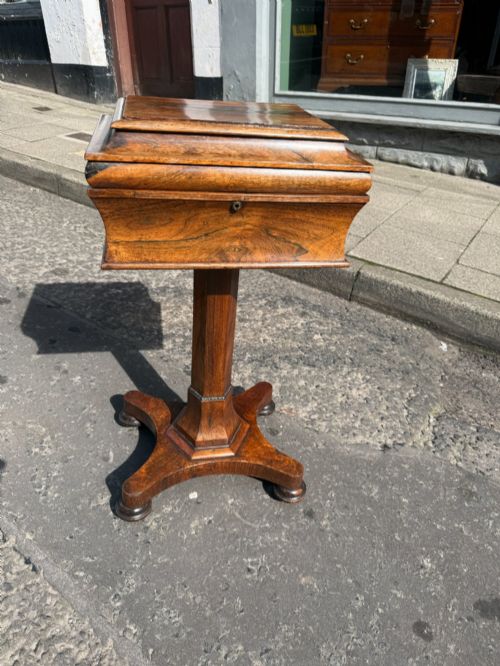
Makers also produced related forms such as teapoys on stands, alongside occasional jewellery boxes and keepsake containers sharing the same architectural silhouette.
How they were made
Cabinetmakers utilised dense timbers including mahogany, rosewood, burr yew-wood, and coromandel, often laid over sturdy pine or oak carcases. Surface decoration relied on contrasting veneers, boxwood stringing, brass inlay, and intricate marquetry in amboyna or satinwood.
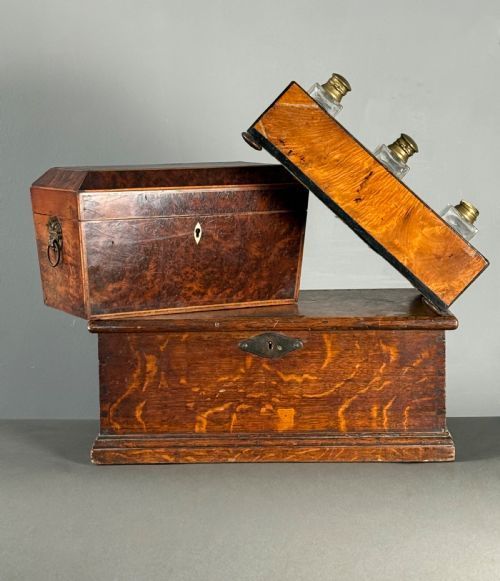
Interiors frequently incorporated fitted wooden compartments with lids for different tea varieties, sometimes housing cut glass bowls or retaining functioning locks with secret drawers.
Materials recorded across these pieces include mahogany, rosewood, coromandel, brass, mother of pearl, and tortoise shell.
What varies in quality
The distinction between standard examples and superior pieces rests on the choice of timber and the precision of the cabinetwork. Figured grain, symmetrical veneers, and crisp brass or mother of pearl inlay separate finer workshops from basic production.
Survival of original interior fittings, such as mixing bowls and compartment lids, governs the integrity of each box.
The Georgian Sarcophagus Tea Caddy Glossary
- Sarcophagus
- A monumental stone coffin shape adopted by Regency cabinetmakers for tea containers, featuring a domed lid and sloping sides. This silhouette defined fashionable drawing room accessories of the early nineteenth century.
- Teapoy
- A pedestal table fitted with a tea caddy box on top, designed to stand beside a chair during tea service. These tall forms often incorporate internal compartments for sugar and leaf varieties.
- Stringing
- Thin lines of contrasting wood inlay used to outline panels and accentuate the geometric form of the box. Boxwood and ebony were common choices for this linear decoration.
- Marquetry
- The art of forming decorative patterns using fitted pieces of coloured wood veneer. Elaborate floral or geometric motifs elevate the visual weight of the timber surface.
Georgian Sarcophagus Tea Caddy: Frequently Asked Questions
How did people use a tea caddy?
Households stored expensive black and green teas inside these lidded containers to protect the dried leaves from damp air and kitchen odours. Because tea carried high value, the box remained locked, with the mistress of the house holding the key.
Servants brought the caddy to the parlour for the tea service, where leaves were measured out using spoons before hot water met them in the teapot.
What is inside a sarcophagus tea caddy?
Lidded wooden canisters or foil-lined compartments sit within the main cavity to separate different grades of tea. Many examples also contain a central recess holding a cut glass bowl utilised for blending leaves or washing spoons.
Some boxes conceal secret drawers beneath these internal partitions, released by hidden spring mechanisms.
How do I tell Regency from Victorian pieces?
Regency examples typically exhibit sharper architectural proportions, crisp brass inlay, and native or exotic hardwoods chosen for bold grain patterns. Work from this era often shows neoclassical restraint in its mounts and handles.
Victorian pieces frequently display heavier carving, darker finishes, and proportions that lean towards robust ornamentation rather than classical severity.
Can I still store tea inside them?
Modern storage remains possible if the interior wood is clean and dry, though most owners utilise these boxes for keepsakes or jewellery. The original foil linings have often perished or been removed over centuries of use.
Gentle care preserves the aged wax finish and protects delicate veneers from excess moisture.