



Georgian Round Dining Table
A georgian round dining table brings sturdy timber and balanced proportions into a room, offering a versatile surface for daily meals.
Georgian Round Dining Table
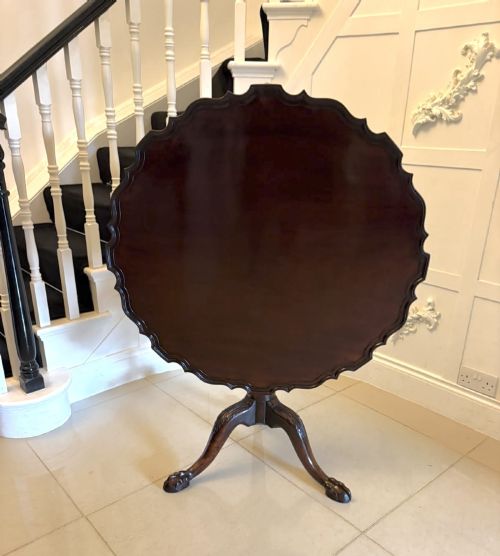
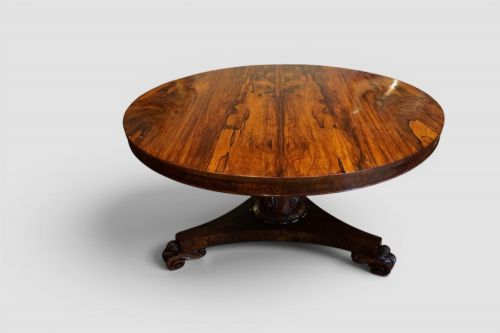
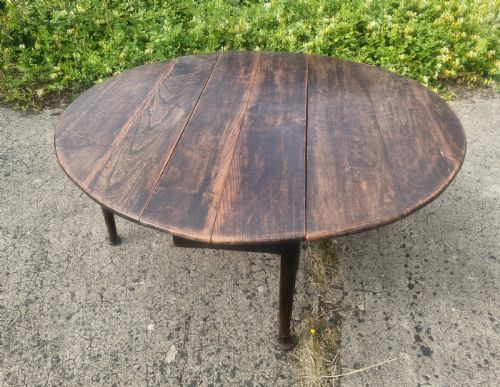
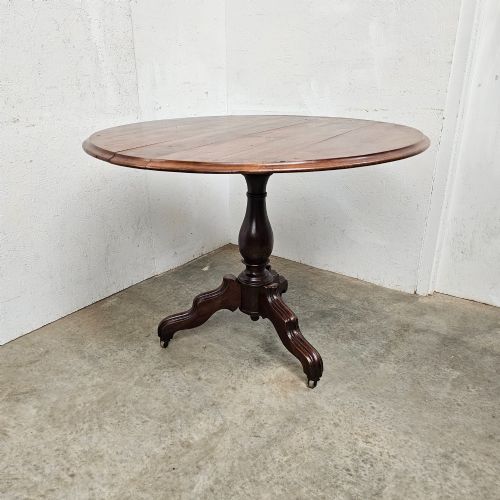
A georgian round dining table appears most often in mahogany, oak, or elm, spanning centuries of British craftsmanship from the eighteenth into the nineteenth. These circular forms range from tilt-top breakfast tables to heavy pedestal formats designed to seat families comfortably for dining.
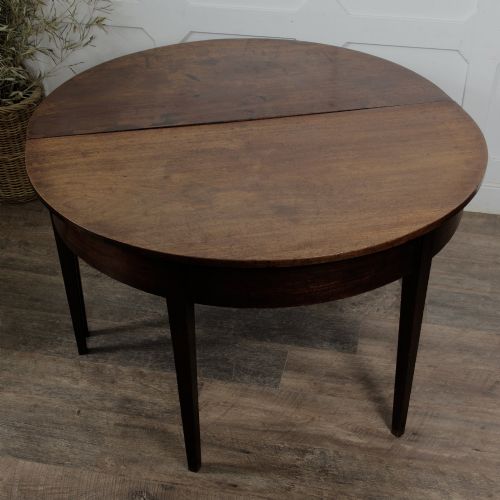
Buyers encounter variations such as drop-leaf mechanisms, gate-leg supports, and demilune sections that join together to form larger extensions. Many pieces function equally well as centre tables or designated dining surfaces in period interiors.
Materials and Construction
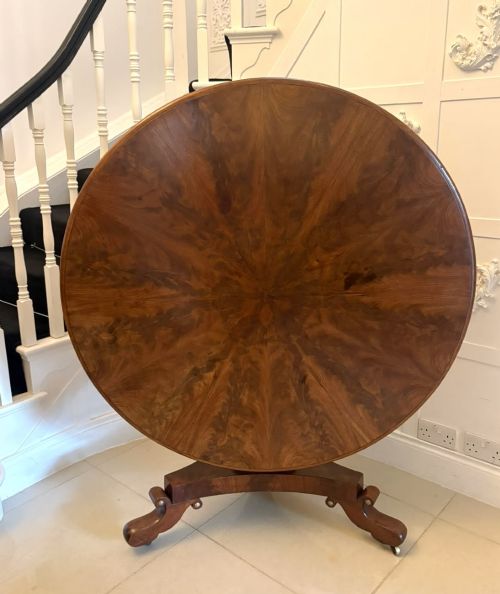
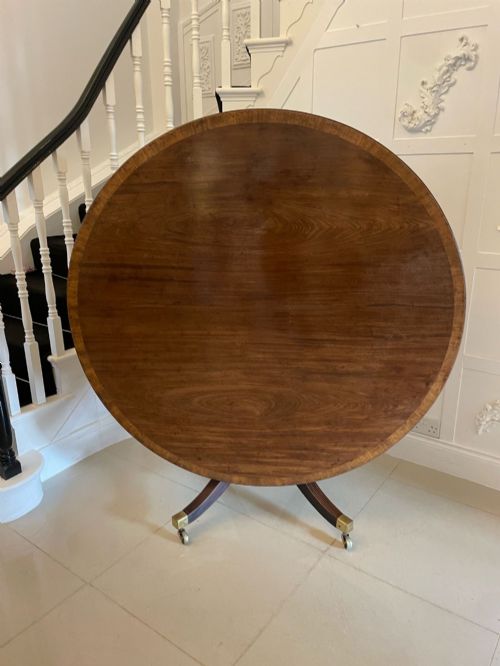
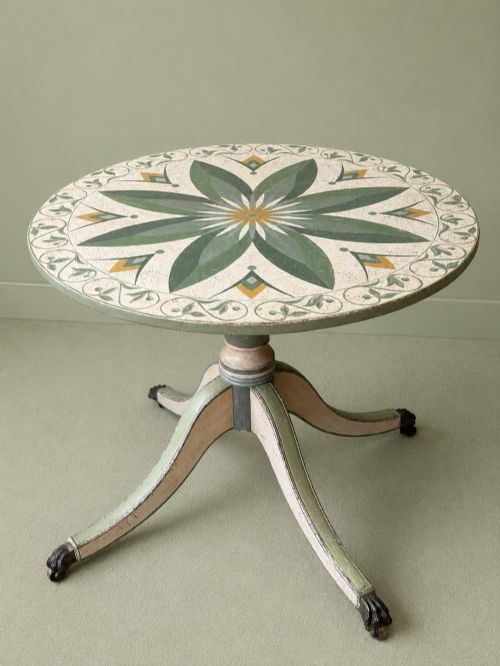
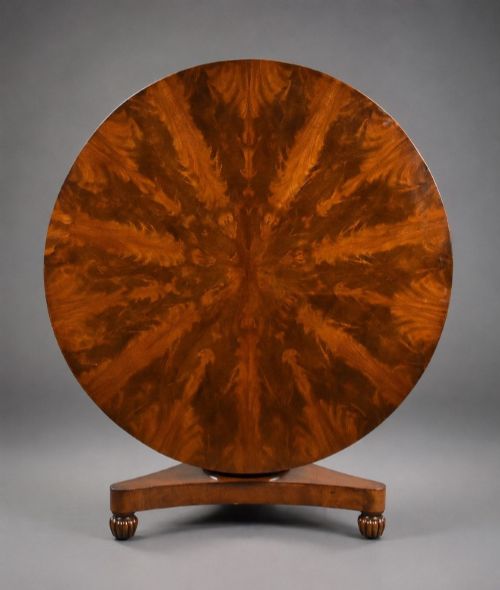
Cabinetmakers relied heavily on solid mahogany, oak, and elm, frequently applying flame mahogany veneer or crossbanded borders to highlight the natural grain of the timber. Rosewood, walnut, and yew wood also appear, sometimes accented with brass inlay or marquetry.
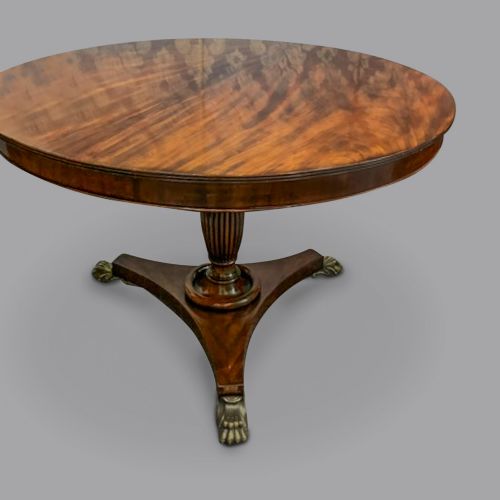
Many circular tops connect to tilt-top tripod bases or sturdy triform pedestals, allowing the timber to expand and contract naturally without warping the surface joints.
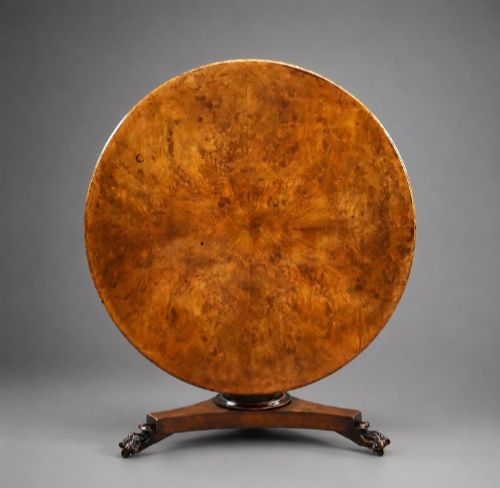
Plum pudding mahogany surfaces display natural knots that mimic the dried fruit inside a traditional Christmas pudding.
Markers of Quality
Quality rests upon the selection of the timber, seen in the depth of figured mahogany or plum pudding mahogany, and the integrity of the single-piece or radially veneered top. Superior examples show precise cabinetwork in the pedestal bases and crisp execution of crossbanding or brass inlay.
The stability of the tilt mechanism and the weight of the tripod or triform support distinguish standard workshop production from finer cabinet work attributed to notable makers.
Gillows·Walker-Lancaster·George Bullock
The Georgian Round Dining Table Glossary
- Tilt-top
- A hinged table top that folds vertically when not in use. This mechanism allowed tables to be stored against walls in smaller rooms.
- Crossbanded
- A border technique where thin strips of veneer are laid perpendicular to the main grain. It creates a defined visual frame around the edge of the table.
- Demilune
- A half-moon shape characteristic of tables that stand against walls or join together to form a larger circular dining surface.
- Triform base
- A three-sided pedestal support typical of Regency and William IV dining and breakfast tables. It distributes weight evenly across heavy timber legs.
- Pad foot
- A simple rounded foot resting flat on the floor, frequently seen on eighteenth-century drop-leg and gate-leg dining tables.
Georgian Round Dining Table: Frequently Asked Questions
How do I seat six people comfortably?
Look for a circular dining table measuring around forty-eight inches or more in diameter, or an extending model with drop-leaf ends.
Pedestal bases provide extra legroom compared to traditional four-legged designs, making it easier to arrange chairs all the way around the perimeter.
What is a tilt-top table used for?
A tilt-top design served a practical purpose in smaller historical homes where dining spaces doubled as living areas. The top folded flat against the wall when the meal ended to free up floor space.
Today, this mechanism allows for easier transport and reveals the underside construction of the table top.
How do I tell Regency from Georgian styles?
Georgian pieces often feature heavier timber frames, oak linings, and simpler tripod or pad-foot supports dating through the eighteenth century. Regency examples lean towards bolder rosewood, brass inlay, and striking pedestal bases.
Regency design frequently incorporates classical revival motifs influenced by nineteenth-century tastes.
Can I use a breakfast table for daily dining?
Breakfast tables provide sturdy surfaces suited to everyday meals, provided the timber receives proper care against moisture and heat. Their central pedestals offer stable support without restricting seating.
Using coasters and placemats protects the historical polish and veneer from accidental damage.