
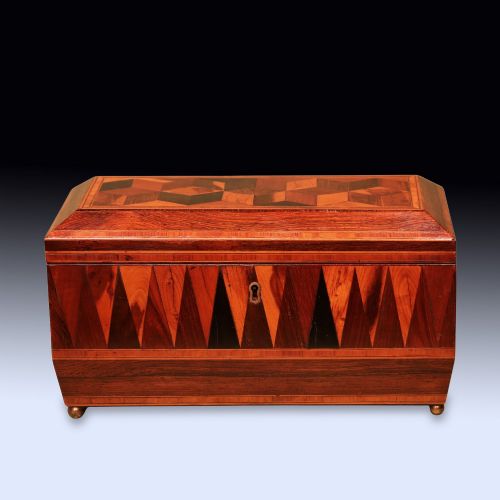


Georgian Rosewood Caddy
A georgian rosewood caddy brings rich grain and precise brass or shell detail to any room, holding tea or small keepsakes.
Georgian Rosewood Caddy
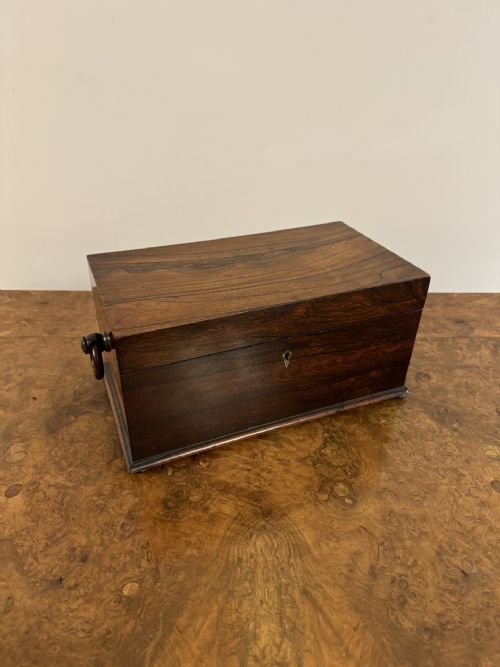
A georgian rosewood caddy takes the form of a lidded box designed to store loose tea leaves securely under lock and key. The pieces seen here date primarily from the Regency period through to Victorian times, spanning the late eighteenth and nineteenth centuries.
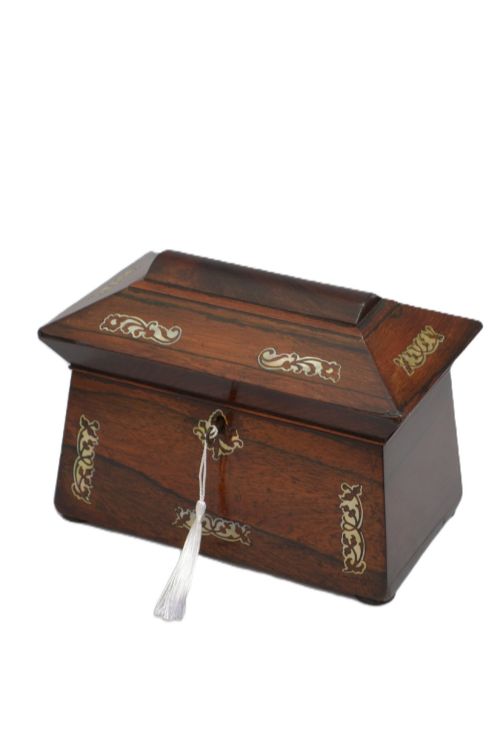
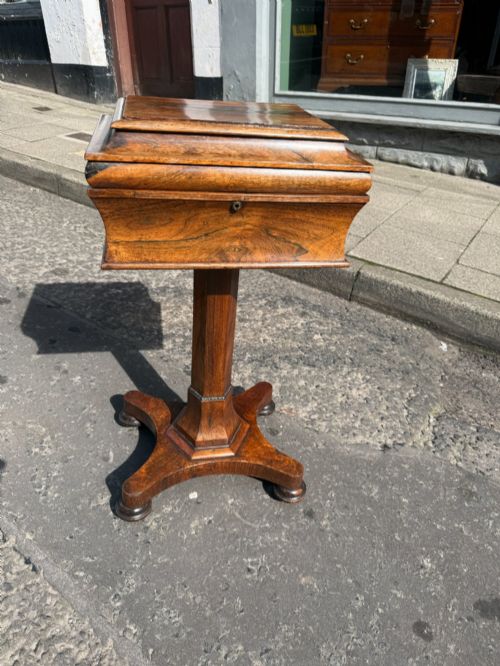
Most examples on this page follow a sarcophagus shape, featuring tapered bodies resting on bun feet or standing independently on a pillar base as a teapoy. Alongside standard tea caddies, related forms such as sewing baskets, jewellery boxes, and music canterleys appear in rosewood.
Makers utilised dark, dense timbers to create containers that sat prominently in the drawing room, reflecting the high status of tea in households of the period. Surviving specimens frequently retain internal compartments for multiple tea varieties alongside a central glass mixing bowl.
How they were made
Cabinet makers constructed these boxes using solid rosewood or applied dense rosewood veneers over secondary pine or mahogany carcases. The distinct dark grain provided a deep brown background suited to decorative embellishment.
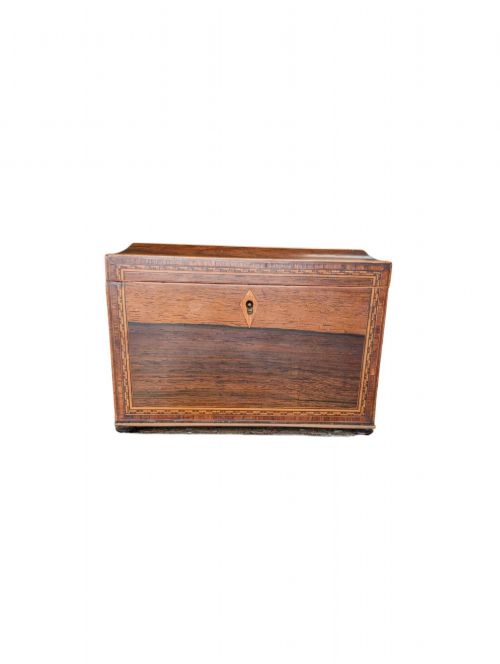
Surface ornamentation relied on precision inlays, incorporating contrasting brass stringing, boxwood lines, and mother-of-pearl motifs. Specialised techniques such as Tunbridge Ware added intricate pictorial mosaics assembled from tiny coloured wood segments.
Listings for a georgian rosewood caddy frequently incorporate brass inlay, Tunbridge Ware, and mother-of-pearl bird motifs.
What varies in quality
Quality rests on the crispness of the parquetry and the precision of the brass inlay set flush into the lid and front panels. Superior boxes show careful alignment where geometric bands meet at corners.
Internal fittings dictate the grade of a piece, with intact mixing bowls, matching tea canisters, and working original locks setting finer examples apart from altered or stripped interiors.
The Georgian Rosewood Caddy Glossary
- Sarcophagus form
- A box design featuring a steep pitched lid and a tapered body resembling a miniature stone coffin, popular during the Regency period.
- Teapoy
- A freestanding tea caddy mounted on a central pillar with tripod or platform legs, designed to stand beside a chair in the drawing room.
- Tunbridge Ware
- Woodware decorated with mosaic patterns created from multiple tiny wood blocks arranged to form geometric or pictorial designs.
- Parquetry
- Geometric wood mosaic work used for decorative veneer patterns on box lids and panels.
- Line inlay
- Thin strips of contrasting wood or metal set into shallow channels cut into the surface of the timber.
Georgian Rosewood Caddy: Frequently Asked Questions
How were tea caddies used?
Tea was a valuable commodity kept under lock by the mistress of the house rather than left in the kitchen.
Servants brought the caddy to the drawing room where tea was measured out for guests using internal canisters.
How do I date a rosewood caddy?
Dating relies on the overall silhouette, construction methods, and the style of inlay work applied to the exterior.
Sarcophagus shapes with brass lion mask handles typically point towards the early nineteenth century during the Regency period.
Can I use an antique caddy for tea?
Most antique caddies retain original foil linings or wooden dividers that suit modern display better than storing loose foodstuffs.
Gentle cleaning and wax maintenance keep the rosewood timber and delicate interior compartments in stable condition.