

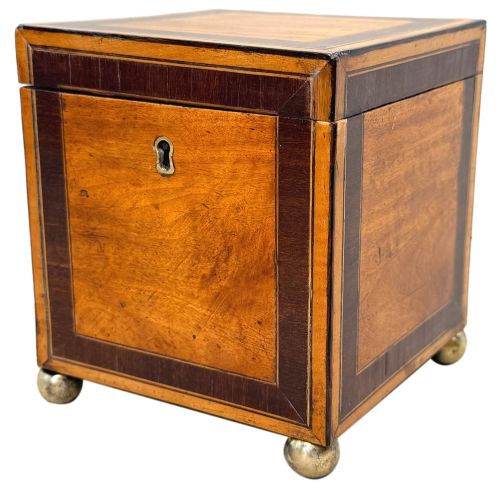
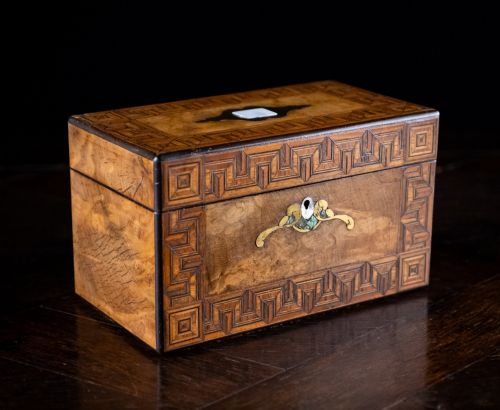


Brass Inlaid Tea Chest
A brass inlaid tea chest is a treasured wooden box designed to store precious dry leaves securely, offering refined elegance for any room.
Brass Inlaid Tea Chest
When you search for a brass inlaid tea chest, you are looking at domestic storage boxes designed to hold valuable tea leaves in Georgian, Regency, and Victorian homes. These pieces range from compact tabletop caddies to larger freestanding teapoys standing on their own legs.
The version you are most likely to meet on this page is a rosewood or mahogany box decorated with precise brass stringing, escutcheons, and geometric motifs. Many examples date from the Regency and Victorian periods, often taking rectangular, sarcophagus, or octagonal forms.
Inside these chests, you frequently find fitted compartments with removable canisters or mixing bowls designed to keep different tea leaves separate. The craftsmanship reflects an era when tea was an expensive commodity requiring proper security and display.
How they were made
Cabinet makers constructed these chests using dense timbers such as rosewood, mahogany, and walnut, frequently applying veneers over sturdy secondary woods. Boxwood and ebony stringing often complemented the primary wood grain.
Artisans inlaid thin strips and shaped pieces of brass into hand-cut channels across the timber surface, securing them with animal glue. More elaborate pieces incorporated tortoiseshell, mother-of-pearl, and ebonised wood to create striking contrast.
Brass Inlaid Tea Chest Retail Price Guide 2026
Typical asking prices for brass inlaid tea chest among the pieces listed under this phrase on Sellingantiques today, from the lower quarter to the upper quarter. They describe what is for sale here now, not the wider market.
Listings feature pieces spanning the eighteenth, nineteenth, and early twentieth centuries, predominantly constructed in rosewood, mahogany, and walnut with brass inlay.
What varies in quality
The refinement of the brass inlay work separates standard boxes from exceptional examples, with finer pieces showing tight joints and intricate floral or geometric patterns. The choice of timber also dictates the tier, particularly highly figured rosewood veneers and burr walnut.
Interior completeness heavily influences the standard of a piece, especially surviving original crystal mixing bowls, inner foil-lined cannisters, and functioning locks with matching keys.
The Brass Inlaid Tea Chest Glossary
- Teapoy
- A larger tea caddy mounted on a central pillar with feet, or standing on a dedicated frame. These substantial pieces served both functional storage and decorative display purposes in formal reception rooms.
- Sarcophagus
- A box shape featuring a domed or pitched lid sloping inward, mimicking classical monumental tombs. This popular Regency form allowed for generous internal storage depth.
- Escutcheon
- A decorative plate surrounding the keyhole, typically cast or engraved from brass. It protected the surrounding wood from wear caused by the key.
- Stringing
- Thin inlay lines of contrasting wood or metal set into the surface of the timber. It defined the borders and architectural panels of the box.
- Boulle
- An elaborate marquetry technique using tortoiseshell and brass inlay developed in France. It created rich, reflective surface patterns across the lid and sides.
Brass Inlaid Tea Chest: Frequently Asked Questions
What is a brass inlaid tea chest?
A brass inlaid tea chest is a decorative wooden box made to store high-value tea leaves securely in historic households. They feature fitted internal compartments for loose leaves and sugar.
Craftsmen used materials like rosewood and mahogany, embellishing the exterior with intricate brass stringing and motifs. These boxes sat prominently on side tables in Georgian and Regency parlours.
How were tea chests used?
These chests kept expensive black and green teas safe from moisture, light, and household theft. The mistress of the house kept the key to control access to the valuable leaves.
Inside, lidded canisters separated different tea varieties, while a central glass bowl allowed the host to blend leaves or rinse the pot. Guests selected their blend before the servant prepared the brew.
How do I date a tea chest?
Stylistic clues such as cabinet shapes and inlay patterns help determine the period of manufacture. Regency boxes often feature sarcophagus forms and bold brass motifs, while Victorian examples lean toward coromandel and marquetry.
Internal construction details, such as handmade screws, secondary wood types, and lock mechanisms, provide further evidence of age. Georgian pieces generally display simpler rectangular proportions with subtle stringing.
How do I care for a rosewood tea chest?
Keep the wood away from direct sunlight and strong heat sources to prevent the rosewood veneer from drying and cracking. Maintain a stable indoor humidity level.
Dust the exterior gently with a dry, soft cloth and avoid using modern liquid polishes or silicone sprays. Conditioning the wood occasionally with appropriate wax helps preserve the finish.