





Georgian Pouch Table
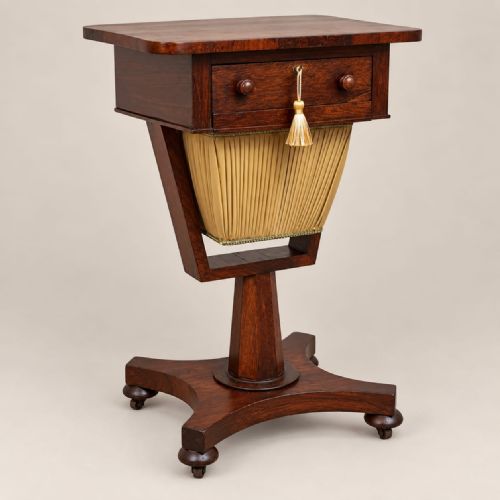
A georgian pouch table is a neat, functional piece designed for needlework, offering clever storage beneath the top.
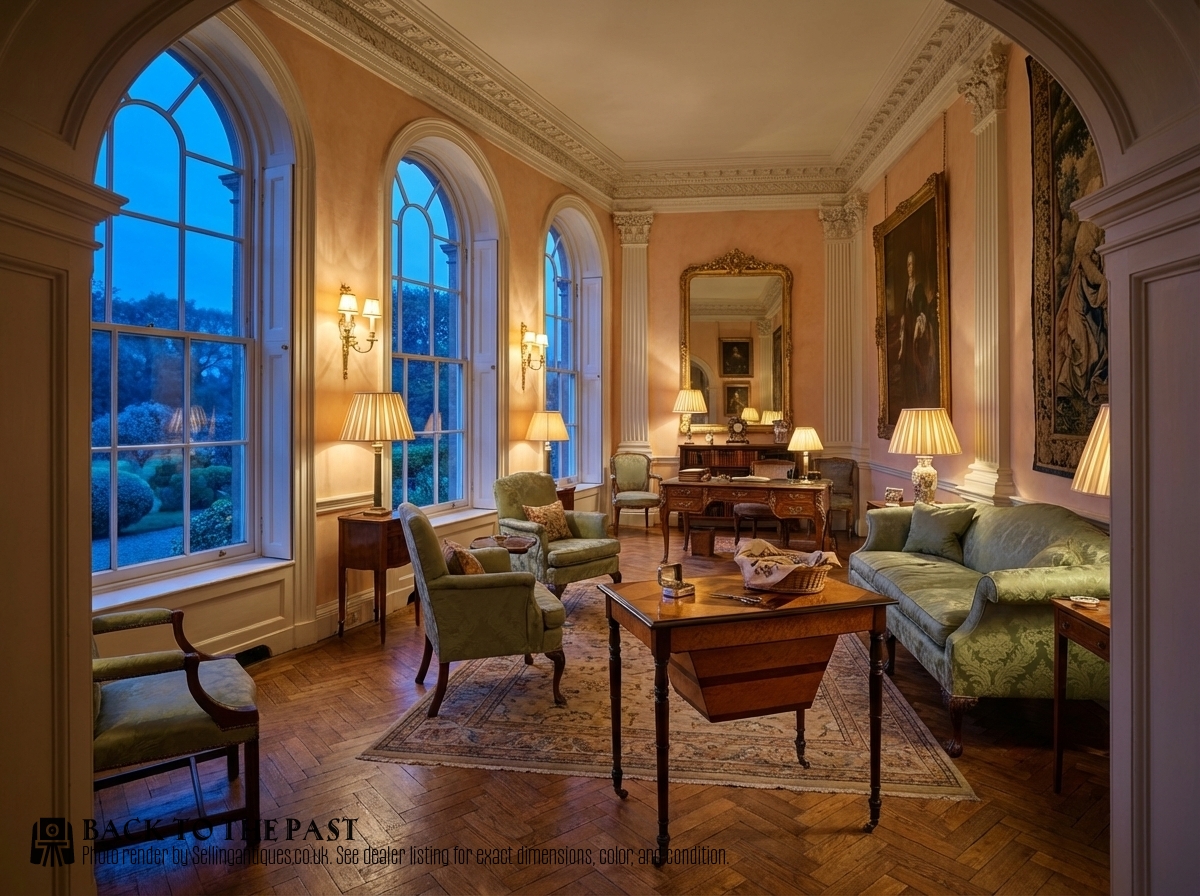
Georgian Pouch Table
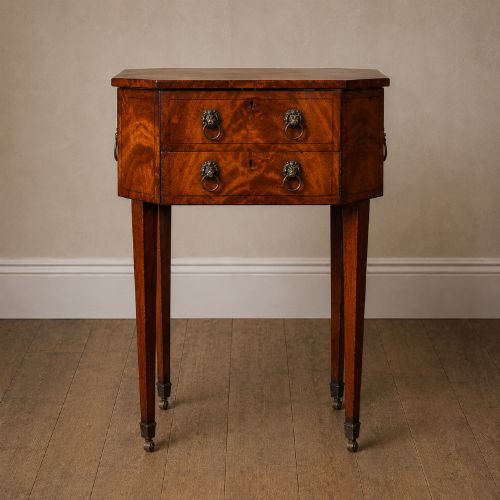
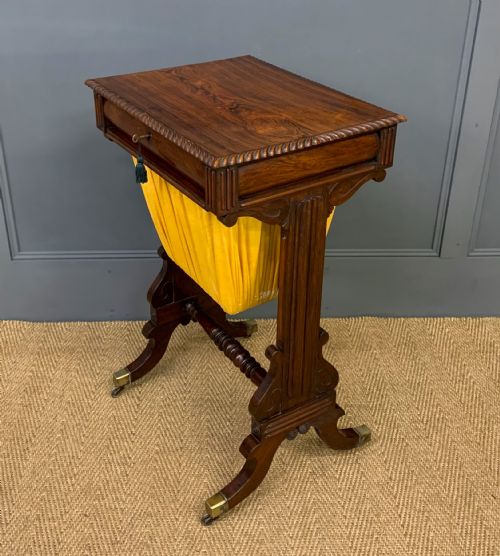
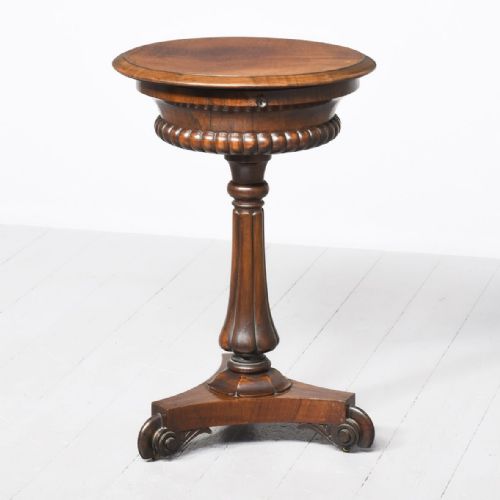
A georgian pouch table primarily serves as a compact sewing or work table, featuring a suspended fabric bag or pouch underneath to hold textiles and threads. These pieces date across the Georgian, Regency, and Victorian periods, often appearing in forms such as drop-leaf, octagonal, or pedestal tables.
The materials span rich timbers like mahogany, rosewood, and satinwood, frequently enhanced with boxwood inlay or brass details. Buyers most commonly meet mahogany and rosewood variants on this page, reflecting the dominant woods of the late eighteenth and early nineteenth centuries.
Makers utilised drop flaps, lyre ends, and lion mask handles to combine utility with elegance, resulting in versatile side tables that double as needlework stations. Their compact proportions make them suitable as occasional tables in modern living spaces.
Construction and materials
Cabinet makers constructed these tables using dense timbers such as mahogany and rosewood, often applying satinwood and boxwood veneers for decorative contrast. Structural stability relied on traditional joinery, while drop leaves and pedestal bases provided functional versatility.
Silk, silk cotton, and fabric formed the hanging pouches that gave these pieces their distinctive utility for needlework. Brass inlays and hardware added refined detail, particularly on Regency examples.
Listings feature woods including mahogany, rosewood, satinwood, pollard oak, and boxwood, spanning the Georgian, Regency, and Victorian eras.
Markers of distinction
The grade of timber and precision of inlay dictate the upper tier of these pieces. Selection of figured mahogany, rich rosewood, and delicate specimen wood veneers separates finer examples from plain utilitarian versions.
The Georgian Pouch Table Glossary
- Drop leaf
- A table top with hinged flaps that can be folded down to save space or raised to increase surface area. This mechanism provides flexibility in smaller rooms.
- Work table
- A small table equipped with drawers or compartments designed for holding sewing materials and needlework. These were essential furnishings for ladies in the eighteenth and nineteenth centuries.
- Pouch
- A fabric or silk bag suspended beneath the table top to store textiles and sewing equipment. It typically gathers into folds or a drawstring.
- Specimen wood
- Small pieces of various decorative timbers used in geometric patterns for inlay or marquetry. This technique highlights the maker's skill through contrasting natural colours.
- Lyre end
- A furniture support shaped like the classical musical instrument, frequently seen on Regency pedestal tables. It adds an architectural element to the base.
Georgian Pouch Table: Frequently Asked Questions
What is a pouch table?
A pouch table is a specialised piece of antique furniture designed for sewing, featuring a fabric bag suspended underneath the top to hold needlework.
These tables combine a flat surface for working with concealed storage for textiles, threads, and tools.
How were these tables used?
Ladies utilised them in the parlour or drawing room for embroidery, sewing, and reading.
The drop leaves provided extra space when needed, while the fabric pouch kept ongoing needlework projects neatly out of sight.
How do I date a Regency example?
Regency pieces often display darker woods like rosewood, brass inlay, and classical motifs such as lyre supports or brass lion mask handles.
They generally date from the early nineteenth century, reflecting a shift towards heavier, neoclassical design influences.
Where should I place one at home?
Their compact dimensions make them suitable as bedside tables, lamp tables, or side tables in a sitting room.
The hanging pouch can remain empty as a decorative feature or hold small books and periodicals.