




Regency Ladies Sewing Table
A regency ladies sewing table combines refined cabinetmaking with practical compartments for needlework, offering elegant utility for the home.
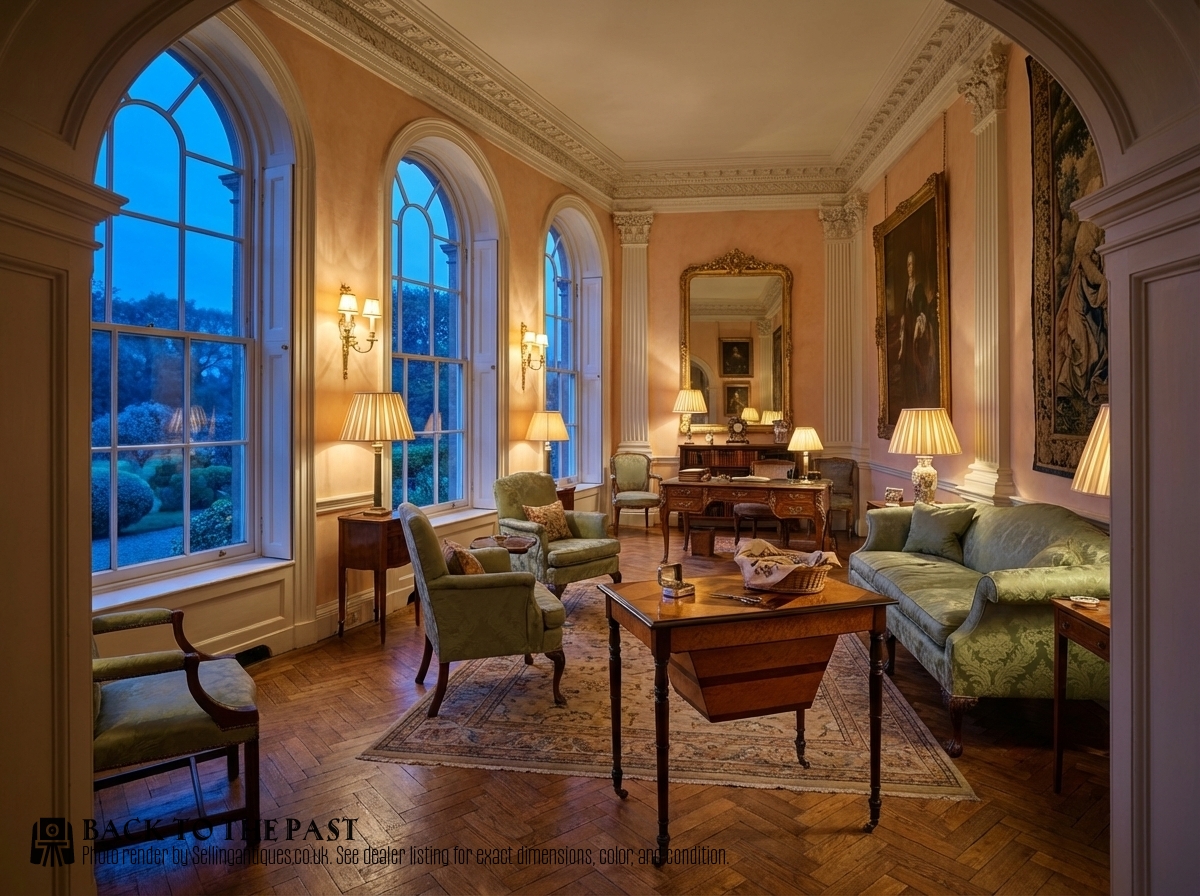
Regency Ladies Sewing Table
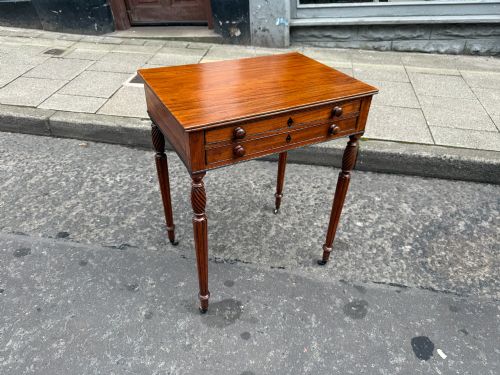
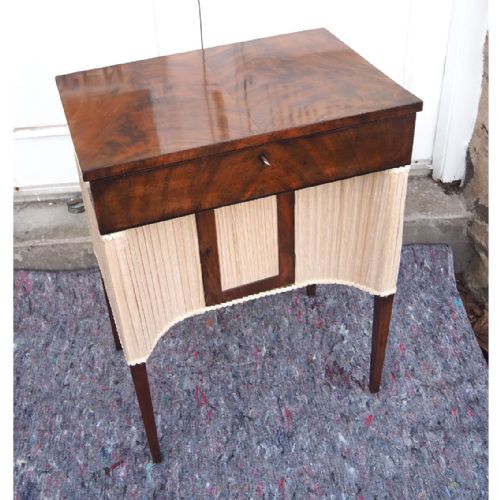
A regency ladies sewing table is a compact multi-purpose furniture form designed for needlework, writing, and small domestic tasks during the early nineteenth century. These pieces typically stand on slender legs and incorporate fitted drawers or hanging fabric bags to hold threads, textiles, and implements.
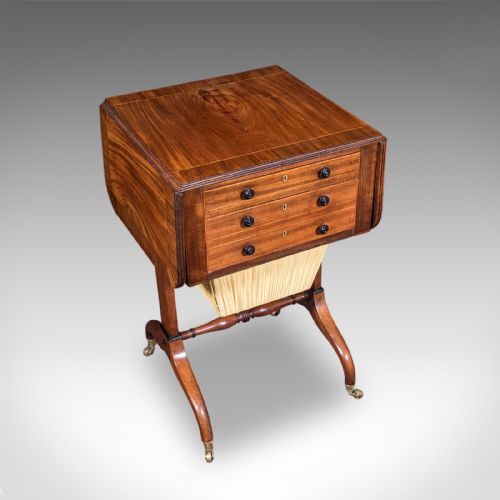
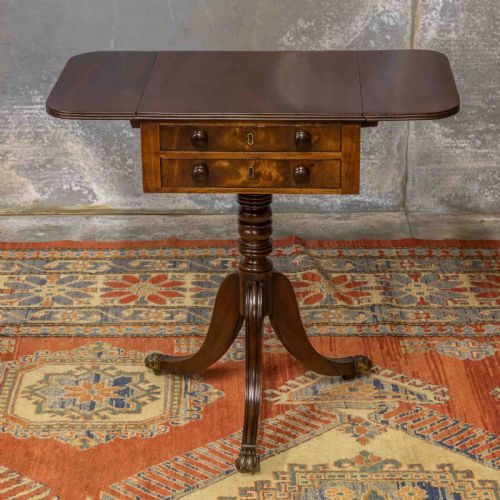
Buyers browsing this selection will most frequently encounter variations from the Regency and Georgian periods alongside later nineteenth-century interpretations. Common forms include drop-leaf variations, dual-aspect boxes, and combinations featuring writing surfaces or rear screens.
Materials span native and exotic timbers, often elevated by decorative veneers and marquetry inlay. The scale remains domestic and graceful, intended for the parlour or drawing-room rather than formal dining spaces.
How they were made
Cabinetmakers constructed these tables using a timber carcase of mahogany, satinwood, rosewood, or silky oak, frequently applied as fine wood veneers over secondary woods. Flame mahogany and specimen wood veneers provided decorative movement and visual contrast across the surfaces.
Details were finished with contrasting inlay, brass mounts, and occasionally tortoiseshell or mother-of-pearl accents. Drop-leaf hinges and interior compartments required precise joinery to ensure smooth daily operation of the folding leaves and sliding boxes.
Some tables include hidden writing ledges and rear screens designed to block the heat of the fireplace.
What varies in quality
The distinction between standard and superior examples lies in the selection of timber figures and the precision of the marquetry. Highly figured flame mahogany or intricate specimen wood veneers indicate a more ambitious commission.
Refinement in the turned legs, quality of brass hardware, and the complexity of the interior fittings separate exceptional workshop output from simpler domestic pieces. The integrity of the original fabric bags and internal trays also influences the overall character.
The Regency Ladies Sewing Table Glossary
- Flame mahogany
- A veneer cut from the fork of the mahogany tree, producing a distinctive rippled flame pattern across the table top.
- Drop-leaf
- A table design featuring hinged flaps on either side that can be raised to extend the surface area or lowered when space is restricted.
- Specimen wood
- Small pieces of various contrasting timbers used to create decorative geometric patterns and inlay work.
- Dual-aspect
- A cabinet or box arrangement accessible from multiple sides or fitted with compartments that open from more than one direction.
Regency Ladies Sewing Table: Frequently Asked Questions
What is a regency ladies sewing table?
A regency ladies sewing table is a small decorative piece of furniture from the early nineteenth century designed to hold needlework supplies, threads, and personal items. They often included drop leaves, internal compartments, and fabric work bags.
These tables were kept in sitting rooms where women engaged in embroidery and correspondence. Their compact proportions made them both decorative and functional furnishings.
How were sewing tables used originally?
These tables served multiple purposes for domestic pursuits, including sewing, mending, writing, and sometimes playing games. The top drawer often pulled out to reveal partitioned compartments for pins and spools.
Beneath the drawer, a suspended silk or fabric bag gathered loose textiles while work was underway. Some models also incorporated small writing desks or folding screens.
What woods are typical for these tables?
Mahogany is the most frequent timber found in these listings, often utilised for its rich grain and stability. Satinwood, rosewood, and silky oak appear regularly as primary surfaces or decorative veneers.
Cabinetmakers also applied flame mahogany and intricate specimen wood veneers to create visual contrast. Inlay work frequently incorporated lighter woods to frame panels and borders.
How can I date a sewing table?
Dating relies upon stylistic markers such as leg shapes, veneer types, and construction methods associated with the Regency, Georgian, and William IV periods. Pieces from around 1800 to 1835 generally feature classical proportions and specific hardware conventions.
Comparative study of related forms helps establish the approximate decade of manufacture. Grain patterns and secondary woods further support period attribution.