



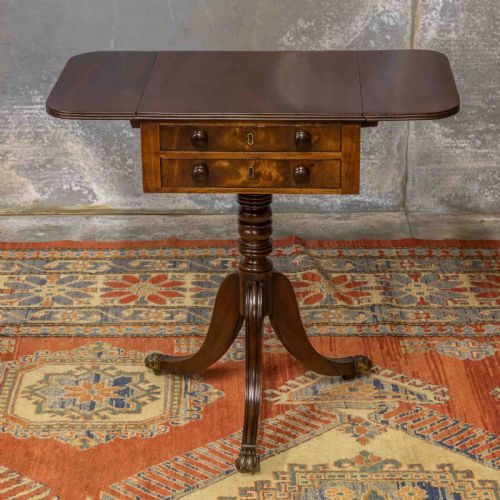

Georgian Mahogany Worktable
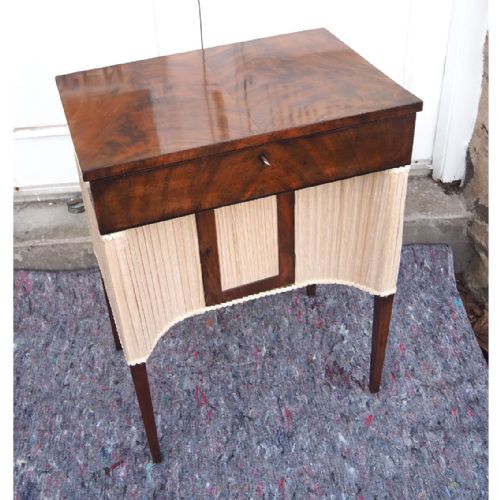
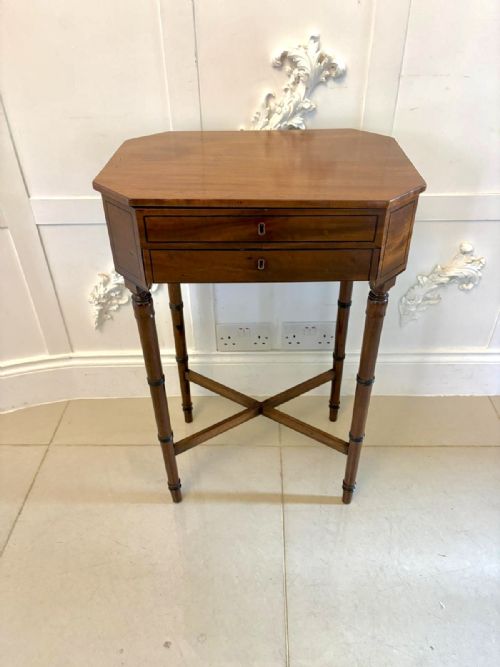
A georgian mahogany worktable is a neat, functional piece designed for needlework and small domestic tasks, offering ingenious compartments within a polished timber frame.
Georgian Mahogany Worktable
When you search for a georgian mahogany worktable, you find compact, versatile items created to hold sewing equipment, needlework, and letters. These pieces served as convenient companions for ladies in the drawing room or parlour.
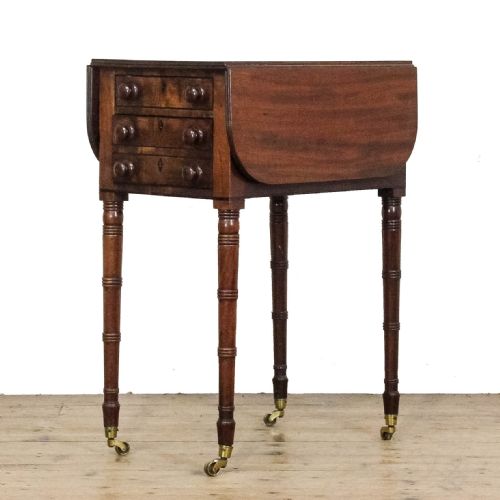
The versions most commonly met on this page span the Georgian, Regency, and early Victorian periods, including George III, Sheraton, and William IV examples. They frequently appear as pedestal tables, Pembroke drops, and occasional stands with fitted interiors.
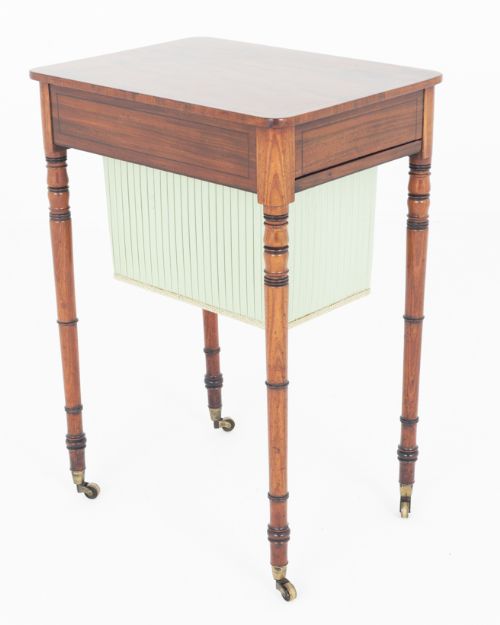
Makers designed these items to be easily moved beside a chair or sofa, combining a writing surface or lamp table with a fabric bag or wooden box underneath. Secret rising compartments and removable sewing baskets frequently feature in the more elaborate formats.
How they were made
Cabinet makers utilised solid mahogany and rich flame mahogany veneer over secondary timbers, often applying satinwood stringing or subtle inlay for contrast. Tops and drop leaves display carefully selected grain patterns matched across the surface.
Brass fittings such as casters, drop handles, and small knobs secure the movable parts, while silk or fabric lines the internal compartments and hanging sewing bags. Turned pedestals and slender legs provide stable support without bulk.
Several examples hide multiple secret compartments beneath their tops, proving that Regency cabinet makers loved a clever hiding spot as much as their clients.
What varies in quality
The degree of refinement in the timber selection and veneer matching defines the upper tier of these pieces. Fine examples display striking flame mahogany figures across the top and drawer fronts, whereas simpler items use plain stock.
Clever internal engineering distinguishes superior specimens, particularly those incorporating multiple secret rising compartments, smoothly operating drawers, and original silk sewing baskets. The crispness of the turning on pedestals and the subtlety of inlay further separate standard production from master craftsmanship.
Gillows
The Georgian Mahogany Worktable Glossary
- Pembroke table
- A small table with hinged drop leaves on two opposite sides, supported by folding brackets or rule joints. These were designed to be easily expanded or tucked away.
- Pedestal table
- A table supported by a central pillar rising from a platform base or branching feet, common in Regency and William IV designs. This construction allows maximum legroom.
- Flame mahogany
- Timber cut from the fork of the mahogany tree, yielding a distinctive ripple pattern resembling flickering flames. Cabinet makers reserved this for prominent exterior surfaces.
- Satinwood
- A pale, hard wood with a satiny sheen used for decorative stringing, banding, and inlay on darker mahogany furniture. It creates sharp visual contrast.
- Drop leaf
- A hinged flap attached to the main top of a table that can be raised to increase surface area. When lowered, it reduces the footprint of the furniture.
Georgian Mahogany Worktable: Frequently Asked Questions
What was a worktable used for?
These pieces served as dedicated stations for ladies to undertake sewing, embroidery, and correspondence in the sitting room. The internal boxes and hanging fabric bags kept threads, needles, and fabric neatly organised out of sight.
They also functioned as convenient lamp stands or occasional tables when the sewing lid was closed. The top surface provided a stable spot for reading material or small decorative objects.
How do I tell a George III table from a Regency one?
George III pieces generally display straight, tapered legs, restrained stringing, and a more rectilinear overall proportion. They reflect the classical restraint favoured in the latter half of the eighteenth century.
Regency examples tend to introduce heavier pedestal bases, brass paw casters, bolder flame mahogany veneers, and curved saber legs. The decorative vocabulary shifts towards heavier classical revival themes influenced by French and Egyptian motifs.
Are the fabric bags original?
Most hanging silk or fabric workbags have been replaced over the decades due to the delicate nature of textiles. Surviving original linings are uncommon and usually show expected signs of age and wear.
Restorers frequently replace the fabric using traditional silks or brocades that match the historical period of the furniture. This renewal allows the piece to retain its intended functional appearance.
Can I use a worktable as a bedside table?
The compact dimensions and practical storage compartments make these tables well-suited for use beside a bed. The drawers and internal boxes accommodate modern nighttime essentials while maintaining period character.
Their narrow footprints and drop leaves also allow them to fit into tight spaces where standard bedside cabinets might overwhelm the room.