

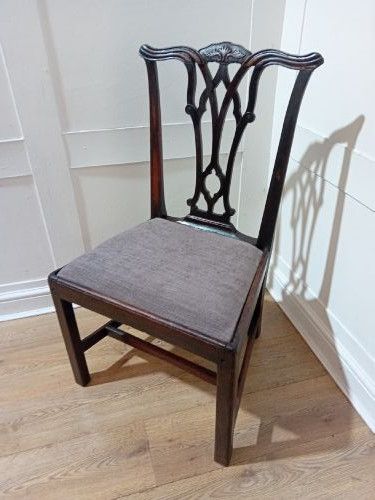


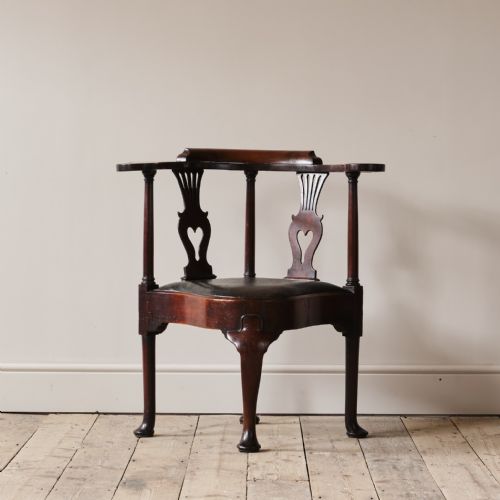
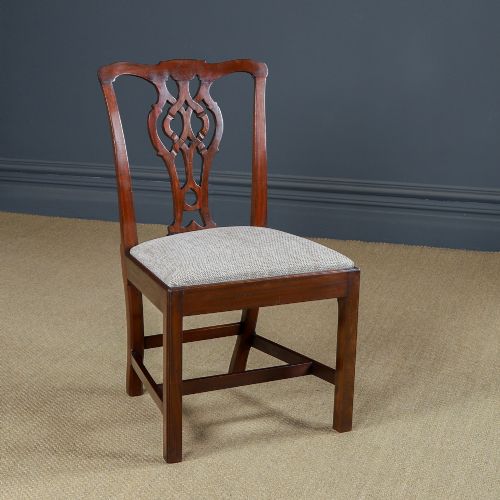
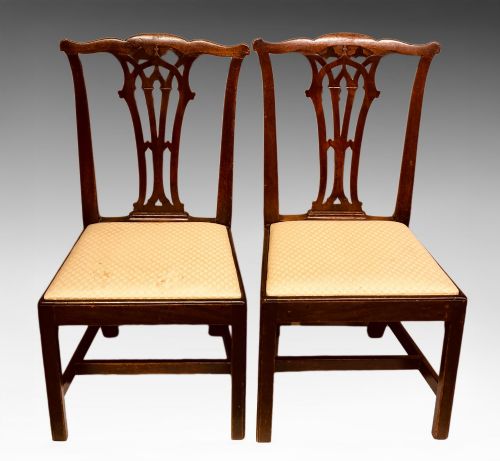
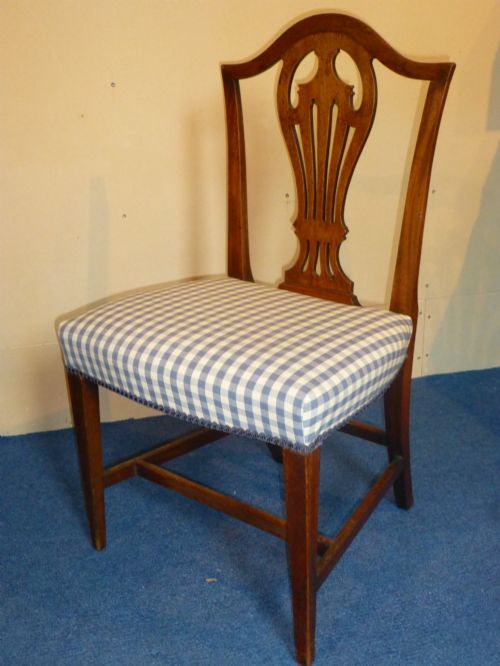
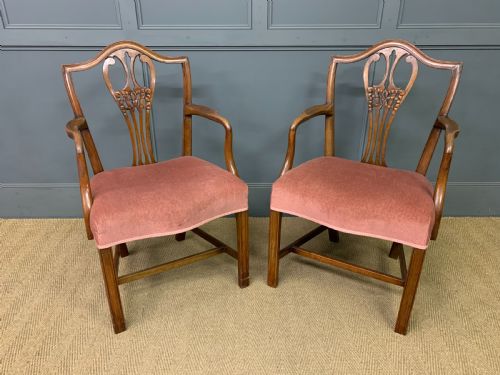
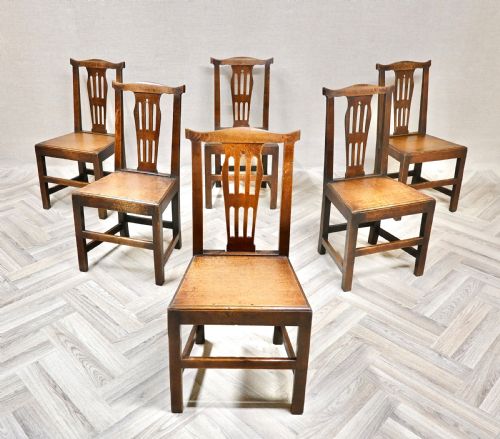
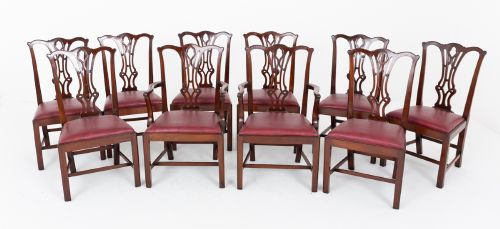
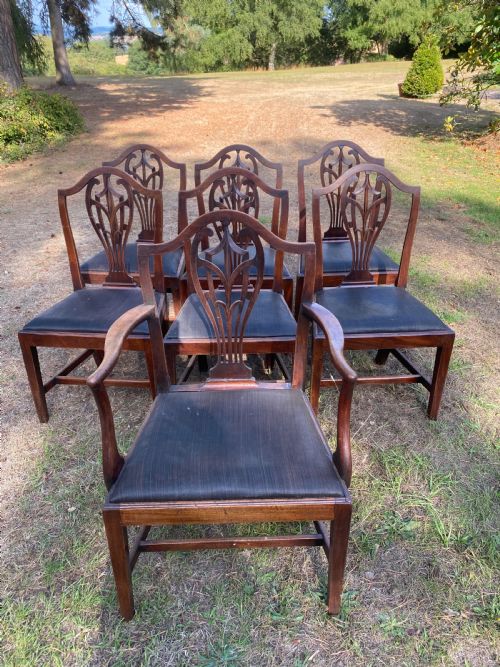
Georgian Pierced Splat Chair
A georgian pierced splat chair brings tactile rhythm to a room through its openwork back, combining sturdy timber with sculptural joinery.
Georgian Pierced Splat Chair
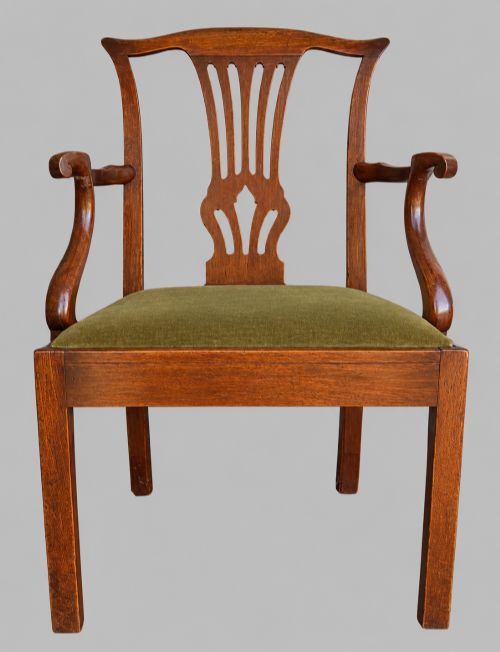
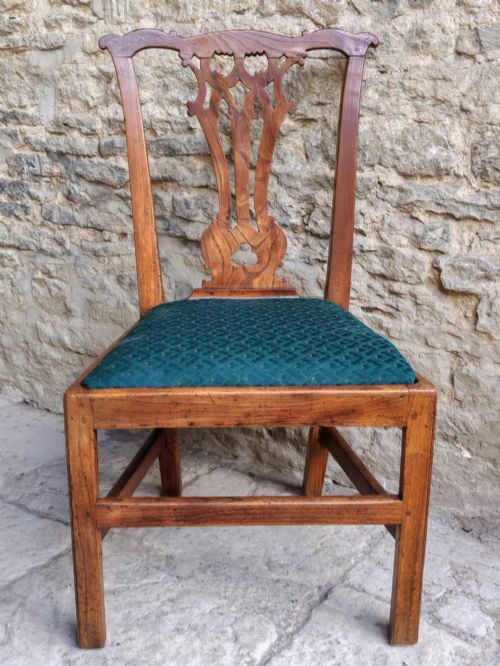
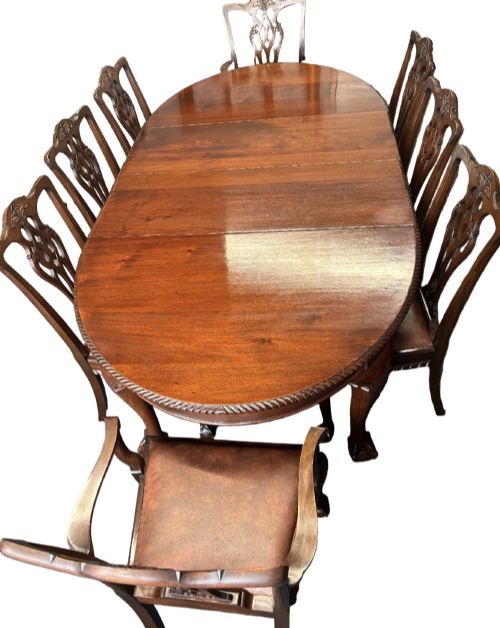
A georgian pierced splat chair centres on a vertical back panel shaped and cut away into intricate silhouettes, supporting the spine while offering visual lightness. These seating forms span dining chairs, office desk chairs, and occasional side seats originating across the eighteenth century and subsequent revival periods.
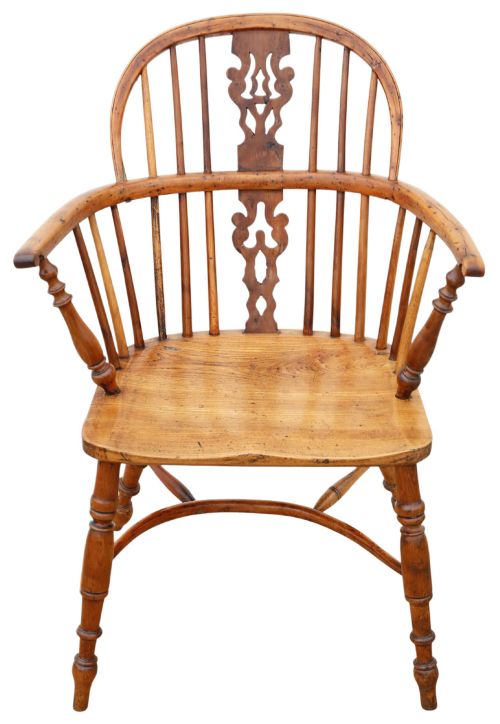
The most common examples encountered on this page combine mahogany timber with characteristic Chippendale style carving, though vernacular country variants also appear in fruitwood and elm. Regional interpretations range from formal urban parlour seating to sturdy provincial dining chairs.
Makers of the period built these seats for formal dining rooms, libraries, and morning rooms, employing robust joinery to withstand daily use. The surviving examples demonstrate diverse regional hands, from London cabinet makers to rural vernacular joiners.
Materials and Construction
The primary structural timber used for formal examples is mahogany, chosen for its tensile strength that permitted delicate piercing without snapping under weight. Regional vernacular pieces utilise domestic woods such as elm, ash, fruitwood, and yew, often combining multiple timbers within a single frame.
Joinery relies on mortise and tenon construction, secured with pegged joints and reinforced corner blocks beneath the seat frame. The central splat is shaped from a single board, slotted into the shoe rail and crest rail to maintain rigidity.
Several Windsor chairs preserve generations of polish buildup in their spindle crevices, telling silent tales of long winter evenings.
Distinctions in Quality
The degree of hand-carving defines the upper tier, where crisp undercut foliage and flowing strapwork reveal the carver's precision. Softer, shallower relief work characterises standard production pieces or later revival interpretations.
Timber selection and grain figure separate high-status commissions from utilitarian workshop output, with dense, well-figured mahogany commanding greater appreciation. Grain alignment through stress points ensures long-term structural stability.
The Georgian Pierced Splat Chair Glossary
- Splat
- The vertical wooden slat occupying the centre of a chair back between the seat and the top rail. In these pieces, it is shaped and pierced.
- Crest rail
- The horizontal or shaped uppermost member of a chair back. It often bears carved decoration such as scrolling or ears.
- Comb back
- A Windsor chair variation where vertical spindles extend through the seat to form a low comb-like crest rail. This design provides robust back support.
- Cabriole leg
- A furniture leg that curves outward at the knee and tapers inward toward the ankle, finishing in a pad or claw foot.
Georgian Pierced Splat Chair: Frequently Asked Questions
How are these chairs best used today?
These chairs function effectively as dining sets around a central table or as single accent pieces at a desk. Their open backs maintain sightlines in smaller interior spaces.
Pairs work well placed beside a fireplace or flanking a hallway console, providing practical seating with historical presence.
What woods were used for these chairs?
Urban workshops relied heavily on imported mahogany for its rich grain and structural strength. Provincial makers utilised native British timbers including elm, ash, fruitwood, and yew.
Combinations of woods within a single frame often indicate regional vernacular production rather than formal city workshop output.
How do I distinguish eighteenth-century pieces?
Original period pieces display traditional hand-cut joinery marks, timber shrinkage appropriate to age, and wear patterns on the foot terminals. Examination of the underside reveals peg placement and secondary woods consistent with the era.
Revival pieces from later periods often show machine-cut precision and uniform timber colouration lacking centuries of handling.
How do I care for the wood surface?
Maintain the finish by applying natural beeswax sparingly and buffing gently with a soft cloth. Avoid placing timber furniture near direct heat sources or strong sunlight.
Consistent indoor humidity prevents the wood from drying out and keeps mortise and tenon joints secure.