
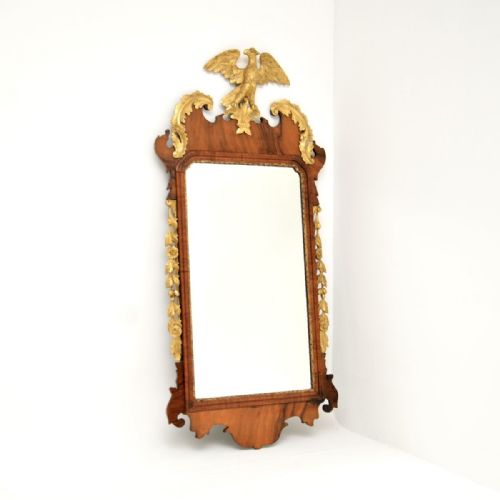
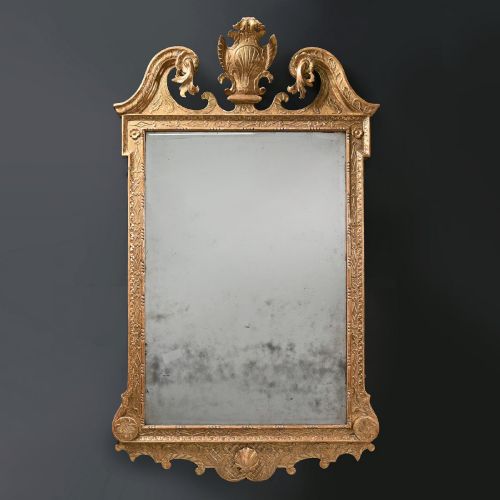
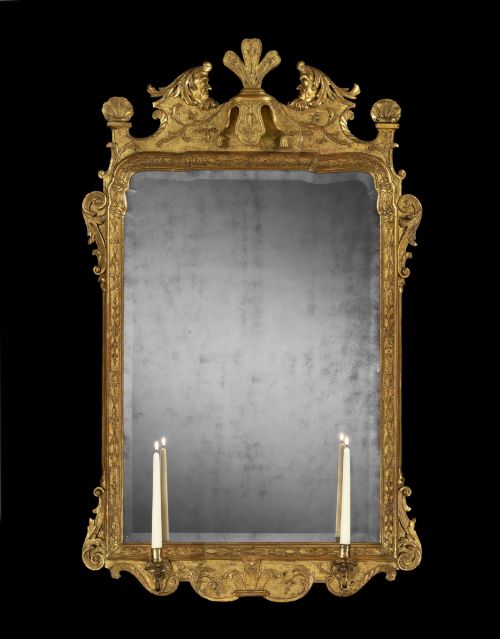


Georgian Period Pier Glass
A georgian period pier glass brings architectural symmetry and brilliant reflection to a room, formed in giltwood, mahogany, and walnut.
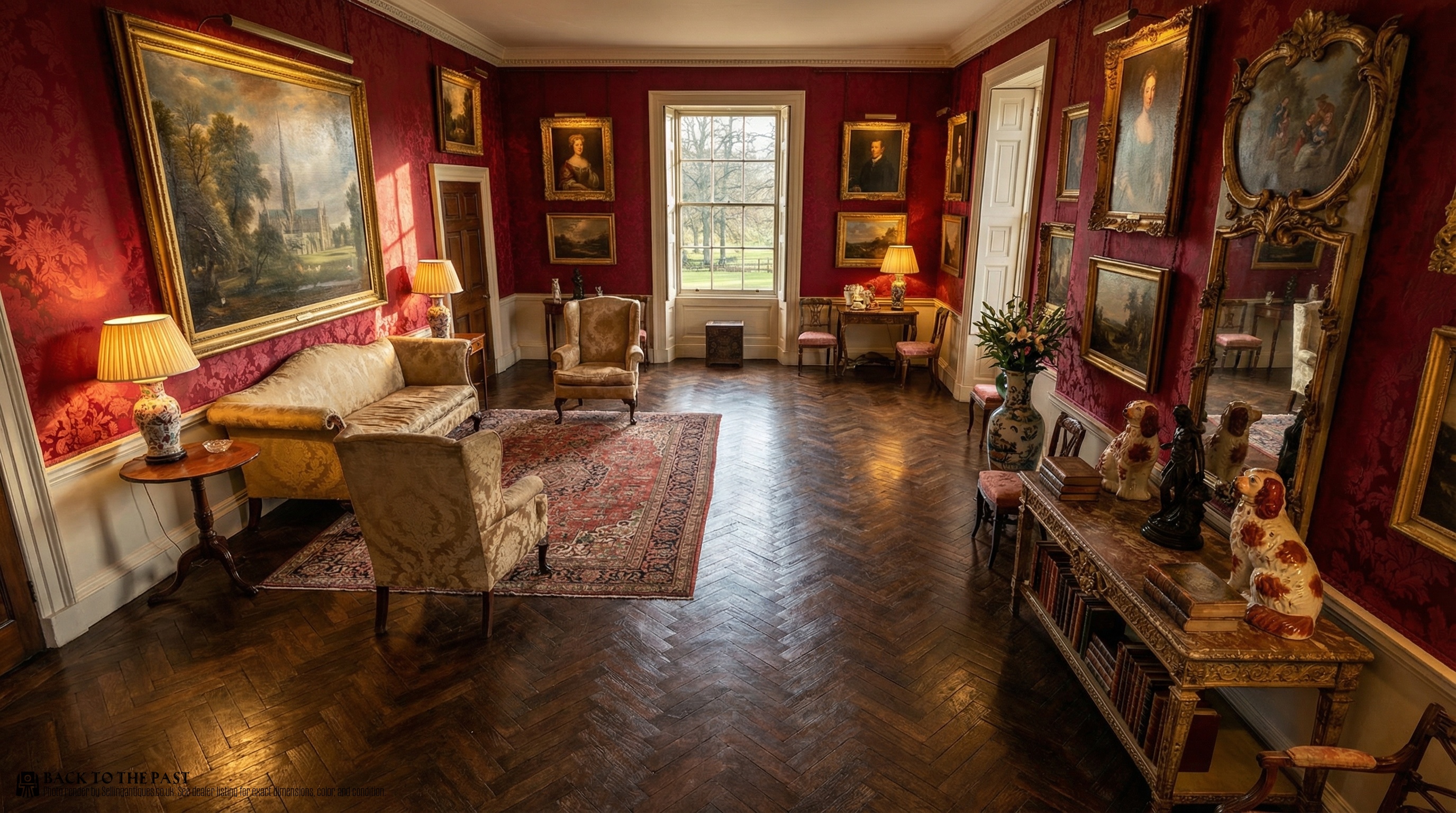
Georgian Period Pier Glass
A georgian period pier glass sits traditionally between windows on a pier wall, capturing and multiplying natural light within a formal interior. The examples encountered on this page span the eighteenth century and the regency era, alongside later revivals.
The primary forms take shape as wall mirrors and pier mirrors, constructed in woods such as mahogany, walnut, and sycamore, or finished with intricate giltwood and gesso. Surviving pieces range from neat proportions to large scale frames influenced by notable designers.
Buyers meet both genuine eighteenth-century creations and early twentieth-century interpretations executed in earlier designs. These objects reflect stylistic shifts from Queen Anne simplicity through Chippendale rococo exuberance to Regency refinement.
Materials and construction
Carvers shaped solid timbers including mahogany, walnut, and sycamore to form the primary structure of the frame. Artisans applied layers of gesso over the wood base to create smooth surfaces suitable for intricate relief carving and subsequent gilding.
Makers utilised gold leaf and parcel-gilt techniques to illuminate the carved ornamentation, contrasting metallic brilliance with dark wood grains or lacquered surfaces. Mirror glass was set within these rebated frames, often secured by slips and backboards.
Specialised techniques such as fretwork sawing allowed workshops to produce delicate pierced patterns, particularly during the Chippendale period. Lacquering and hand painting introduced japanned Chinoiserie scenes onto select wooden frames.
Early mirrors were narrow because glassmakers struggled to cast large sheets without distortion, making pier glass proportions a triumph of historic engineering.
Distinctions in quality
The refinement of the carved ornament distinguishes superior examples from simpler utilitarian frames. Crisp execution in gesso and giltwood reveals the hand of a skilled artisan, whereas worn or shallow moulding lacks definition.
Proportion and architectural balance dictate the visual success of a pier glass. Pieces that maintain harmonious relationships between plate size and frame width command greater presence on the wall.
The integrity of the materials, from the depth of the gold leaf to the choice of figured walnut or mahogany veneers, underpins the lasting character of the object.
William Kent·John Belchier
The Georgian Period Pier Glass Glossary
- Pier glass
- A tall mirror designed specifically to hang on the pier wall between two windows. This placement maximised the distribution of daylight in eighteenth-century rooms.
- Gesso
- A mixture of chalk or gypsum bound with glue, applied to a wooden frame as a base for gilding. Carvers cut directly into this layer to achieve sharp decorative relief.
- Parcel-gilt
- A finish where portions of a wooden or painted object are selectively gilded with gold leaf. This technique highlights specific carved details against a contrasting dark wood ground.
- Rococo
- An ornate design style characterised by asymmetrical scrolls, C-curves, and naturalistic foliage. It heavily influenced British mirror frames during the mid-eighteenth century.
- Trumeau
- A decorative wall mirror incorporating a painted or carved panel above the glass plate. These French-influenced pieces served as permanent architectural fittings.
Georgian Period Pier Glass: Frequently Asked Questions
Where should I hang a pier glass?
A pier glass is traditionally positioned on the wall space between two windows. This architectural placement allows the mirror to reflect natural light deeper into the room.
Modern interiors often use them above mantelpieces or console tables to create a similar sense of vertical scale and enhanced illumination.
How do I distinguish walnut from mahogany pieces?
Walnut frames typically date from the earlier part of the eighteenth century, showing rich brown tones and subtle grain patterns. Mahogany gained popularity later in the century, offering a denser structure and deeper reddish hues.
Craftsmen utilised these timbers according to prevailing fashions, often pairing them with parcel-gilt highlights or carved gesso ornamentation.
What is the difference between a pier mirror and a wall mirror?
A pier mirror is specifically proportioned to fit the narrow wall space between architectural openings such as windows. Standard wall mirrors are manufactured in a wider variety of shapes and dimensions for general placement.
Both forms served decorative and practical functions in historic domestic interiors.
How do I care for antique giltwood frames?
Giltwood surfaces require gentle maintenance using a soft dry brush to remove dust accumulation. Moisture and harsh cleaning agents can damage the delicate gesso and gold leaf layers.
Stable environmental conditions with moderate humidity help preserve both the wooden structure and the historic finish.