
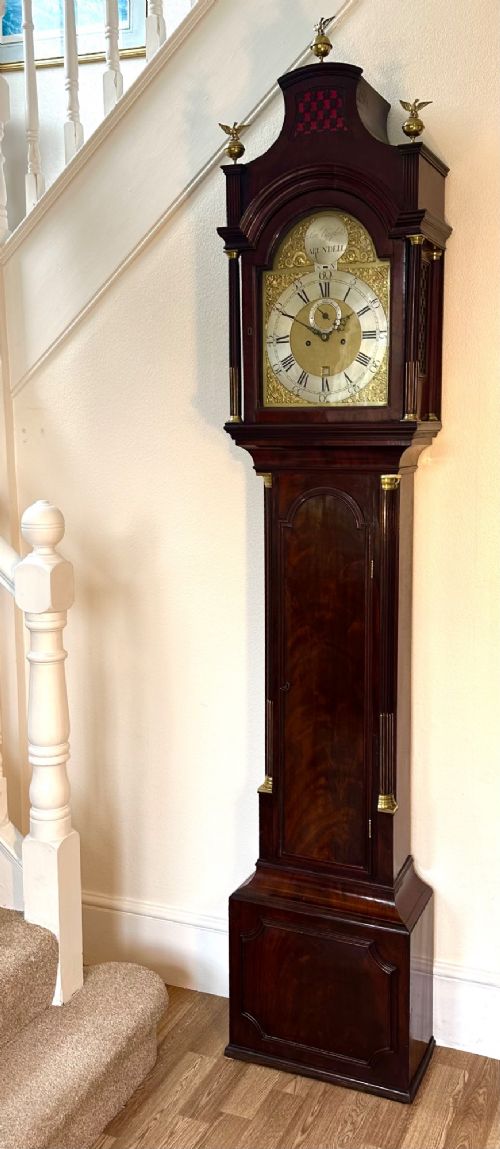
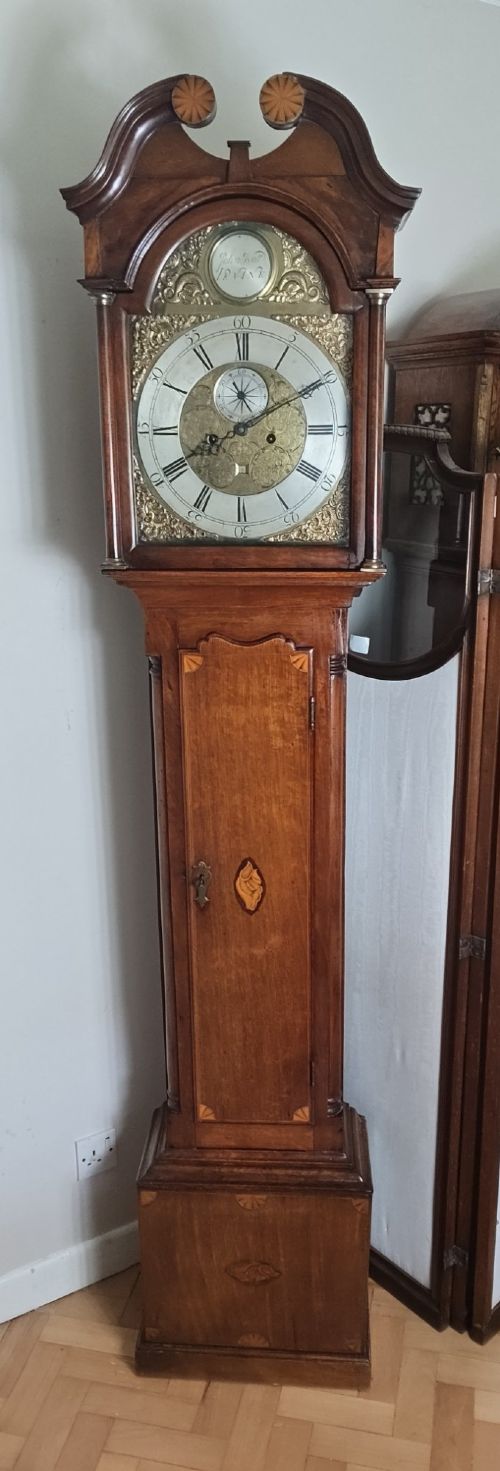
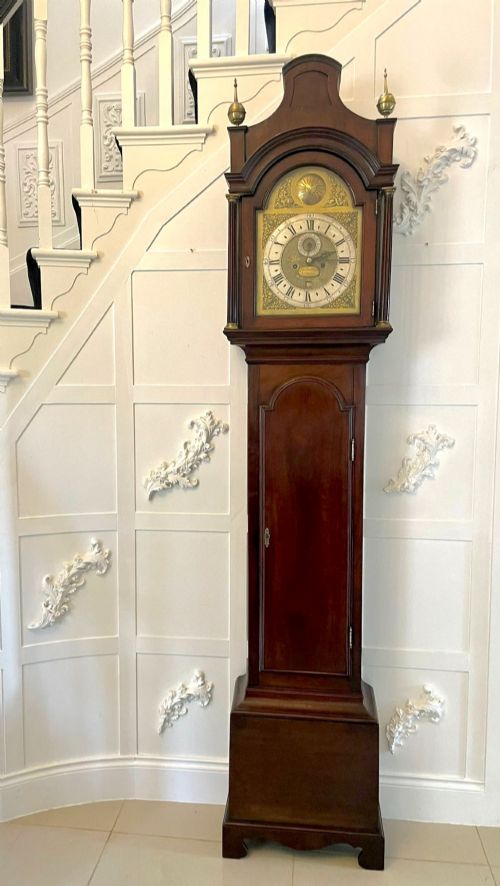
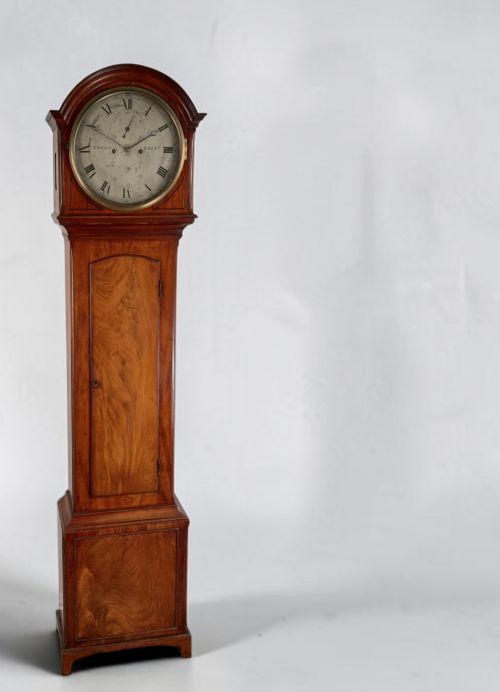
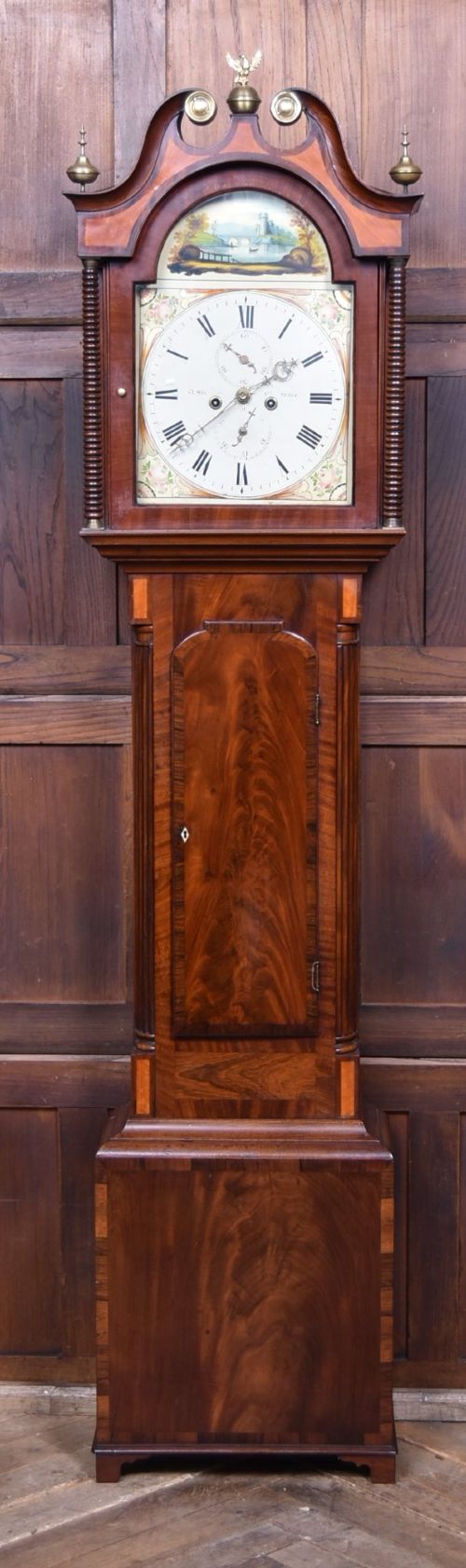
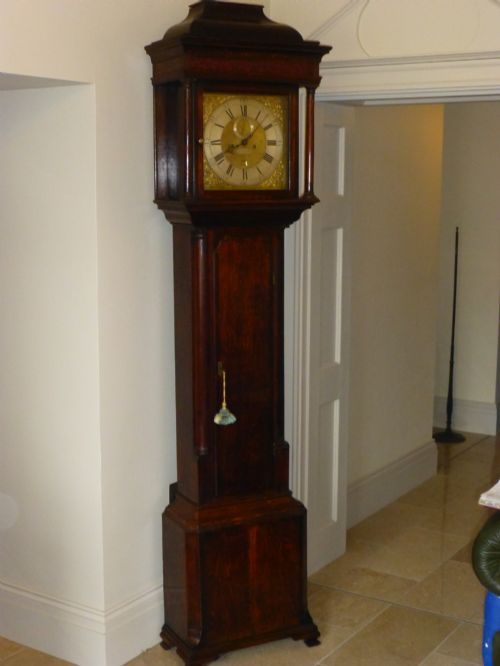
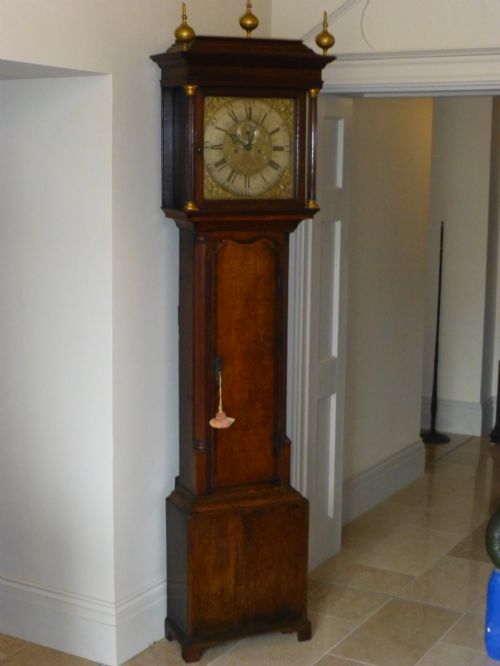
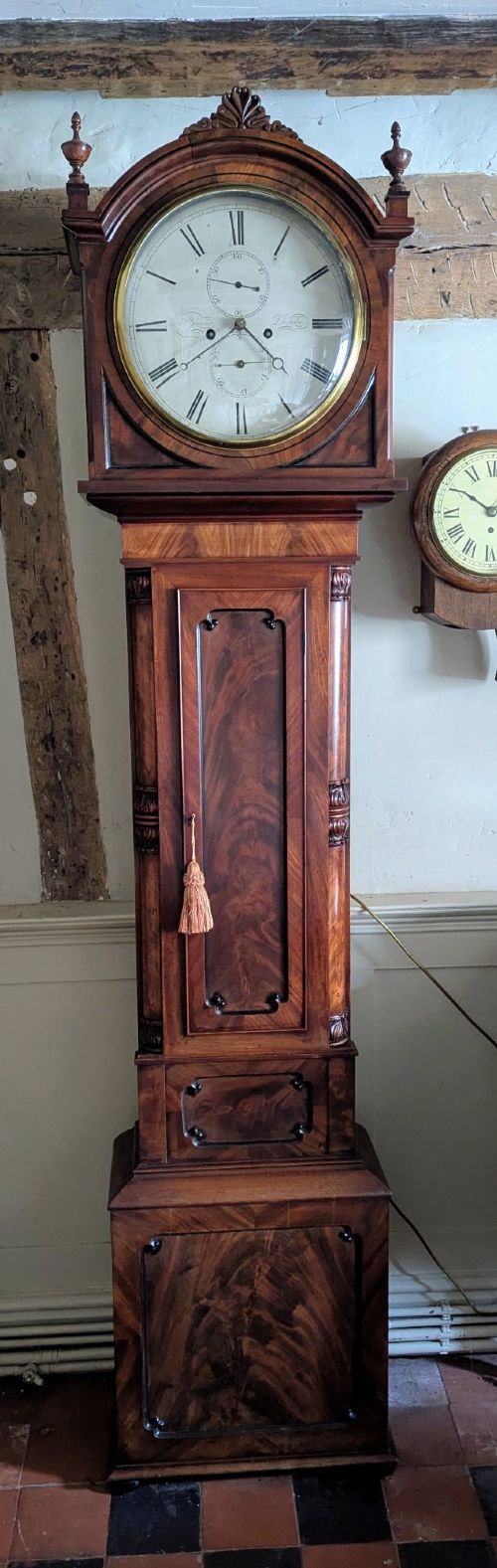
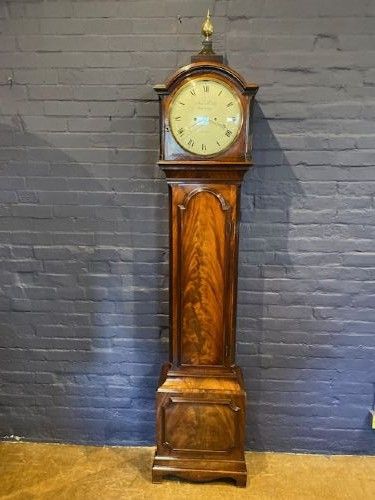
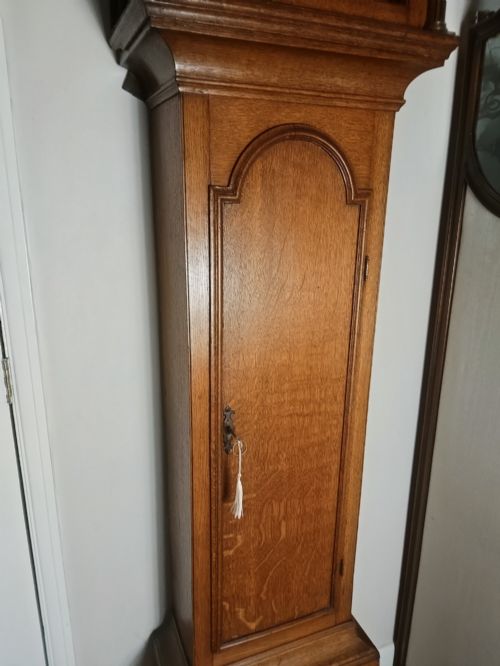
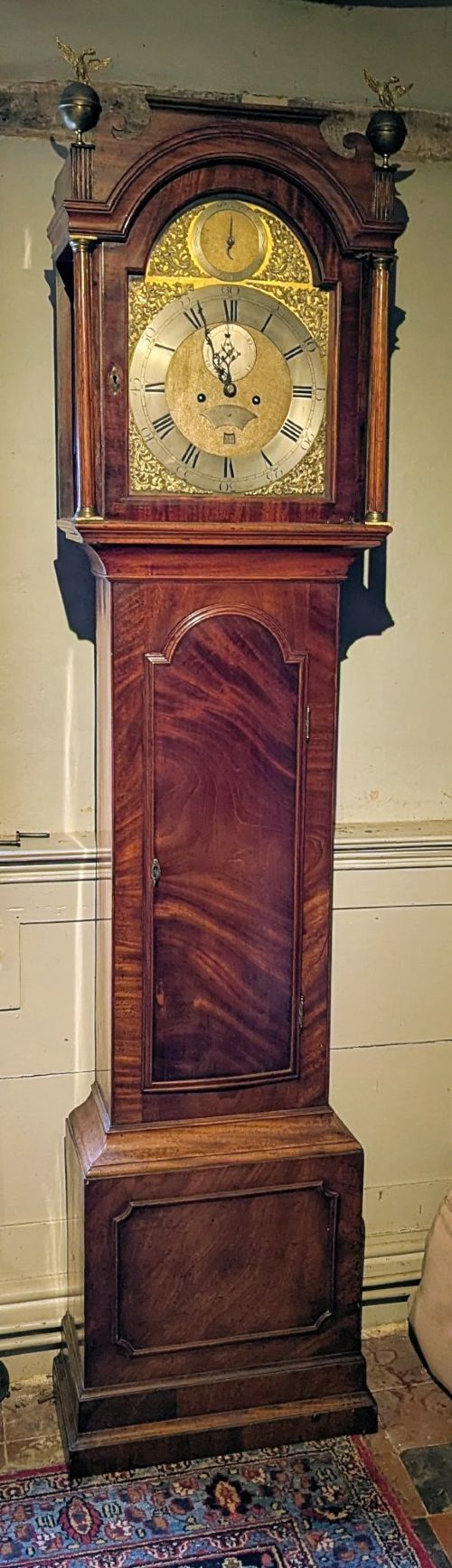
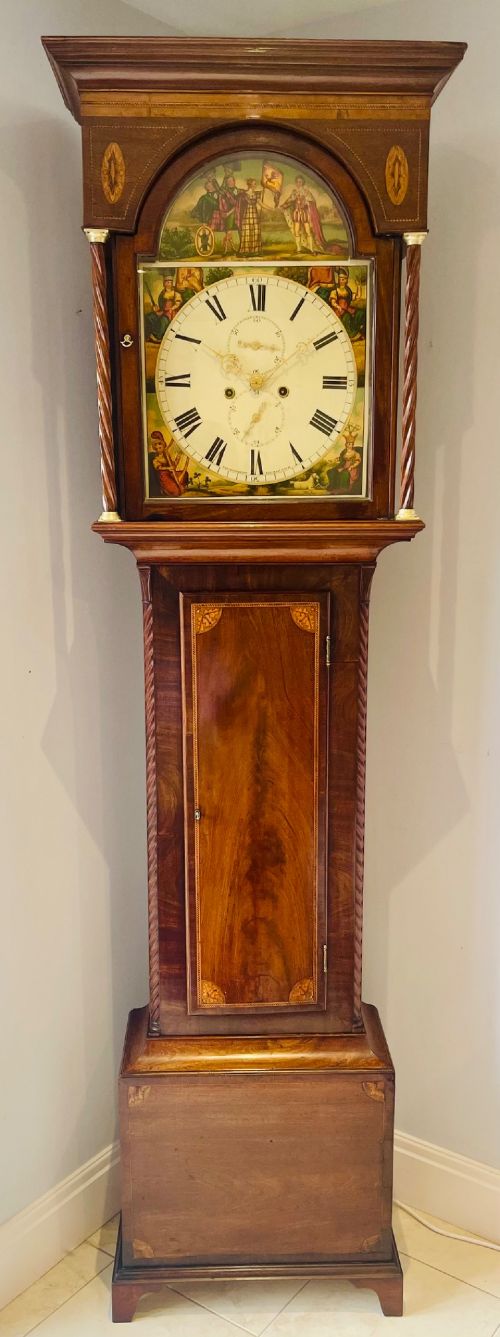
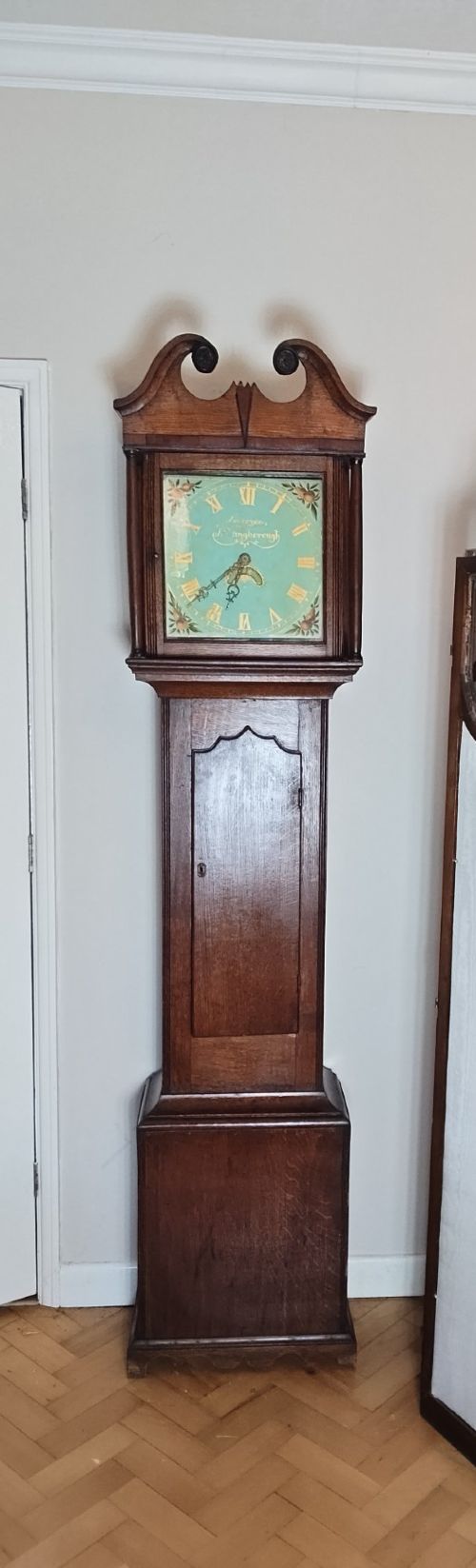
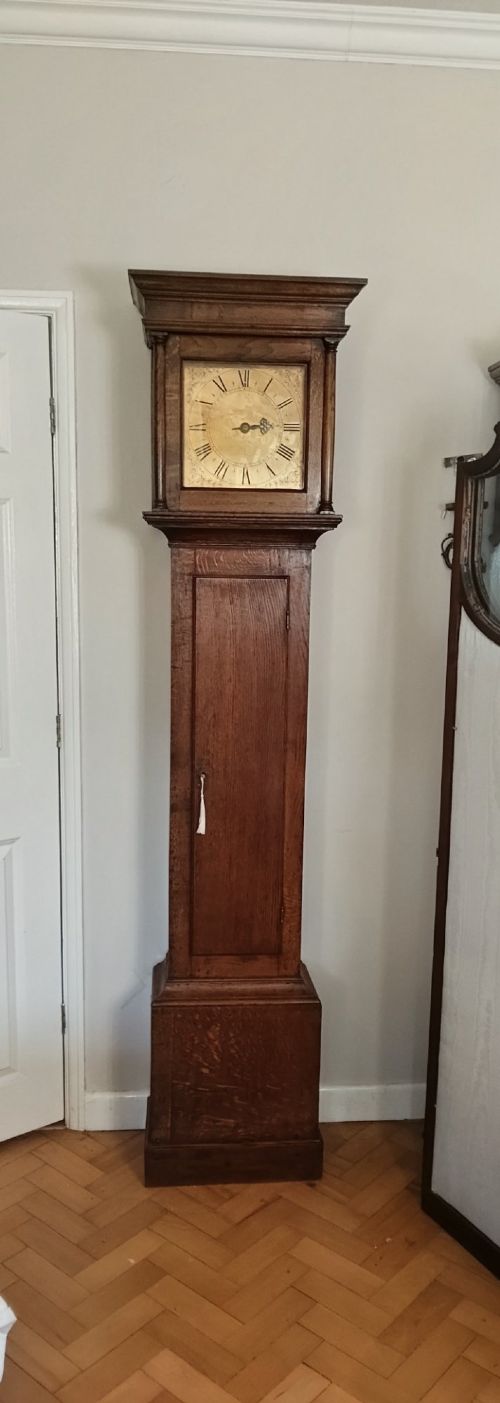
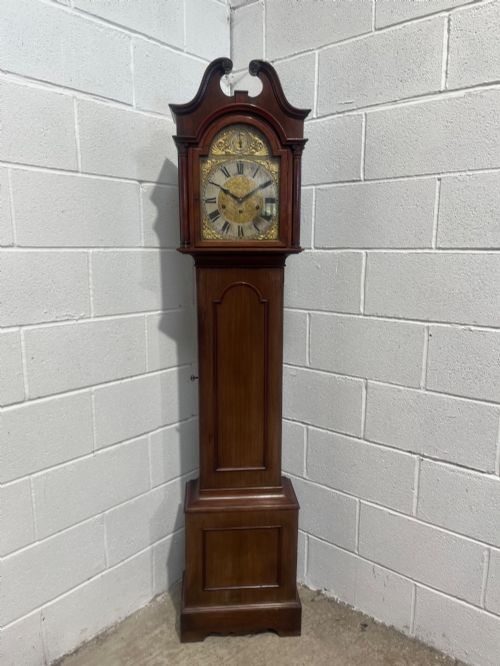
Georgian Pendulum Longcase Clock
A georgian pendulum longcase clock measures time through the swing of a heavy lead weight, housed in a tall wooden case.
Georgian Pendulum Longcase Clock
A georgian pendulum longcase clock stands upright on the floor, protecting the delicate weights and pendulum inside a tall wooden trunk. These floor-standing timepieces combine cabinet-making with precision mechanics, often featuring a glazed door above the pendulum bob.
The versions most commonly met here date from the eighteenth and nineteenth centuries, spanning eras from Early Georgian to Victorian revivals. They appear in regional oak and walnut as well as figured mahogany, reflecting both provincial workshops and London centres.
How they were made
Clockmakers built the movements from brass and steel, cutting gear teeth and fitting escapements by hand before mounting engraved or painted brass dials. Cabinet-makers enclosed these movements in tall timber cases constructed from oak, walnut, or mahogany, often selecting figured veneers and flame mahogany for the principal door and trunk.
Regional makers and London masters alike utilised traditional joinery techniques, jointing timber with precision to withstand the tension of heavy weights suspended on cords or chains. Dials received silvered brass chapters, cast brass spandrels, or hand-painted iron faces depicting moon phases and calendar indicators.
Regional Scottish and English workshops are represented alongside prominent London makers on this page.
What varies in quality
Quality rests upon the crispness of the movement's hand-cut brass work and the sophistication of its mechanical additions, such as strike-silent levers, moon rollers, or quarter-chiming gear trains. Clocks signed by recorded makers command attention for their internal finish and the precision with which the gear trains mesh.
On the exterior, the choice of timber and the depth of the cabinet-maker's carving or inlay separate standard regional timepieces from high-end London examples. Figured veneers, well-proportioned hoods with freestanding pillars, and secondary timbers of matching quality dictate the standing of the piece.
Charles Shuckburgh·Green of Edinburgh·D. Straiton, Montrose·Richard Corless of Stockport·Smith of Chester·James McCabe·Parkinson Bros, Batley·Benjamin Taylor·Windmills and Wightman·Rickards Wotton Under Edge·D Williams of Crickhowell·Priory of Dundee·George Hallifax Of Doncaster·Henry Weedon London·Edward Shepley of Manchester
The Georgian Pendulum Longcase Clock Glossary
- Longcase clock
- A tall, weight-driven pendulum clock enclosed in a wooden case standing directly on the floor. These timepieces are frequently known by the colloquial term grandfather clock.
- Moon phase
- A dial mechanism tracking the lunar cycle through a rotating disc painted with two moons. This complication displays the visible phase of the moon through an arched aperture above the main dial.
- Strike-silent
- A mechanism allowing the clock's striking train to be disengaged so the piece does not chime the hours. It uses a small lever acting upon the rack and snail components.
- Spandrel
- An ornamental corner piece fitted to square or arched brass dials. Early examples are cast brass in floral or scroll designs, while later painted dials feature floral motifs in the corners.
- Paterae
- Small circular decorative bosses carved or inlaid into furniture surfaces. They appear on classical revival furniture of the late eighteenth and nineteenth centuries.
Georgian Pendulum Longcase Clock: Frequently Asked Questions
How do you wind a longcase clock?
Winding requires using a crank key to raise the heavy lead or iron weights back to the top of the trunk. Care must be taken not to overwind the barrel or chain.
Most eight-day movements need attention weekly, while thirty-hour models require daily winding using continuous loop cords.
Where should a longcase clock be placed?
These clocks require a stable, dry interior wall away from direct sunlight, central heating vents, and exterior doors. Vibrations from heavy traffic or floorboards can alter the beat.
Positioning the case plumb against a sturdy wall ensures the pendulum swings evenly without catching on the interior backboard.
What is a grandfather clock versus a longcase?
The terms describe the exact same object class, with longcase being the historical trade description and grandfather clock the popular term adopted later. Both refer to floor-standing pendulum clocks.
Smaller variants also exist in the evidence, categorised as grandmother or smaller dial clocks depending on their height and cabinet proportions.