


Georgian Paper Cut Silhouette
A georgian paper cut silhouette captures a likeness in sharp monochrome profile, offering a direct and intimate glimpse into the past.
Georgian Paper Cut Silhouette
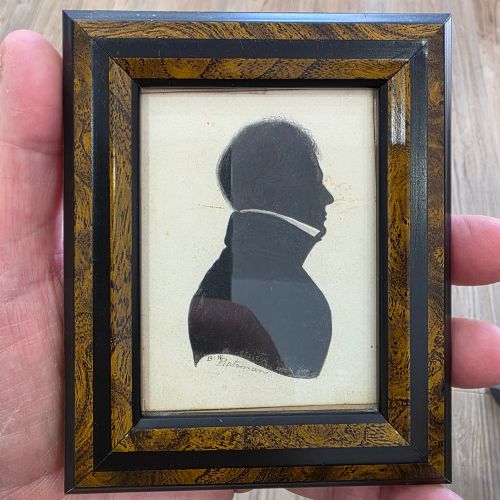
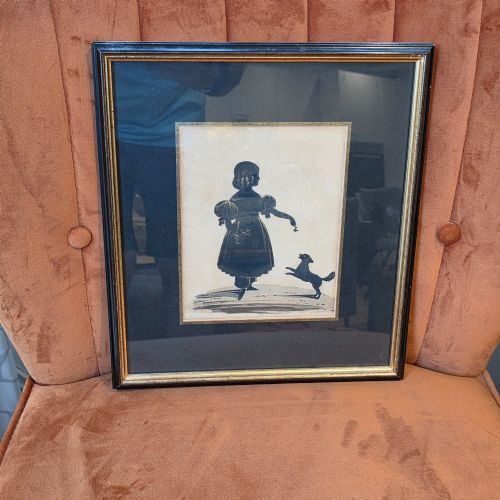
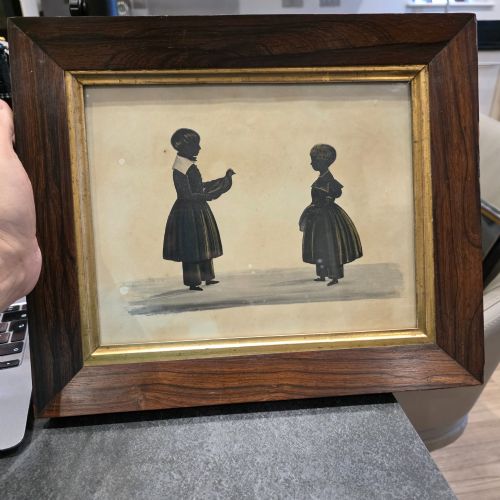
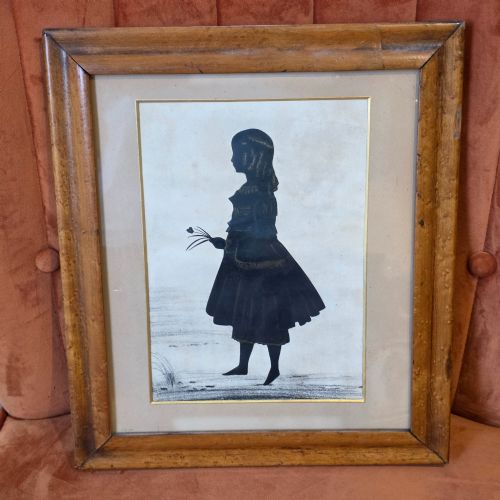
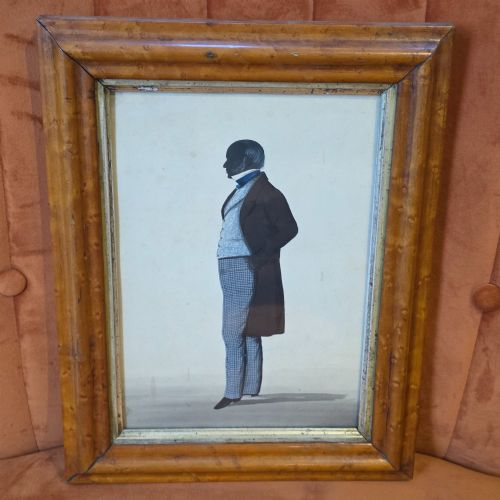
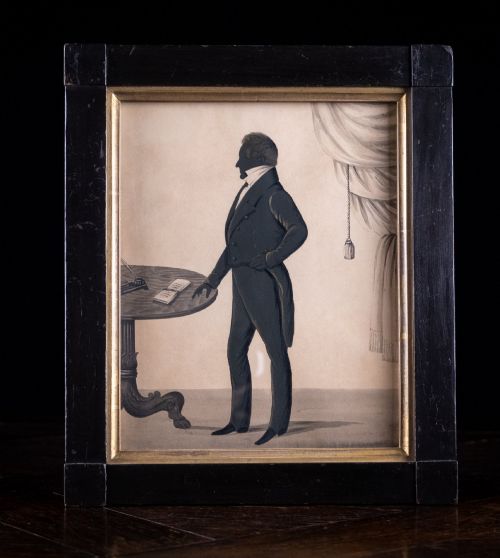
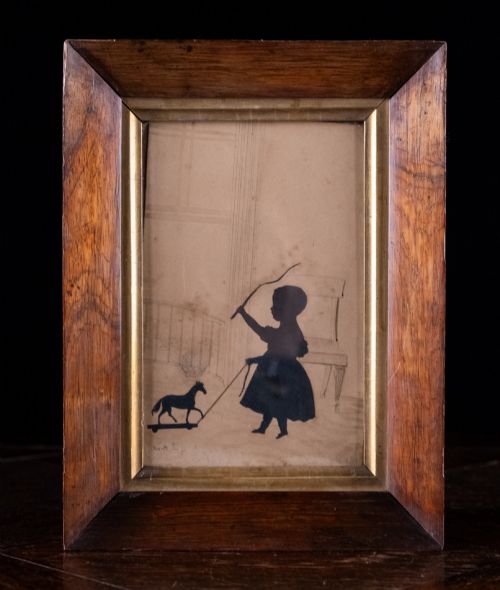
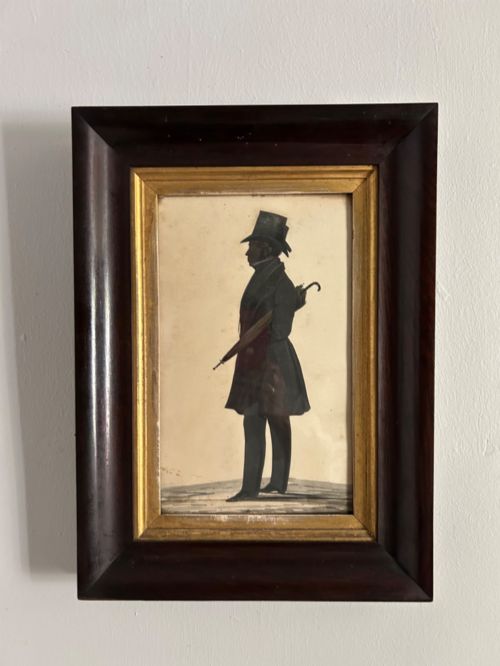
When you search for a georgian paper cut silhouette, you encounter profile portraits and conversation pieces framed for the wall. These works span the Georgian, Regency, and early Victorian periods, capturing gentlemen, ladies, children, and animals in crisp detail.
The most common examples on this page are framed silhouette portraits depicting single figures or small groups. Many pieces incorporate delicate ink work, watercolour highlights, or gilded accents alongside the cut paper.
Origins range across the late eighteenth and nineteenth centuries, featuring works from established galleries and noted profile artists. The presentation typically includes timber frames, often maple or ebony, protecting the paper beneath glass.
How They Were Made
Finished cut-outs were mounted against pale backgrounds and housed behind glass within wooden frames made of maple, ebony, or other polished timbers, sometimes accented with brass fittings.
Materials across these listings include cut paper, glass, ink, wood, brass, gold leaf, maple, and gilt.
What Varies in Quality
The precision of the cutting distinguishes superior profile work, where intricate details of costume, lace, and hair remain crisp and clean. Finer examples often combine the cut paper with delicate watercolour or gold leaf application rather than relying on plain ink wash alone.
Original framing adds significant merit, particularly when period maple or ebony surrounds the work alongside contemporary glass and backing materials. Attribution to known artists or galleries elevates the standing of an individual piece.
William James Hubard·Augustin Edouart·Nathaniel Bermingham
The Georgian Paper Cut Silhouette Glossary
- Silhouette
- A portrait profile filled in with a solid dark colour, typically black paper cut and mounted against a lighter background.
- Conversation piece
- An informal group portrait depicting family members or companions engaged in a shared activity or setting.
- Gilded silhouette
- A paper cut portrait enhanced with gold leaf highlights applied to the costume or accessories.
- Profile miniature
- A small-scale portrait focusing strictly on the side profile of the subject.
- Ebony frame
- A dark timber housing often utilised during the Regency period to contrast sharply with pale portrait grounds.
Georgian Paper Cut Silhouette: Frequently Asked Questions
How are these silhouettes usually framed?
Most examples appear in wooden frames made of maple or ebony, protected by glass and often featuring brass hangers or gilt bezels.
These housings are generally contemporary to the artwork and help preserve the delicate cut paper within.
What subjects appear in these portraits?
Portraits depict single gentlemen, ladies in caps or turbans, children, and occasionally domestic animals like dogs.
Larger group compositions, known as conversation pieces, show multiple figures interacting in a domestic scene.
How can I tell the period?
Clothing styles, hairstyles, and framing materials provide the clearest indications of date, moving from late eighteenth-century conventions into the Regency and early Victorian eras.
Signatures or gallery labels on the reverse also point directly to the active years of the artist.
Did artists sign their cut paper work?
Some profiles bear signatures directly on the paper, while others were stamped with gallery details on the reverse of the frame.
Many skilled pieces remain anonymous or are attributed based on distinct cutting techniques and known studio styles.