
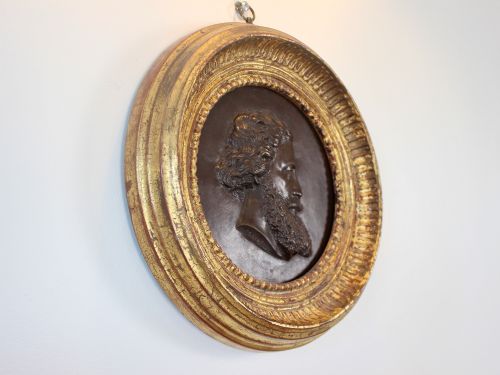


Gentleman Profile Portrait
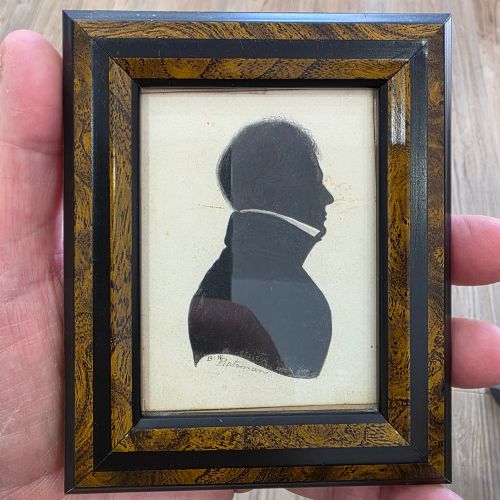
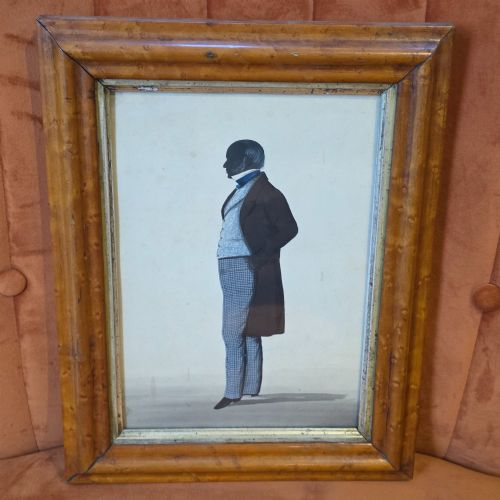
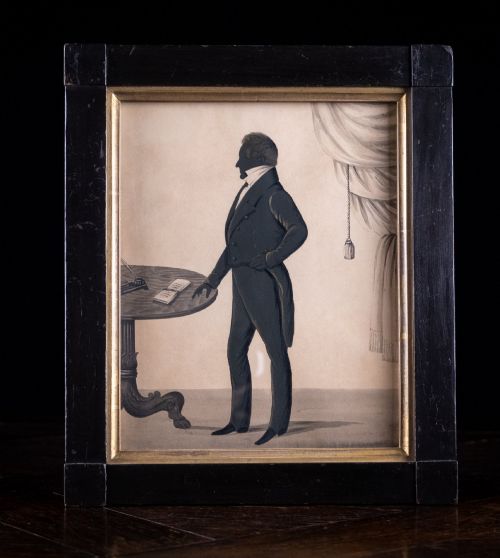
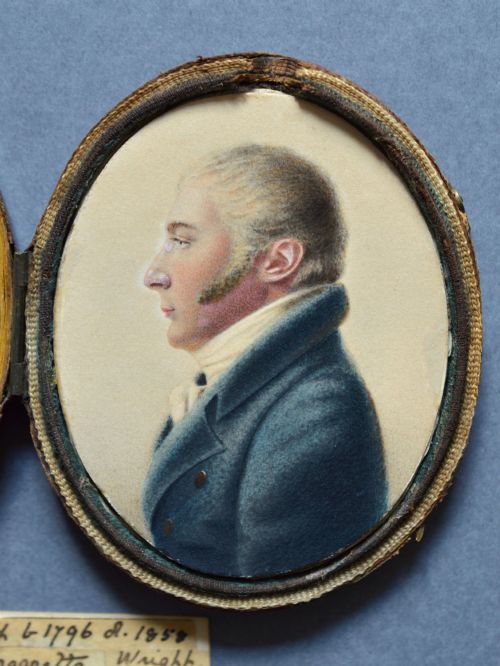
A gentleman profile portrait captures a subject in strict side-view, offering an intimate and enduring record from past centuries.
Gentleman Profile Portrait
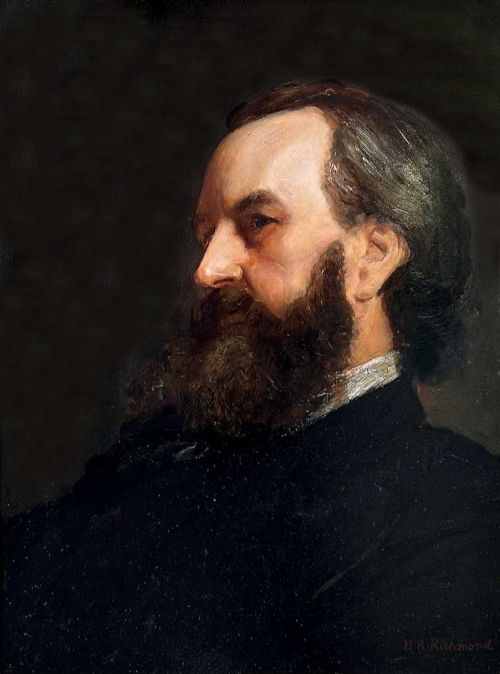
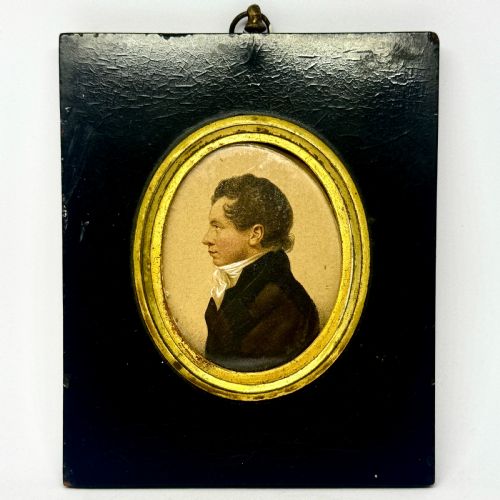
A gentleman profile portrait brings together diverse historical depictions spanning the eighteenth, nineteenth, and early twentieth centuries. These works range from delicate hand-cut silhouettes to detailed watercolour paintings and oil on panel.
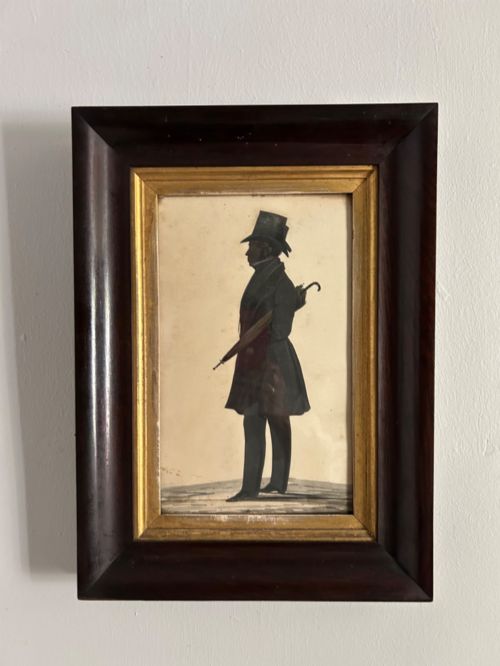
Buyers encountering this selection will most frequently find silhouette portraits alongside miniature watercolours and framed wall art. The subjects appear in various forms, from bust-length profiles to full-length studies set within period frames.
Originating across Georgian, Regency, and Victorian eras, these portrayals reflect evolving artistic tastes in recording male likenesses. Makers utilised paper, glass, wood, and metal to immortalise their sitters with striking economy.
Materials and execution
Makers produced these likenesses using paper, ink, and card, often mounting cut silhouettes against contrasting light backgrounds. Many works incorporate delicate watercolour detailing or gold leaf highlights directly onto the paper.
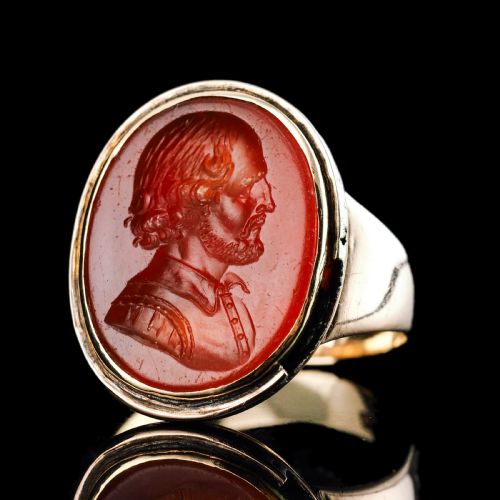
Framed pieces rely on timber surrounds, protective glass, and occasionally brass fittings to preserve the fragile media within. Solid panels of wood support oil paintings, whilst intaglio rings employ carved carnelian set in gold.
Artists also cast metal into plaques or worked with pastel and gouache to build depth in profile. The physical construction combines traditional framing techniques with specialised cutting or painting methods.
Listings feature paper, glass, wood, ink, brass, gold leaf, watercolour, and gilt across eighteenth, nineteenth, and early twentieth-century periods.
Markers of distinction
Quality rests upon the precision of the cutting or brushwork and the immediate clarity of the sitter's profile. Accomplished artists captured posture, costume, and expression with minimal lines, whereas lesser examples lack definition.
The survival of original backing paper, period frames, and legible signatures or studio labels elevates an example's historical standing. Condition issues such as foxing on paper or damage to the protective glass impact desirability.
Signed works by known practitioners command attention through superior execution and documented provenance. The integration of high-grade materials, such as eighteen-carat gold settings or fine ivory substitutes, further distinguishes the tier.
Hubard Gallery·Nathaniel Bermingham·Thomas John Horsley·John Seymour Lucas·Sir Nathaniel Dance-Holland
The Gentleman Profile Portrait Glossary
- Silhouette
- A portrait represented as a solid shape of a single colour, usually black, outlined and filled in or cut from paper. This technique gained immense popularity during the eighteenth and nineteenth centuries.
- Intaglio
- A gem or other material carved with a design that sinks below the surface. This technique allows the piece to be used as a seal or set into a ring.
- Miniature
- A small-scale portrait painting executed with meticulous detail. These works were often housed in protective cases or worn as personal adornments.
- Gouache
- An opaque watercolour paint consisting of natural pigment, water, and a binding agent such as gum arabic. Artists used it to add solid highlights to silhouette portraits.
- Bronze plaque
- A flat piece of cast metal bearing a raised relief portrait. These durable objects were designed for wall display during the nineteenth century.
Gentleman Profile Portrait: Frequently Asked Questions
What is a gentleman profile portrait?
A gentleman profile portrait is a likeness of a male subject shown from the side, created in media ranging from cut paper silhouettes to watercolour and oil.
These works date predominantly from the eighteenth, nineteenth, and early twentieth centuries, reflecting changing portraiture conventions.
How do I date a silhouette?
Dating relies on the style of clothing, hair, and framing materials visible in the piece, as well as any handwritten notes on the reverse.
Early examples often feature convex glass and papier-mâché frames, whereas mid-nineteenth-century pieces display different mounting styles.
How should I display these portraits?
These works require placement away from direct sunlight to prevent fading of fragile paper, watercolours, and inks.
Original glass and frames should be retained where possible to preserve the historical integrity of the piece.