


Paper Silhouette Portrait
A paper silhouette portrait captures a likeness in profile, offering a direct glimpse into historical character through delicate black paper and ink.
Paper Silhouette Portrait
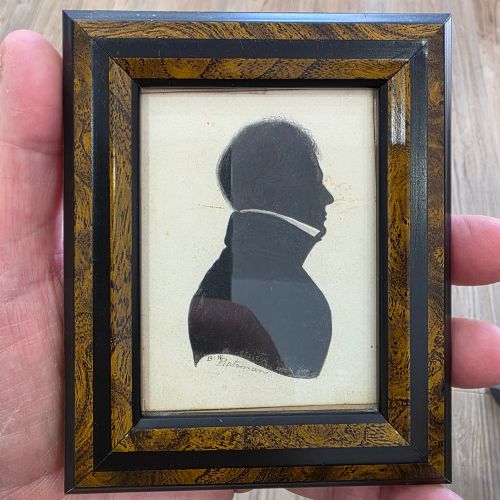
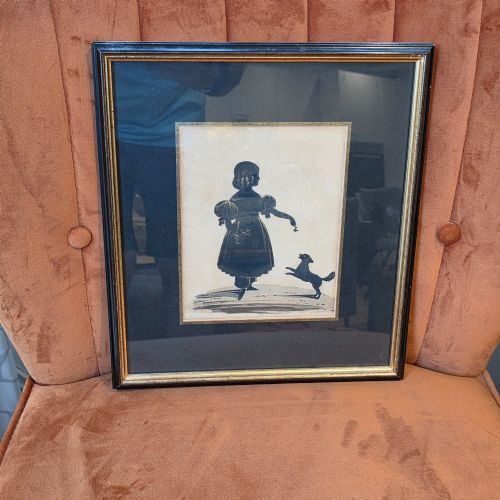
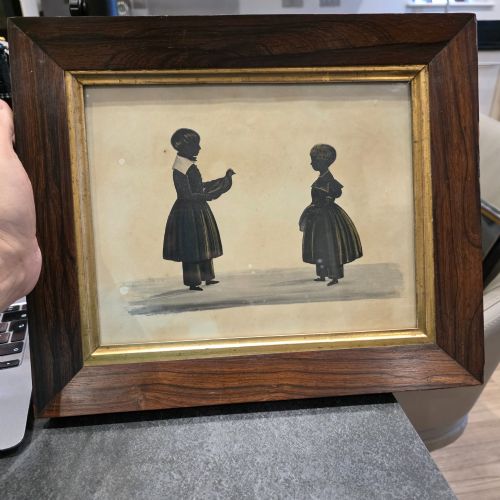
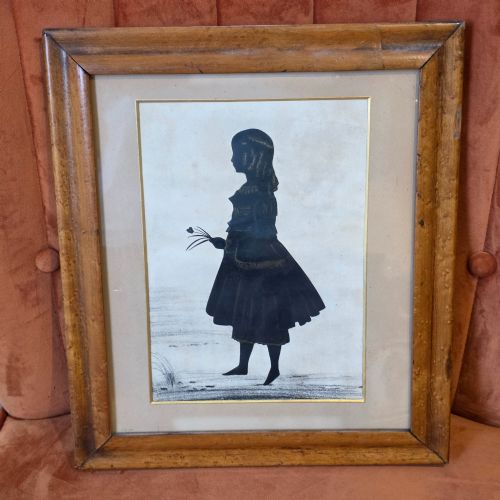
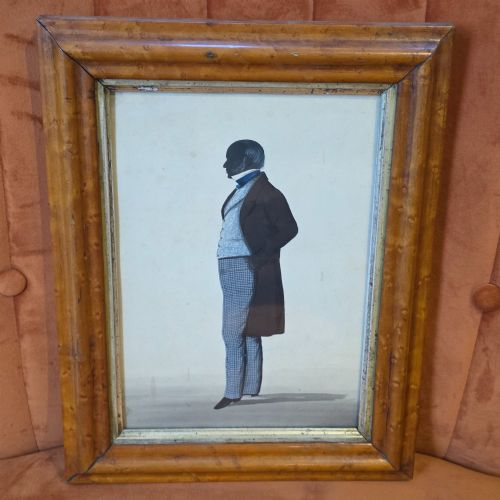
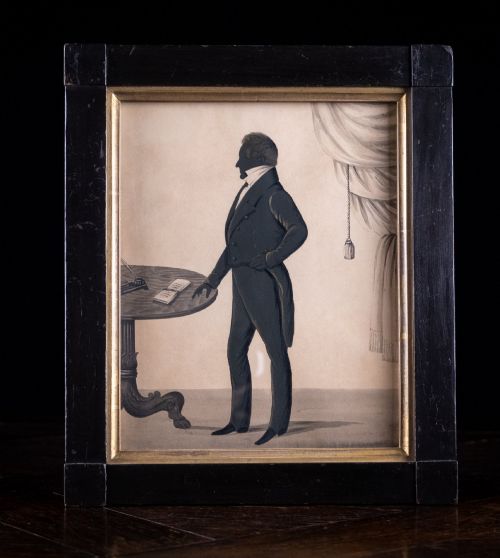
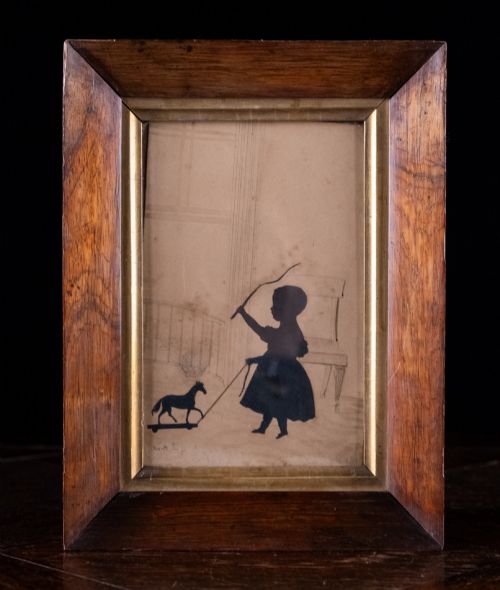
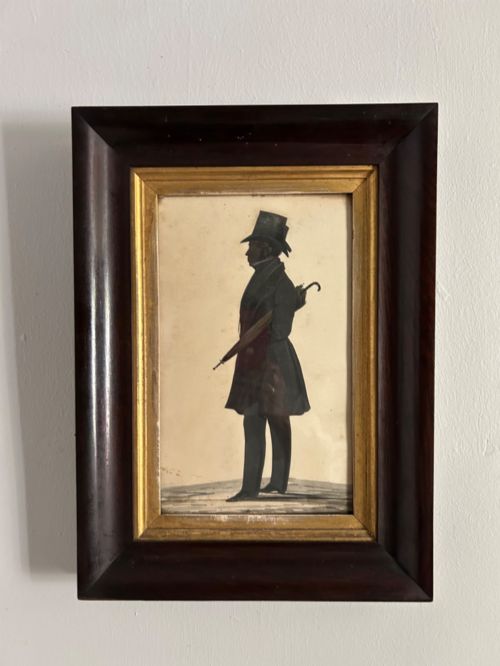
When you examine a paper silhouette portrait, you encounter framed artwork and wall art originating primarily from the eighteenth and nineteenth centuries. These pieces span Georgian, Regency, and Victorian periods, capturing gentlemen, ladies, children, and family groups.
The selection here includes full-length figures, conversation pieces, and profile busts housed in timber frames. You meet hand-cut paper examples alongside painted silhouettes and works incorporating watercolor and ink details.
Makers and galleries such as the Hubard Gallery and the Royal Victoria Gallery produced these profile likenesses. Works attributed to artists like Augustin Edouart and Frederick Frith frequently appear among the nineteenth-century listings.
How they were made
Many examples incorporate gold leaf and gilding to highlight buttons, lace, or accessories on the figures. Miniature portrait techniques also appear where silhouette work meets fine painting on card or paper.
Framing relies on traditional materials like wood, maple, and ebony, protected by glass. Brass hangers and bezels complete the presentation of these framed art pieces.
Listings feature eighteenth and nineteenth-century periods, utilising materials such as maple, brass, glass, and gold leaf.
What varies in quality
Precision of the cutting dictates the primary tier of quality, distinguishing confident, fluid hand-cut outlines from hesitant work. The addition of delicate watercolor detailing or gold leaf embellishment elevates the sophistication of the profile.
Condition of the paper and the original framing elements influence the integrity of the piece over time. Intact maple or ebony frames with original glass preserve the silhouette better than later replacements.
Attribution to documented practitioners or galleries adds significant distinction to individual portraits. Signed works and pieces with recorded provenance stand apart from anonymous examples.
William James Hubard·Augustin Edouart·Frederick Frith·John Smith·Nathaniel Bermingham
The Paper Silhouette Portrait Glossary
- Silhouette portrait
- A profile likeness of a person filled in with a solid dark colour, typically cut from paper or painted. This form predates photography as an accessible method for recording personal appearance.
- Cut-paper
- A technique where the profile is sheared directly from black paper using scissors or a knife. The resulting paper silhouette is mounted onto a contrasting backing sheet.
- Conversation piece
- An artwork depicting a group of figures engaged in a common activity or conversation. In silhouette form, these show families, children, or animals in domestic scenes.
- Gilded silhouette
- A profile enhanced with applied gold leaf or metallic paint to accent costume details, jewellery, or hair. This technique adds depth and light reflection to the dark paper.
- Profile
- A side view of a human head or figure. Silhouettes rely entirely on this outline to convey recognition and expression.
Paper Silhouette Portrait: Frequently Asked Questions
How do I date a silhouette?
Dating relies on costume details, hair styles, and framing materials characteristic of Georgian, Regency, or Victorian eras. Examining the paper type and backing also helps establish the period.
Signed pieces or works associated with specific galleries provide more precise chronological markers for collectors.
Were silhouettes cut freehand?
Many skilled artists cut paper silhouettes entirely freehand without preliminary drawing, relying on sharp scissors and keen observation. Others sketched the profile lightly before cutting.
Artists like Augustin Edouart mastered this rapid freehand cutting technique in front of sitters.
How should I hang them?
Hang these framed artworks away from direct sunlight to prevent the paper from fading and the watercolor or ink details from degrading. Maintain stable indoor humidity to protect the antique wood frames and paper.
Grouping smaller pieces together creates a traditional display wall reminiscent of nineteenth-century parlours.
What is a conversation piece?
A conversation piece is a multi-figure artwork showing family members or groups interacting in a natural setting. In silhouette form, these intricate compositions often include children, pets, and furniture.
These elaborate scenes require exceptional skill in cutting and arranging multiple paper figures within a single frame.