


Cut Paper Profile Silhouette
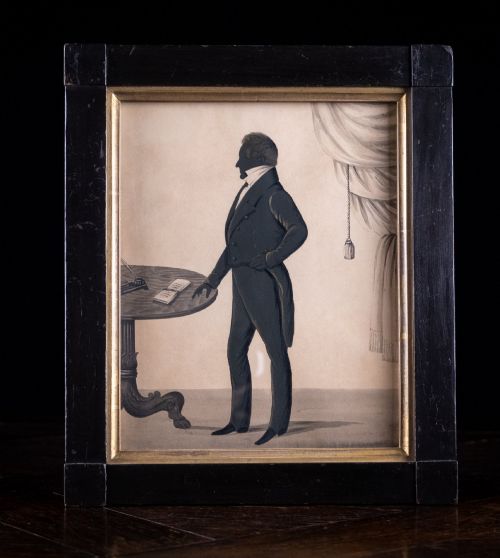
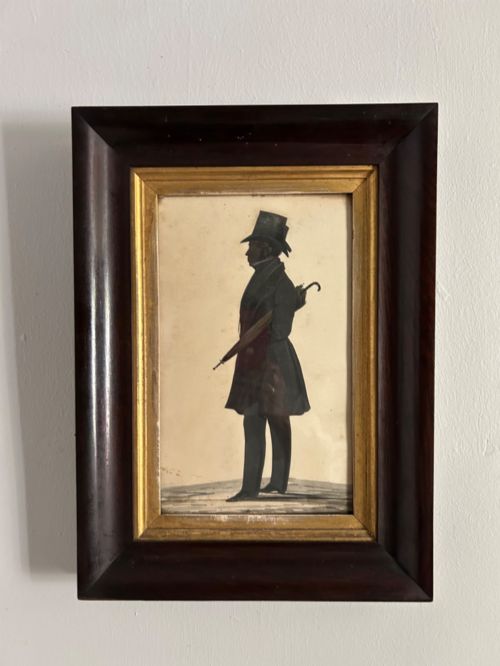
A cut paper profile silhouette captures a likeness through hand-cut paper mounted against a contrasting ground, offering crisp character and historic intimacy.
Cut Paper Profile Silhouette
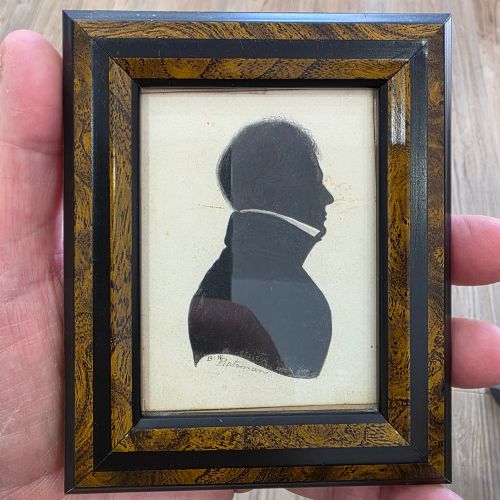
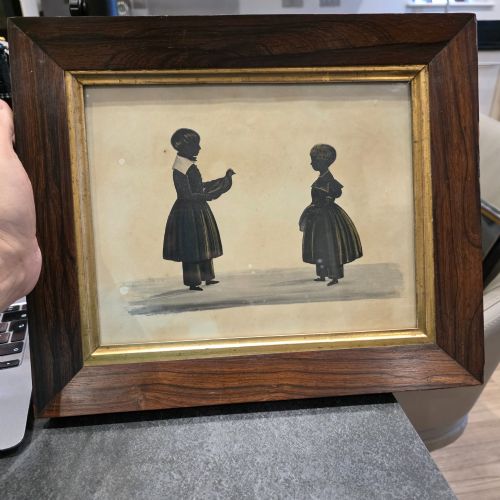
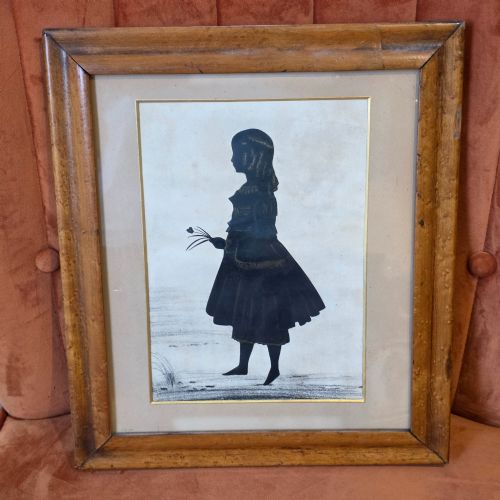
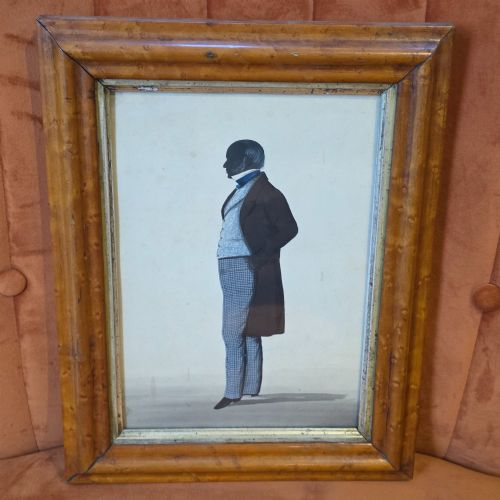
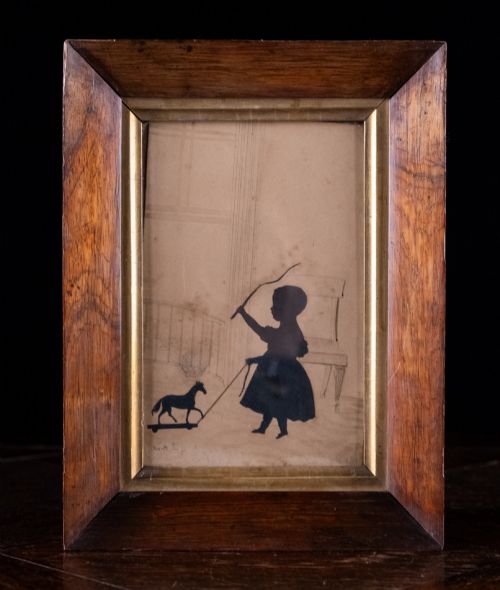
A cut paper profile silhouette presents a likeness trimmed directly from dark paper and set against a pale background. These works range from simple head profiles to full-length conversation pieces featuring figures, children, and animals.
Most examples found here date from the Georgian, Regency, and Victorian periods. The selection includes individual portrait miniatures alongside complex multi-figure domestic scenes framed for wall display.
Makers recorded in the evidence range from notable profile artists working in the nineteenth century to anonymous folk art practitioners. Pieces frequently incorporate ink detailing or gold leaf highlights upon the cut paper.
Materials and construction
The primary technique relies on precision scissor work upon dark paper to isolate a subject in profile. Artists then mounted these delicate paper cuttings onto card or paper grounds, occasionally adding watercolour, ink, or gold leaf embellishments.
Frames play a structural role in preserving these paper works, utilising materials such as maple, ebony, brass, and gilt wood. Glazing protects the vulnerable paper surface from dust and atmospheric moisture over the centuries.
Augustin Edouart was so prolific he managed to cut a silhouette of a dog named Snap before breakfast.
Standards of execution
Quality rests upon the dexterity of the cutting and the crispness of the profile's contours. Superior examples capture posture, costume details, and likeness with minimal scissor strokes, avoiding jagged edges or heavy-handed ink touch-ups.
The quality of contemporary framing and mounting significantly influences the preservation and visual impact of a piece. Original maple or ebony frames with intact glass and backing papers elevate the historical integrity of the work.
Bateman·Frith·Augustin Edouart·Hubard Gallery·Frederick Frith·Royal Victoria Gallery·Alfred Darbyshire·Nathaniel Bermingham·Skeolan
The Cut Paper Profile Silhouette Glossary
- Cut paper
- A technique where the silhouette image is formed entirely by snipping paper with scissors rather than painting directly onto a ground. This method yields sharp edges and tangible depth.
- Profile
- A side-view representation of a subject's face or figure. This viewpoint was chosen to record distinctive facial structures clearly.
- Conversation piece
- An artwork depicting a group of figures engaged in a social scene or daily activity. These intricate compositions often include multiple cut figures and animals.
- Reverse cut
- A method where the silhouette shape is cut out from the background sheet, allowing the contrasting layer behind to show through the aperture. This creates a distinct visual framing effect.
- Gilt highlights
- Applied gold leaf or gold paint used to accent costume details, jewellery, or hair within the silhouette. These touches catch the light and define clothing textures.
Cut Paper Profile Silhouette: Frequently Asked Questions
How do I date a cut paper silhouette?
Dating relies primarily on the style of dress, hair, and any accompanying framing materials. Regency pieces often show high-waisted gowns or specific neckwear, while Victorian examples reflect mid-century fashions.
The backing papers and frame construction also offer chronological clues. Early works frequently use turned wooden frames or verre eglomise glass mounts.
Were these works made by amateurs or professionals?
Both professional profilists and talented amateurs produced these portraits. Travelling artists set up temporary studios or galleries to cut likenesses for clients, while domestic practitioners worked at home.
Signed pieces or those bearing studio trade labels point to professional execution. Folk art examples often suggest the hand of a skilled family member.
How should I hang and care for paper silhouettes?
Paper silhouettes require placement away from direct sunlight to prevent the ink and paper from fading. Stable indoor humidity levels protect the fragile paper from warping inside the frame.
Original frames and old glass should be retained where possible to preserve authenticity. Avoid placing them on exterior walls subject to dampness or temperature swings.
What distinguishes a conversation piece silhouette?
A conversation piece portrays multiple people, often with pets or domestic objects, interacting within a single framed scene. These elaborate compositions require advanced cutting skill and careful spatial arrangement.
They offer narrative detail about the subjects' lives rather than a simple head and shoulders likeness. Such works frequently date from the nineteenth century.