




Georgian Painted Pedestal Table
A georgian painted pedestal table offers compact utility and decorative surface interest, bringing character to any room.
Georgian Painted Pedestal Table
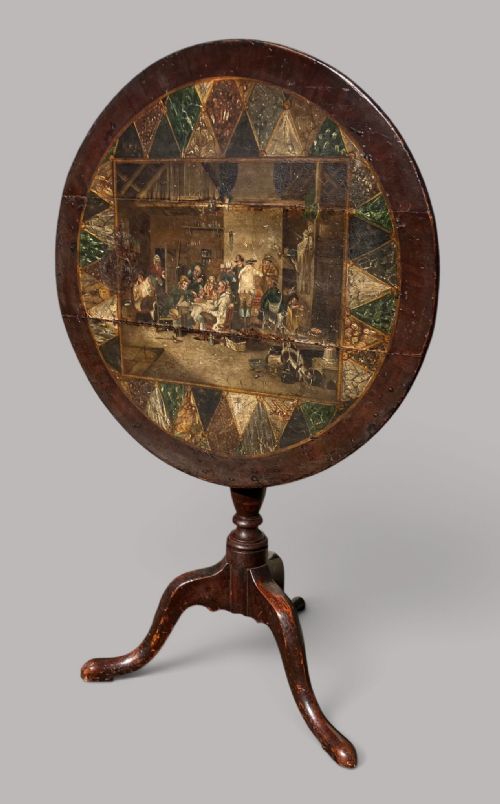
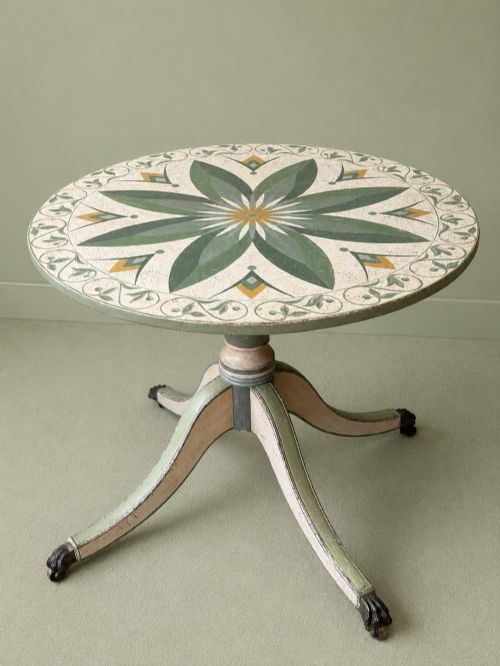
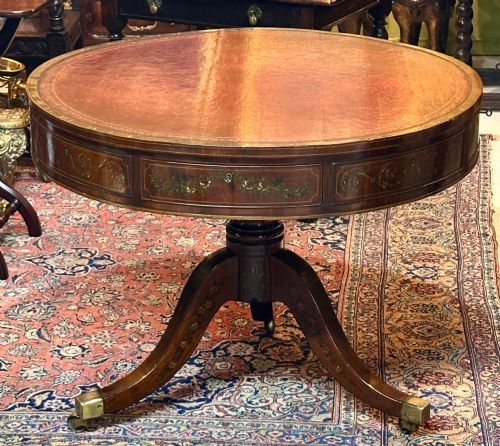
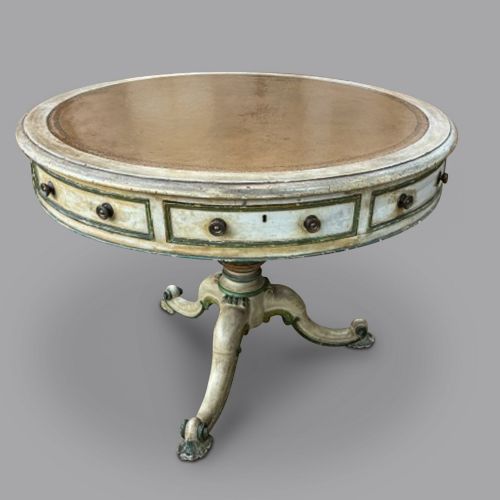
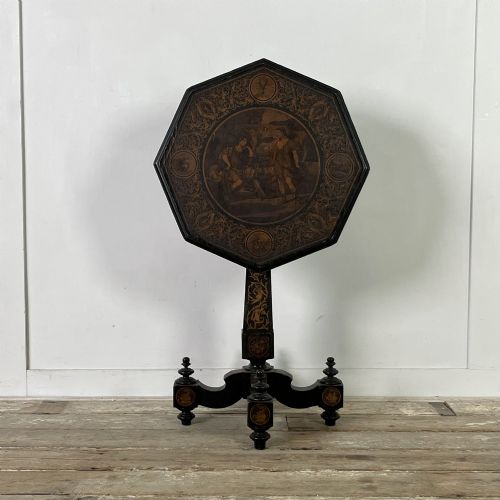
A georgian painted pedestal table combines a central column support with a decorated surface, appearing across forms such as occasional tables, tilt-top examples, and drum tables. These pieces emerge in styles including Regency, Sheraton, Neoclassical, and Chippendale Style, reflecting the design vocabulary of the period.
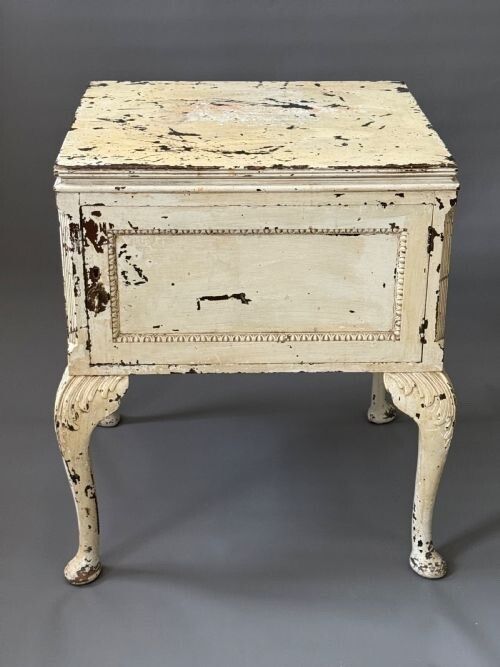
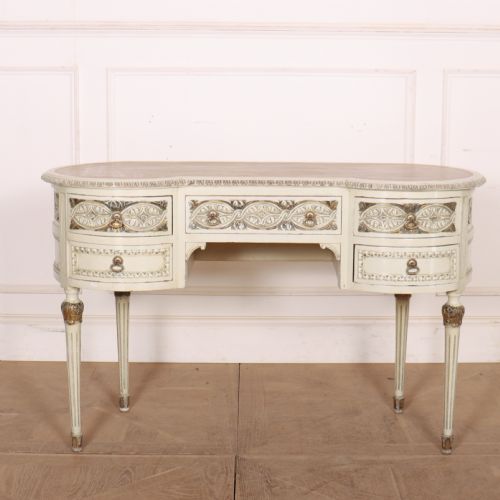
Surviving pieces span the Georgian era through to the 19th century and Victorian periods, alongside later revival pieces like Sheraton Revival and items from 1880, 1890, and 1920. Buyers will encounter occasional tables, bedside cabinets, and desks that share the characteristic central pedestal support.
The selection ranges from tripod bases with later decoration to pieces retaining original paintwork or ink work. Oak, mahogany, and satinwood provide the structural foundation for these painted and decorated surfaces.
Materials and construction methods
Cabinet makers utilised timbers such as mahogany, oak, and satinwood to construct the structural core of these tables. Turning and joinery created the sturdy central pedestals and tripod bases required to support the tops.
Surfaces received decorative treatments involving paint, japanning, gilding, and ink work. Artisans applied hand-decoration directly to the wood, sometimes combining painted motifs with mahogany or satin birch substrates.
Quality factors in painted pedestal tables
The integrity of the decorative surface distinguishes examples, particularly where original paintwork or ink work remains intact versus later surface decoration. The crispness of the turning on the pedestal and the selection of underlying timbers, such as figured mahogany or fine satinwood, contribute to the standing of a piece.
Proportion and balance between the central column, the base, and the table top govern the visual success of the form. Finer pieces demonstrate careful joinery in the tripod or pedestal base and sophisticated execution in the painted motifs.
The Georgian Painted Pedestal Table Glossary
- Pedestal table
- A table supported by a single central column rather than four corner legs. This column frequently terminates in a tripod base with three feet.
- Tilt-top table
- A table featuring a mechanism that allows the top to pivot into a vertical position when not in use. This design saved space in period interiors.
- Drum table
- A circular library or occasional table with a deep skirt containing drawers, set upon a central pillar and pedestal base. They date prominently from the Regency and Georgian eras.
- Japanning
- A European imitation of East Asian lacquer work popular on furniture. It involves applying layers of varnish and paint, often decorated with Chinoiserie motifs.
- Sheraton
- A neoclassical furniture style from the late 18th century characterised by classical urns, straight tapered legs, and refined painted decoration. It takes its name from designer Thomas Sheraton.
Georgian Painted Pedestal Table: Frequently Asked Questions
What is a tilt-top table used for?
A tilt-top table served as a versatile surface for tea, reading, or card playing when horizontal. When not in use, the top tilted vertically to allow the table to stand flat against a wall.
This space-saving function made them practical additions to period sitting rooms and drawing rooms.
How do I identify original paintwork?
Original decorative paintwork exhibits wear and patination consistent with age, integration into the wood grain, and lack of modern chemical strippers underneath. Closer inspection reveals craquelure and pigment stability typical of historical application.
Re-decorated or later painted surfaces often present a more uniform appearance without the natural softening of edges seen in genuine period work.
Where should I place a pedestal table?
A pedestal table fits well beside seating as a lamp or wine table, or as a free-standing accent in a hallway or corner. The single central pillar allows chairs to tuck neatly underneath without legs obstructing the space.
Placement should avoid direct sunlight to protect painted surfaces and timber finishes.