






Regency Neoclassical Furniture
Regency neoclassical furniture brings together striking architectural forms and rich classical details that elevate any formal room.
Regency Neoclassical Furniture
Regency neoclassical furniture draws on ancient Greek and Roman motifs, translating grand archaeological discoveries into domestic pieces for the home. When you search for regency neoclassical furniture, you encounter seating, tables, stands, and cabinets created across several distinct periods.
The selections span authentic Regency examples alongside later revivals from the nineteenth and twentieth centuries. These later pieces often replicate the earlier classical vocabulary with varying degrees of decorative intensity.
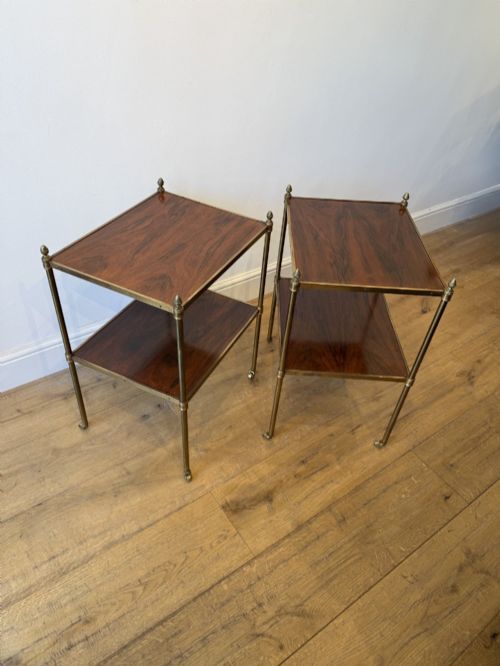
Forms range from occasional tables and console tables to armchairs, window seats, and architectural pedestals. Each piece reflects a fascination with classical antiquity, translated through mahogany, satinwood, painted beech, and giltwood.
Materials and Construction
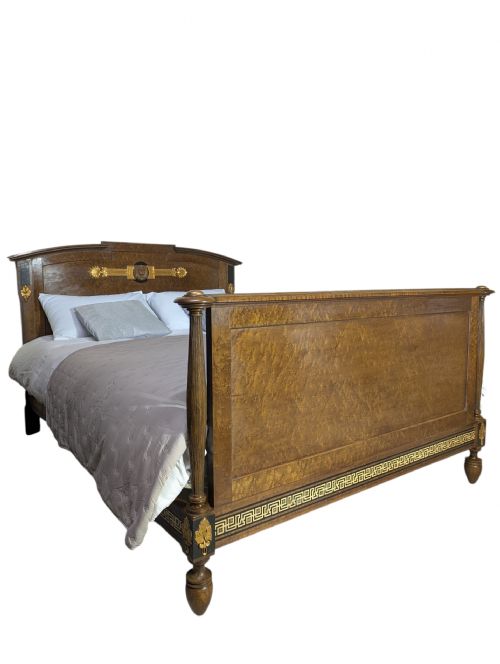
Cabinetmakers relied heavily on mahogany, satinwood, and birch as primary timbers, frequently enhancing surfaces with rich grain patterns, paint, or delicate inlay. Giltwood and bronze details highlight architectural mouldings and structural supports.
Marble tops provide durable and elegant surfaces for side tables and cabinets, while brass mounts and hardware add precise metallic accents. Painted finishes on beech and other woods allow for classical motifs to be rendered in contrasting tones.
Brass door knockers sneak into the classical lineup alongside grand library tables and wine coolers.
Judging Quality and Execution
Quality reveals itself in the crispness of carved wooden details, the precision of inlaid veneers, and the stability of architectural forms like pedestals and stands. Superior examples demonstrate a careful balance between monumental classical design and refined domestic proportion.
The choice of materials dictates the finish of the piece, with finely figured timbers and genuine marble tops standing apart from simpler painted or secondary woods. The integration of bronze mounts or giltwood accents further distinguishes high-status examples from more modest interpretations.
Mallett·Thomas Hope·Richard Bridgens
The Regency Neoclassical Furniture Glossary
- Neoclassical
- A style rooted in the art and architecture of classical antiquity. It emphasises symmetry, straight lines, and motifs such as urns, wreaths, and classical foliage.
- Regency
- A period of British design spanning the early nineteenth century. It is characterised by a strong influence from Greek, Roman, and Egyptian archaeological finds.
- Giltwood
- Timber that has been coated with a thin layer of gold leaf or gold paint. This technique adds a reflective, decorative surface to frames, stands, and architectural elements.
- Satinwood
- A durable hardwood prized for its golden sheen and smooth grain. It is frequently utilised for fine veneer work and decorative inlay on tables and cabinets.
- Torchere
- A tall stand or pedestal designed to support a light source or decorative object. These pieces often feature neoclassical tripod bases or columnar shafts.
Regency Neoclassical Furniture: Frequently Asked Questions
How do I date these pieces?
Dating relies on examining the timber, construction methods, and stylistic revival cues. Pieces span the authentic Regency era as well as later Victorian and twentieth-century revivals.
Materials such as birch, mahogany, and painted beech help separate original period construction from subsequent interpretations.
Where should I place a pedestal or stand?
Stands, torcheres, and pedestal tables suit corners, hallways, or reception rooms where they can display art or lighting. Their vertical forms draw the eye upward and anchor open spaces.
Ensure the floor surface is level to support heavy marble tops or tripod bases safely.
Are painted finishes original?
Painted finishes on beech and other timbers were common in neoclassical design, especially during revival periods. They allowed makers to emulate classical stone or create contrasting decorative surfaces.
Examining the wear patterns and underlying preparation layers helps determine the age of the paintwork.