


Georgian Oval Vanity Mirror
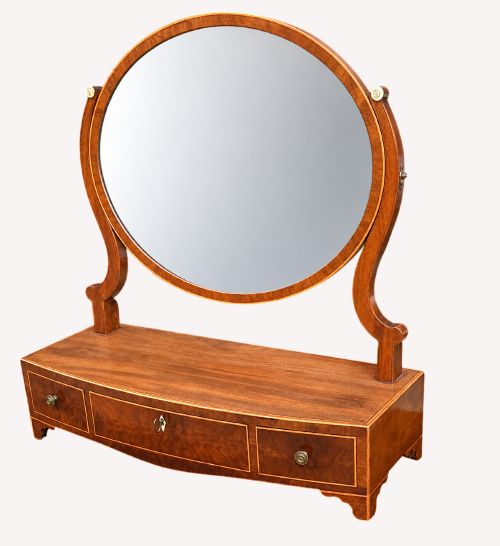
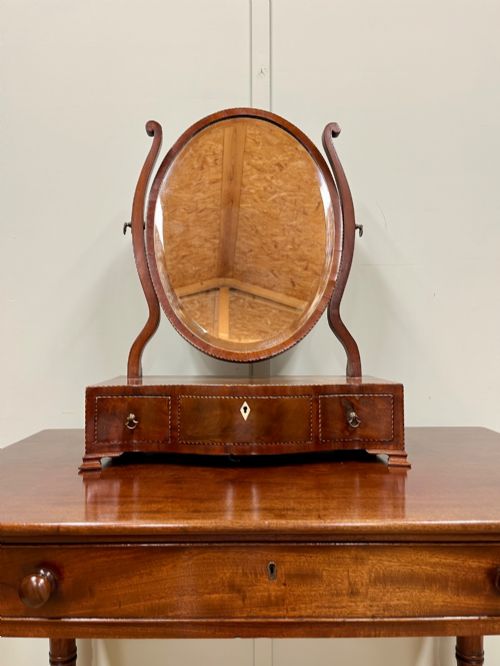
A georgian oval vanity mirror brings warmth and reflective depth to a dressing table, combining upright glass with compact drawer storage.
Georgian Oval Vanity Mirror
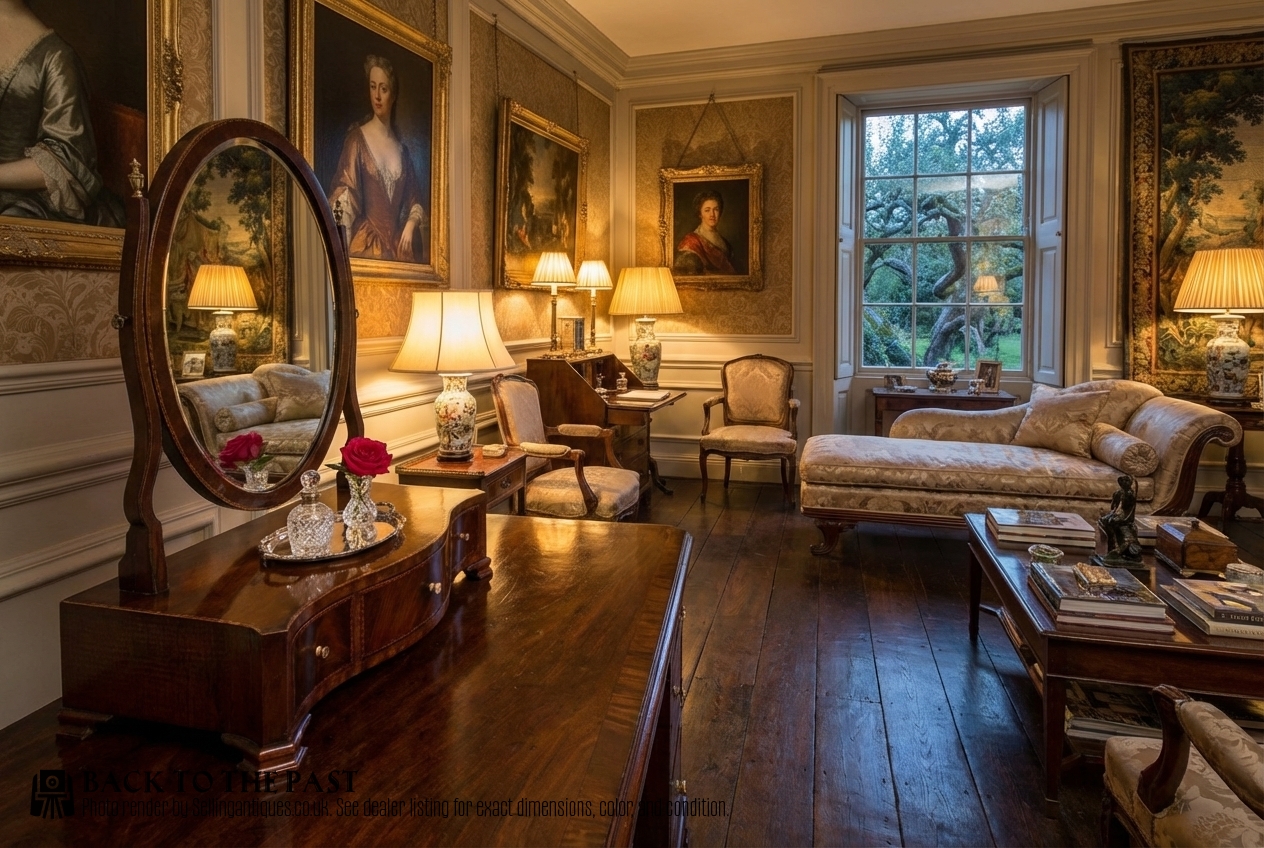
A georgian oval vanity mirror sits upon a tabletop or forms part of a dressing chest, designed for personal grooming and light reflection in domestic chambers. The pieces found here span the eighteenth and nineteenth centuries, alongside later Edwardian interpretations and revival work.
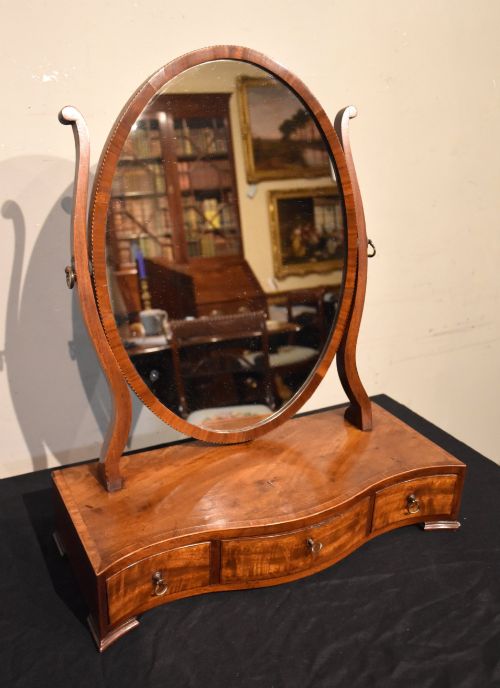
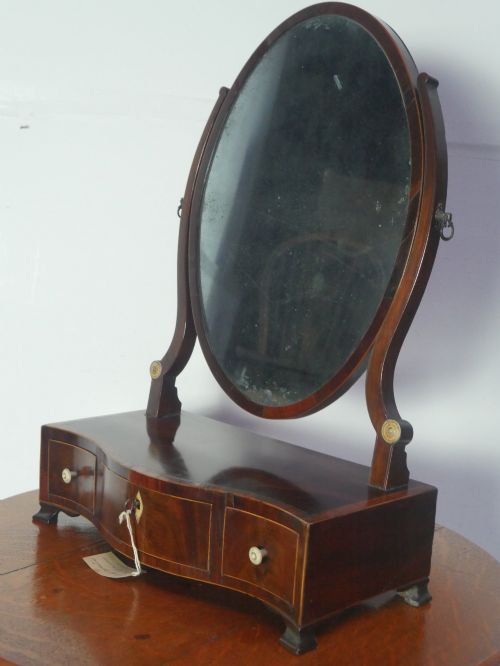
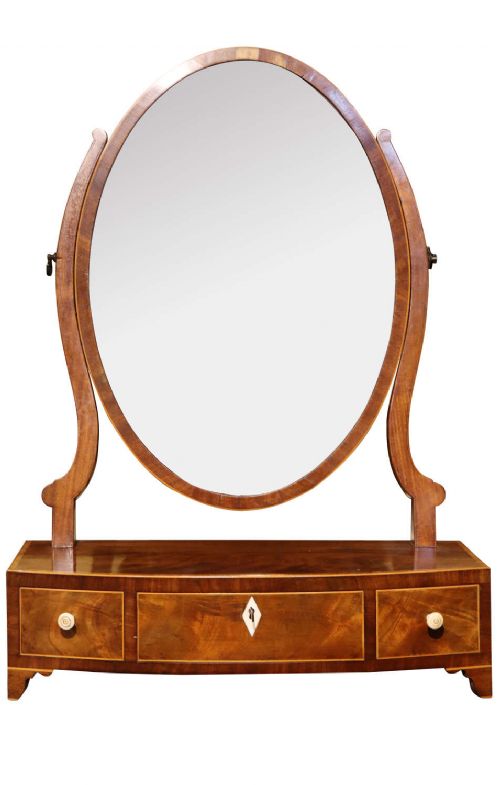
Most examples take the form of toilet mirrors with small wooden box bases, often featuring serpentine fronts, bow-fronts, or straight drawers for small valuables. Makers adapted these table mirrors in mahogany, occasionally incorporating satinwood or boxwood inlay for refined surface detail.
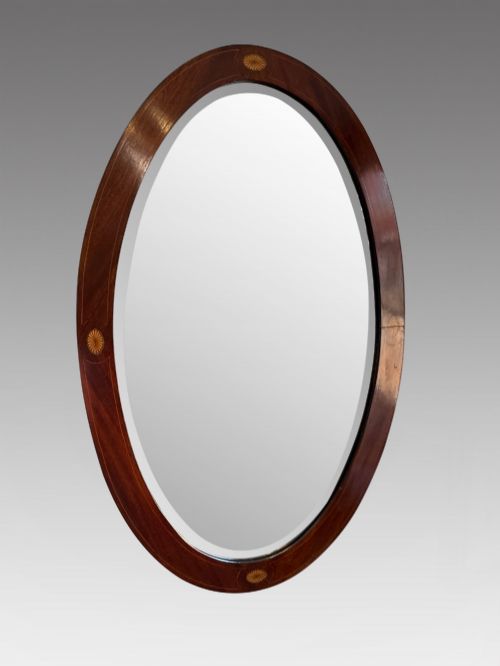
While many survive as tabletop dressing glasses, variations include triplate configurations and wall-hanging oval frames. The glass swivels between upright support arms, allowing the user to adjust the angle of reflection easily.
How they were made
Cabinetmakers constructed the frames and box bases predominantly from solid mahogany, frequently selecting flame veneers for the drawer fronts and panels. Boxwood and satinwood inlay provided delicate contrasting lines around the edges and borders of the woodwork.
Brass fittings such as adjusting screw knobs, hinges, and small drawer pulls secured the pivoting mirror plate and accented the dark timber. Mirror glass was set within moulded wooden frames, often supported by scroll-shaped arms rising from the base.
Georgian Oval Vanity Mirror Retail Price Guide 2026
Typical asking prices for georgian oval vanity mirror among the pieces listed under this phrase on Sellingantiques today, from the lower quarter to the upper quarter. They describe what is for sale here now, not the wider market.
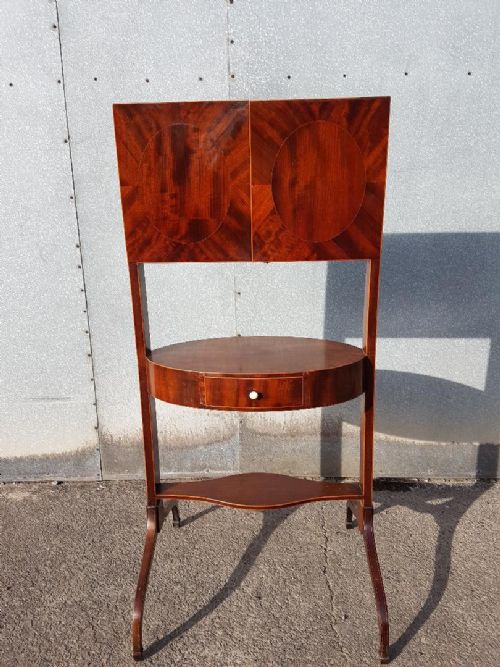
Secret compartments hidden within nineteenth-century worktables offered a private spot for letters and vanity items.
What varies in quality
The refinement of the woodwork dictates much of the distinction, separating simple utilitarian pieces from those with shaped serpentine bases and fine crossbanding. Superior examples display thoughtful grain selection in the mahogany veneer and precise alignment of the small drawers.
Proportion and the grace of the support arms influence the overall presence of the dressing mirror. Well-executed brass hardware and intact original mirror plates contribute significantly to the integrity of the piece.
The Georgian Oval Vanity Mirror Glossary
- Serpentine
- A gently undulating curved shape resembling a snake, frequently seen on the fronts of eighteenth-century toilet mirror bases. This contour required skilled woodworking to achieve.
- Crossbanding
- A strip of veneer applied across the grain of the primary wood to create a decorative border. It frames panels on better quality cabinet work.
- Toilet mirror
- The period term for a dressing table mirror designed to sit on a surface. These pieces often incorporated small drawers for cosmetics or trinkets.
- Boxwood inlay
- Light-coloured wood insertions used to create contrasting geometric lines and stringing patterns. Craftsmen set these into recesses carved into the darker mahogany background.
- Triplate
- A mirror assembly featuring three separate glass panels, usually with a central section flanked by smaller adjustable wings. This configuration offered multiple angles for viewing.
Georgian Oval Vanity Mirror: Frequently Asked Questions
What is a georgian oval vanity mirror used for?
These mirrors served primarily for personal grooming and dressing in bedrooms and dressing rooms during the eighteenth and nineteenth centuries.
The small drawers built into the base also provided secure storage for jewellery, cosmetics, and small personal items.
How do you date a period toilet mirror?
Dating relies on examining the timber species, construction methods of the base drawers, and the shape of the mirror frame.
Eighteenth-century examples often feature hand-cut dovetails and specific mahogany grains, while later nineteenth-century and Edwardian pieces show different secondary woods and machine-made elements.
Are the mirror plates original?
Many antique dressing mirrors have had their glass replaced over the centuries due to Foxing, silver degradation, or accidental breakage.
Original mirror glass often exhibits slight distortions, minor speckling, and thin bevelling consistent with early manufacturing techniques.
How do you care for mahogany table mirrors?
Keep the wood conditioned with appropriate furniture wax and avoid placing the mirror in direct sunlight or near heat sources.
Gentle cleaning of the glass with a soft cloth prevents moisture from seeping behind the old silvering along the edges.