
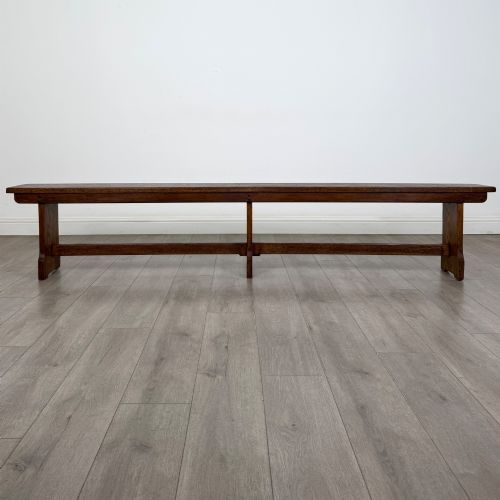
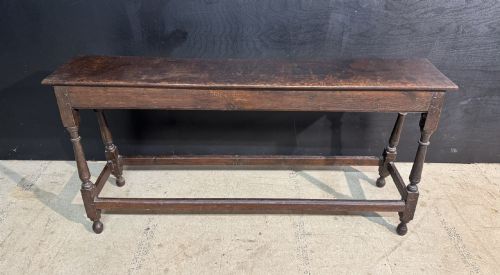
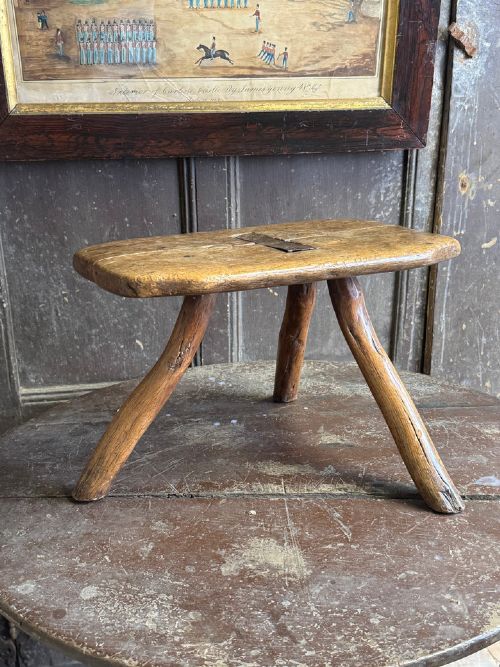
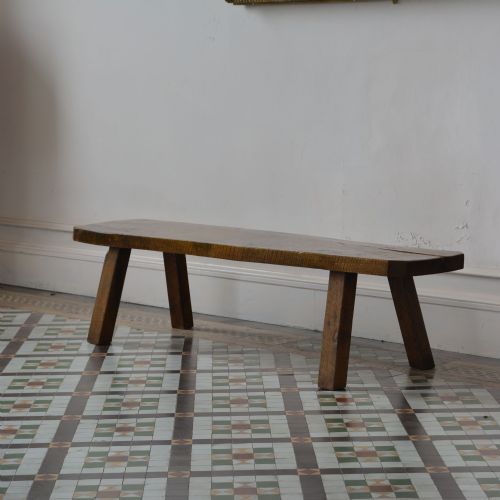


Georgian Oak Stool
A georgian oak stool offers solid provincial character, combining utilitarian strength with the warm grain of domestic timber.
What a georgian oak stool is
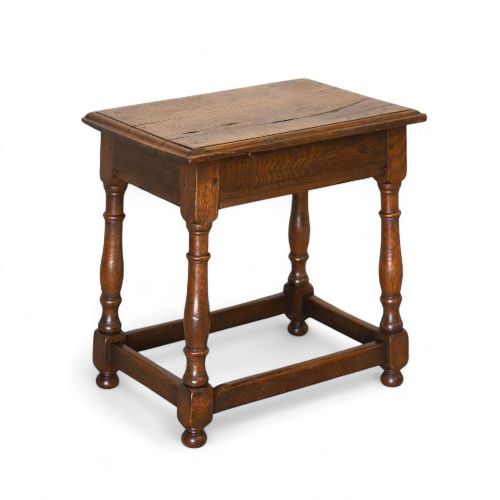
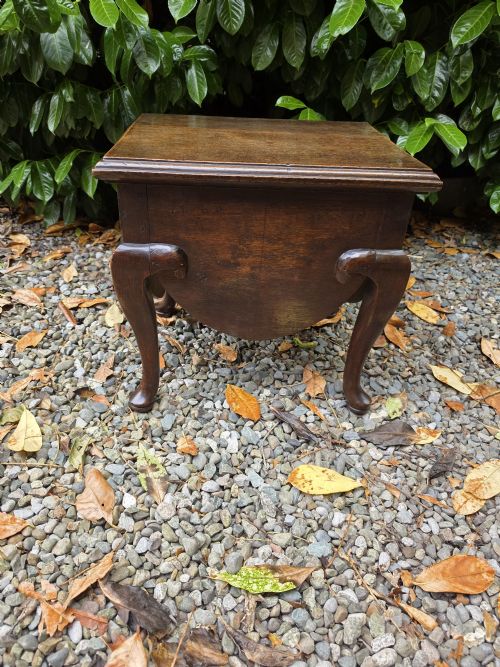
A georgian oak stool represents the practical domestic seating of the eighteenth century, built for hard everyday use in provincial homes. These pieces range from simple vernacular forms with splayed legs to structured joint stools and box stools designed for storage.
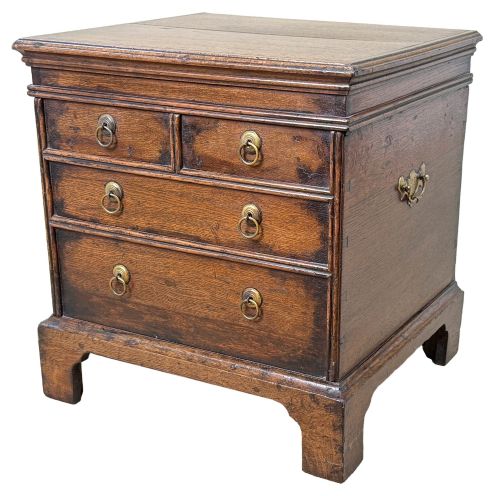
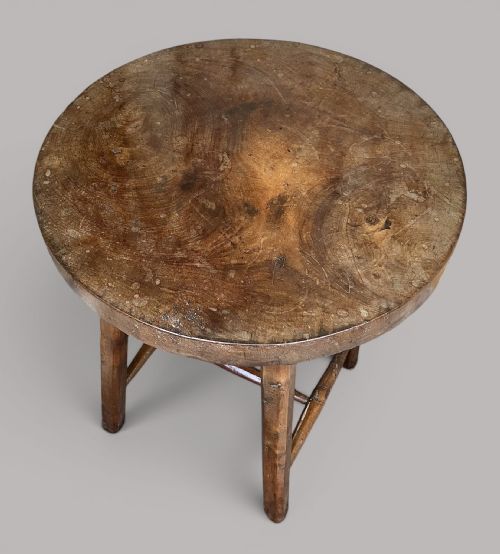
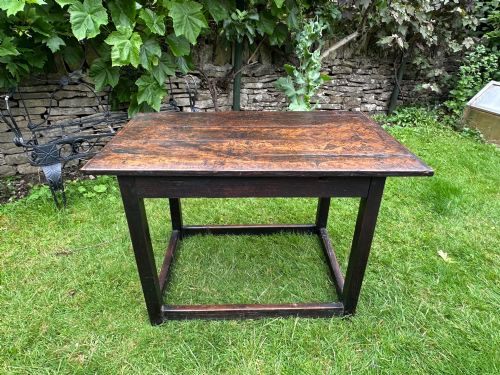
The most common examples encountered here are joint stools and provincial seats, often showing the marks of local rural craftsmanship. Makers utilised sturdy native timber to create low seating, footstools, and small side tables that survive in various states of original repair.
How they were made
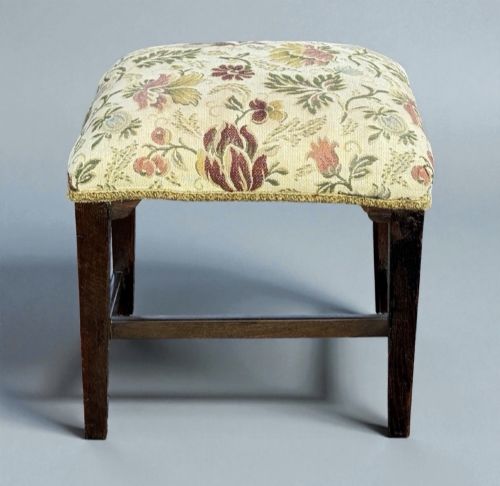
The primary material is solid oak, sometimes combined with elm, walnut, or pine for secondary parts and complemented by iron brackets or blacksmith repairs. Upholstered variants incorporate wool and cotton fabrics over internal framing.
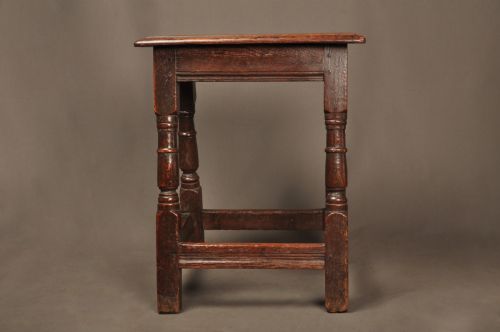
Joinery methods rely on pegged mortise and tenon construction, particularly in joint stools designed to bear heavy weight. Turning and carving shape the legs and rails, while hand planing leaves subtle tool marks across the timber surfaces.
Retail Price Guide 2026
Typical UK retail prices for georgian oak stool, calculated from the Sellingantiques database of over a million retail prices indexed since 2003. This retail price guide relies exclusively on Sellingantiques data; no external sources or auction records are used, so the figures do not describe the wider market.
Some provincial stools proudly display centuries-old blacksmith repairs, proving that a solid mend is worth more than a quiet retirement.
What varies in quality
The distinction between ordinary and superior pieces rests on the depth of the timber's patina and the integrity of the original construction. Items retaining their uncompromised structural joints and rich, dark surface colour command greater appreciation among collectors.
Proportion and regional character also dictate distinction, as vernacular pieces with untouched blacksmith repairs or unusual configurations like drawers and box compartments display distinct local traditions. Standard reproductions or heavily restored examples lack the authentic integration of timber found in period originals.
The Georgian Oak Stool Glossary
- Joint stool
- A sturdy wooden stool built with pegged mortise and tenon joints rather than turned and glued legs. This method provided exceptional strength for domestic tasks.
- Vernacular
- An architectural or furniture style created by local artisans using regional materials without academic design influence. These objects reflect practical utility rather than fashionable metropolitan trends.
- Cabriole leg
- A furniture leg that curves outward at the knee and tapers inward at the ankle, often ending in a pad foot. The design imitates animal limbs and appeared on refined seating.
- Close stool
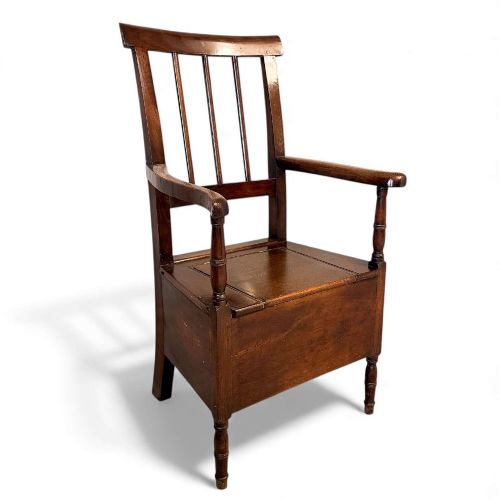
- A box stool enclosing a chamber pot or pan, fitted with a hinged lid. This form served domestic sanitation needs before indoor plumbing.
- Box stool
- A seat featuring a hollow compartment beneath the lid for storage. These pieces combined seating with practical household organisation.
Frequently Asked Questions
What is a joint stool?
A joint stool is a sturdy wooden seat constructed using traditional pegged joinery rather than turned and glued components. These pieces were built to bear significant weight in daily domestic life.
They often served multiple household purposes, functioning as portable seats or small tables when needed.
Where were these stools made?
These items originated in provincial workshops across England and Wales, created by local carpenters and joiners. They utilised native timbers available in the immediate region.
Regional differences in turning and construction often indicate the specific part of the country where the piece was fashioned.
Can I use an antique stool every day?
Most of these pieces were engineered for hard domestic service and remain structurally robust enough for daily use. Solid timber framing and pegged joints provide lasting stability.
Placing them on level floors helps protect historical joints from undue strain.