

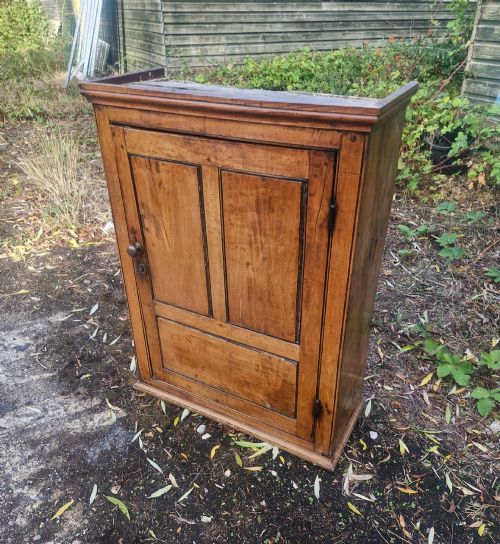
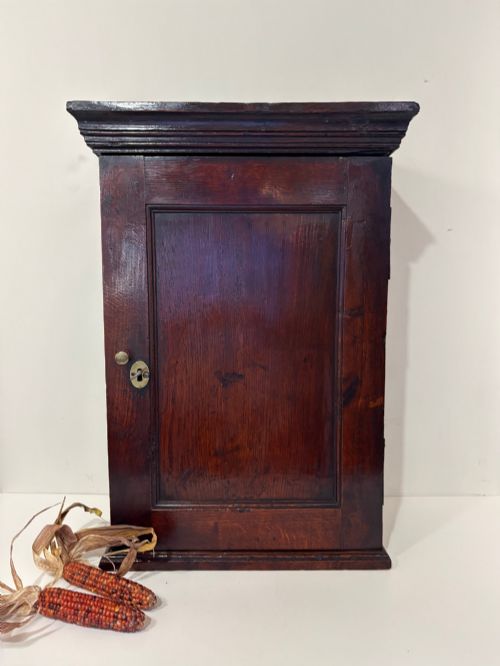
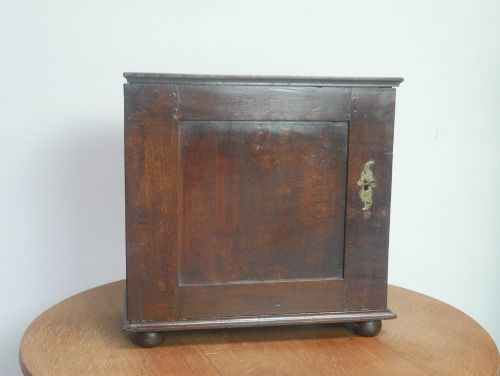
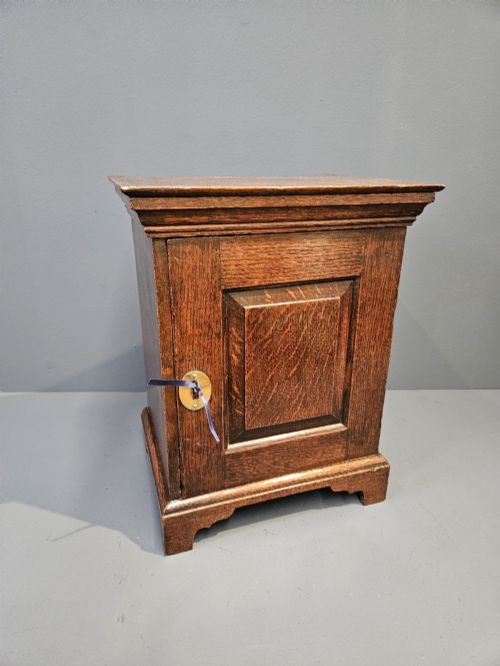
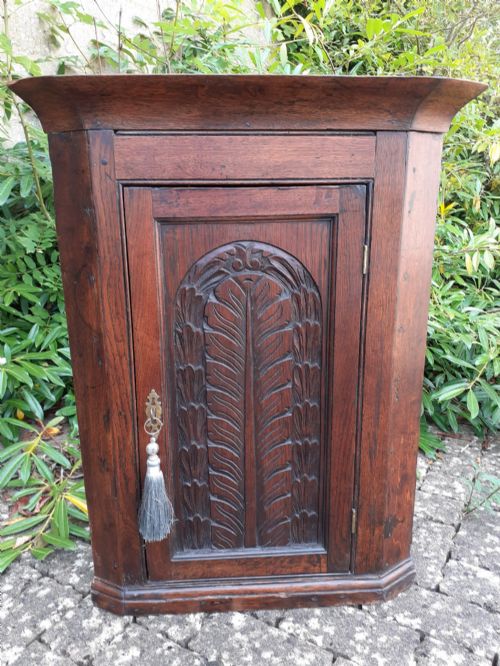


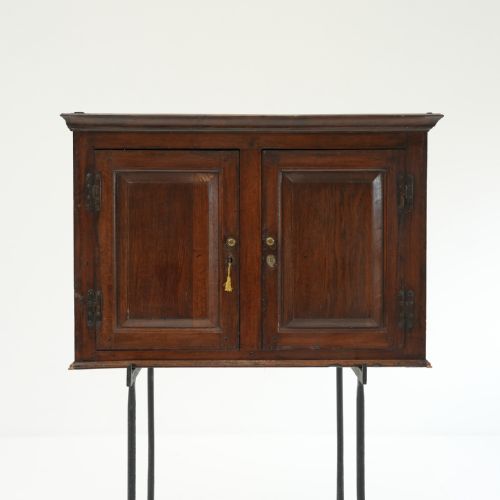


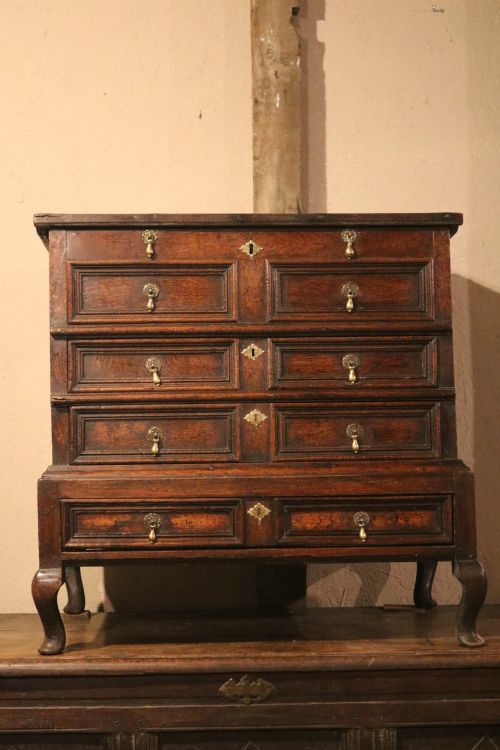
Georgian Oak Spice Cabinet
A Georgian oak spice cabinet brings the warmth of eighteenth-century provincial craftsmanship straight to your wall, offering compact, compartmentalised storage that collectors prize.
Georgian Oak Spice Cabinet
When you search for a georgian oak spice cabinet, you encounter compact wall-hanging pieces designed to hold precious provisions securely in country houses. Most examples on this page date from the eighteenth century, spanning periods like George II and provincial styles including Welsh vernacular and rustic farmhouse.
The primary forms include small spice cupboards, hanging wall cabinets, and corner cupboards fitted with internal drawers or shelving. These practical items often double as apothecary cases or miniature storage chests intended for domestic spaces.
Originating largely from English and Welsh provincial workshops, these cabinets showcase the utilitarian needs of domestic life during the seventeen-hundreds. Their robust construction ensures they survive as functional wall furniture today.
How they were made
Joiners built these cabinets primarily using solid oak, frequently paired with secondary woods like pine for internal partitions and drawer linings. Wood inlay and occasional carved details add decorative contrast to the plain timber surfaces.
Hardware played a functional role, utilising brass for hinges and escutcheons alongside iron and wrought iron for interior latches and hanging brackets. These metals fasten small doors securely over clusters of internal drawers.
Tiny internal drawers often retain faint traces of aromatic nutmeg and cinnamon from centuries past.
What varies in quality
The standard of a georgian oak spice cabinet depends heavily on the crispness of its timber joinery and the integrity of its original hardware. Finer pieces display careful selection of grain patterns in the oak, alongside well-fitted internal drawers that slide smoothly within their frames.
Regional variations also influence desirability, with certain Welsh and provincial English pieces showing distinctive carving or specific regional proportions. The survival of original brasses and untouched surface patination separates exceptional examples from heavily restored or altered pieces.
The Georgian Oak Spice Cabinet Glossary
- Vernacular
- Everyday objects made by local craftsmen using regional materials rather than following formal metropolitan design rules. These pieces reflect the practical traditions of specific areas like Wales or rural England.
- Escutcheon
- A protective plate surrounding a keyhole, usually made of brass on these cabinets. It prevents the wood around the lock from splitting with repeated use.
- Tallboy
- A tall chest of drawers consisting of one chest stacked on top of another. Miniature versions appear in provincial oak.
- Inlay
- A decorative technique where contrasting materials are set into the surface of the wood. On these cabinets, light or dark woods create geometric patterns.
- Cornice
- The moulded projection crowning the top of a cabinet. It provides a finished architectural profile to wall-hanging pieces.
Georgian Oak Spice Cabinet: Frequently Asked Questions
What were spice cabinets used for?
These cabinets stored valuable culinary spices, medicinal herbs, and dried ingredients safely away from damp kitchen environments.
Their small internal drawers kept expensive seasonings organised and secure behind locked doors in eighteenth-century homes.
Are these cabinets meant to hang on walls?
Many examples are specifically designed as wall-hanging units, equipped with brackets or sturdy backboards for secure mounting.
Some smaller versions also function as tabletop cabinets or sit neatly upon larger desks and surfaces.
How do I date a Georgian oak cabinet?
Dating relies on construction methods, timber characteristics, and secondary woods like pine used in internal framing. Eighteenth-century examples often display hand-cut dovetails and period brass hardware consistent with eras like George II.
How do I care for antique oak furniture?
Keep oak cabinets away from direct sunlight and dramatic humidity shifts to prevent the solid timber from warping or splitting.
Regular dusting with a dry cloth and occasional application of appropriate wax maintains the natural finish.