
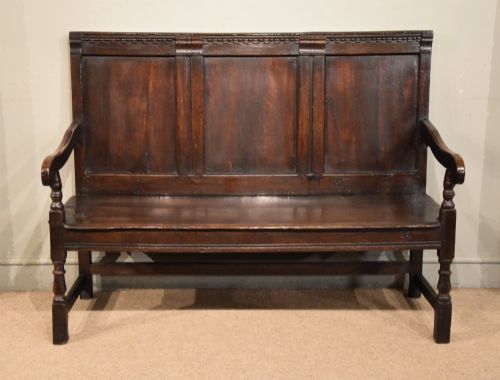
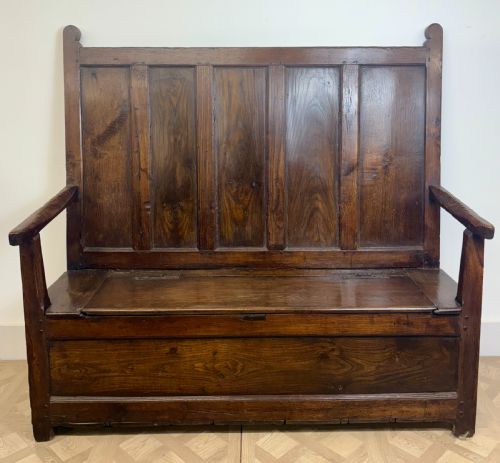
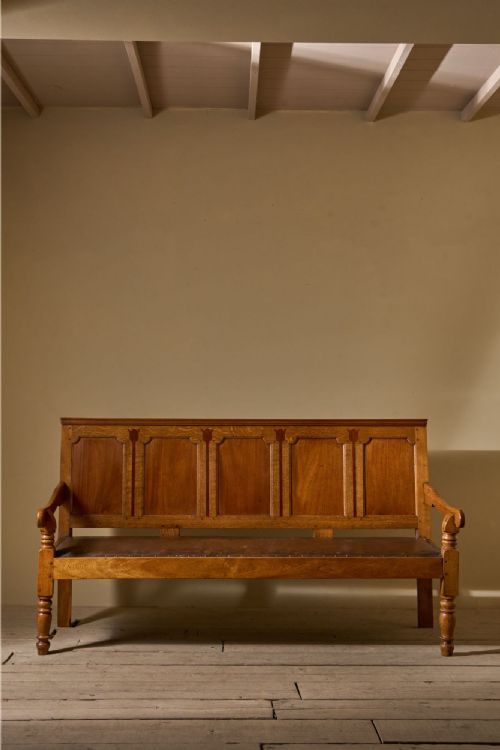
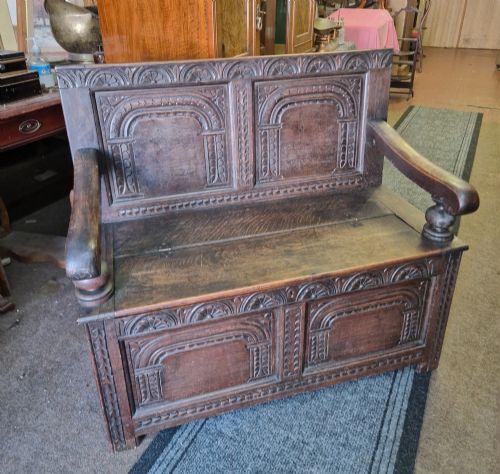
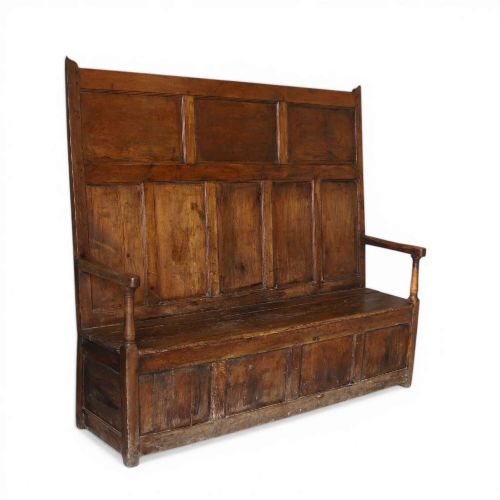
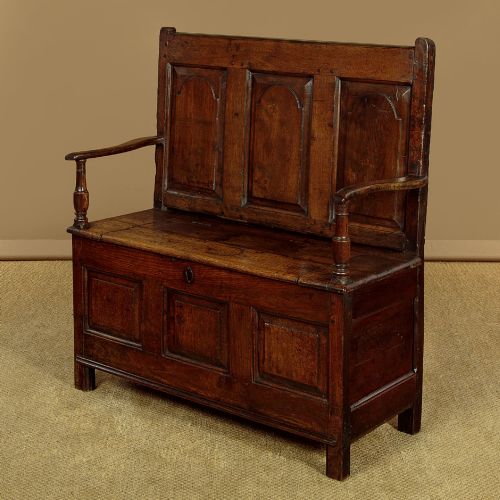


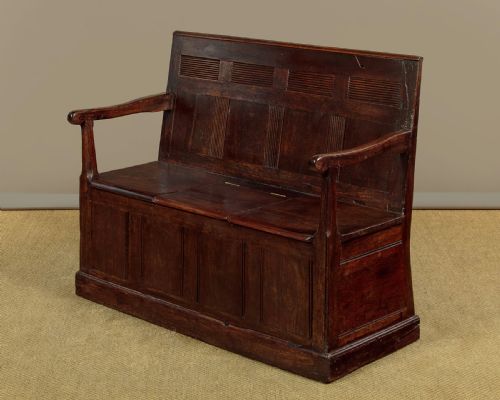


Georgian Oak Settle Bench
A georgian oak settle bench brings solid vernacular warmth and high-backed privacy directly from centuries-old farmhouses and halls into modern spaces.
Georgian Oak Settle Bench
A georgian oak settle bench functions as a high-backed seat designed to block cold draughts in historic hallways and kitchens. These items appear primarily in regional British styles, including Welsh, West Country, and Gothic variations.
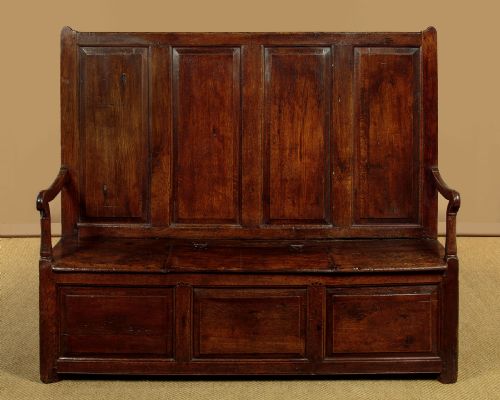
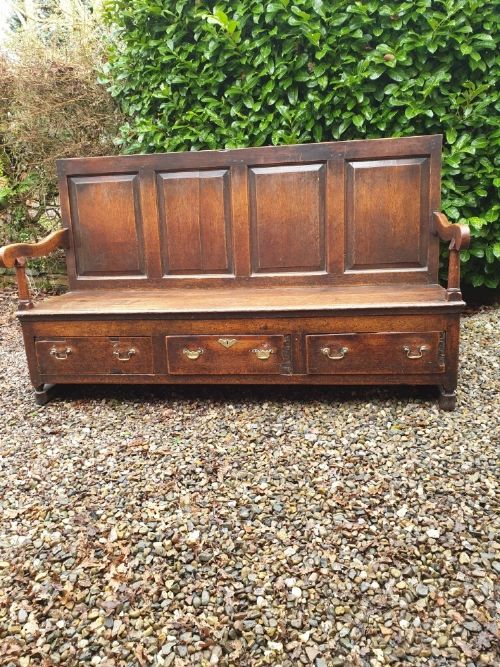
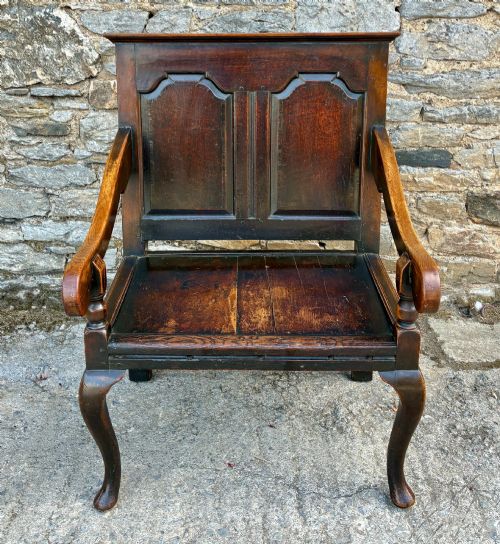
Most examples on this page are sturdy timber seats featuring either straightforward panelled backs or integrated storage boxes beneath the seat. Buyers encounter variations ranging from simple country benches to grander wingback and barrel forms.
Materials and construction
Makers built these pieces predominantly using solid oak, occasionally combining it with secondary native timbers like elm, ash, and mahogany for panels or structural supports. Peg joints and solid joinery methods held the heavy framework together without modern adhesives.
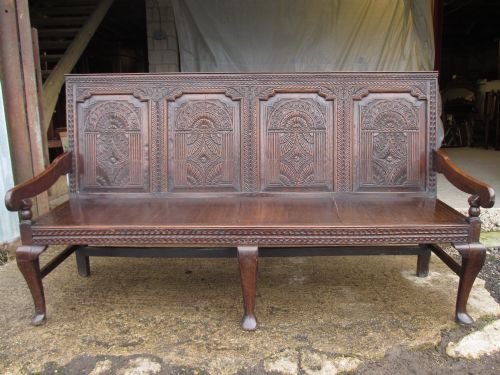
Surface detailing often includes hand-carved panels, crossbanding, or subtle decorative motifs such as tulip carvings. Some versions incorporate iron or brass hardware for hinges and fastenings on box seats.
Some tavern settles were specifically designed with high wooden hoods to trap pipe smoke and gossip in equal measure.
Assessing quality and proportion
Quality rests heavily on the integrity of the timber, the depth and crispness of any period carving, and the proportions of the high back. Pieces retaining their original unblemished boards and authentic peg construction command greater attention.
The sophistication of regional vernacular design also sets examples apart, distinguishing simple utility benches from finely proportioned panelled wingback or barrel settles.
The Georgian Oak Settle Bench Glossary
- Box settle
- A high-backed wooden bench featuring a compartment beneath the seat for storage. This enclosed design helped keep household items tidy in communal rooms.
- Wingback settle
- A seating form featuring extended side panels designed to trap heat and block draughts from the fire. These side wings offer both privacy and physical comfort.
- Crossbanding
- A decorative technique using thin strips of veneer arranged across the grain to form a contrasting border around panels. This detail appears on select higher-status pieces.
- Vernacular furniture
- Domestic objects made by local craftsmen using regional traditions and readily available materials rather than strict high-style London fashions. Oak and elm are staples of this tradition.
- Peg joined
- A method of securing mortise and tenon joints using wooden pins rather than metal nails. This traditional construction accommodates seasonal timber movement.
Georgian Oak Settle Bench: Frequently Asked Questions
What is a georgian oak settle bench?
A georgian oak settle bench is a traditional wooden seat featuring a high back designed to shield occupants from cold indoor draughts. These heavy pieces served practical seating and storage roles in historic British homes.
Craftsmen built them primarily from solid oak using regional vernacular designs, often incorporating panelled backs or built-in box compartments beneath the seat.
How were settle benches used historically?
These benches sat close to hearths in kitchens, halls, and taverns to provide sheltered seating away from cold stone floors and chilly air currents. The high back and enclosed sides created a microclimate around the user.
Many examples included integrated storage boxes under the seat cushion area for blankets, boots, or household goods, doubling their utility in tight spaces.
How do I style a settle bench today?
A settle bench works well in a generous hallway, kitchen, or boot room where its substantial wooden back creates a strong architectural focal point. Adding simple seat cushions softens the firm timber base for everyday sitting.
Ensure the room has adequate floor space to accommodate the high back and deep profile without overwhelming the surrounding furniture.
How can I tell the period of a settle?
Dating relies on examining the construction methods, timber patination, and stylistic markers such as panel configuration and carving details. Eighteenth-century examples frequently show peg joining, hand-planed surfaces, and regional vernacular traits.
Later nineteenth-century pieces often display tighter mechanical uniformity or different secondary woods compared to earlier rural workshop productions.