

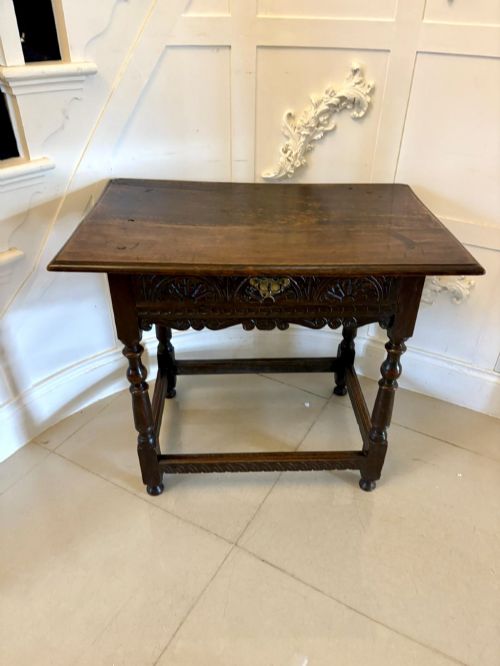
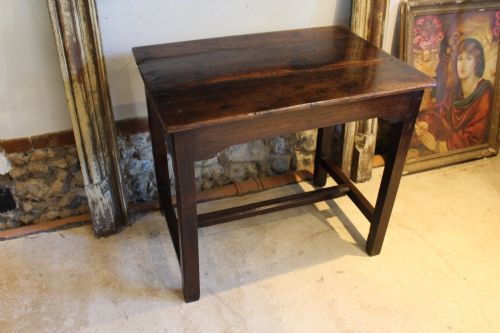
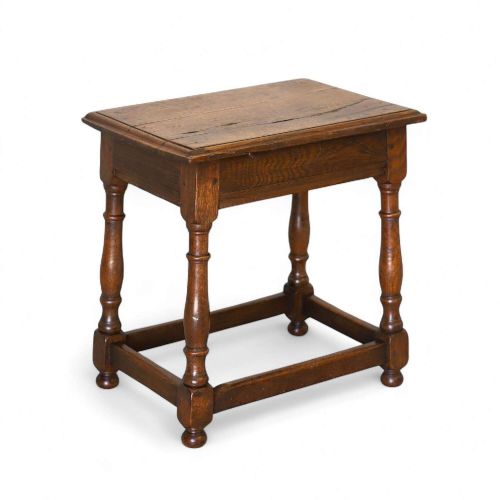
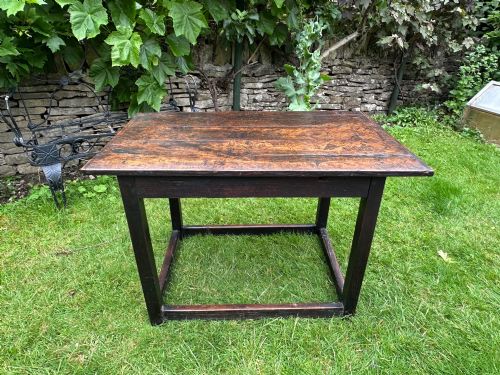
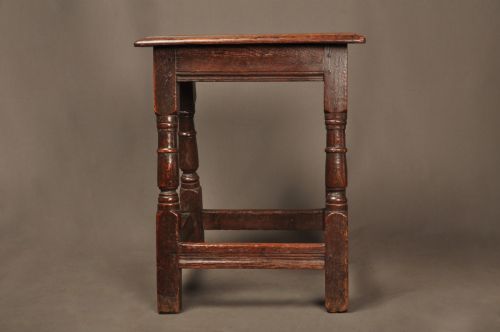


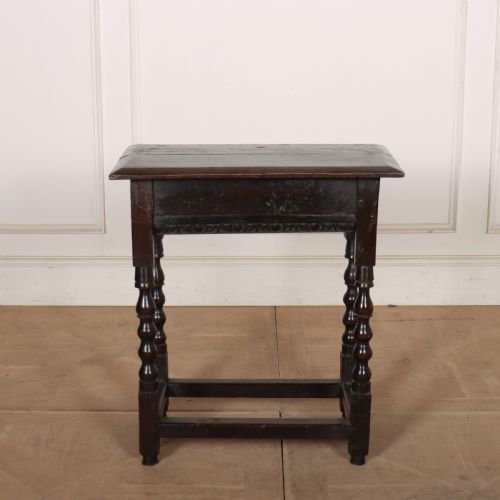


Georgian Oak Joint Table
A georgian oak joint table brings honest vernacular strength into a room, offering sturdy utility and rich patination honed over centuries.
Georgian Oak Joint Table
A georgian oak joint table sits at the heart of English provincial furniture history, combining robust domestic function with straightforward joinery. Buyers searching for a georgian oak joint table generally encounter sturdy side tables, occasional tables, and related joint stools dating from the seventeenth, eighteenth, and early nineteenth centuries.
The pieces listed here span the eighteenth century and early Georgian periods, alongside related plank top and lamp tables. Elm and pine occasionally appear alongside the primary oak construction, reflecting regional English country workshop practices.
How they were made
Construction relies upon solid oak timbers, often supported by secondary woods such as elm and pine for internal or lesser components. Traditional pegged mortise and tenon joints hold the framework together without modern metal fasteners.
Surface finishing relies on simple scraping and polishing, allowing the natural grain of the timber to develop depth over time. Brass and iron hardware occasionally supplement the wooden structure where hinges or supports are fitted.
Georgian Oak Joint Table Retail Price Guide 2026
Typical asking prices for georgian oak joint table among the pieces listed under this phrase on Sellingantiques today, from the lower quarter to the upper quarter. They describe what is for sale here now, not the wider market.
Current listings feature eighteenth century oak side tables alongside seventeenth century forms, incorporating secondary materials like elm, pine, brass, and iron.
What varies in quality
Proportion and the integrity of the original joints dictate the structural success of each surviving piece. Minimal intervention and honest patination mark the distinction between desirable examples and those with compromised surfaces.
The Georgian Oak Joint Table Glossary
- Joint table
- A sturdy table constructed with mortise and tenon joints rather than turned legs secured by glue alone. These pieces were built to withstand heavy daily domestic use.
- Joint stool
- A low wooden seat built with pegged joinery, sharing construction methods with larger tables. They often doubled as small side stands in early provincial homes.
- Plank top
- A table surface formed from solid boards joined edge to edge. This construction method showcases the natural width and grain of early timber.
- Provincial
- Furniture made in regional workshops outside London, characterised by practical designs and local materials. English country pieces often display individual regional traits.
Georgian Oak Joint Table: Frequently Asked Questions
What is a joint table?
A joint table is a solid wooden table built using traditional pegged mortise and tenon joinery. The term derives from the joiner's craft rather than any folding mechanism.
These pieces were designed for heavy domestic use in early English homes. Their sturdy frames made them reliable surfaces for daily tasks.
How old are these tables?
The pieces available span from the seventeenth through to the early nineteenth centuries. Most examples date from the eighteenth century and the early Georgian period.
Surviving items reflect the enduring strength of traditional English country cabinet making. Each piece bears the physical marks of its long history.
What woods were used?
Oak is the primary timber found in these provincial tables and stools. Elm and pine also appear in secondary components or related occasional furniture.
Occasionally, metal elements such as brass or iron are present in hardware or minor fittings. The choice of timber reflects local materials available to regional makers.
How do I live with one?
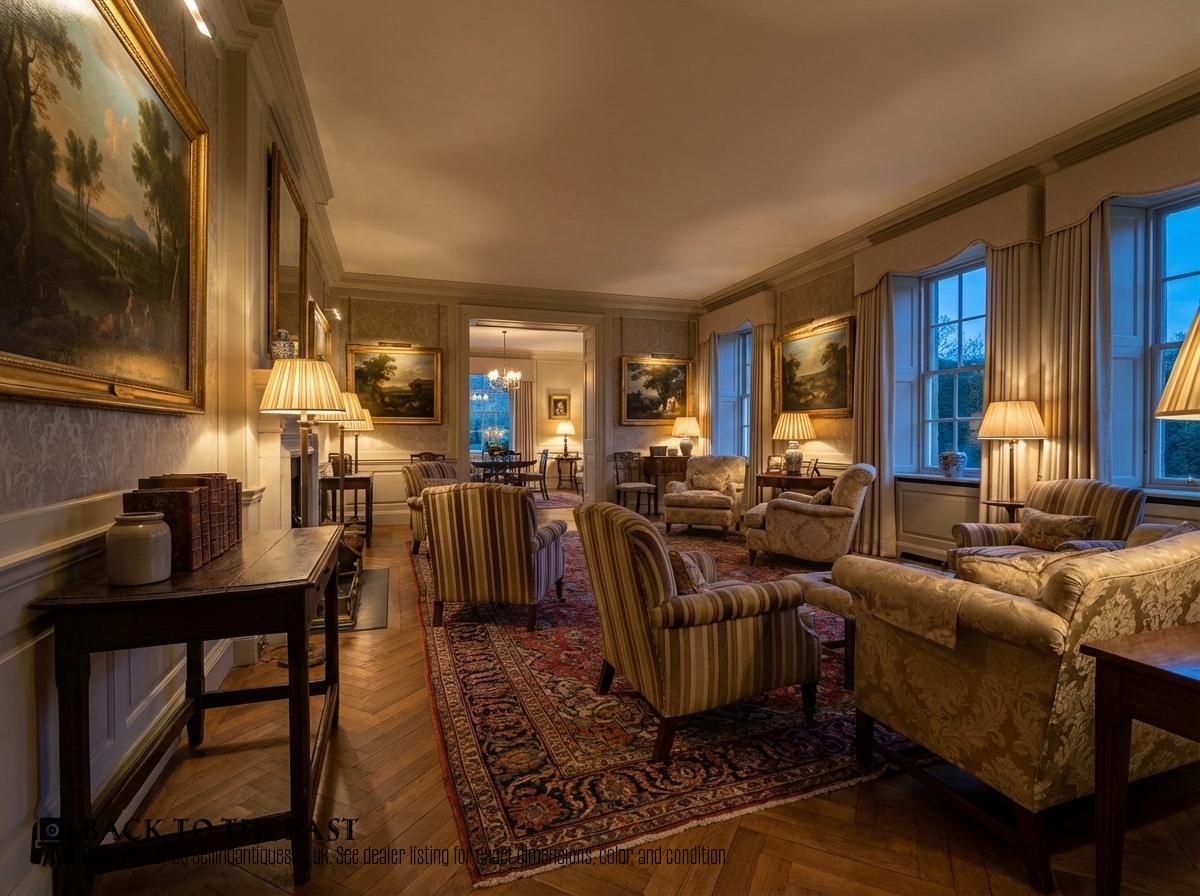
These tables fit easily into modern rooms as side stands, lamp tables, or occasional surfaces. Their neutral timber tones complement both traditional and contemporary interiors.
Avoid placing them in direct sunlight or near heat sources to protect the aged wood. Regular dusting and occasional wax maintenance will preserve the surface finish.