

Oak Jointed Side Table
An oak jointed side table provides practical surface space rooted in centuries of traditional woodworking.
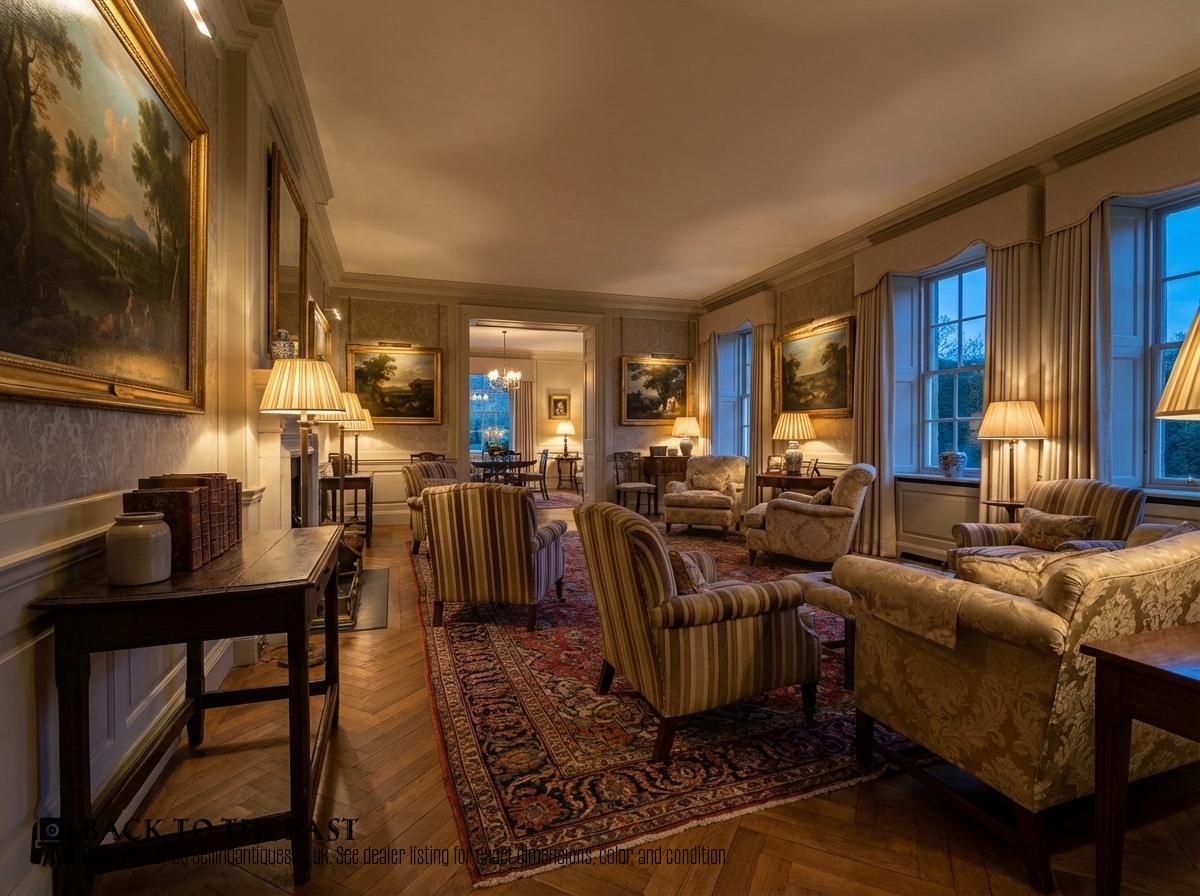
Oak Jointed Side Table
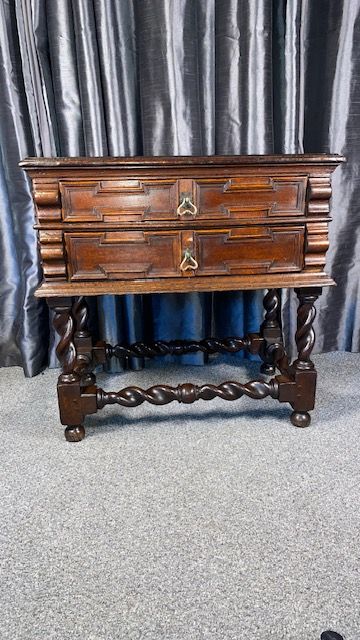
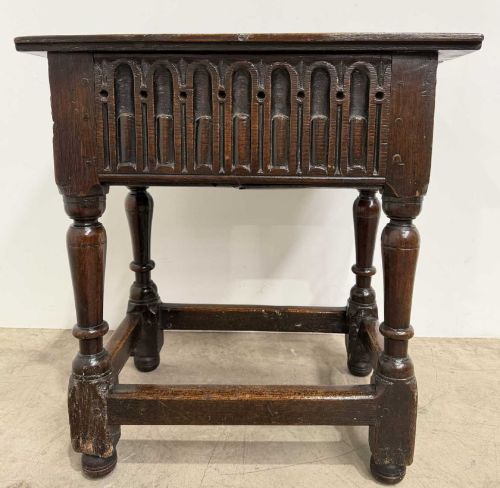
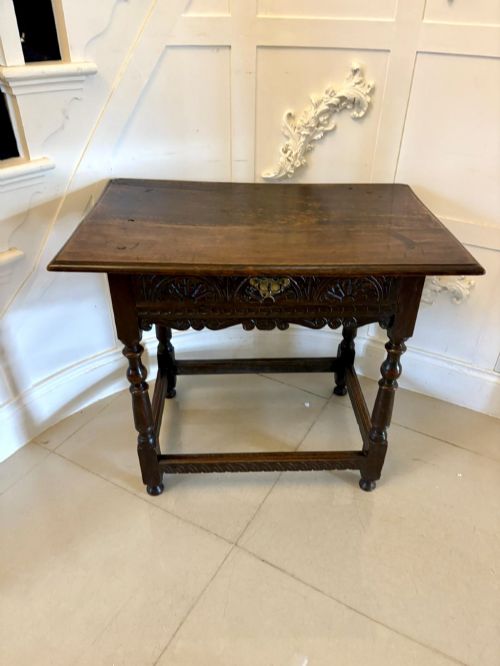
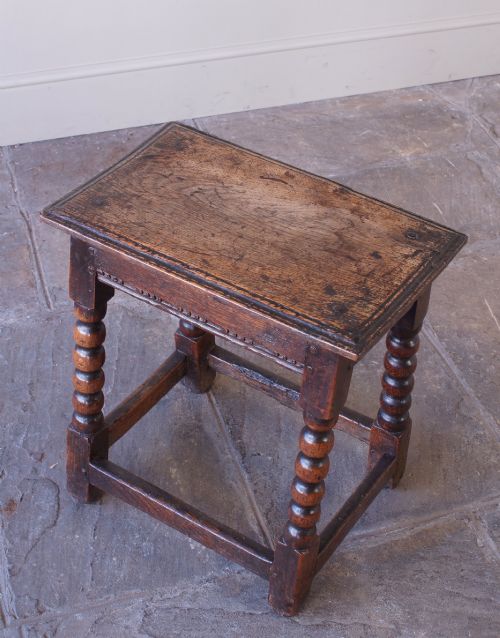
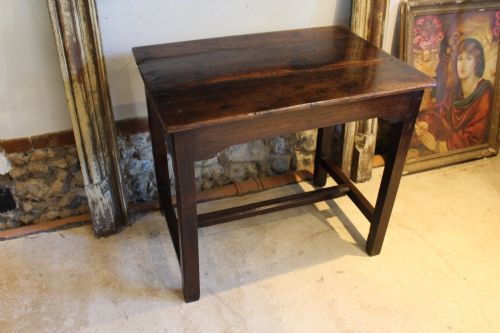
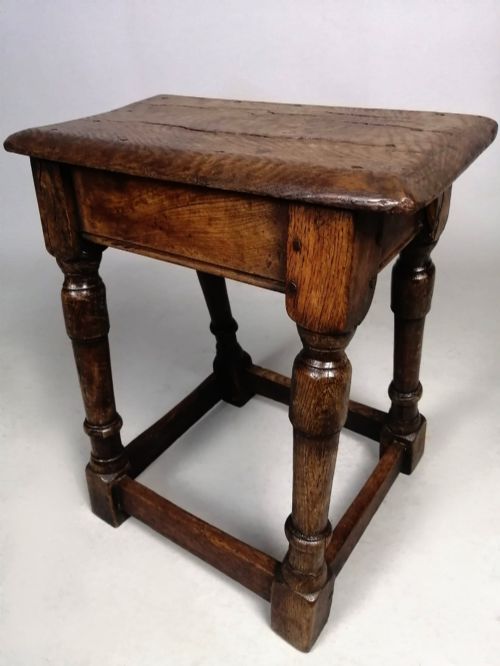
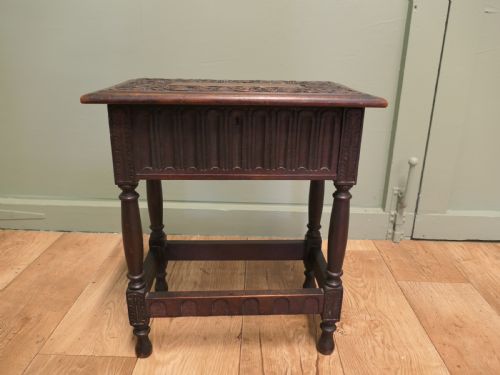
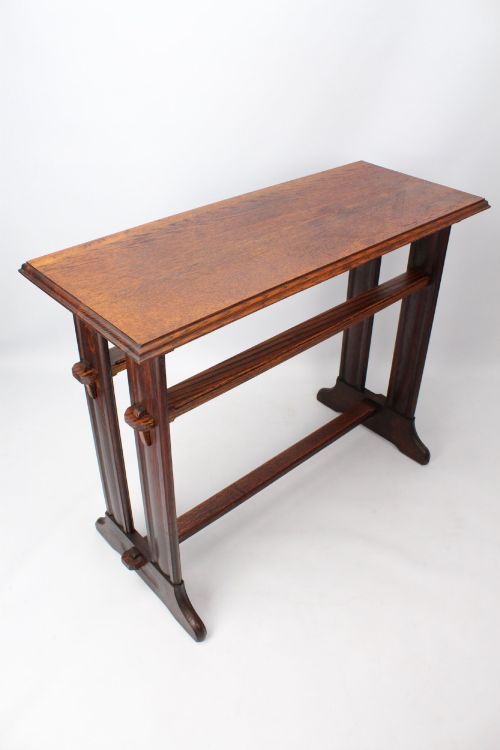
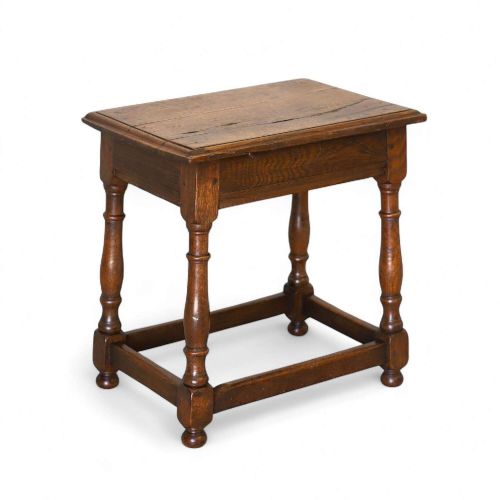
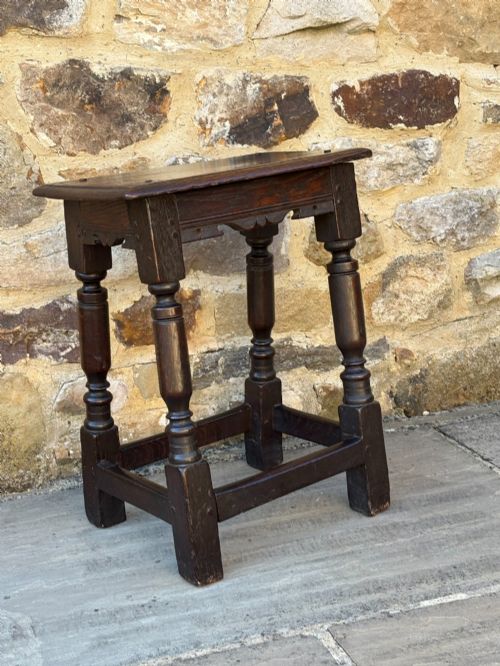
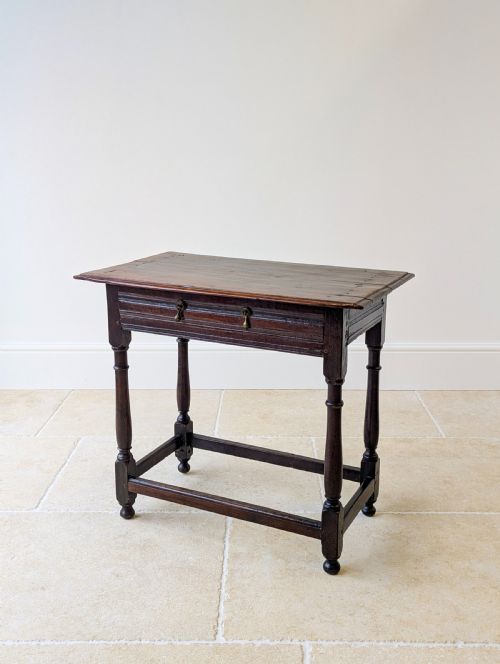
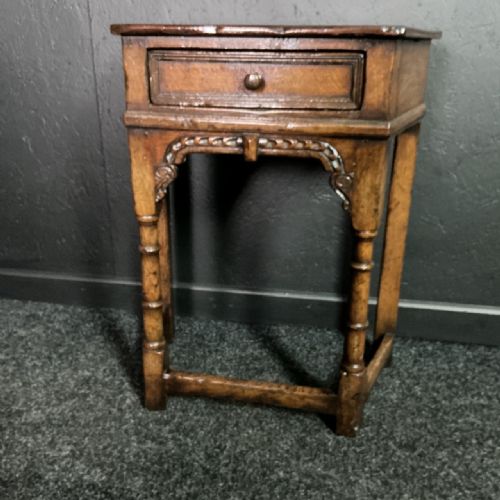
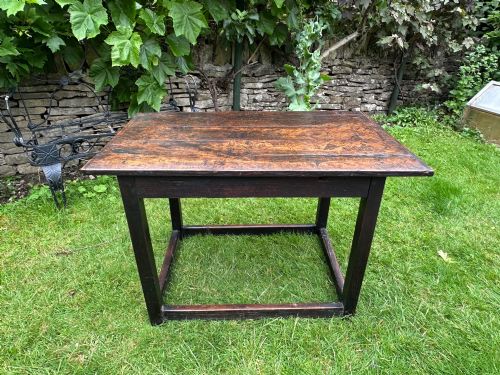
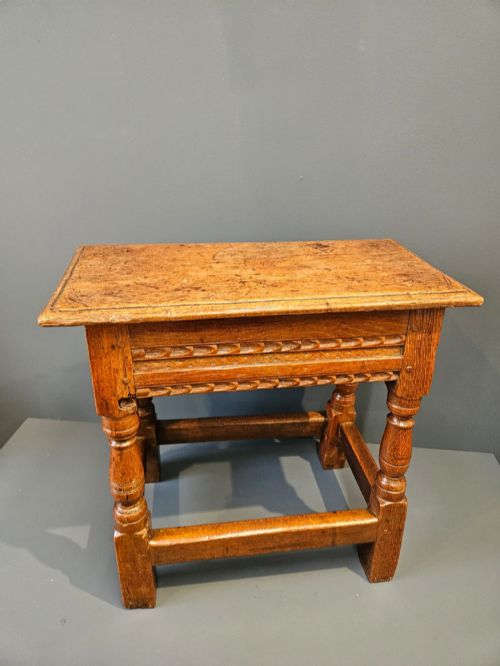
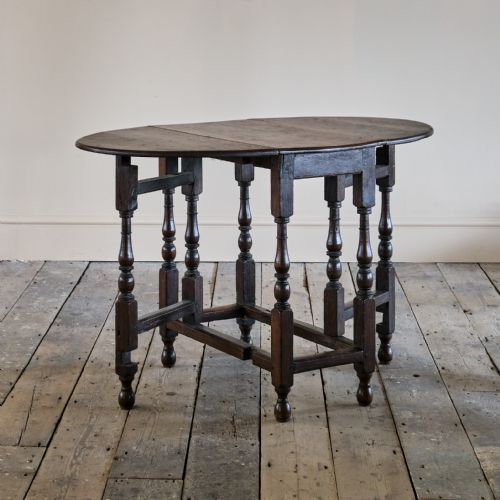
An oak jointed side table combines the sturdy frame construction of historical joint stools with the elevated surface of an occasional table. Buyers seeking an oak jointed side table encounter sturdy utilitarian forms from periods spanning the seventeenth century through the Edwardian era, alongside later revivals.
Most entries display heavy timber framing, often incorporating plank tops, turned legs, and stretchers. English country and Jacobean styles predominate, reflecting domestic utility and straightforward domestic design.
Materials and construction
Makers relied principally on solid English oak, frequently augmented by secondary timbers such as elm and yew wood for particular structural or surface elements. Brass and iron hardware appear sparingly on hinges or drawer fittings where functional.
Construction relies on traditional pegged joinery rather than metal fasteners, utilising mortise and tenon joints to secure uprights and stretchers. Plank tops and solid sides endure through thick timber dimensions and simple geometric forms.
Oak Jointed Side Table Retail Price Guide 2026
Typical asking prices for oak jointed side table among the pieces listed under this phrase on Sellingantiques today, from the lower quarter to the upper quarter. They describe what is for sale here now, not the wider market.
Early box stools doubled as discreet storage for household valuables while keeping heavy seating ready for unexpected guests.
Factors of quality
Quality rests upon the integrity of the original pegged joinery and the preservation of the timber surface. Tables retaining their original plank tops and tight, uncompromised joints demonstrate superior craftsmanship.
The depth of the timber's surface appearance and the crispness of any carved decoration distinguish standard utilitarian pieces from finer provincial examples. Unaltered structures with honest wear command greater interest than heavily restored items.
The Oak Jointed Side Table Glossary
- Joint stool
- A sturdy wooden stool built with mortise and tenon joints and pegged construction rather than turned legs glued into seats. These items served multiple domestic purposes including sitting and small surface use.
- Box stool
- A variant of the joint stool featuring enclosed sides forming a small storage compartment beneath the seat or top. They provide compact storage alongside structural support.
- Pegged construction
- A method of securing timber joints using wooden dowels or pins driven through mortised connections. This technique accommodates wood movement without metal nails.
- Plank top
- A table or stool top constructed from solid boards joined edge to edge. This method creates a heavy, durable surface characteristic of early domestic furniture.
- Stretcher
- A horizontal timber connecting the legs of a table or stool to provide lateral stability. These supports strengthen the structural framework.
Oak Jointed Side Table: Frequently Asked Questions
What is an oak jointed side table?
An oak jointed side table is a compact wooden table built using traditional mortise and tenon joinery. These pieces draw their structural vocabulary from historical joint stools.
They offer durable surface areas suited for lamps, books, or general placement in traditional and contemporary rooms.
How do I date an antique oak table?
Dating relies on examining the construction methods, tool marks left by woodworking implements, and the wear patterns on the timber. Peg placement and wood shrinkage offer reliable indicators of age.
Style elements such as carved ornamentation or turning profiles also align with specific historical periods like the seventeenth century or later revivals.
Where should I place a side table?
These small tables fit comfortably beside seating in living rooms, hallways, or bedrooms where floor space is limited. Their sturdy frames handle daily use as lamp stands or occasional surfaces.
Keep them away from direct heat sources and strong sunlight to protect the solid oak timber and its surface condition.
Are elm and yew used in these tables?
Makers frequently combined oak with secondary timbers like elm and yew wood for specific components such as table tops or structural stretchers. These native woods provided complementary grain patterns and durability.
Such mixed-timber construction remains characteristic of English provincial furniture making traditions.