



Early Oak Side Desk
An early oak side desk brings heavy timber and honest grain into a room, offering a sturdy surface for writing or display.
Early Oak Side Desk
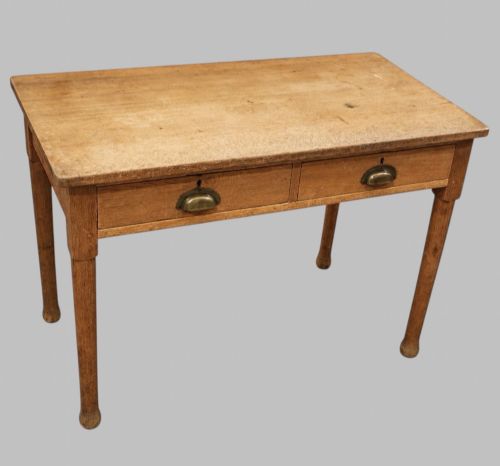
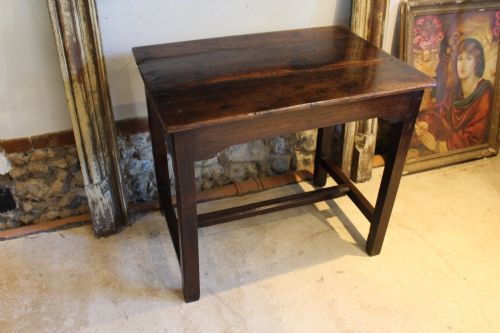
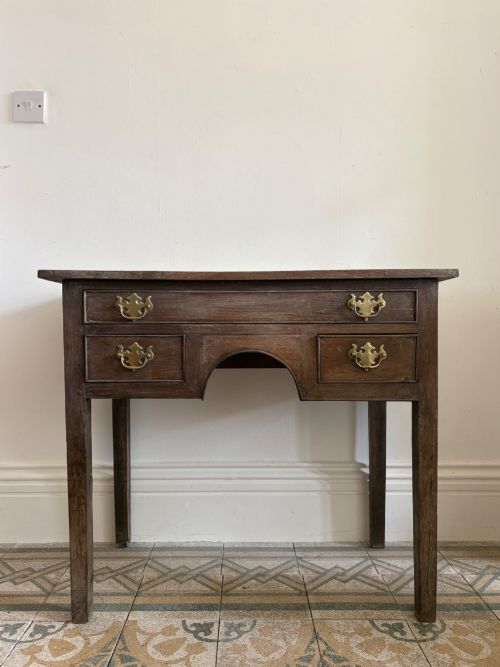
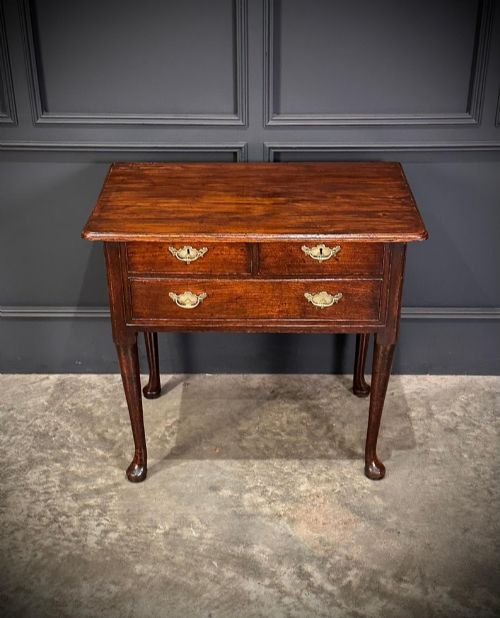
An early oak side desk connects domestic history with practical daily use, encompassing forms such as lowboys, writing tables, and side tables from the seventeenth and eighteenth centuries. These pieces emerge in styles ranging from Jacobean and Queen Anne to Georgian and early twentieth-century Arts and Crafts revivals. A buyer examining this category meets numerous lowboys and writing tables built from solid timber.
The selection ranges across centuries, including seventeenth-century examples alongside eighteenth-century George I pieces and later Edwardian interpretations. Makers constructed these versatile items to serve as dressing tables, writing desks, and side tables. The enduring appeal lies in the straightforward joinery and robust character of the oak.
Assessing Quality
The distinction between tiers rests upon the integrity of the timber, the preservation of original surfaces, and the sophistication of the proportions. Superior examples retain their early brass pulls and uncompromised drawer linings, displaying crisp mouldings and stable construction. Lesser instances often show extensive timber replacement or unsympathetic cleaning that strips the character from the grain.
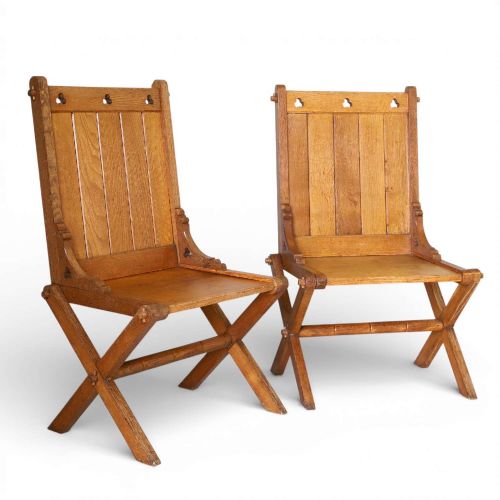
Proportion and regional origin also influence the standing of a piece, with well-balanced proportions and documented provenance marking out the finer specimens. The presence of period details, such as trefoil carvings or specific regional turning, elevates certain lowboys and side tables above standard utilitarian variants.
Early Oak Side Desk Retail Price Guide 2026
Typical asking prices for early oak side desk among the pieces listed under this phrase on Sellingantiques today, from the lower quarter to the upper quarter. They describe what is for sale here now, not the wider market.
Listings span from the 17th century to the Edwardian era, featuring oak, brass, textile, and leather across forms like lowboys and writing desks.
The Early Oak Side Desk Glossary
- Lowboy
- A small table with one or more drawers, commonly used as a dressing table or side table during the seventeenth and eighteenth centuries. These pieces typically stand on slender legs and represent a significant portion of early oak furniture.
- Mortise and tenon
- A traditional joint used to connect two pieces of wood, where a projecting tenon fits snugly into a corresponding mortise hole. This method underpins the sturdy frames of early oak desks.
- George I
- The period of British design spanning the early eighteenth century, characterised by clean lines and the adoption of cabriole legs. Furniture from this era often utilises high-grade oak.
- Arts and Crafts
- A design movement from the late nineteenth and early twentieth centuries that emphasised handcraftsmanship and simple forms. Pieces from this era often reinterpreted earlier vernacular styles.
- Gothic Revival
- An architectural and decorative style drawing inspiration from medieval forms, featuring pointed arches and ornate details. Items from this movement sometimes incorporate motifs like trefoils.
Early Oak Side Desk: Frequently Asked Questions
What is an early oak side desk?
An early oak side desk encompasses lowboys, writing tables, and side tables produced in centuries past. These items served functional roles in homes for writing and dressing.
They combine utilitarian purpose with the rich grain and sturdy construction characteristic of early English cabinetmaking.
How do I identify a lowboy?
A lowboy is a small table featuring a set of drawers beneath the working surface, often raised on four legs. They frequently function as dressing tables or compact writing desks.
Their scale allows them to fit easily into smaller spaces while providing practical storage.
Which periods are represented?
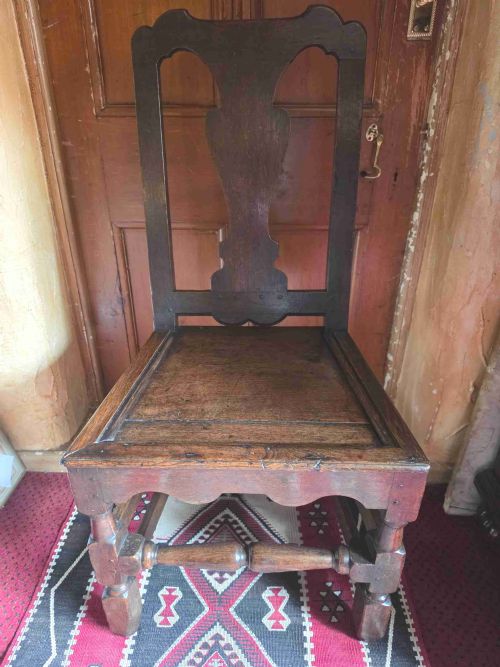
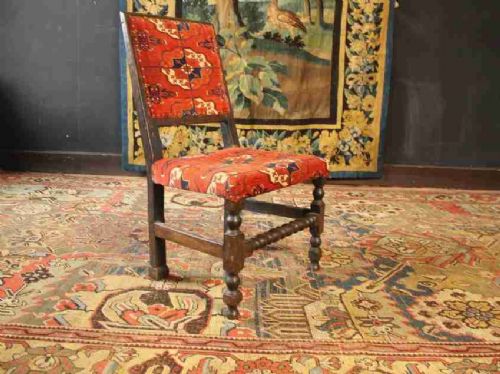
The pieces span from the seventeenth century through the Georgian era and into early twentieth-century revivals. Examples include seventeenth-century side chairs, eighteenth-century lowboys, and Edwardian writing tables.
Each period brings distinct stylistic elements, from Jacobean severity to Arts and Crafts simplicity.
How do I care for antique oak?
Caring for antique oak involves keeping the timber away from direct heat sources and sudden humidity changes. Regular dusting with a dry cloth maintains the surface without the need for heavy polishes.
Allowing the wood to breathe preserves the natural patina developed over centuries.