
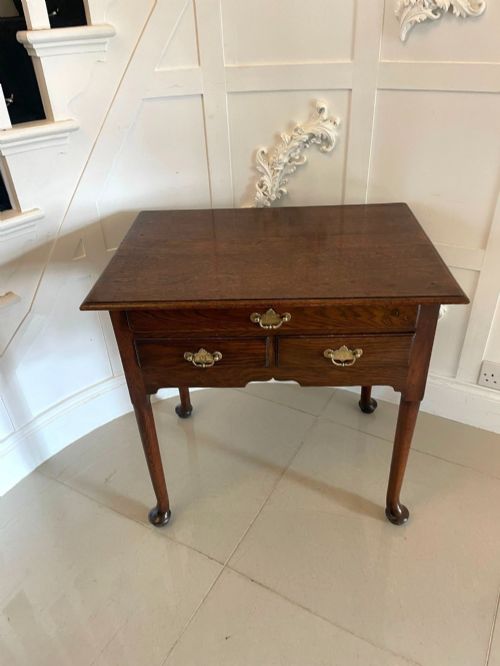
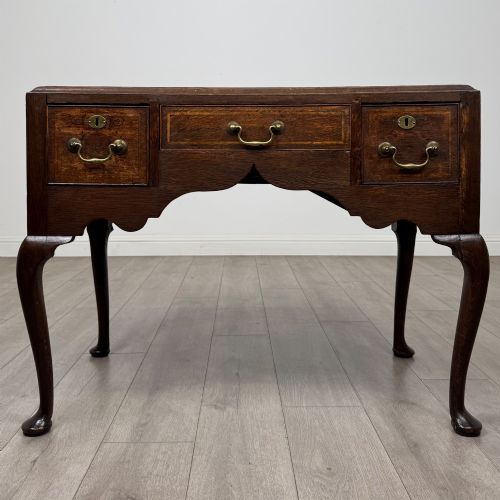
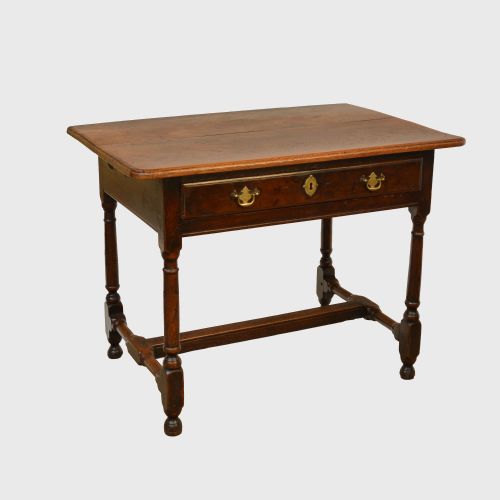
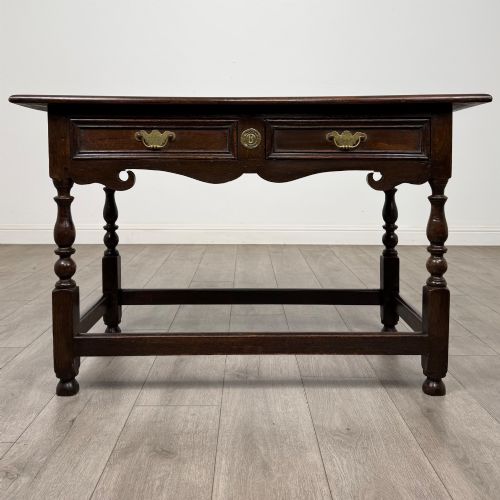
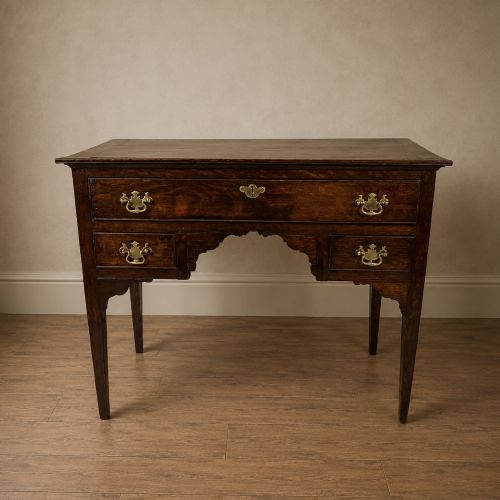
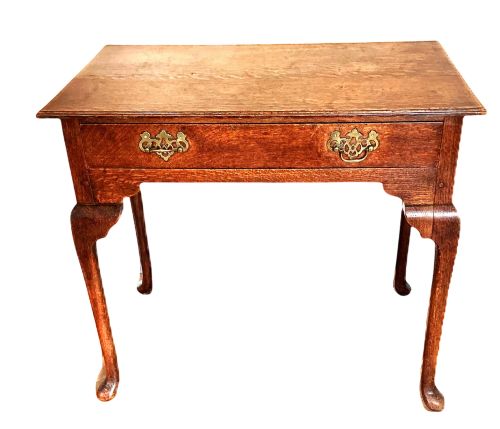
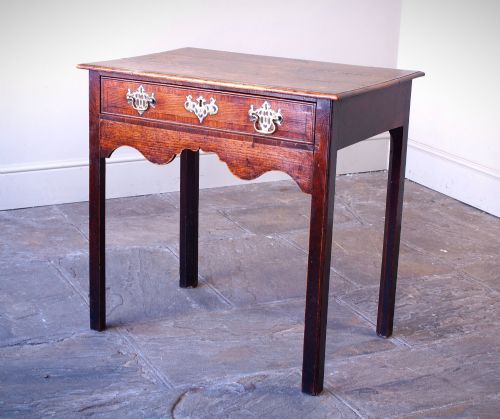
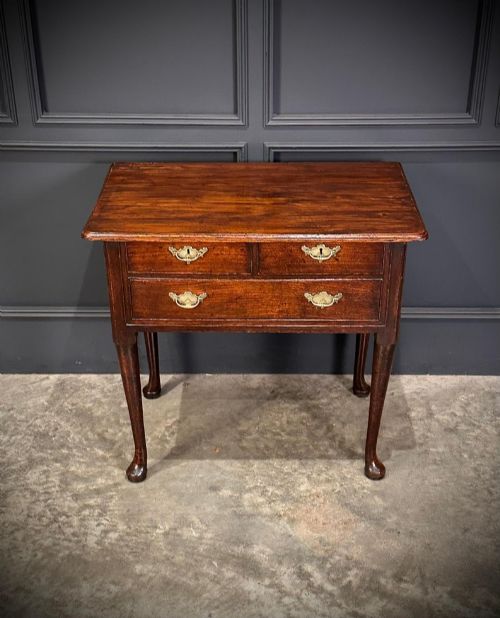
Georgian Oak Dressing Desk
A georgian oak dressing desk is a compact, practical table used for grooming or writing, offering sturdy timber and simple drawers.
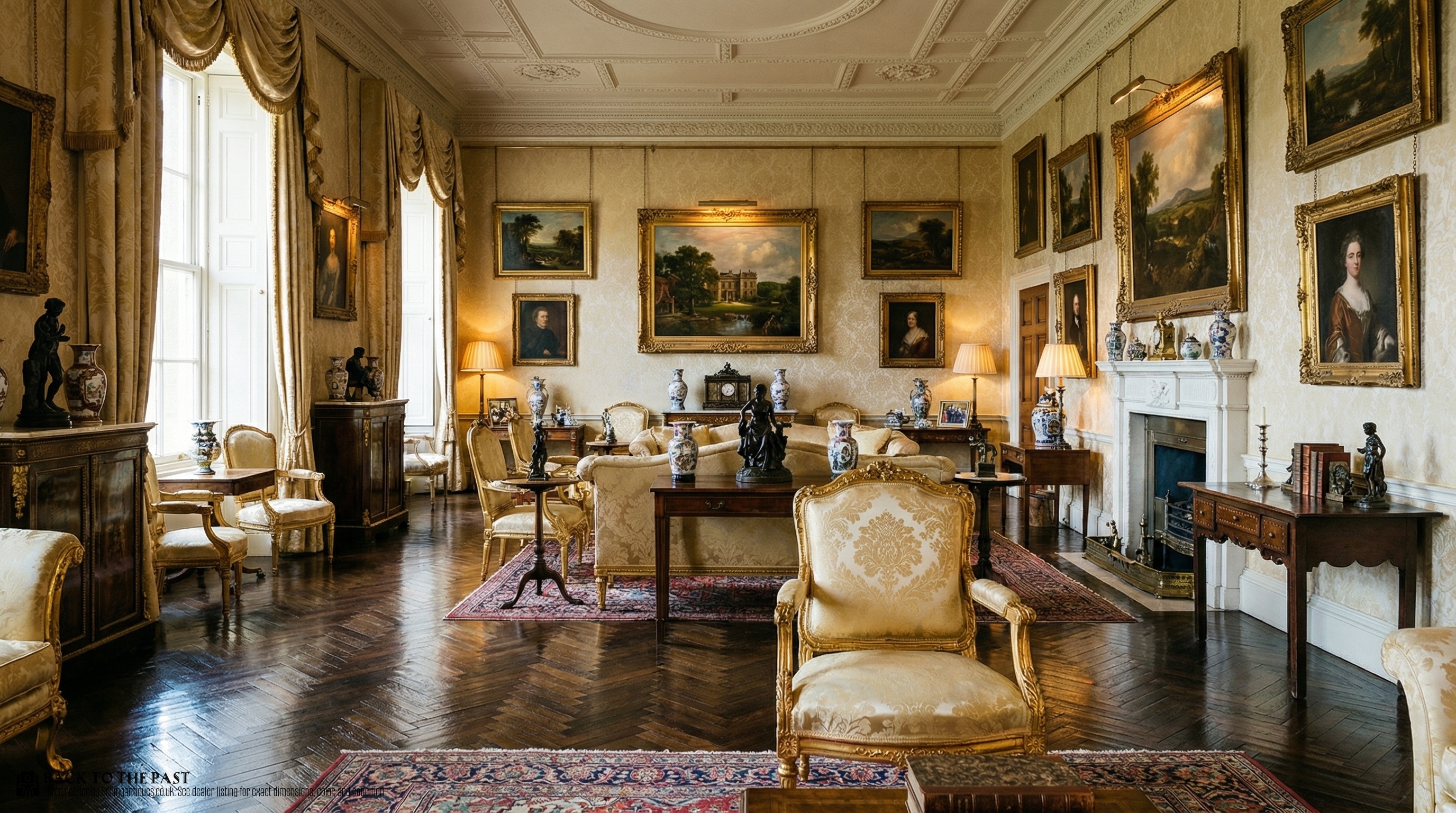
Georgian Oak Dressing Desk
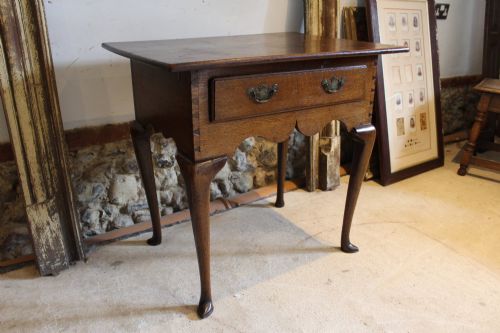
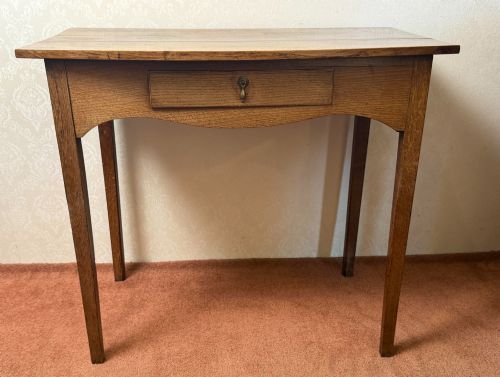
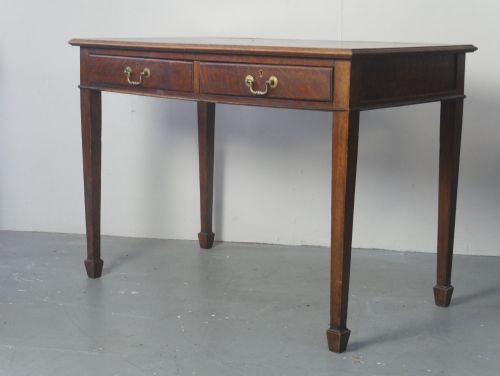
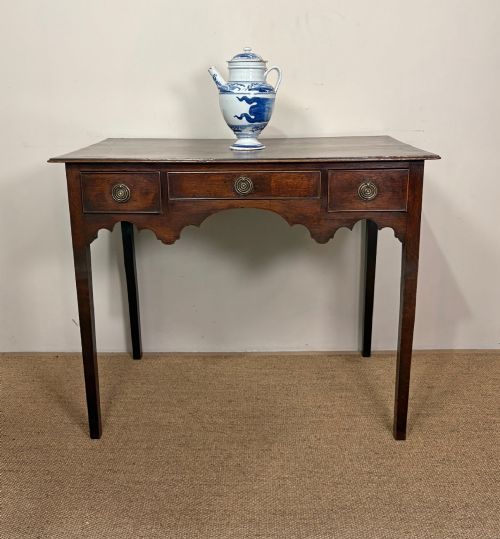
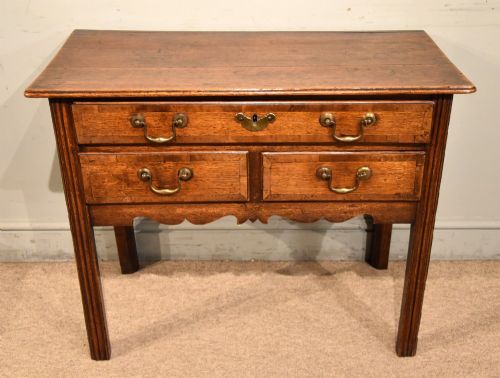
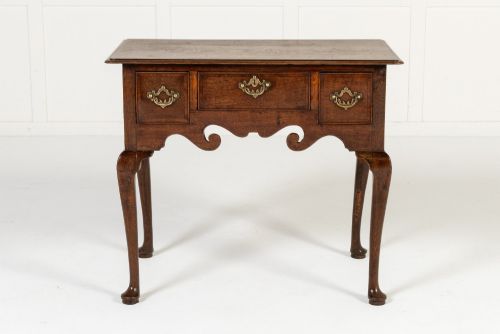
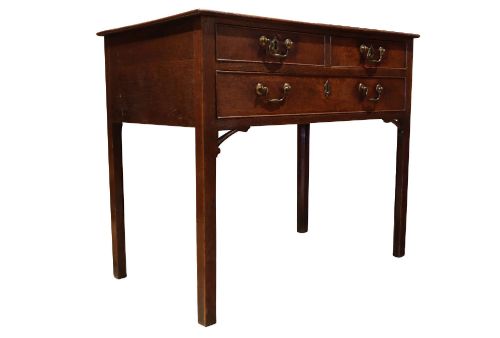
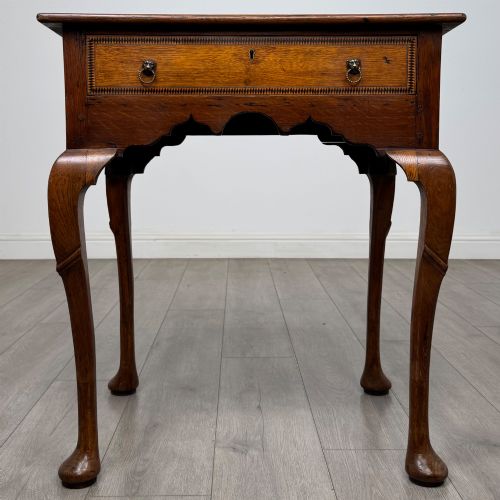
A georgian oak dressing desk primarily appears here in forms such as lowboys, side tables, and writing desks originating from the eighteenth and nineteenth centuries. These pieces combine domestic utility with regional cabinet-making, often featuring single or multiple drawers set beneath a frieze.
Buyers encounter examples spanning the George II and George III periods, alongside pieces built in the broader Georgian style and English Country tradition. The design prioritises functional surface area and understated proportions suited to domestic chambers.
While oak is the dominant timber, the selection also includes secondary woods and related variants like yew, elm, fruitwood, and walnut. Each piece reflects the working methods of period joiners who balanced structural strength with restrained decoration.
How they were made
Cabinet-makers relied on solid oak planks for the primary surfaces and frames, frequently supplementing them with elm, yew, fruitwood, or walnut for contrasting details or drawer linings. These timbers were joined using traditional framing techniques designed to withstand daily use without warping.
Hardware such as brass handles and drawer pulls were fitted to house the fitted drawers that characterise these tables. Surface finishes were kept simple, allowing the natural grain of the wood to remain visible through centuries of wear.
Materials recorded across the inventory include brass, oak, walnut, mahogany, elm, burr walnut, yew, and fruitwood.
What varies in quality
The degree of refinement in the timber selection and surface finish distinguishes standard utilitarian pieces from more ambitious cabinet work. Finer examples display carefully chosen grain patterns and more deliberate attention to proportions and edge profiling.
The Georgian Oak Dressing Desk Glossary
- Lowboy
- A small table with one or more drawers, commonly used as a dressing table or side table during the eighteenth century.
- Side table
- A versatile small table designed to stand against a wall or beside other furniture.
- Feather banding
- A decorative inlay technique using veneer strips arranged to form a herringbone pattern around drawer edges.
- Fruitwood
- A dense, light-coloured timber sourced from fruit-bearing trees and utilised for provincial furniture.
- Frieze
- The horizontal band or section situated directly beneath the top surface of a table.
Georgian Oak Dressing Desk: Frequently Asked Questions
What is a lowboy?
A lowboy is a small, low table equipped with drawers, historically used for grooming or personal dressing in domestic bedchambers.
Over time, these pieces also served as writing desks or side tables due to their convenient proportions and storage capacity.
How do I date a dressing desk?
Dating relies on examining construction methods, timber choices, and stylistic markers associated with reigns like George II or George III.
Changes in drawer assembly, handle styles, and secondary woods help place a piece within the eighteenth or nineteenth century.
Where were these tables used?
These desks were typically kept in private chambers, parlours, or country house dressing rooms for personal grooming and correspondence.
Today, their compact footprint makes them suitable as writing tables or side tables in modern living spaces.
What woods are common?
Oak is the primary timber found in these listings, often accompanied by elm, yew, walnut, and fruitwood in regional pieces.
Cabinet-makers selected these native hardwoods for their durability and attractive grain patterns.