

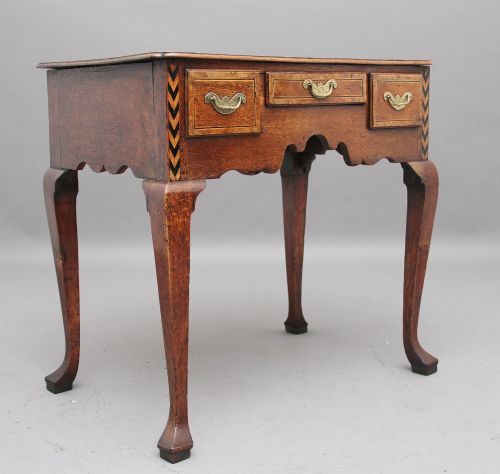


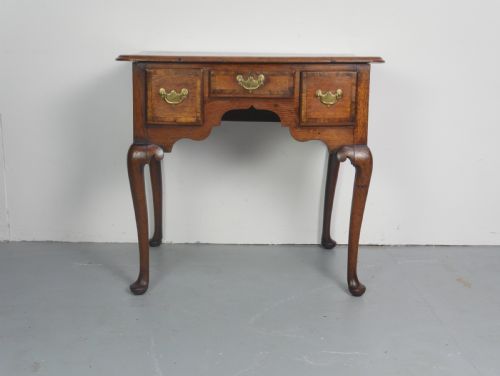


Georgian Oak Cabriole Desk
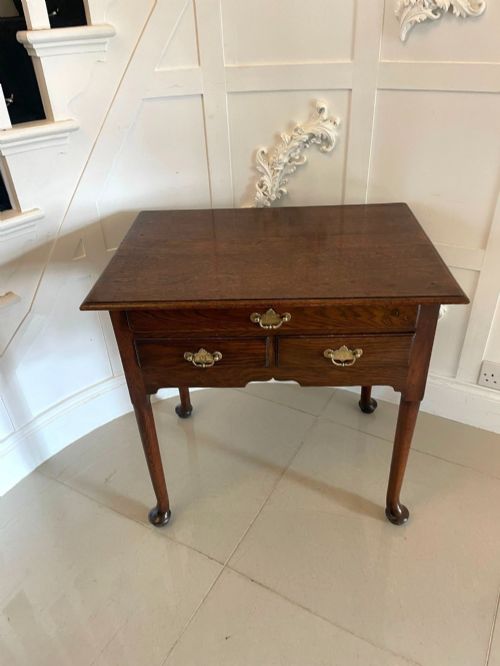
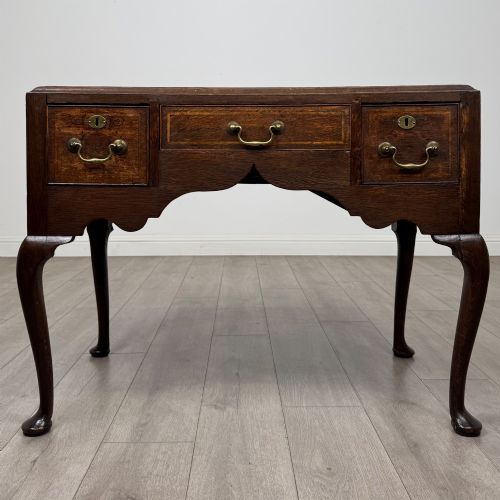
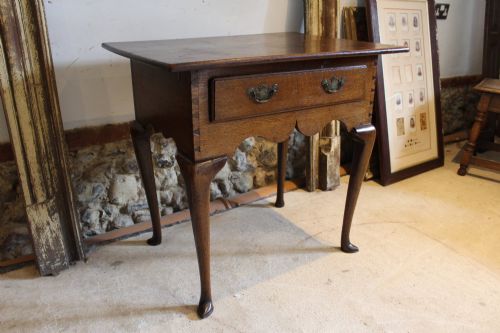
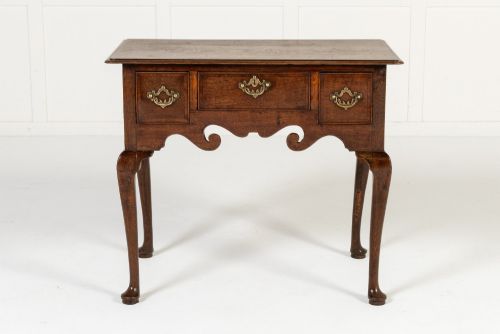
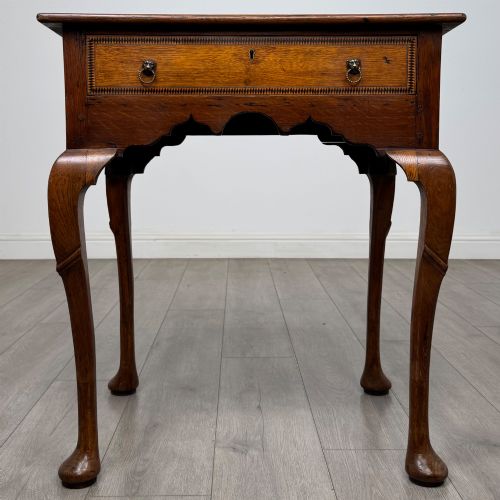
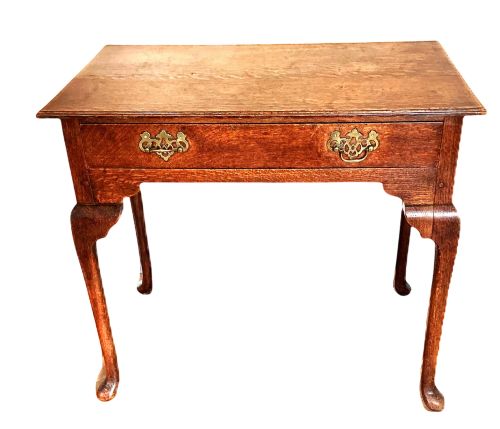
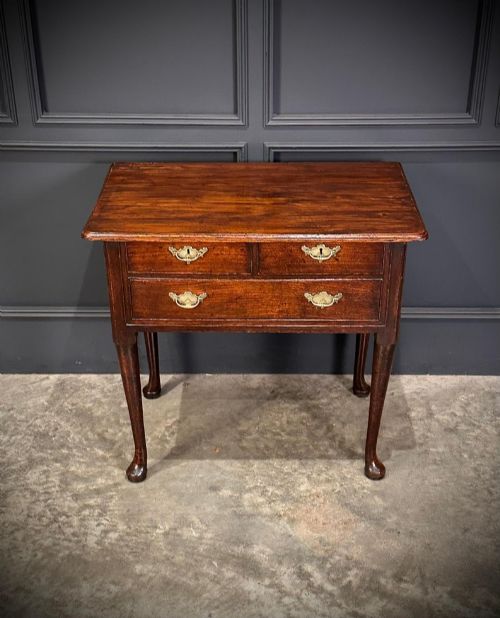
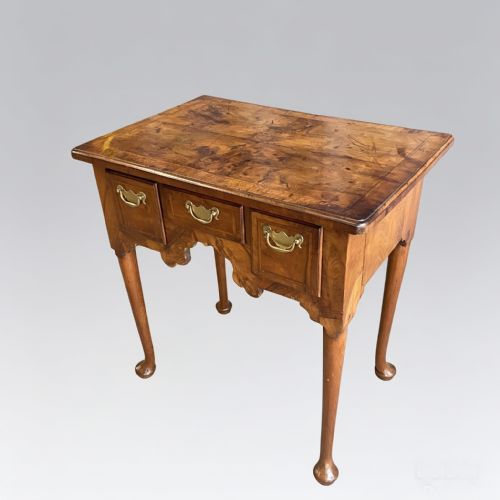
A georgian oak cabriole desk or lowboy offers practical writing space paired with curved leg joinery rooted in eighteenth-century craftsmanship.
Georgian Oak Cabriole Desk
When you search for a georgian oak cabriole desk, you encounter lowboys, writing tables, and side tables constructed primarily during the eighteenth century. These versatile household furnishings combine sturdy timber frames with graceful, curved supports.
The version you are most likely to meet on this page is the lowboy or dressing table, frequently featuring single or multiple drawers beneath a polished top. They originate from periods spanning the reigns of George I, George II, and George III, alongside country-made interpretations.
How they were made
Cabinet makers utilised solid oak alongside secondary timbers such as elm, fruitwood, and walnut for drawer linings and secondary framing. Surfaces often display rich grain patterns developed through hand planing and finishing.
Structural integrity relied upon pegged mortise and tenon joints, while brass handles and escutcheons secured to drawer fronts added functional detail. Cabriole legs were shaped directly from solid timber blocks to achieve their characteristic double curve.
Many a diligent apprentice practiced his carving strokes on the hidden underside of a lowboy knee.
What varies in quality
The refinement of the leg profile distinguishes standard examples from superior pieces, with crisp carving and well-proportioned pad feet indicating skilled workmanship. Timber selection also dictates overall merit, particularly where quarter-sawn oak or contrasting feather banding is present.
Construction fidelity within the drawer construction reveals the maker's hand, demonstrated through neat hand-cut dovetails and smooth interior running surfaces. Original brass hardware and minimal timber replacement preserve the integrity of the piece.
The Georgian Oak Cabriole Desk Glossary
- Cabriole leg
- A furniture leg featuring a double curve, swelling outward at the knee and tapering inward to a foot. This design derived from ancient forms and gained prominence during the early eighteenth century.
- Lowboy
- A small table with one or more drawers, commonly used as a dressing table or writing desk during the Georgian period. They typically stand on four tall cabriole legs.
- Feather banding
- An inlay technique utilising small sections of veneer laid in a herringbone pattern around drawer perimeters. It frames the drawer front to create a decorative border.
- Mortise and tenon
- A traditional joint where a projecting peg fits tightly into a matching cavity to secure two pieces of timber at a right angle. This method provides robust framing without reliance on metal fasteners.
- Quarter-sawn
- Timber cut radially from the growth rings to produce a durable board with a distinctive flecked grain pattern. This method minimises warping in furniture surfaces.
Georgian Oak Cabriole Desk: Frequently Asked Questions
What is a lowboy used for?
These compact tables functioned primarily as dressing tables or writing desks within eighteenth-century bedchambers and parlours. Their drawer space accommodated personal documents, cosmetics, and small writing implements.
Today, they serve equally well as hallway console tables or independent writing surfaces within compact modern rooms.
How do I identify a Georgian piece?
Georgian furniture spans the reigns of the four Georges, displaying characteristic shifts from ornate walnut styles toward cleaner lines in mahogany and oak. Look for hand-cut joinery, period timber patination, and proportional symmetry.
Country-made pieces often retain regional characteristics while adhering to the overarching architectural proportions of the eighteenth century.
Are cabriole legs always carved?
Cabriole legs on oak pieces frequently remain plain, relying entirely upon the fluid double curve for visual effect. Some examples feature carved shell motifs or acanthus leaves upon the knee.
Plain pad feet or hoof feet terminate the leg depending on the regional workshop and the specific decade of manufacture.
How do I care for antique oak?
Protect antique oak surfaces from direct sunlight and sudden temperature shifts to prevent timber shrinkage and splitting. Apply natural beeswax periodically to nourish the grain and maintain the protective finish.
Avoid commercial silicon polishes, which build up over time and dull the historic patination developed across centuries of use.