
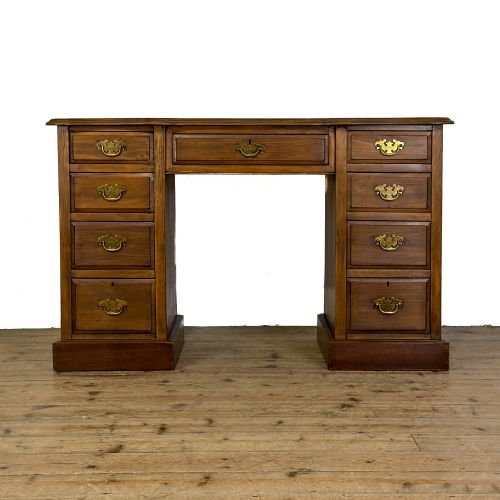
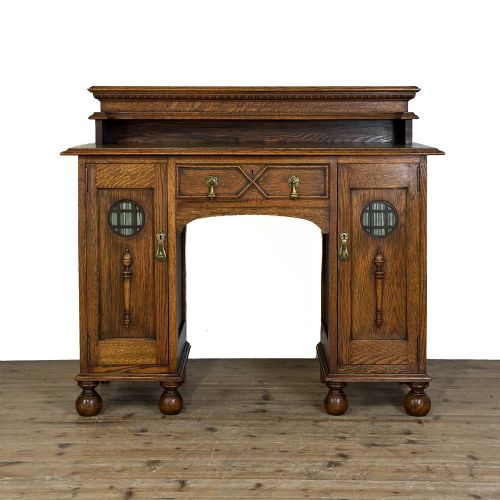
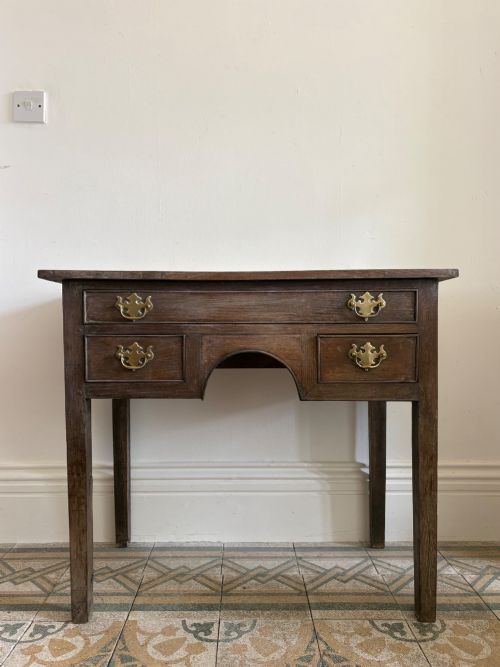
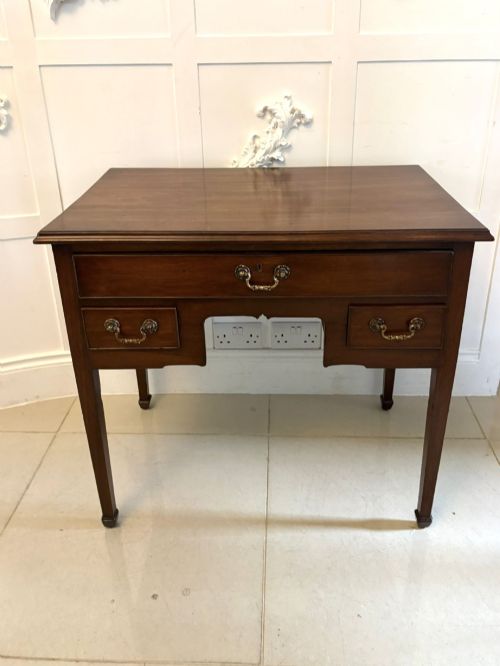
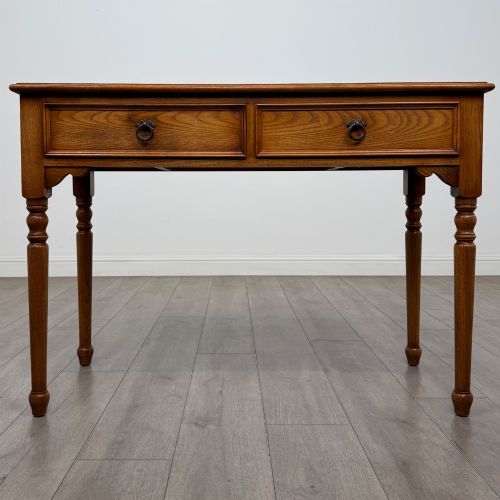
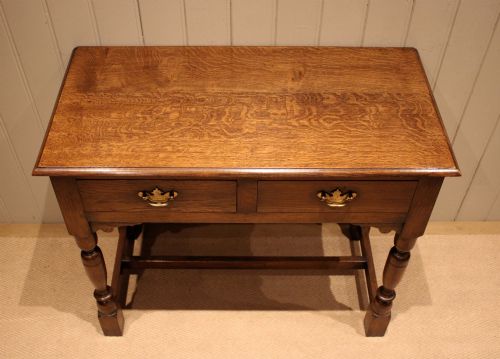
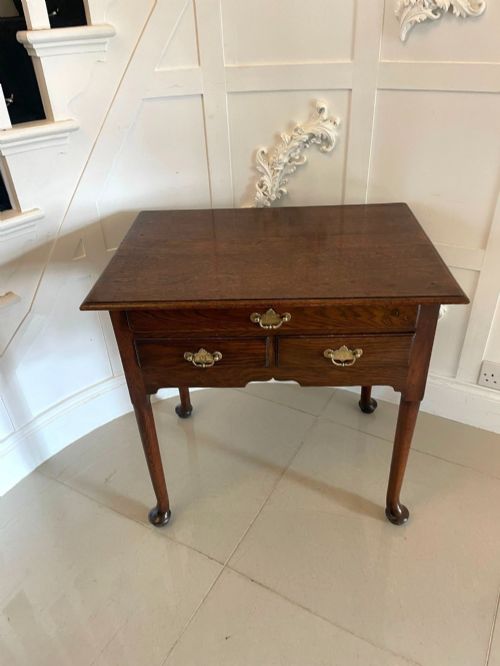

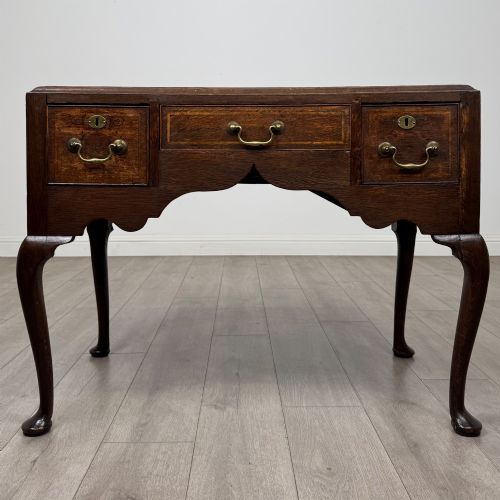
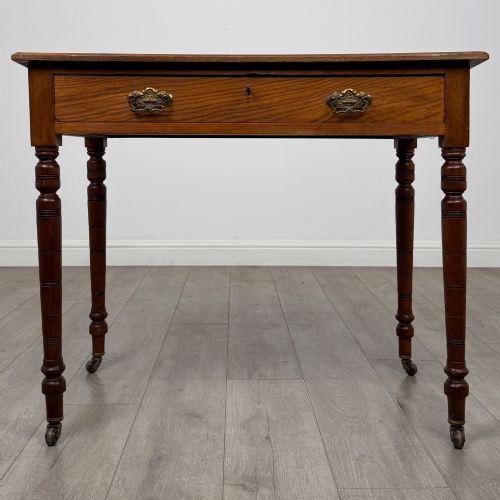
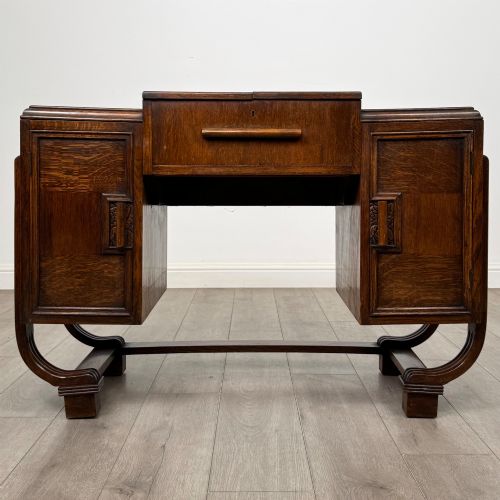
Antique Oak Dressing Desk
An antique oak dressing desk offers practical workspace built from robust timber, carrying decades of domestic history into a modern room.
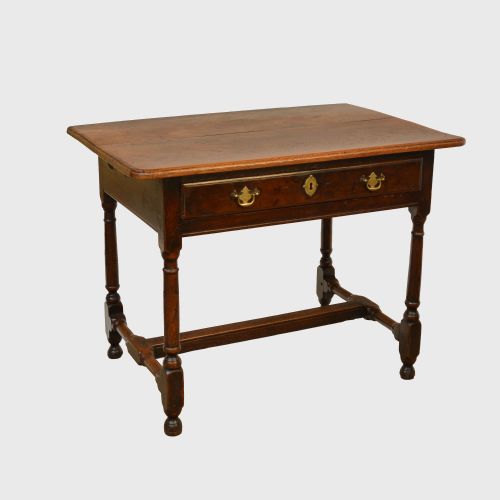
Antique Oak Dressing Desk
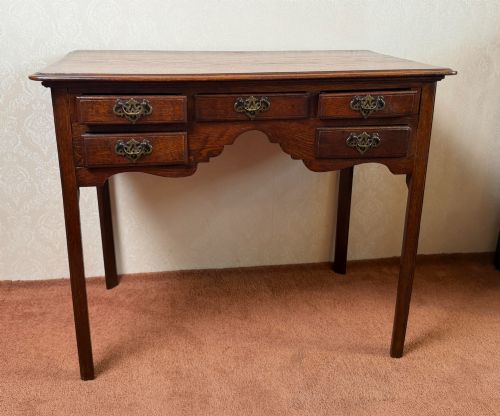
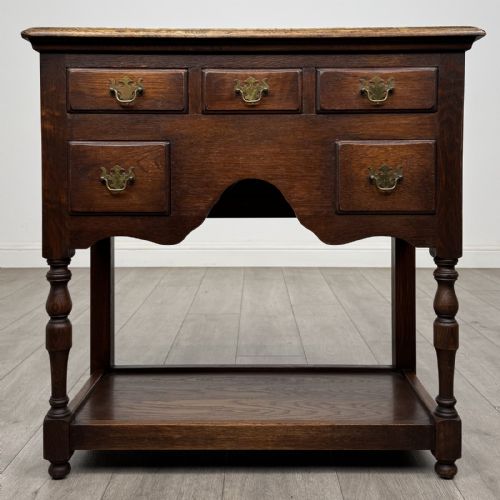
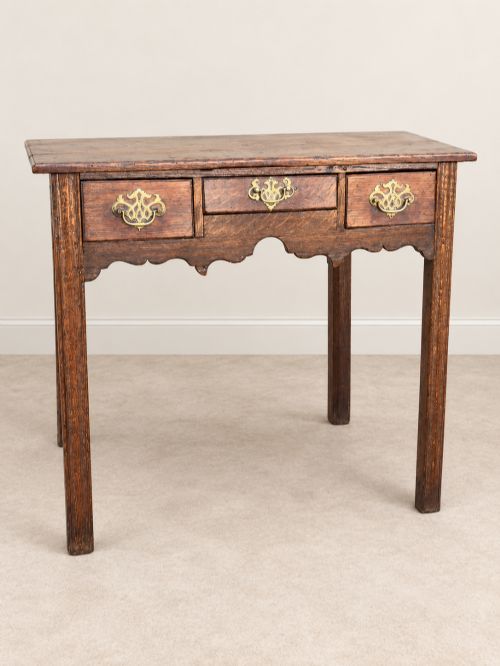
The lowboy emerges frequently among these listings, functioning historically as a small side table with drawers for personal grooming or correspondence. Alongside these, writing desks and dressing chests constructed from solid oak appear regularly, often equipped with fitted drawers for storage.
Makers such as Heal and Sons are represented in the twentieth-century pieces, showing limed finishes and modernist lines. The structural forms range from country house side tables to narrower console tables and specific dressing chests.
Distinguishing quality in oak tables
The standard of a piece depends heavily on the crispness of the timber moulding, the integrity of the drawer linings and the retention of original brass hardware. Eighteenth-century lowboys often demonstrate finer joinery and distinct proportions compared to later revival items.
Design ambition separates basic utility tables from sophisticated examples bearing maker labels, such as those from Heal and Sons, or unusual stylistic details like Art Deco geometry. The selection of figured oak boards and the weight of the timber further elevate specific desks above standard production.
Among the oak desks and tables, an Edwardian cigar box complete with sterling silver mounts makes a brief, unexpected appearance.
Heal and Sons
The Antique Oak Dressing Desk Glossary
- Lowboy
- A traditional eighteenth-century table featuring one or more rows of drawers, commonly used as a dressing table or side table.
- Georgian
- A stylistic period spanning the reigns of the Georges, noted for proportion, symmetry and quality timber construction.
- Limed oak
- A wood finish treatment giving timber a pale, pickled appearance, popular in early twentieth-century modernist furniture.
- Dressing chest
- A chest of drawers equipped with a surface for grooming and personal preparation, often paired with a mirror.
- Side table
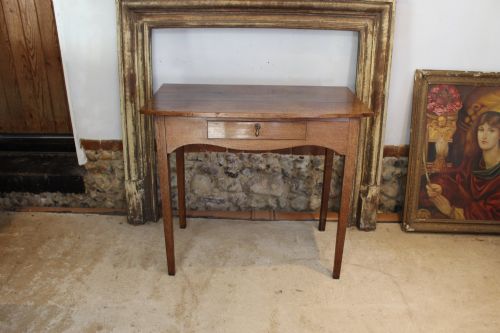
- A versatile small table designed to stand against a wall, frequently incorporating a single drawer for storage.
Antique Oak Dressing Desk: Frequently Asked Questions
What is an antique oak dressing desk?
These pieces comprise lowboys, writing tables and dressing chests constructed from oak across multiple centuries. They served historical functions for writing, grooming and general storage.
Today, buyers utilise them as compact desks, hall tables or bedroom dressing surfaces. Their varied periods range from the Georgian era through to Art Deco designs.
How do I identify a Georgian lowboy?
Georgian lowboys typically date from the eighteenth century, displaying traditional bracket feet, shaped aprons and hand-cut dovetail joints on the drawers. The timber exhibits deep patination accumulated over generations of use.
These tables maintain balanced proportions, often featuring a single wide drawer flanked by two smaller ones. Their construction relies on solid oak rather than modern veneers.
Where should I place a side table desk?
Side table desks fit easily into hallways, studies or bedrooms due to their shallow depth and compact footprints. They provide a surface for a lamp or a laptop without dominating the room.
Pairing the desk with a simple wooden chair creates a functional writing nook. Their neutral oak tones blend readily with various interior schemes.
What defines twentieth-century oak furniture?
Twentieth-century examples on this page include Edwardian and Art Deco pieces alongside modernist designs by makers like Heal and Sons. These items often feature clean geometric lines or limed oak finishes.
Unlike earlier country pieces, twentieth-century desks sometimes incorporate modernist hardware and novel proportions. They reflect changing domestic habits and interior tastes before the Second World War.