
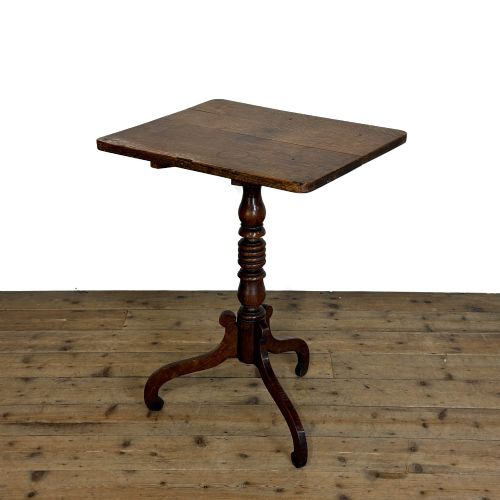
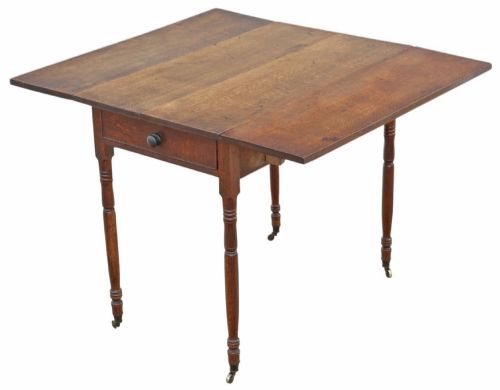
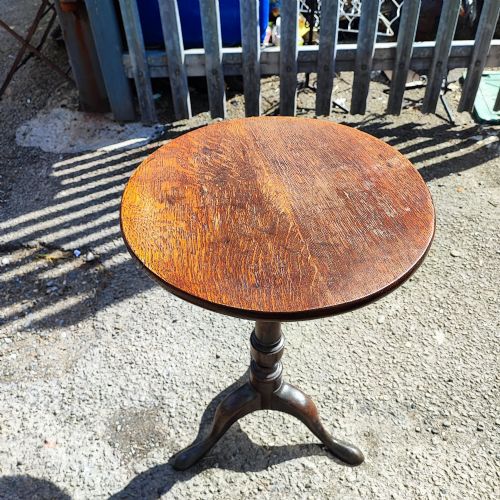
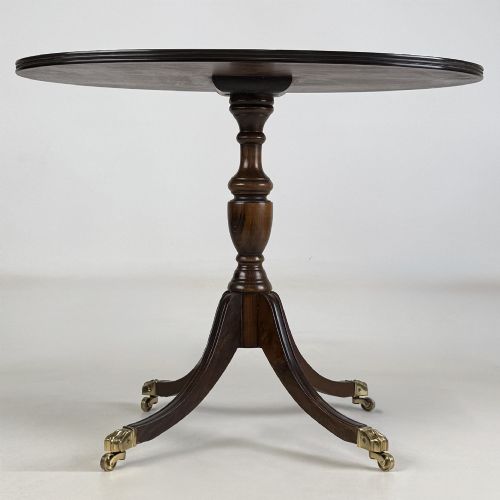
Georgian Oak Accent Table
A georgian oak accent table brings practical utility and warmth to a room through solid vernacular construction.

Georgian Oak Accent Table
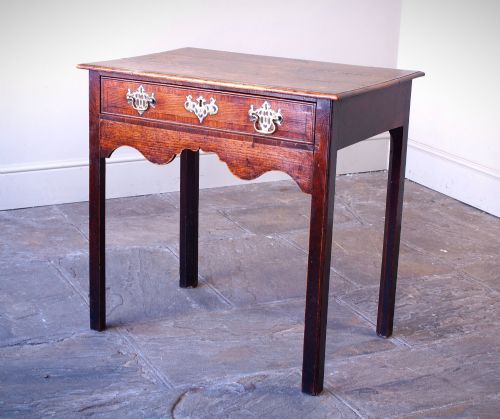
A georgian oak accent table encompasses compact domestic furnishings produced during the eighteenth century and associated periods, including side tables, wine tables, and lowboys. These smaller forms served specific daily uses in domestic spaces, from holding candles to serving beverages.
The versions most commonly met on this page date from the eighteenth century through to the early nineteenth century. They display regional English and Welsh provincial characteristics, reflecting the working methods of country joiners rather than urban cabinet makers.
Evaluating Quality and Character
Quality rests in the depth of colour and the untouched condition of the timber surfaces over centuries of use. Provincial pieces demonstrate the individual hand of the maker through subtle variations in turning and joinery.
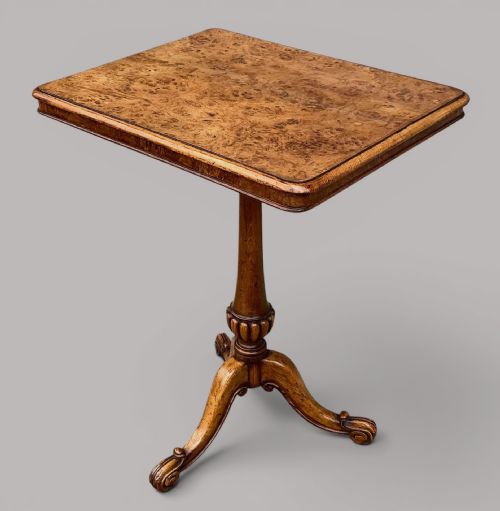
Proportion and timber selection separate everyday utilitarian items from finer examples. Grain definition in burr oak or walnut elements indicates the higher status of specific tables within a domestic setting.
Georgian Oak Accent Table Retail Price Guide 2026
Typical asking prices for georgian oak accent table among the pieces listed under this phrase on Sellingantiques today, from the lower quarter to the upper quarter. They describe what is for sale here now, not the wider market.
Primary materials recorded across the selection include solid oak, burr oak veneer, elm, walnut, and pine, occasionally paired with brass hardware.
The Georgian Oak Accent Table Glossary
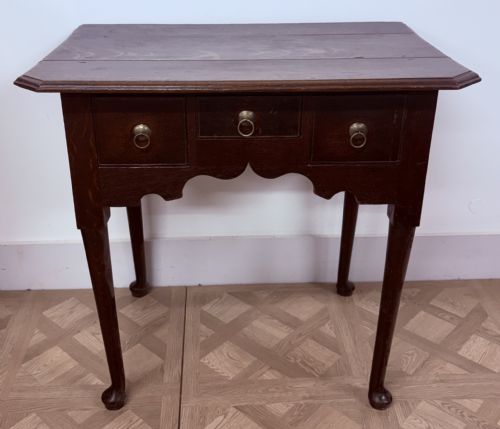
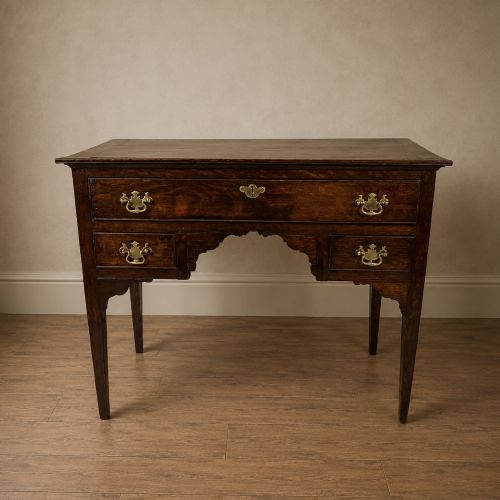
- Lowboy
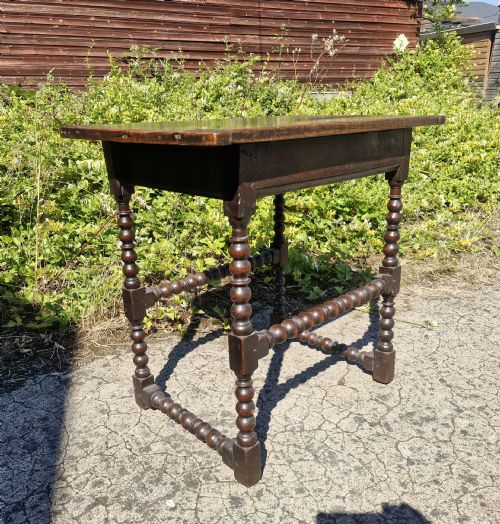
- A small table with one or more drawers, typically used as a dressing table or side table during the eighteenth century. They stand on relatively short legs.
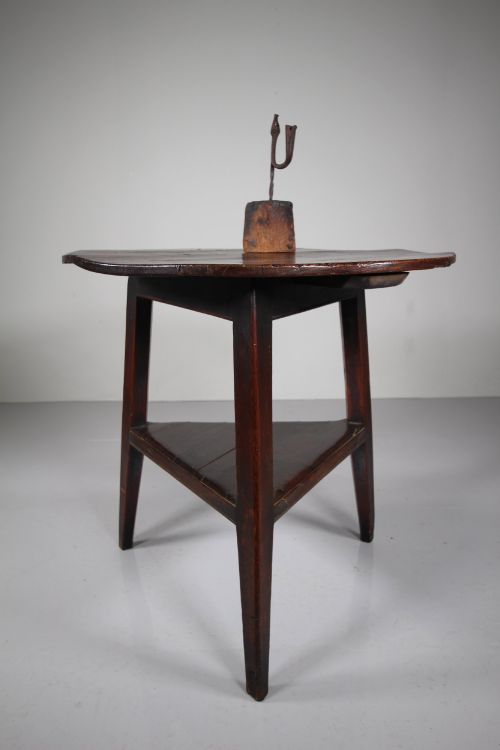
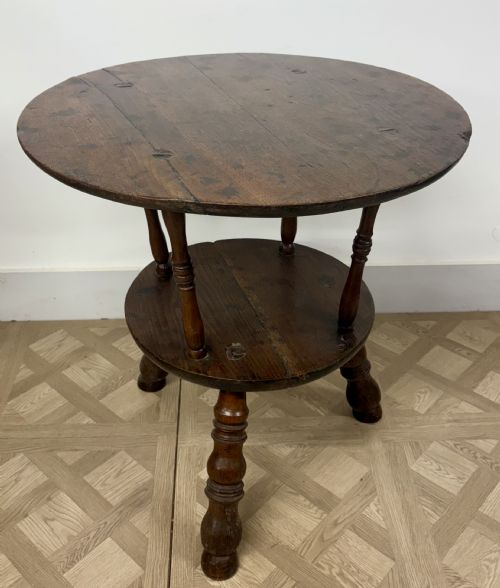
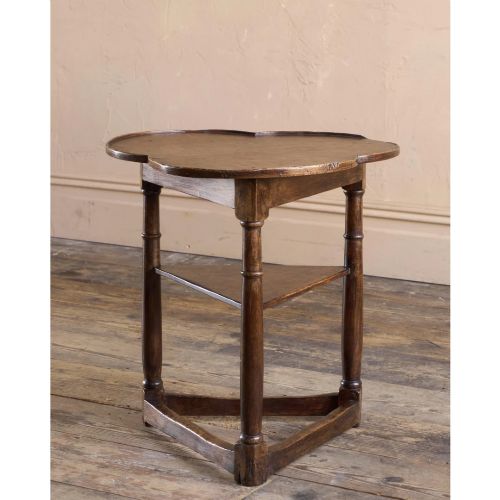
- Cricket table
- A small round table featuring three legs, traditionally designed to stand steady on uneven floors in domestic cottages. They often incorporate a lower tier for storage.
- Tilt-top
- A tabletop mechanism that allows the surface to pivot to a vertical position when not in use. This design saved space in smaller rooms.
- Joint stool
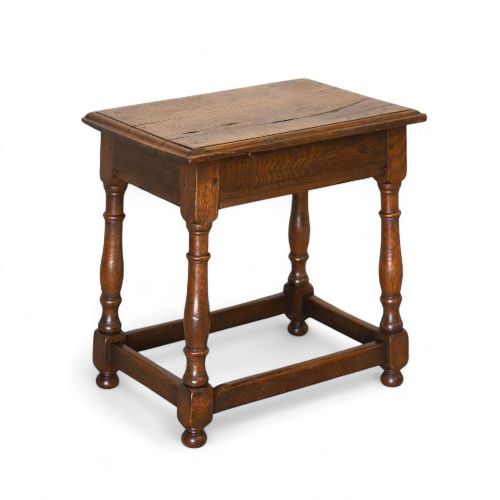
- A sturdy wooden seat constructed with mortise and tenon joinery using wooden pegs. These items functioned as seats or auxiliary surfaces.
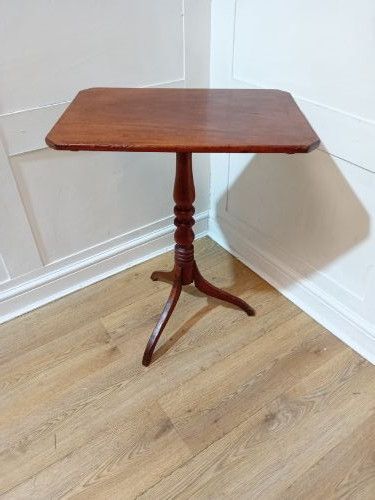
- Tripod table
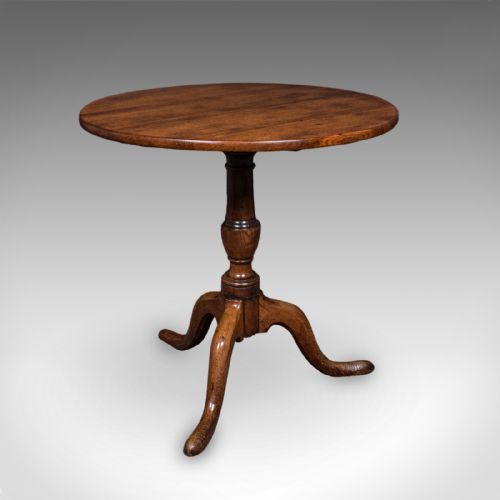
- A freestanding small table supported by a pillar above three spreading legs. They appear frequently as wine tables or occasional tables.
Georgian Oak Accent Table: Frequently Asked Questions
What did they use a lowboy for?
A lowboy functioned primarily as a compact storage table for personal items or valuables in private chambers. They provided a surface for grooming or writing within smaller domestic spaces.
Over time, these versatile tables moved into hallways and reception rooms as convenient surfaces for lamps and decorative objects.
How do I identify an 18th century table?
Look for construction details such as hand-cut pegged joinery, timber shrinkage, and evidence of hand-tool work on the underside of tops and drawer linings. Eighteenth-century oak develops a deep, rich colour and patina through decades of polishing and handling.
Secondary woods used inside drawers, such as pine or elm, also assist in confirming the period origin of provincial furniture.
Where should I place a tripod table?
A tripod table fits easily beside seating areas or in corners due to its compact circular top and slender central column. Their small footprint makes them suitable for rooms where space is limited.
Avoid placing them in areas with direct sunlight or fluctuating humidity to protect the aged timber surfaces.
What is a cricket table?
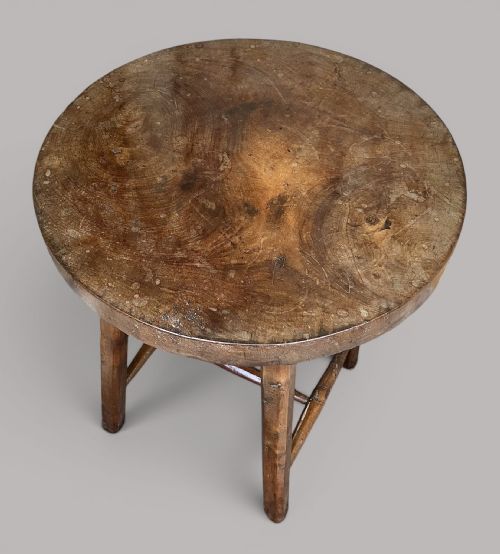
A cricket table is a three-legged occasional table with a circular top, historically associated with English country houses and farmhouses. The three-legged design ensured the table remained stable on flagstone or uneven floors.
Many examples feature a triangular under-tier shelf positioned between the legs for added structural rigidity and storage.