

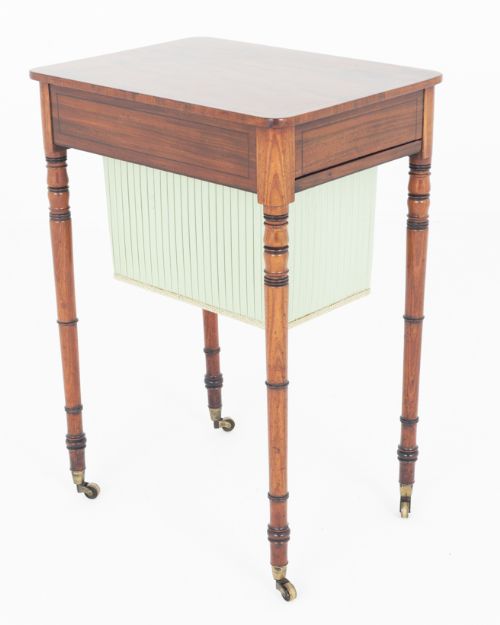


Georgian Needlework Box
A georgian needlework box brings together practical sewing storage and refined cabinetmaking from the Georgian and Regency periods.
Georgian Needlework Box
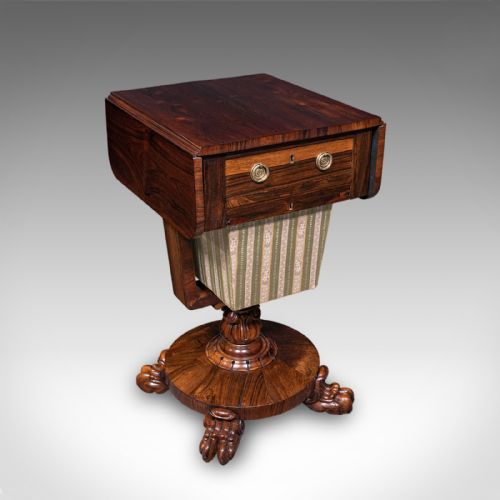
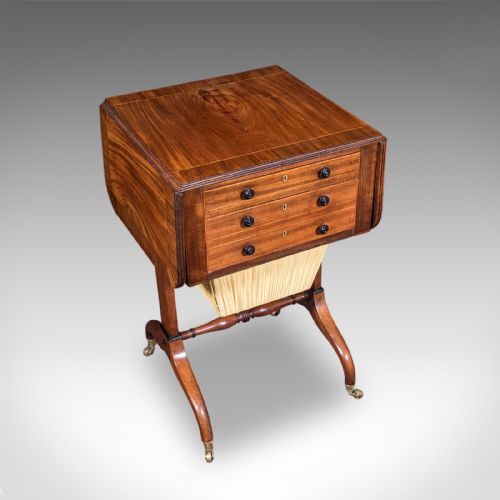
A georgian needlework box encompasses both tabletop workboxes and freestanding sewing tables designed for domestic use. The pieces appearing here span the Georgian, Regency, and William IV eras, along with later Victorian and Edwardian examples.
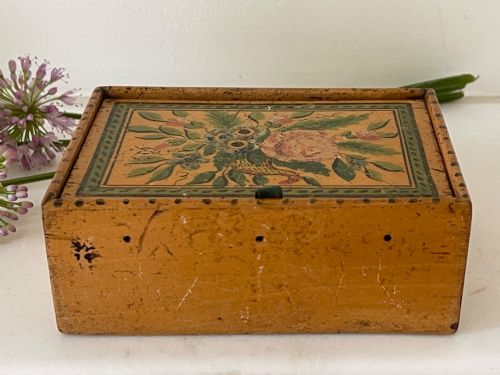
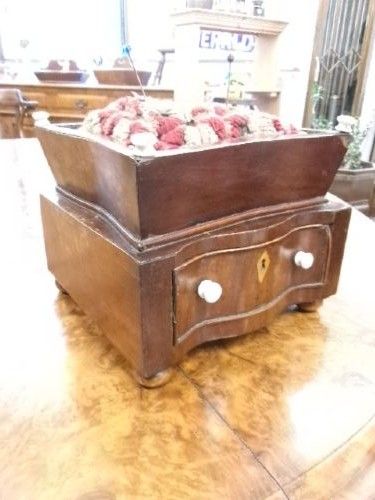
Tabletop boxes take the form of small, portable containers fitted with compartments for threads, pins, and accessories. Freestanding versions serve as occasional or side tables incorporating drop leaves and silk bags beneath for fabric storage.
Materials range from native timbers such as mahogany and satinwood to exotic rosewood and pollard oak. More specialised items include Tunbridge ware, tortoiseshell, and Anglo-Indian ivory work from Vizagapatam.
Materials and Technique
Cabinetmakers utilised dense hardwoods like mahogany, rosewood, and satinwood, often selecting figured veneers such as flame mahogany and pollard oak for exterior surfaces. Solid timbers form the structural frames, drop leaves, and pedestals.
Surface ornamentation relies on brass inlay, shell marquetry, and delicate stringing, alongside Japanned finishes and painted satinwood. Tunbridge ware incorporates intricate mosaic woodblock patterns, while specialised boxes feature bone, ivory, and fabric linings.
Listings feature mahogany, rosewood, satinwood, brass, fabric, bone, and ivory across Georgian, Regency, and Victorian periods.
Distinctions in Standard
The standard of a georgian needlework box rests on timber selection, veneer matching, and the precision of interior fittings. Finer pieces demonstrate careful grain alignment across lid and drawer fronts, alongside well-executed brass or shell inlays.
Construction details distinguish workshop tiers, visible in the dovetailing of internal compartments, the integrity of lyre ends or pedestal bases, and the preservation of original fabric linings, hinges, and lock hardware.
The Georgian Needlework Box Glossary
- Work table
- A freestanding piece of furniture designed for sewing, featuring a drawer and an under-mounted fabric bag.
- Tunbridge ware
- Small wooden objects decorated with mosaic patterns built from tiny blocks of naturally coloured woods.
- Drop leaf
- A hinged flap on a table that lifts to extend the surface area when needed.
- Japanned
- A style of European decorative finish that imitates Japanese and Chinese lacquerwork.
- Lyre-ended
- A furniture support shaped like the classical stringed instrument, common in Regency pedestal designs.
Georgian Needlework Box: Frequently Asked Questions
What is a georgian needlework box?
A georgian needlework box is a specialised container or small table created to hold sewing implements, threads, and materials. These pieces served ladies in the parlour for needlecraft and correspondence.
They appear as portable tabletop boxes or as freestanding work tables with internal compartments and fitted silk bags.
How were sewing tables used?
These tables functioned as movable side or lamp tables that doubled as workstations for embroidery and sewing. The drawers and drop-leaf surfaces provided space for active projects.
The suspended fabric bag underneath held wools and cloths out of sight when not in use.
How do I identify Regency pieces?
Regency pieces often display classical motifs, rosewood or flame mahogany veneers, and brass inlay. Structural forms frequently include pedestal bases and lyre-end supports.
Proportions remain clean and architectural, reflecting the influence of the early nineteenth century.
What materials are most common?
Mahogany and rosewood dominate the selection, complemented by satinwood, pollard oak, and various exotic timbers. Interiors frequently combine fabric, bone, and mirror elements.
More decorative examples incorporate tortoiseshell, ivory, or specialised wood mosaic work.