


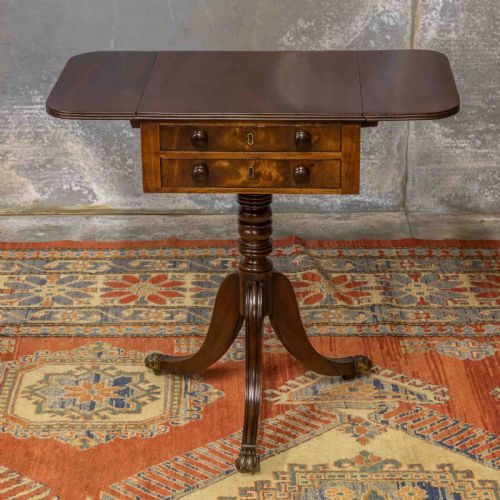


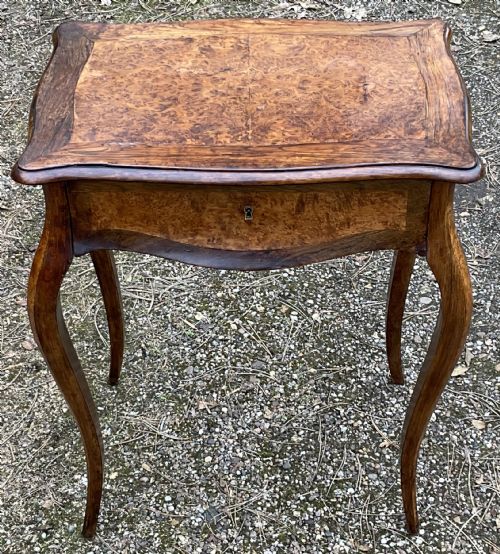

Ladies Needlework Table
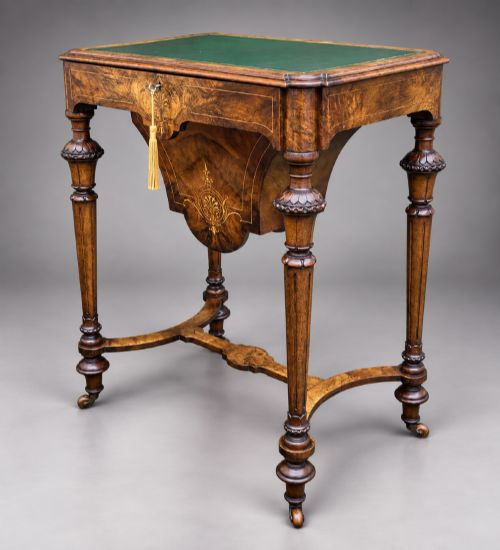
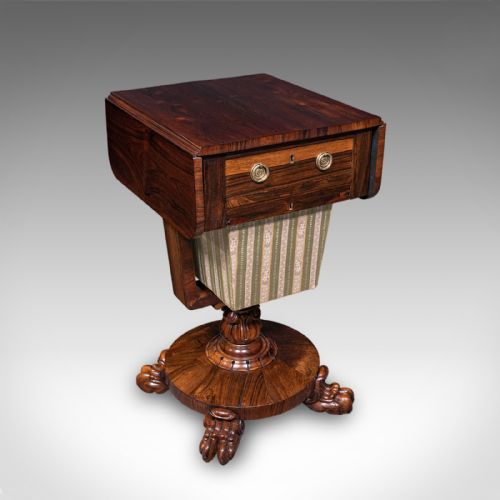
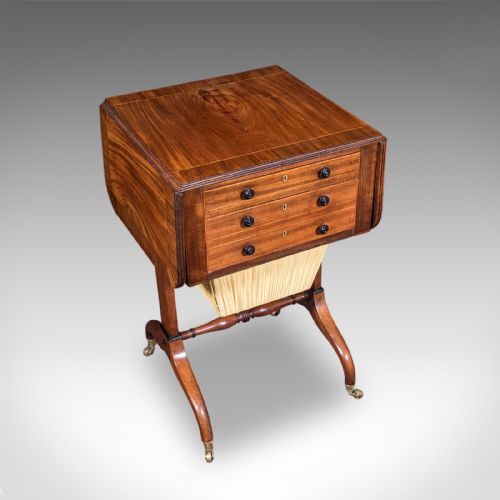
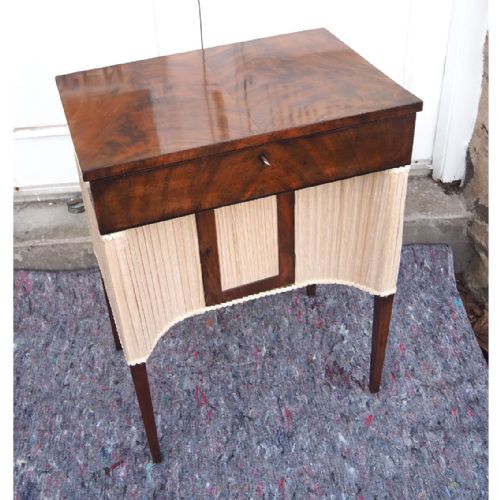
These ladies needlework table examples are compact domestic pieces designed for sewing and crafting, offering hidden storage and elegant surfaces for the parlour.
Ladies Needlework Table
A ladies needlework table provides a dedicated surface for sewing, crafting, and light correspondence, frequently incorporating an internal compartment or suspended bag for materials. The pieces appearing across this selection span the Georgian, Regency, and Victorian eras through to the Edwardian period.
Most examples function as occasional tables, work tables, or sewing tables, with drop-leaf formats and fitted interiors appearing regularly. These functional domestic items originate from English and French workshops, utilising fine timbers to suit the refined sitting rooms of the nineteenth and early twentieth centuries.
Makers often integrated multiple uses into a single frame, combining a sewing box or writing surface with the footprint of a small side table or occasional table. Surviving pieces demonstrate the changing domestic habits of polite society across successive design revivals.
Materials and Construction
Cabinetmakers utilised dense hardwoods such as mahogany, rosewood, walnut, burr walnut, and satinwood, often applying decorative veneers or marquetry to the primary surfaces. Lighter woods like yew and specialised timber inserts provide contrast within the construction of the frames and internal compartments.
Joinery techniques include drop-leaf hinges, precise framing for inset fabric bags, and fitted wooden boxes with specialised compartments for sewing tools and threads. Brass hardware and subtle inlay work finish the structural joints and decorative borders.
Mahogany and walnut form the primary timber foundation across the nineteenth-century listings on this page.
Judging Quality
The distinction between standard and superior pieces rests on the choice of timber and the precision of the decorative veneers, such as burr walnut or flame mahogany. Finer examples display carefully matched grain patterns and restrained inlay rather than heavy ornamentation.
Interior execution distinguishes workshop standards, seen in the arrangement of the fitted compartments and the integrity of the suspended work bag. The smoothness of moving parts, such as drop leaves and sliding drawers, reflects the original carpenter's skill.
Waring and Gillow
The Ladies Needlework Table Glossary
- Work table
- A small domestic table designed specifically to hold sewing implements, threads, and needlework supplies within fitted drawers or hanging fabric bags.
- Drop leaf
- A hinged flap on the side of a table that can be raised to extend the surface area or lowered when space is restricted.
- Marquetry
- Decorative veneer work arranged in pictorial or geometric patterns using various coloured woods applied to the carcase.
- Flame mahogany
- A highly figured cut of mahogany displaying a distinctive flame-like pattern across the polished timber surface.
- Occasional table
- A small, movable table designed for general use in a reception room rather than for a single fixed purpose.
Ladies Needlework Table: Frequently Asked Questions
What is a ladies needlework table used for?
These tables served as functional furniture for women to organise sewing, embroidery, and needlework projects while sitting in the parlour or drawing room.
They provided a stable surface for detailed handwork alongside concealed storage compartments for threads, needles, and unfinished pieces.
How do I identify a Regency sewing table?
Regency examples typically feature cleaner architectural lines, classical proportions, and dark timbers such as mahogany or rosewood with minimal brass detailing.
They often include rectangular drop leaves and ring-turned legs that reflect the classical design influences of the early nineteenth century.
Where were sewing tables placed in a home?
Owners positioned these compact pieces beside armchairs or near windows in drawing rooms and parlours to catch natural light during needlework hours.
Their modest dimensions allowed them to function easily as side tables when sewing was not actively taking place.
What is the difference between a work table and an occasional table?
A work table specifically incorporates internal compartments, drawers, or suspended fabric bags designed to hold sewing materials and tools.
An occasional table offers only a plain flat surface for general display or resting small objects without any specialised storage beneath.
How do I care for antique wood surfaces?
Maintain polished wood surfaces by dusting regularly with a soft cloth and avoiding exposure to direct sunlight or sudden changes in room humidity.
Applying appropriate wax polish occasionally preserves the finish of fine timbers like burr walnut and mahogany without building up residue.