


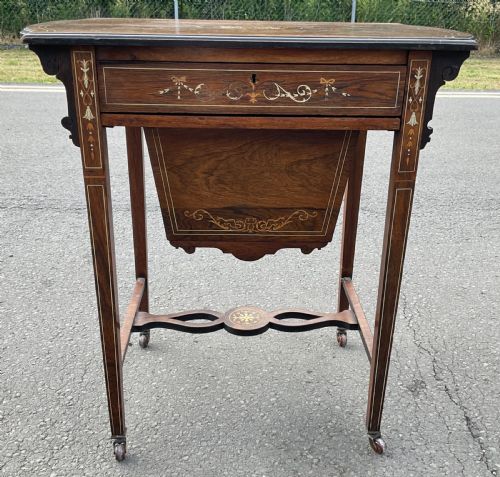


Antique Ladies Workbox
An antique ladies workbox is a treasured receptacle designed for needlework and small valuables, combining fine craftsmanship with practical storage for the home.
Antique Ladies Workbox
When you search for an antique ladies workbox, you encounter a variety of forms including table top boxes, sewing tables, and occasional tables designed for domestic use. The pieces span Georgian, Regency, Victorian, and Edwardian periods, reflecting changing tastes in interior furnishings over the centuries.
You are most likely to meet boxwood, mahogany, walnut, rosewood, and satinwood examples, often ornamented with intricate inlay or painted decoration. Object types range from compact decorative caskets to larger work tables fitted for needles, thread, and jewellery.
Materials and construction
Cabinet makers utilised dense hardwoods such as mahogany, walnut, and rosewood, alongside lighter timbers like satinwood and boxwood for contrasting inlay work. Decorative techniques include Tunbridge Ware mosaic detailing, ebonising, and hand painting upon the wooden surfaces.
Structural forms combine sturdy occasional tables with fitted interior compartments designed specifically for sewing implements and precious trinkets. Brass fittings frequently provide secure latches and hinges for these portable and static containers.
Antique Ladies Workbox Retail Price Guide 2026
Typical asking prices for ladies workbox among the pieces listed under this phrase on Sellingantiques today, from the lower quarter to the upper quarter. They describe what is for sale here now, not the wider market.
A sewing table listed as a country kitchen work box brings an unexpected rustic charm to the refined world of nineteenth-century needlework furniture.
Distinguishing quality
The refinement of the timber selection and the precision of the marquetry or Tunbridge Ware mosaic work distinguish the superior examples from standard production. Cabinet making skill shows in the tight joining of the wood and the smooth operation of internal compartments.
Surface finish and the preservation of original painted details or polished wood grains determine the visual appeal of a piece. Finer items exhibit careful attention to interior arrangements and durable hardware that withstands generations of use.
The Antique Ladies Workbox Glossary
- Tunbridge Ware
- A type of woodworking featuring mosaic decoration made from tiny precisely cut pieces of naturally coloured woods to form geometric or pictorial scenes. This technique reached notable popularity during the nineteenth century.
- Marquetry
- The art of applying decorative veneer pieces to a structure to form intricate patterns and pictures. Craftsmen selected woods of varying tones to create contrast without relying on paint.
- Work table
- A specialised piece of furniture incorporating storage space and compartments for needlework and sewing accessories. These items often sat beside seating areas in reception rooms.
- Satinwood
- A durable hardwood noted for its golden sheen and smooth grain, frequently utilised in fine cabinet making during the Georgian and Edwardian eras. It provides a bright surface for painted decoration.
- Occasional table
- A small, versatile table intended for specific, intermittent domestic tasks rather than permanent central placement. They appear across multiple historical periods in various wood types.
Antique Ladies Workbox: Frequently Asked Questions
How were workboxes used historically?
Women utilised these boxes and tables to organise needlework supplies, embroidery threads, and small jewellery items close at hand in the home. They provided a secure, tidy receptacle kept in parlours or bedrooms.
Many designs included compartmented trays that lifted out to reveal deeper storage spaces beneath for ongoing textile projects.
How can I date a workbox?
Dating relies on observing the prevailing wood types, construction methods, and decorative styles associated with specific periods like the Regency or Victorian era. Cabinet making techniques shifted from Georgian proportions toward more ornate Victorian and Edwardian aesthetics.
Specific motifs such as Tunbridge Ware or painted satinwood help narrow the timeline of manufacture.
Where should I place a workbox in my home?
Table top boxes sit neatly on sideboards, desks, or chests of drawers, while work tables function well as occasional pieces beside seating. Their compact footprints allow them to integrate easily into various room layouts.
Keeping them away from direct heat sources helps preserve the delicate wooden veneers and antique finishes.