
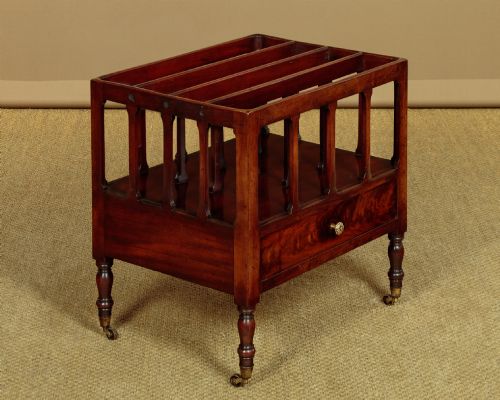
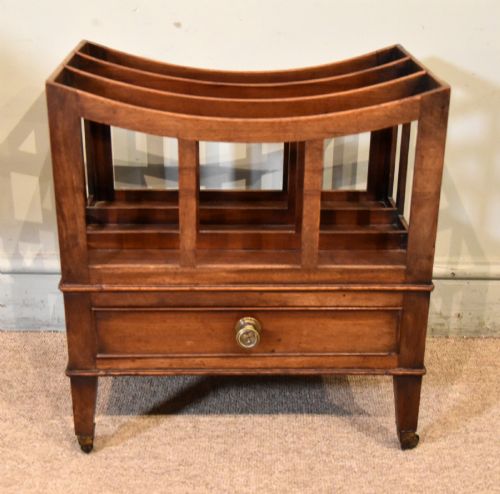
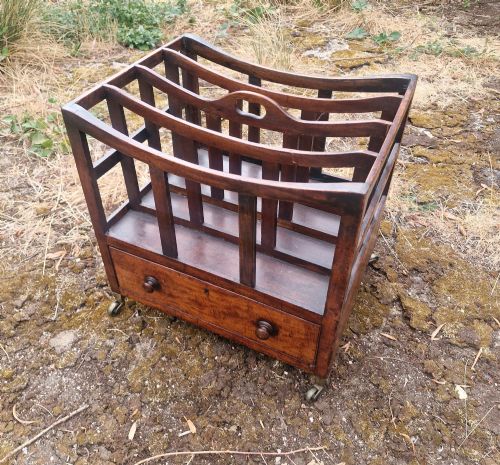
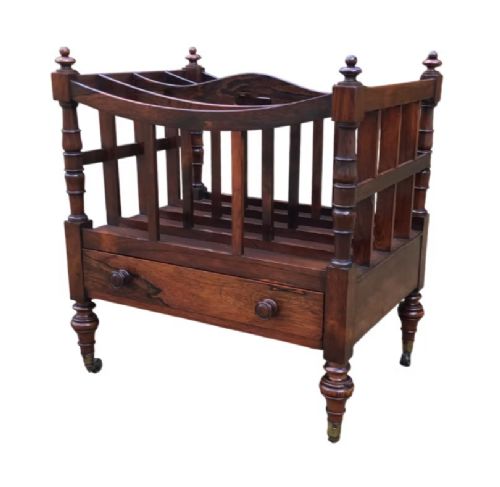
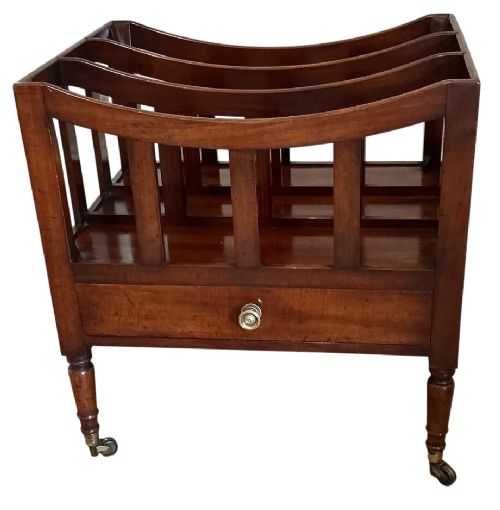
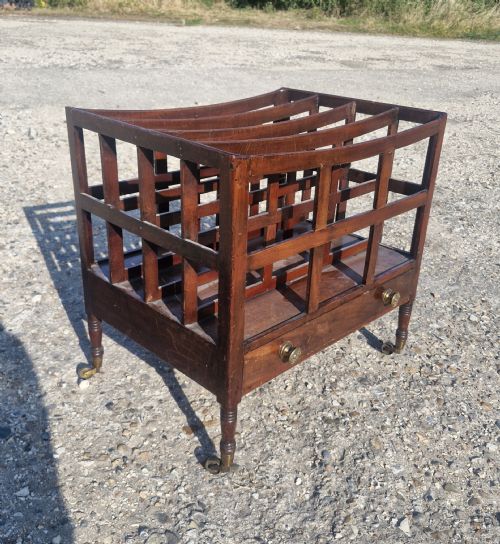
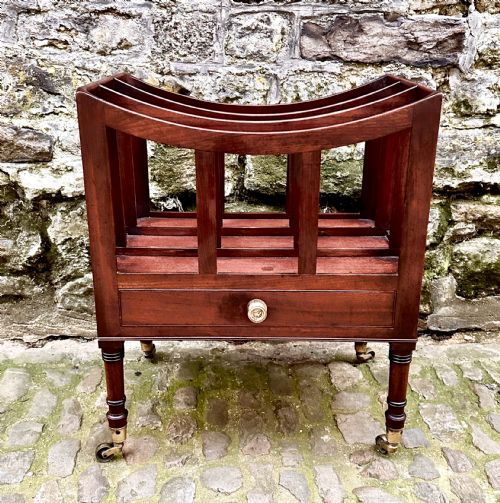
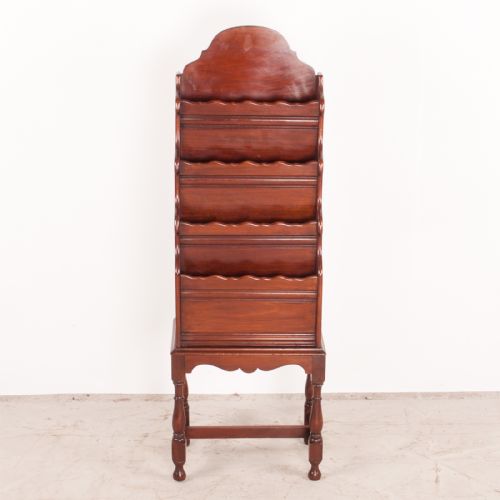
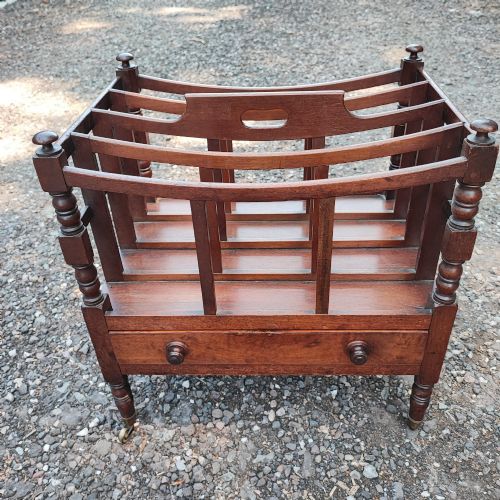
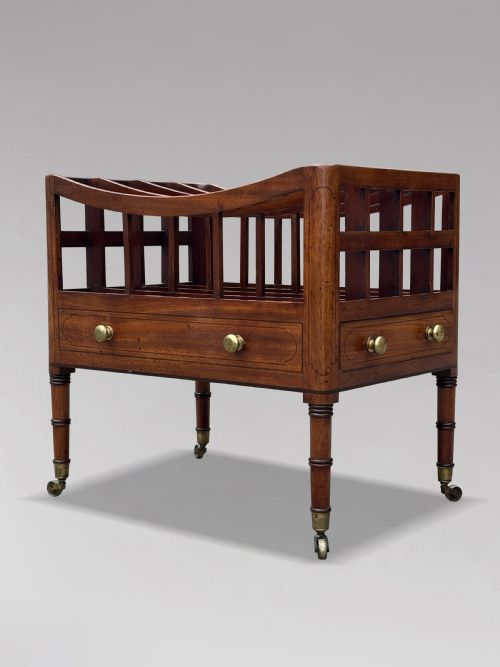
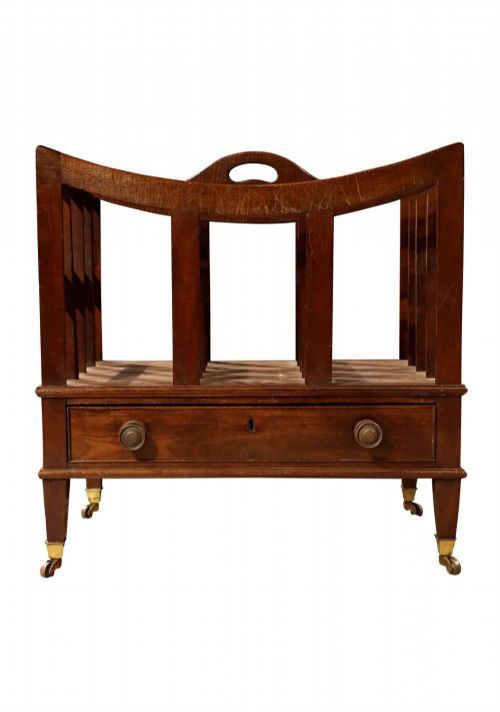


Georgian Music Rack
A georgian music rack, commonly known as a canterbury, brings refined timber and functional elegance to any room.
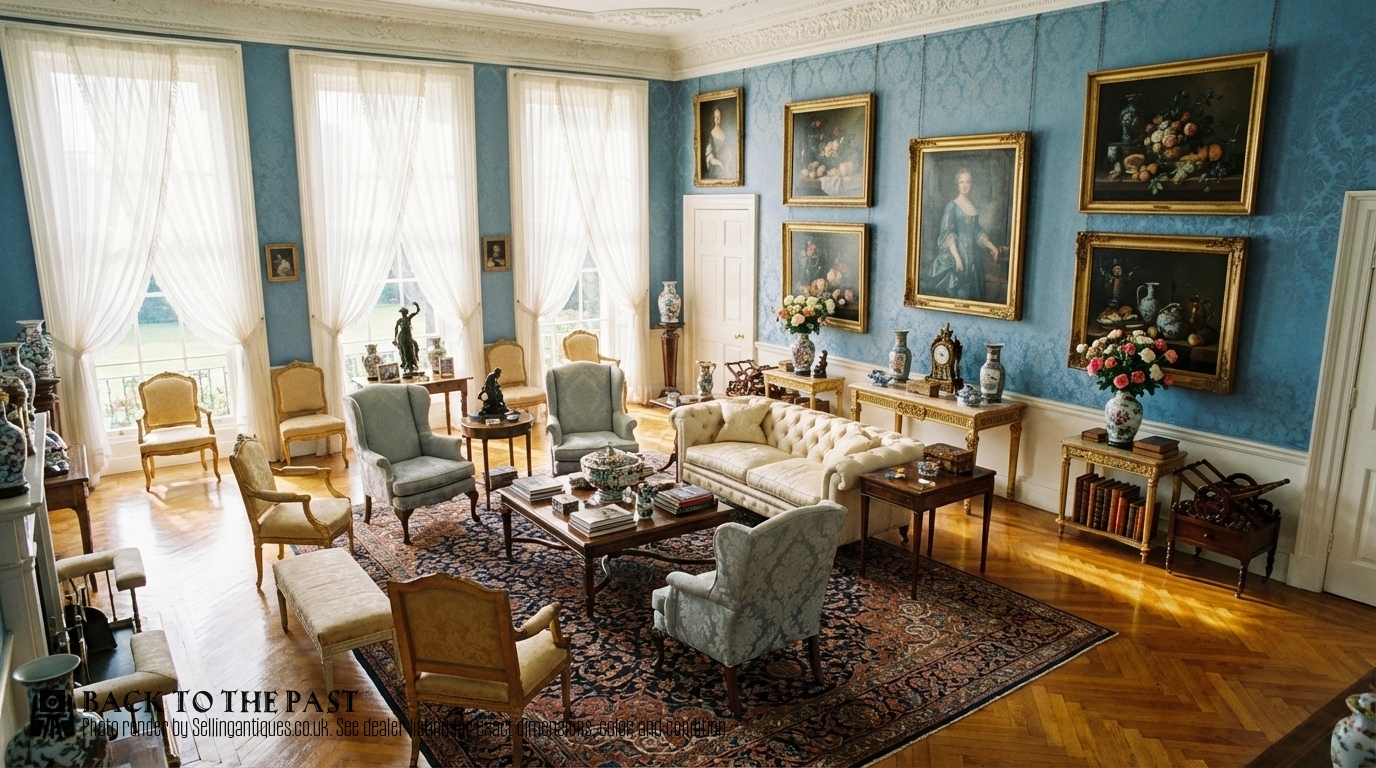
Identifying a georgian music rack
A georgian music rack sits in the room as a dedicated stand for holding sheet music, newspapers, and periodicals. These pieces frequently appear under the name canterbury, embracing magazine racks and music stands alike.
The listed examples span the Georgian, Regency, and George III periods, alongside nineteenth-century interpretations. Mahogany and rosewood form the primary bodies of these functional domestic items.
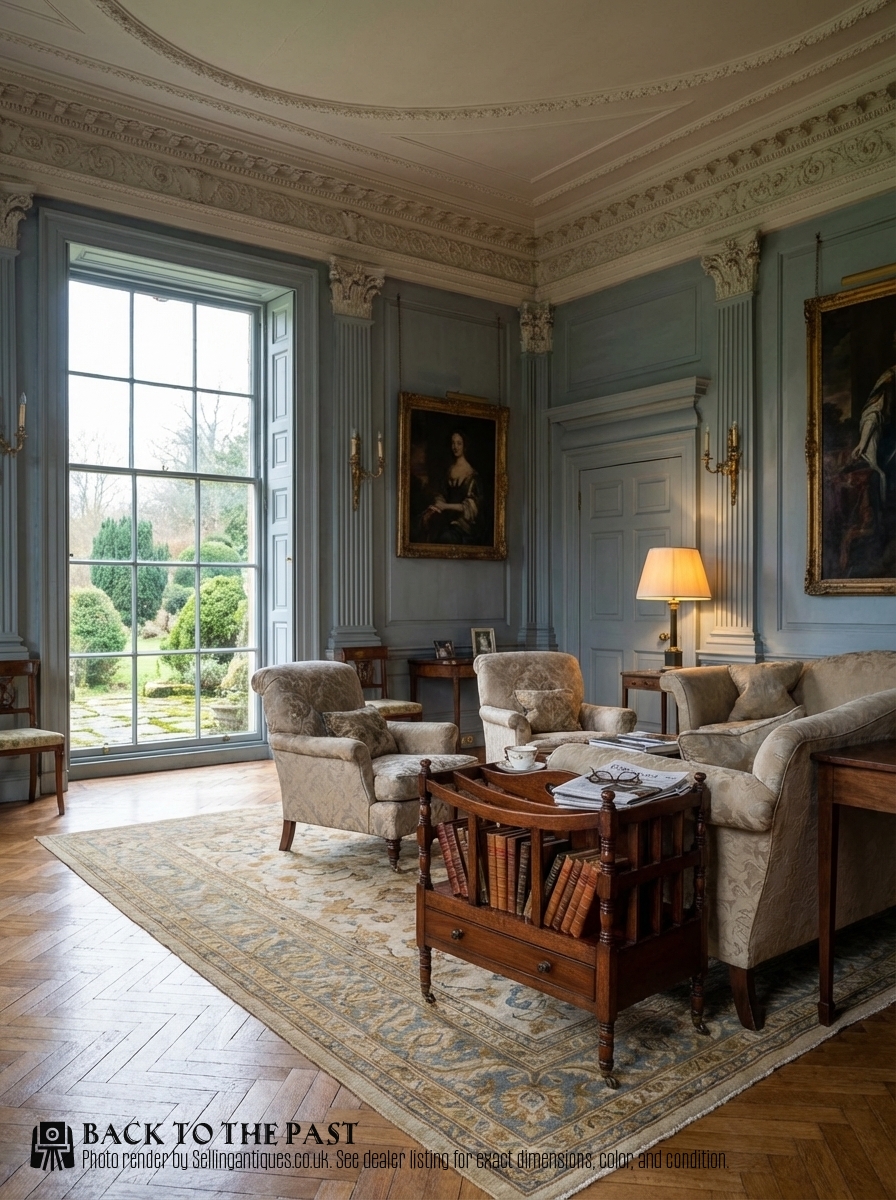
Materials and construction
Cabinet makers utilised dense, richly grained timbers such as mahogany and rosewood for the main structures. These woods were carefully selected for both strength and decorative visual appeal.
Brass fittings and detailed carvings, including Prince of Wales feathers, appear on select examples to elevate the design. Joinery methods of the period ensured sturdy partitions capable of supporting heavy bound volumes.
Retail Price Guide 2026
Typical UK retail prices for georgian music rack, calculated from the Sellingantiques database of over a million retail prices indexed since 2003. This retail price guide relies exclusively on Sellingantiques data; no external sources or auction records are used, so the figures do not describe the wider market.
Listings for a georgian music rack exclusively feature mahogany and rosewood bodies, frequently paired with brass components.
Judging quality and craftsmanship
Superior examples distinguish themselves through the quality of timber selection and the crispness of any applied carving. Fine grain figures in the mahogany or rosewood indicate a higher grade of material chosen by the maker.
The integration of a smoothly operating drawer and the delicacy of the turned or carved supports separate standard production from exceptional pieces. Attention to detail in the assembly of the slatted dividers also marks the upper tier of these items.
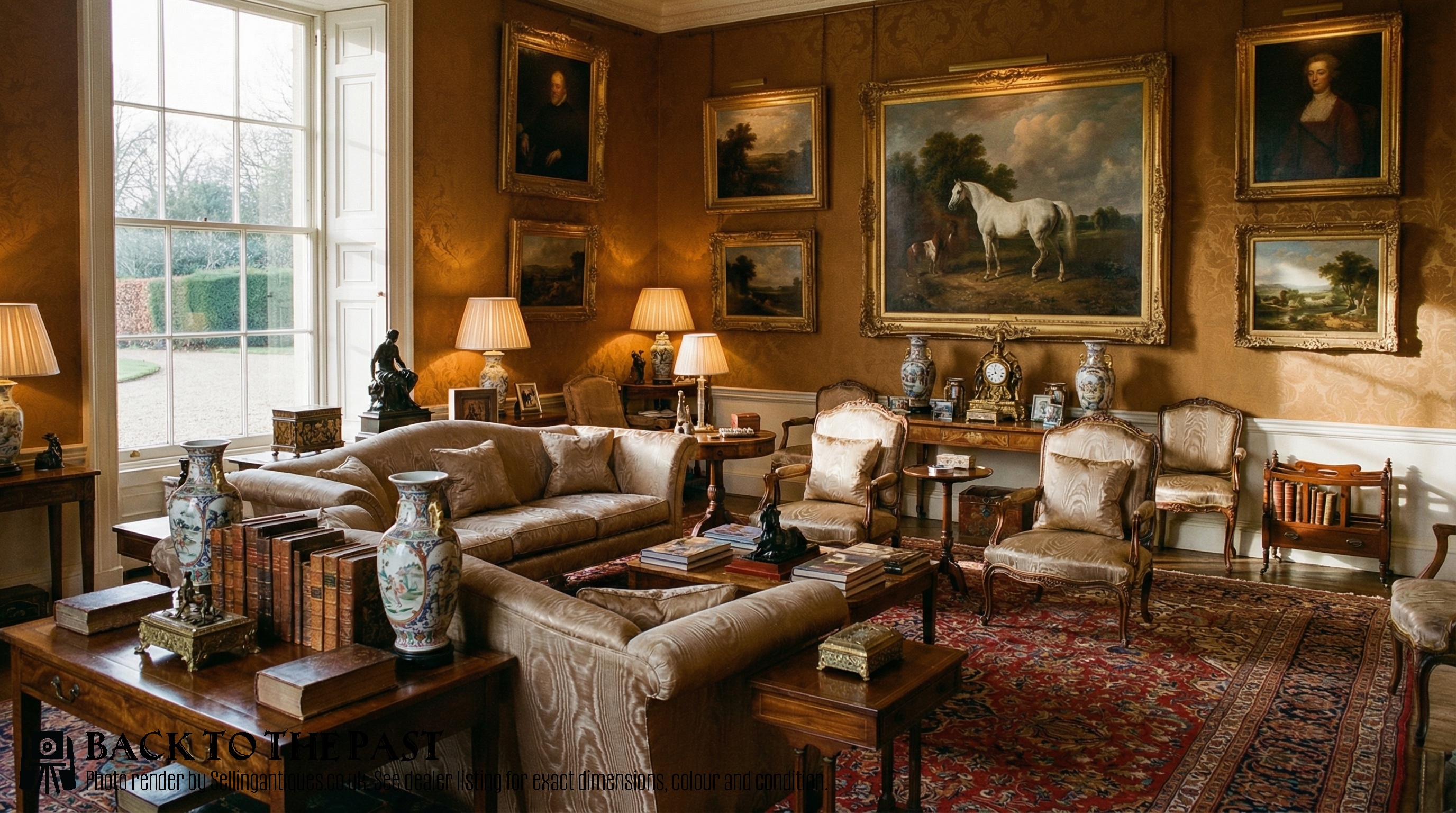
The Georgian Music Rack Glossary
- Canterbury
- A low stand with vertical divisions for holding music sheets, books, or papers. This term is frequently used interchangeably with music rack in period listings.
- George III
- The period of British history spanning from seventeen sixty to eighteen twenty, noted for refined cabinet making. Pieces from this era often display restrained classical proportions.
- Regency
- The stylistic era covering the early nineteenth century up to eighteen thirty. Furniture from this time incorporates bolder grain patterns and occasional classical brass mounts.
- Prince of Wales Feathers
- A carved decorative motif featuring three ostrich feathers emerging from a coronet. This symbol appears on select high-status pieces of the period.
Frequently Asked Questions
How were these pieces used?
These items stood beside pianos, music desks, or seating areas in domestic drawing rooms. They kept scores and daily newspapers tidy and close at hand.
Their portable nature allowed servants or family members to move them easily around the room. The divisions prevented soft-bound folios from slumping and creasing.
How do I care for rosewood and mahogany?
Maintain these antique timbers by keeping them away from direct sunlight and steady heat sources. Excessive temperature changes can cause the wood or veneer to split.
Apply a traditional beeswax polish occasionally to nourish the surface and preserve the natural sheen. Avoid using modern silicone-based sprays on period timber finishes.
How can I tell a George III piece apart?
George III pieces generally exhibit classical proportions and refined cabinet making techniques. The timber choice leans heavily towards well-figured mahogany with subtle decorative elements.
Later Regency examples often introduce rosewood and more pronounced brass detailing. Examining the joinery and hardware helps confirm the approximate period of manufacture.