
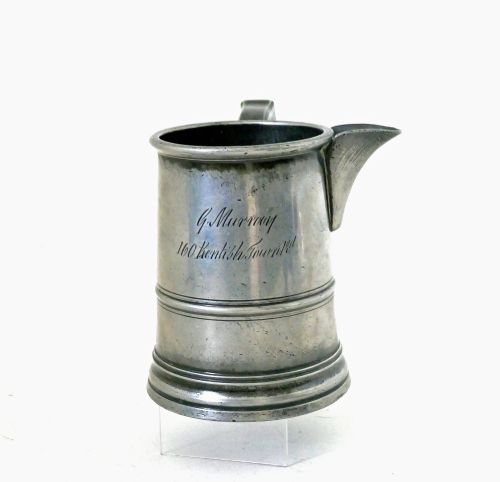
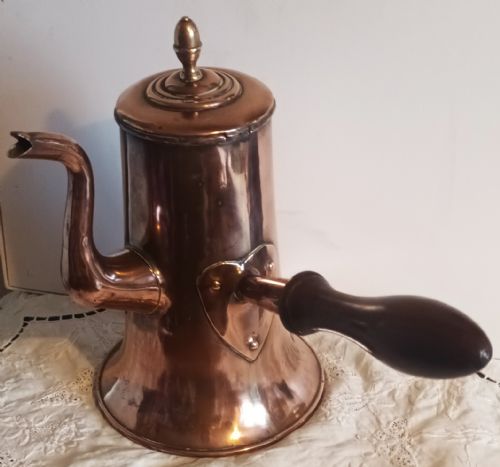
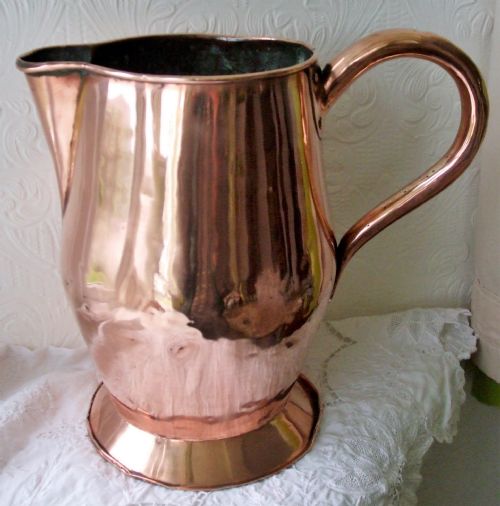
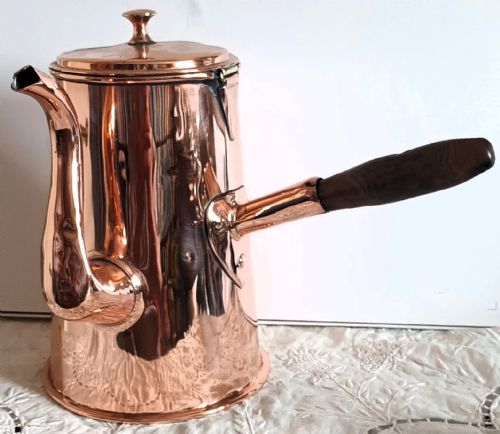


Georgian Metalware Pitcher
These georgian metalware pitcher pieces are robust vessels of copper, pewter and plate built for tavern and household service.
Georgian Metalware Pitcher
When you search for georgian metalware pitcher, you encounter functional serving vessels shaped for beer, ale, coffee and water during the eighteenth and nineteenth centuries. The selection encompasses generous copper jugs, capacity measures and tall spired flagons used in homes and public houses.
Most examples hail from the Georgian and Victorian periods, with pieces appearing in copper, brass, pewter, old Sheffield plate and tin. Forms range from modest noggin measures to colossal lidded pitchers and sets of graduated measuring jugs.
English and Scottish workshops produced these heavy utilitarian pieces, which often bear capacity marks, maker details or tavern inscriptions. Surviving items demonstrate the practical metalworking output of the era rather than purely decorative display.
How they were made
Makers shaped heavy sheets of copper and brass by hand, joining seams with durable rivets and solder to withstand daily tavern use. Spouts, handles and lids were cast separately and attached firmly to the main body.
Pewter vessels utilised metal alloys cast in moulds to achieve specific capacity standards like the Scottish pint or English OEWS measures. Plated items employed early Sheffield plating techniques to fuse thin layers of silver onto base metals.
Georgian Metalware Pitcher Retail Price Guide 2026
Typical asking prices for georgian metalware pitcher among the pieces listed under this phrase on Sellingantiques today, from the lower quarter to the upper quarter. They describe what is for sale here now, not the wider market.
Certain heavy tavern jugs carry benefit club titles, recording mutual aid societies that gathered for ale.
What varies in quality
Superior examples display crisp hammering marks, substantial gauge metal and intact original lids, handles and thumbpieces. Pieces retaining clear capacity stamps, maker touches or contemporary ownership engravings command greater interest.
Lower tiers show heavy distortion, replaced components, extensive patching or worn surfaces from generations of vigorous scouring. The balance of proportion and the integrity of the original construction dictate overall desirability.
Robert Iles·G. Murrouy·Loftus of Oxford Street London
The Georgian Metalware Pitcher Glossary
- Tappit Hen
- A traditional Scottish pewter measure and drinking vessel featuring a lid and characteristic body shape. They appear in specific capacity sizes.
- Spire Flagon
- A tall pewter jug with a tapering conical lid resembling a spire. These pieces often date to the eighteenth century.
- Old Sheffield Plate
- A composite material made by fusing a thin sheet of silver to a copper base. It represents an early precursor to electroplating.
- Noggin
- A small historical unit of liquid capacity used for spirits and ale. Lidless measures of this size survive in pewter.
- OEWS Capacity
- An official measure standard used for pewter vessels. It denotes verified volume compliance for trading liquids.
Georgian Metalware Pitcher: Frequently Asked Questions
What were these metal pitchers used for?
These vessels served to store, measure and pour liquids such as beer, ale, coffee and water in domestic kitchens and busy taverns.
Their robust construction allowed them to handle the heavy demands of daily hospitality and communal drinking.
How do I tell copper from old sheffield plate?
Copper pieces show a warm reddish metal hue throughout the body without underlying base metals beneath a silver surface.
Old Sheffield plate reveals traces of copper showing through where the thin silver layer has worn away at high points.
Why do some jugs have capacity marks?
Capacity marks ensured that publicans and traders dispensed accurate volumes of ale or spirits to customers.
Official inspectors stamped these measurements onto the metal to guarantee honesty in commerce.
How should I clean antique copper and pewter?
Gentle washing with warm soapy water and careful drying preserves the aged surface patinas without causing damage.
Aggressive metal polishes strip away the historical oxidation that collectors value on old copper and pewter.