
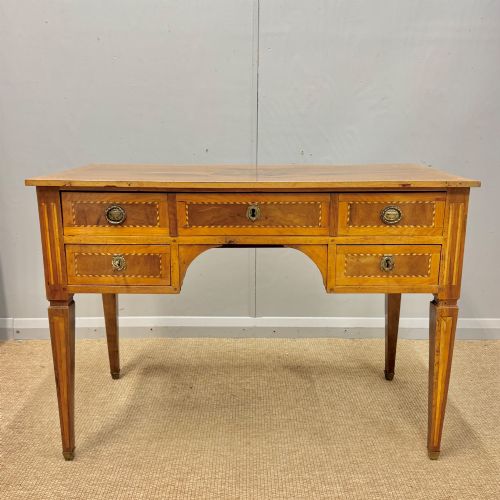
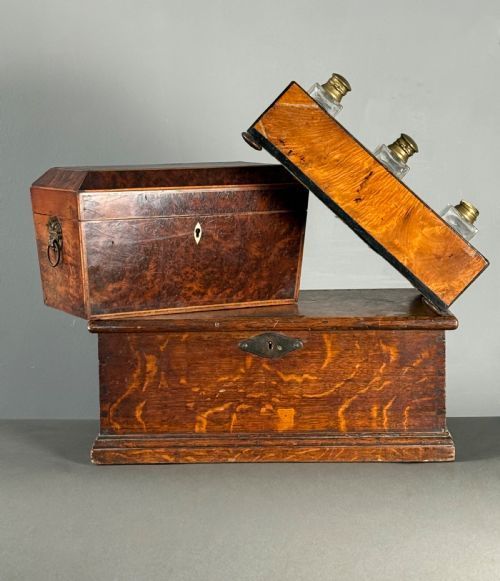
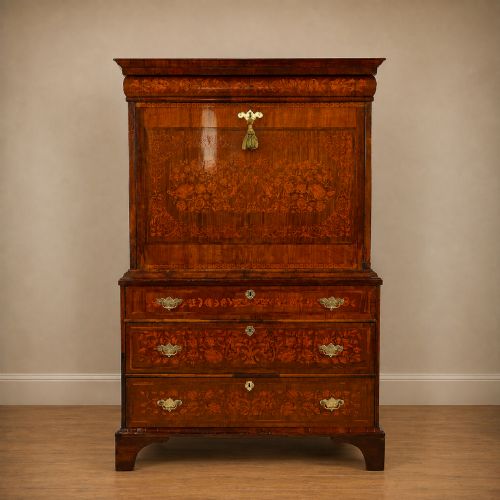
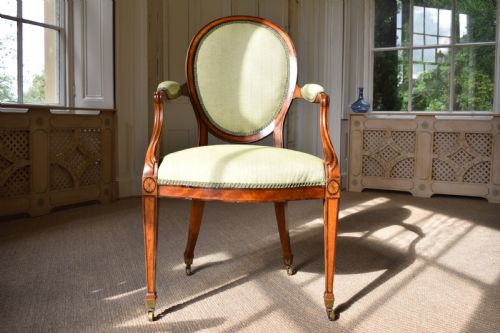


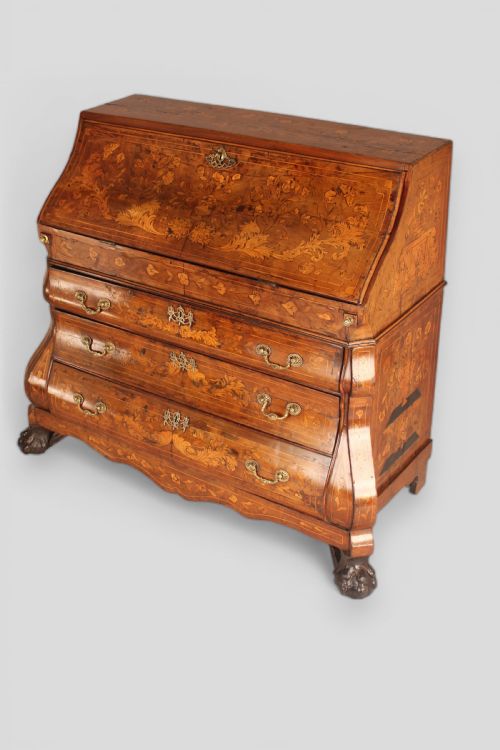

Georgian Marquetry Desk
A georgian marquetry desk brings patterned woods and fine writing surfaces together, offering a functional workspace with decorative depth.
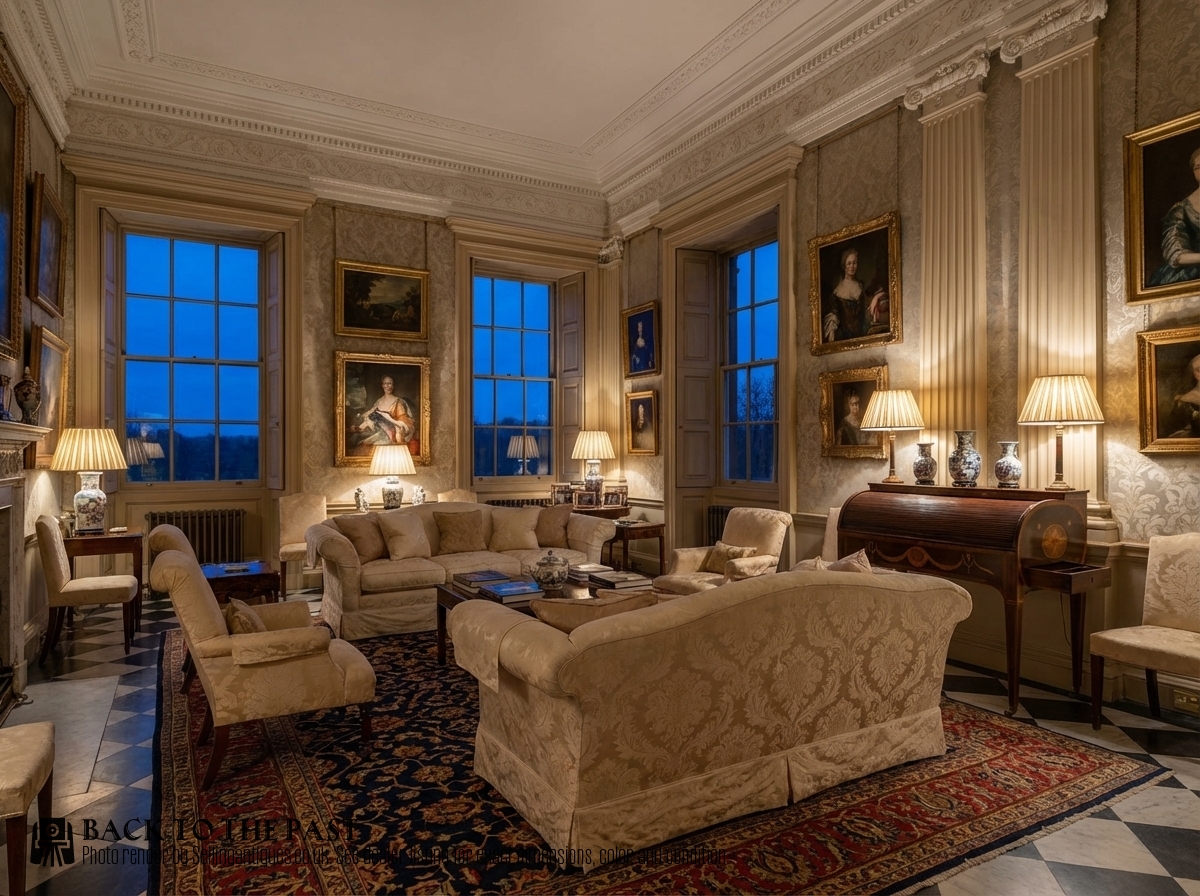
Georgian Marquetry Desk
A georgian marquetry desk is a writing surface decorated with inlaid woods, commonly appearing alongside bureau bookcases, writing slopes, and cabinets from the eighteenth and nineteenth centuries.
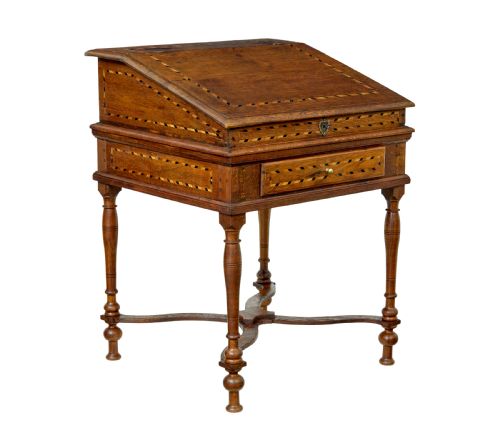
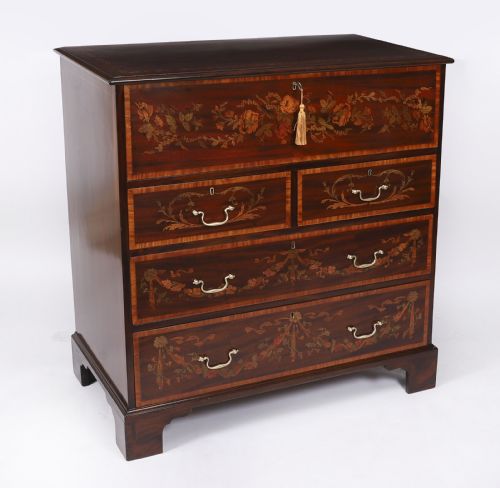
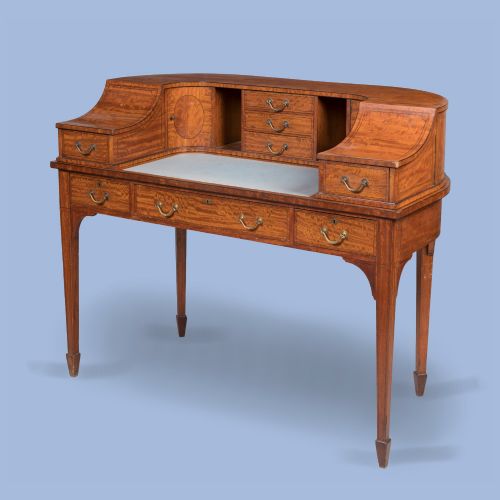
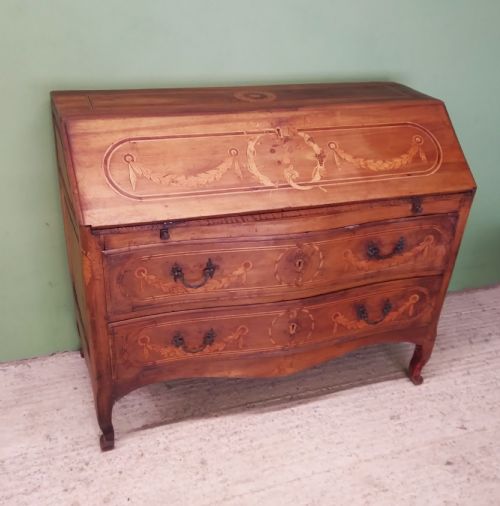
The pieces on this page span several decades, including George III examples and later revivals, displaying forms ranging from freestanding library tables to bureau bookcases and slope-front writing desks.
Makers and workshops from Georgian, Regency, and Edwardian periods produced these surfaces in mahogany, satinwood, walnut, and oak, often incorporating floral and pictorial veneer patterns.
How they were made
Cabinetmakers constructed carcases using timbers like mahogany, walnut, oak, and satinwood, applying contrasting veneers to create detailed surface patterns.
Marquetry inlay involved cutting thin sections of fruitwood, boxwood, and other contrasting materials to form floral designs and geometric motifs set directly into the primary wood.
Brass fittings, glass doors, and leather inserts completed the functional elements of writing desks, bureau bookcases, and library tables.
Materials span satinwood, brass, glass, leather, and intricate marquetry inlay.
What varies in quality
The crispness of the marquetry cutting and the choice of contrasting timbers dictate the visual depth of the inlaid surface.
Secondary framing timbers and the integrity of the original carcase construction determine the structural stability of each desk.
The survival of original brass hardware, fitted interior drawers, and leather writing surfaces influences the overall character of the piece.
Shoolbred of London
The Georgian Marquetry Desk Glossary
- Marquetry inlay
- The technique of fitting together decorative veneer patterns on a wooden ground. This method creates pictorial or floral designs across the desktop.
- Bureau bookcase
- A writing cabinet featuring a sloping fall-front desk combined with upper shelving enclosed by doors. These dual-purpose pieces provide both storage and a writing surface.
- Satinwood
- A pale, lustrous timber frequently utilised in eighteenth and nineteenth-century furniture. It serves as a contrasting background for darker inlay materials.
- Secretaire
- A piece of furniture containing a pull-down writing drawer fitted with small compartments and pigeonholes. It combines drawer storage with a dedicated desk area.
- Escritoire
- An antique writing cabinet, often supported on legs or a chest base. The hinged front opens to reveal drawers and pigeonholes for correspondence.
Georgian Marquetry Desk: Frequently Asked Questions
How do I identify a Georgian marquetry desk?
Look for eighteenth-century structural proportions combined with floral or geometric veneer patterns set into mahogany, walnut, or satinwood.
Examine the interior drawers and secondary timbers to confirm the period of manufacture matches the exterior style.
Were these desks used for daily writing?
These pieces served primary roles for correspondence, record-keeping, and estate management in period homes.
Fitted interiors with pigeonholes and small drawers accommodated inkwells, quill pens, and personal documents.
How do I care for inlaid wooden surfaces?
Keep wooden writing furniture away from direct sunlight and heat sources to prevent the veneers from drying and lifting.
Apply gentle wax polishes periodically to maintain the lustre of the timber and protect the delicate marquetry.