
Cylinder Roll Desk
Cylinder roll desks conceal writing surfaces beneath a curved sliding lid, offering a neat enclosed workspace.
Cylinder Roll Desk
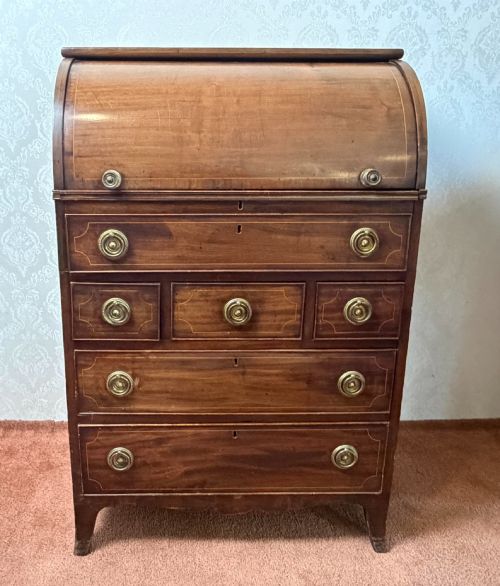
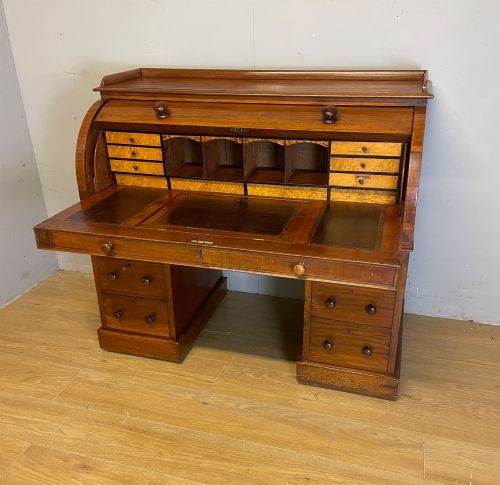
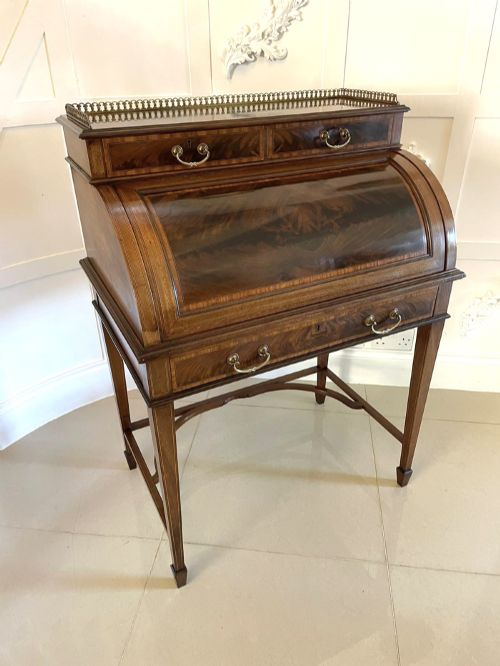
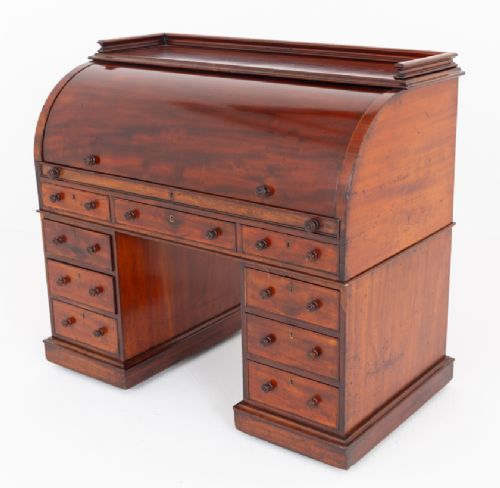
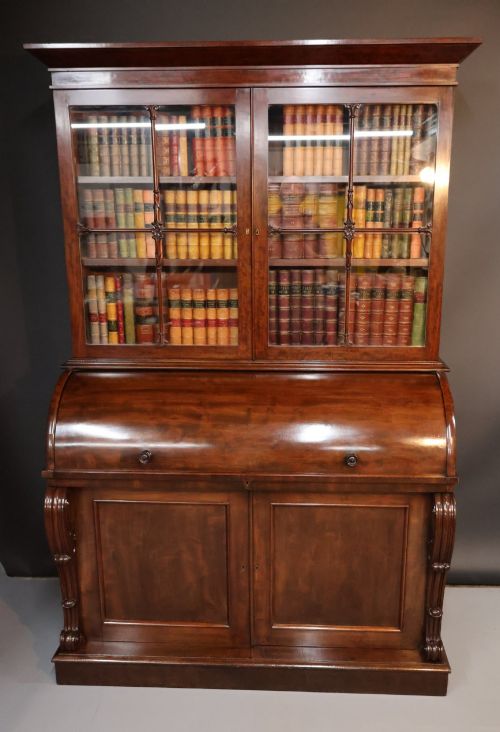
A cylinder roll desk is a sophisticated form of writing furniture where a curved wooden shutter rolls back to reveal fitted drawers and a pull-out writing slide. The search phrase encompasses both formal pedestal writing tables and upright bureau bookcases dating from the Georgian, Victorian, and Edwardian eras.
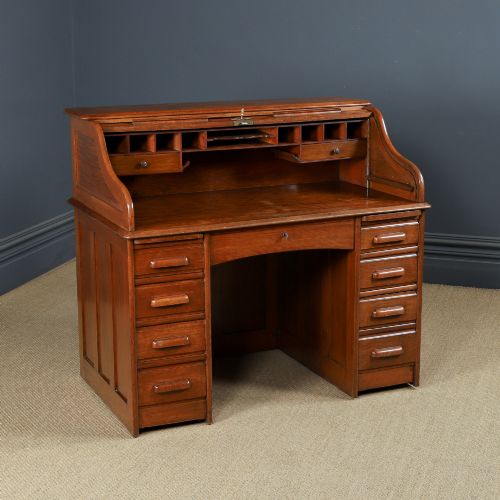
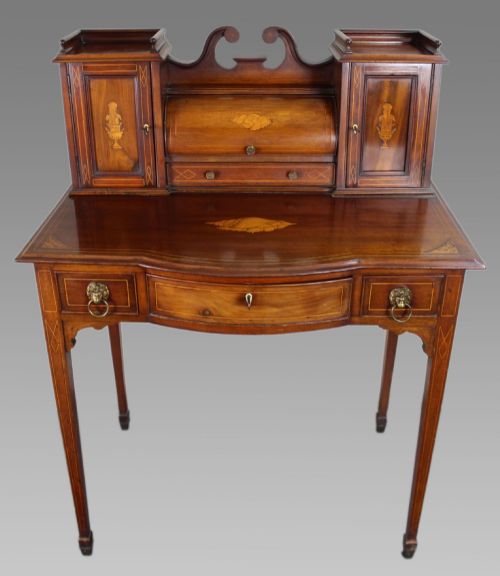
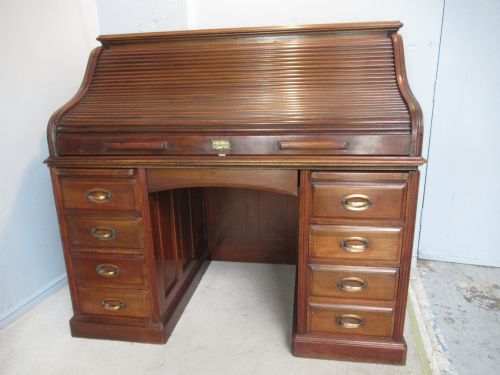
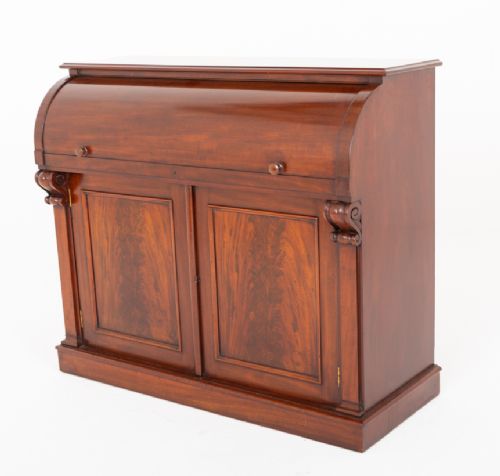
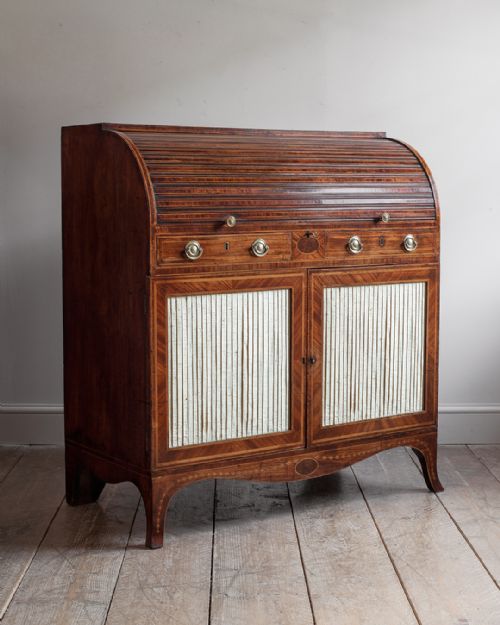
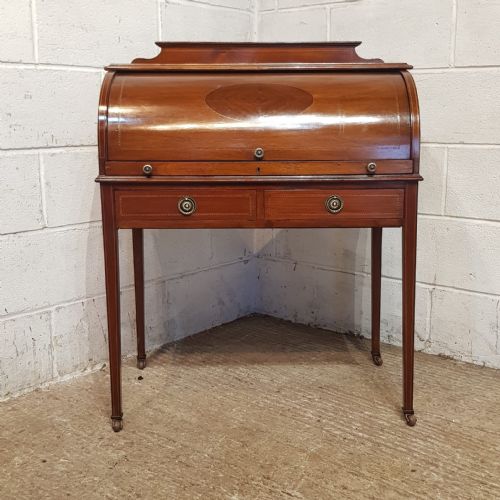
The versions most frequently encountered on this page are Edwardian mahogany models and Victorian pedestal iterations, alongside occasional Georgian and 19th-century tambour variants featuring slatted wooden shutters.
Originating as refined writing cabinets for studies and drawing rooms, these pieces combine concealed storage with a dignified exterior silhouette.
How they were made
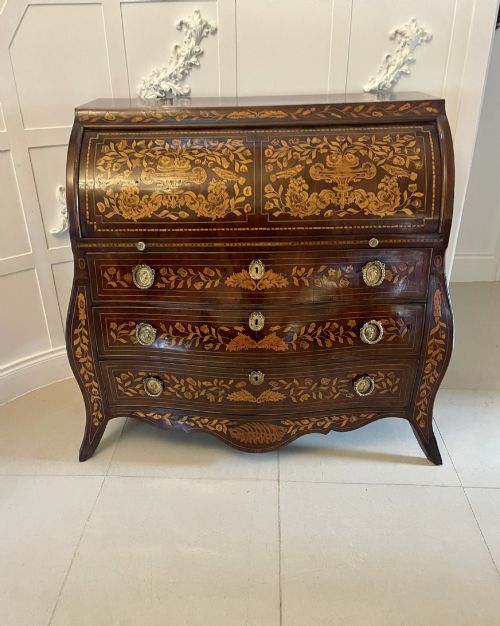
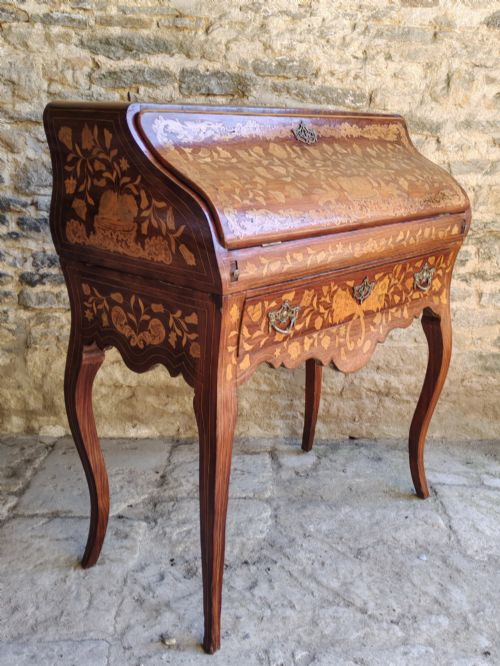
Cabinet makers built these desks primarily using solid and veneered mahogany, oak, and walnut, often embellishing the exterior surfaces with satinwood, partridgewood, and intricate floral marquetry inlay.
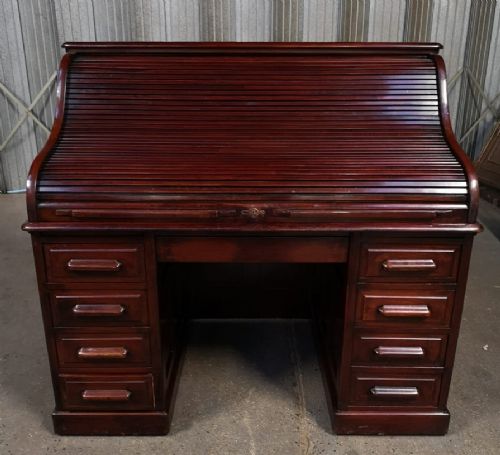
The signature rolling mechanism relies either on a solid curved wooden cylinder or a tambour shutter constructed from narrow vertical slats glued to a canvas backing, allowing smooth movement within concealed tracks.
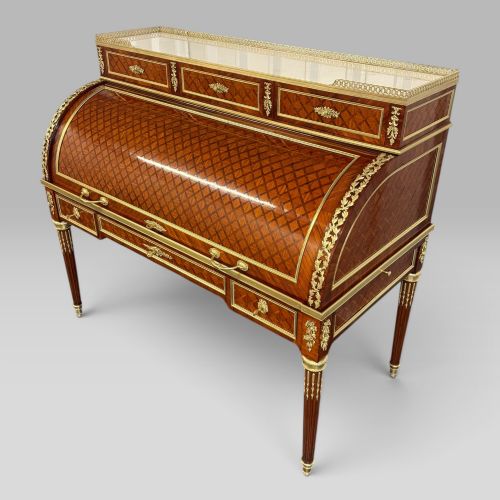
Fitted interiors incorporate small drawers, pigeonholes, and pull-out leather-lined writing slides, whilst higher-status examples include cast brass handles and ormolu mounts.
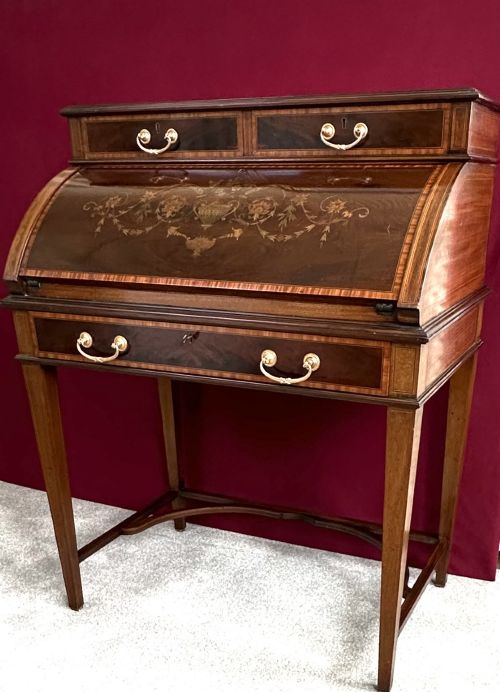
Some Edwardian ladies' desks feature secret compartments hidden behind the smallest pigeonhole drawers.
What varies in quality
The distinction between standard commercial office furniture and exceptional cabinet work lies in the precision of the timber matching and the complexity of the internal configuration.
Finer examples demonstrate seamless operation of the rolling cylinder and immaculate marquetry or parquetry work across curved surfaces, whereas utilitarian pieces rely on plain unadorned timber.
The integration of secondary timbers, original hardware such as brass ring handles, and branded maker signatures elevates the standing of an individual desk.
Maple & Co London·Edwards & Roberts·Tudor & Burrey Shrewsbury·Ray & Miles of Liverpool
The Cylinder Roll Desk Glossary
- Cylinder desk
- A writing desk with a curved, quarter-circle wooden shutter that rolls back to uncover the writing surface and pigeonholes. This mechanism provides secure concealment for correspondence.
- Tambour
- A flexible shutter made from narrow strips of wood glued to fabric backing, enabling it to follow a curved track. It serves the same concealing function as a solid cylinder.
- Marquetry
- Decorative patterns formed by fitting together small pieces of coloured veneers onto a structural base. Floral motifs are particularly common on 18th-century and revival pieces.
- Pedestal desk
- A heavy freestanding desk supported by two banks of small drawers resting on the floor. The central cylinder top sits above this twin-pedestal base.
- Secretaire
- A cabinet or desk containing a folding or pull-out writing flap. In these pieces, the cylinder mechanism often operates the primary writing drawer.
Cylinder Roll Desk: Frequently Asked Questions
How do cylinder desks work?
The curved wooden shutter runs along a grooved track, sliding backward into the body of the desk. Pulling it forward encloses the entire writing area and any papers left on the slide.
Most mechanisms operate smoothly when the internal writing surface is pushed fully home, which disengages the locking catch on the roll top.
What is the difference between a tambour and a cylinder desk?
A cylinder desk utilises a solid curved piece of wood that turns on a rounded path. A tambour desk uses many narrow vertical wooden slats glued to canvas.
Both serve the exact same purpose of hiding the inner compartment, but tambour construction allows for tighter curves.
Where were cylinder desks placed?
These desks traditionally stood in private libraries, grand drawing rooms, or dedicated estate studies. Freestanding Edwardian and Georgian versions were finished on all sides so they could sit in the middle of a room.
Pedestal variants were usually positioned facing outward into the space, providing a substantial architectural presence.
How do I date a cylinder roll desk?
Dating relies on timber selection, handle styles, and construction traits. Georgian and Regency examples favour fine mahogany with subtle stringing, while Edwardian pieces often display Sheraton Revival satinwood and marquetry.
Victorian iterations tend to be heavier in scale, utilising robust mahogany pedestals and brass ring hardware.