

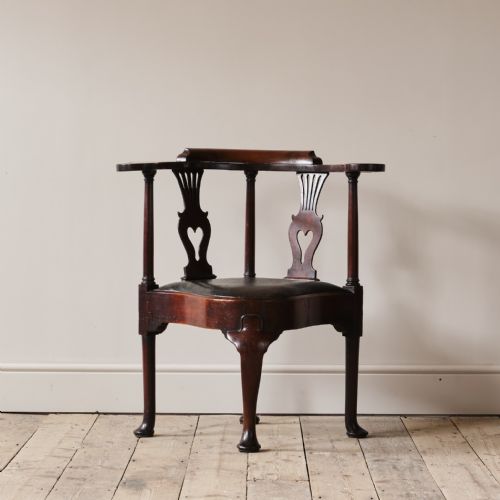
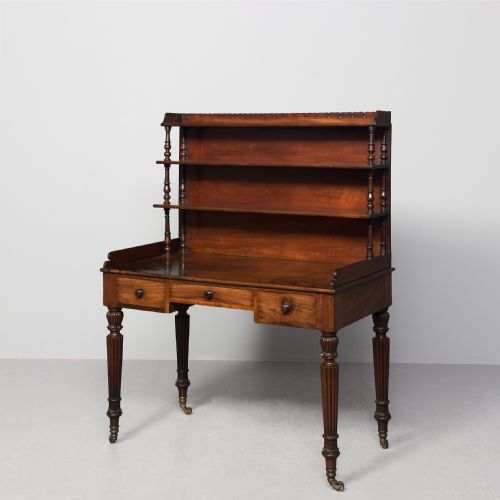
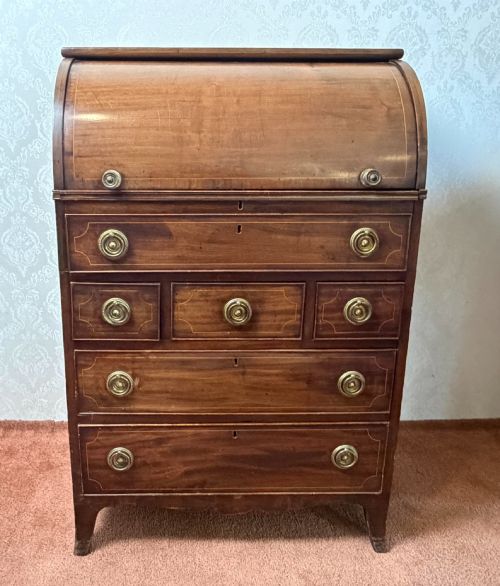
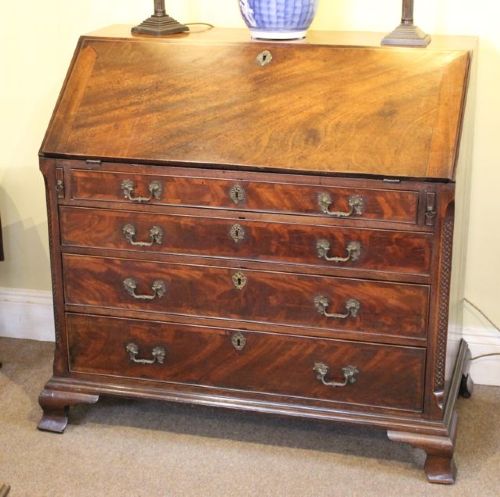
Georgian Mahogany Writing Furniture
Georgian mahogany writing furniture brings together desks, bureaux, and secretaire bookcases built to serve correspondence in solid and veneered timbers.
Georgian Mahogany Writing Furniture
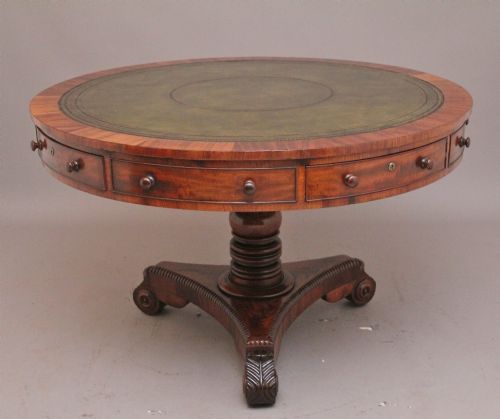
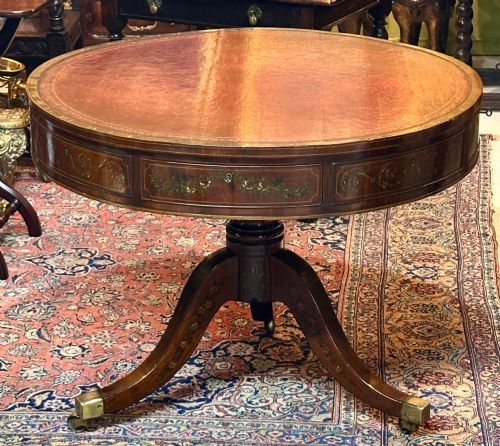
When you search for georgian mahogany writing furniture, you encounter a range of functional pieces designed for domestic administration and study. The selections span compact kneehole desks and bureaus alongside larger secretaire bookcases and drum tables originating from the eighteenth and nineteenth centuries.
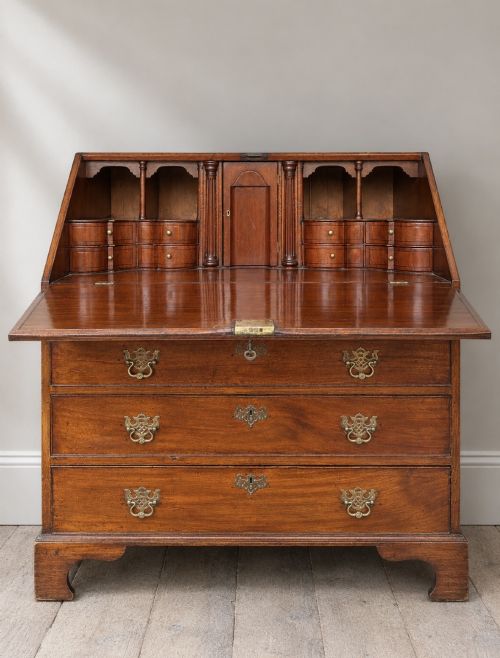
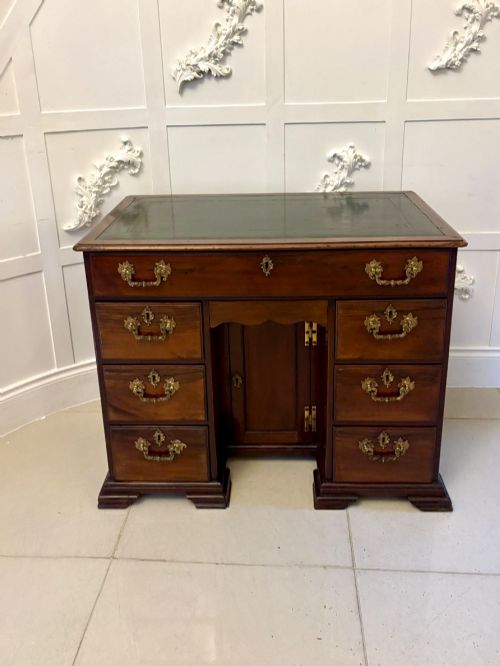
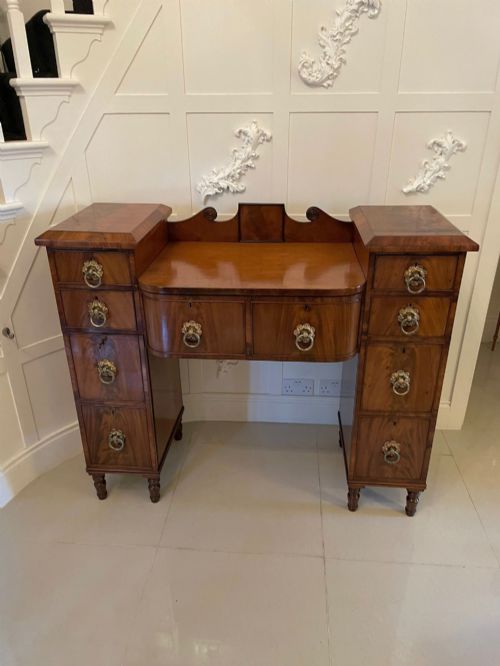
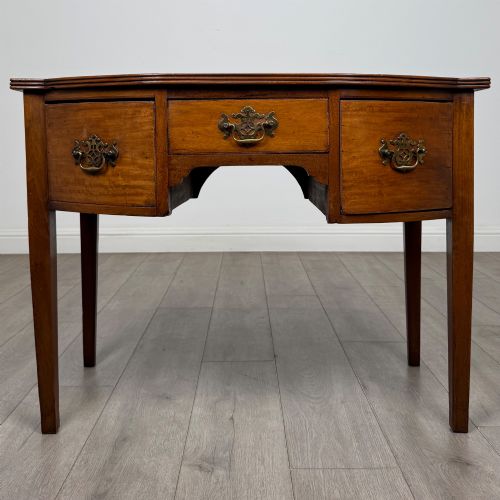
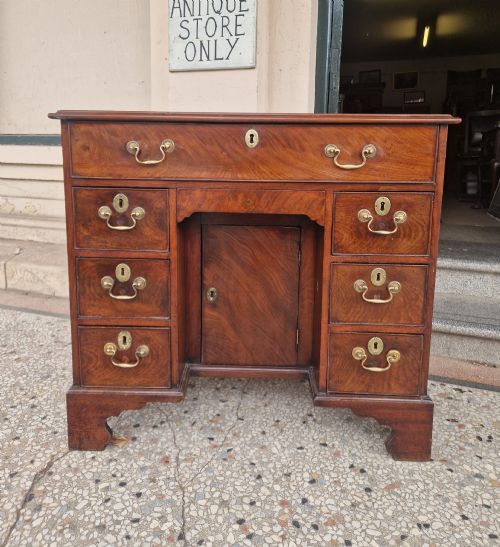
Bureau desks and kneehole desks dominate the physical evidence, often fitted with pigeonholes, small drawers, and writing slides. You also find side tables adapted for writing, alongside campaign chests and cylinder desks featuring tambour shutters.
The aesthetic bridges the reigns of the Georges through to the Regency period, encompassing stylistic influences associated with Chippendale and Sheraton. Pieces range from formal library furniture to smaller domestic writing tables.
Materials and Construction
Makers utilised solid mahogany and flame mahogany veneers over secondary timbers such as oak, applying satinwood for contrast on inlaid surfaces. Brass handles, escutcheons, and occasional paw feet provide structural and decorative hardware.
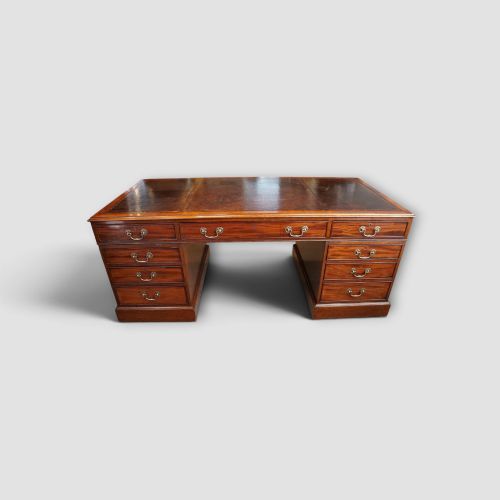
Writing surfaces frequently incorporate inset panels of leather or baize to provide a smooth plane for quill and paper. Glass is employed in the astragal glazed doors of larger bookcases and cabinets.
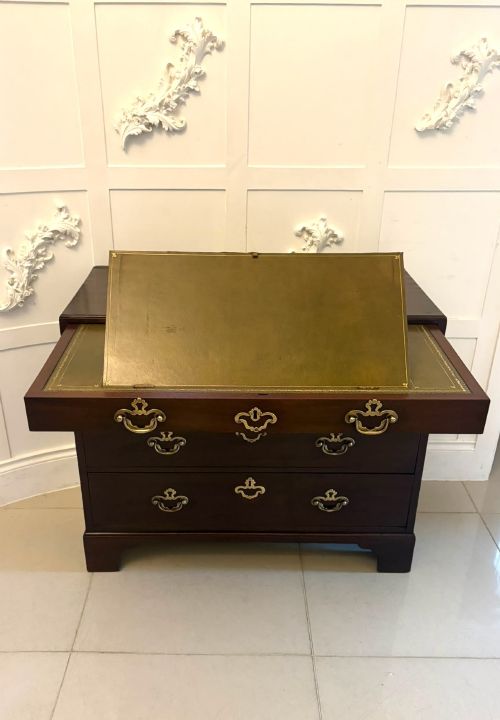
Construction techniques include bracket feet, fitted interiors with secret compartments, and sliding writing brushes integrated into chest of drawers designs.
Listings feature mahogany, oak, satinwood, and brass alongside leather and baize writing surfaces.
Judging Quality
The caliber of georgian mahogany writing furniture depends upon the selection of timber and the precision of the cabinetmaker's joinery. Figured mahogany veneers, crisp inlay work, and well-proportioned secondary woods distinguish superior workshops.
Internal arrangement dictates much of the value, with intricate pigeonholes, concealed drawers, and original leather or baize inserts marking out finer examples. The retention of original brass hardware and stable structural framing further separates workshop standards.
James Mein of Kelso·Gillows of Lancaster·Gillows
The Georgian Mahogany Writing Furniture Glossary
- Bureau
- A sloping writing cabinet enclosing fitted drawers and pigeonholes. It typically rests upon a chest of drawers or bracket feet.
- Secretaire
- A desk disguised as a chest of drawers or incorporated into a bookcase with a drop-front writing flap. This dual-purpose form conceals internal stationery compartments.
- Tambour
- A sliding shutter constructed from narrow vertical strips of wood glued to a canvas backing. It closes over desk surfaces or cylinder tops.
- Kneehole
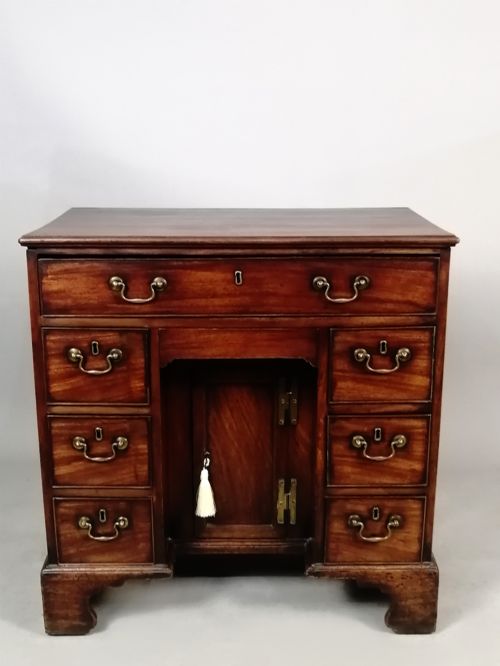
- A recessed space beneath a desk or dressing table designed to accommodate the user's legs. Flanking banks of small drawers usually frame this central opening.
- Astragal
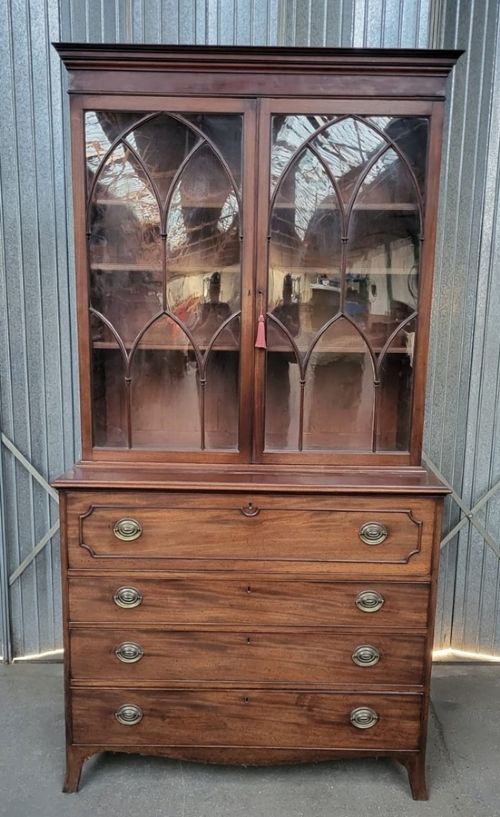
- A small semi-circular moulding used to divide panes of glass in cabinet doors. It forms geometric glazing bars characteristic of library bookcases.
Georgian Mahogany Writing Furniture: Frequently Asked Questions
What is a kneehole desk?
A kneehole desk is a compact form featuring a central recess for seating. Flanking columns of drawers support the main writing surface above.
Many examples include a recessed cupboard door set back within the kneehole space. This layout became popular for domestic studies during the eighteenth century.
How can I spot a tambour desk?
Tambour desks utilise flexible wooden strips running in tracks to enclose the writing area. Sliding this shutter upward reveals the desk interior.
This mechanism allows makers to cover pigeonholes and drawers without requiring a heavy drop-front flap. The slatted construction demands precise woodworking.
Where were secretaire bookcases used?
Secretaire bookcases served as multi-functional furniture for parlours and libraries. The upper section housed books behind glazed doors while the lower section provided a writing desk.
This combined storage and workspace suited the administrative needs of Georgian households. The drop-front drawer concealed stationery while maintaining the exterior appearance of a chest or cabinet.