
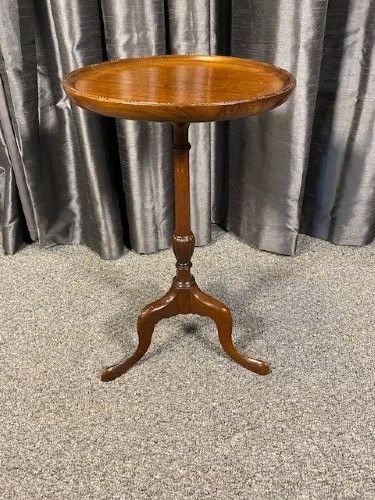
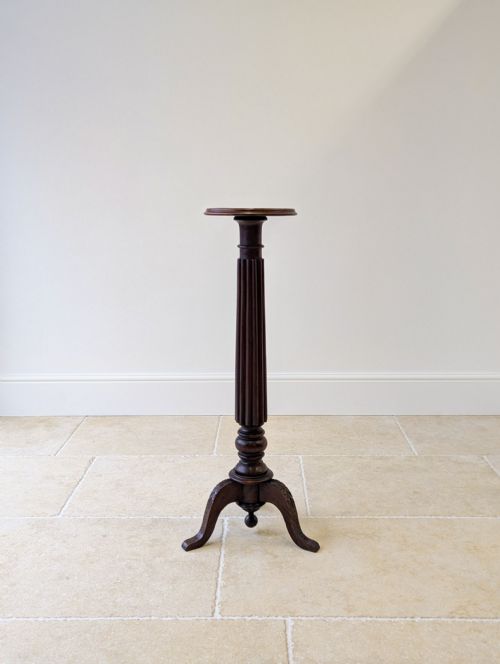
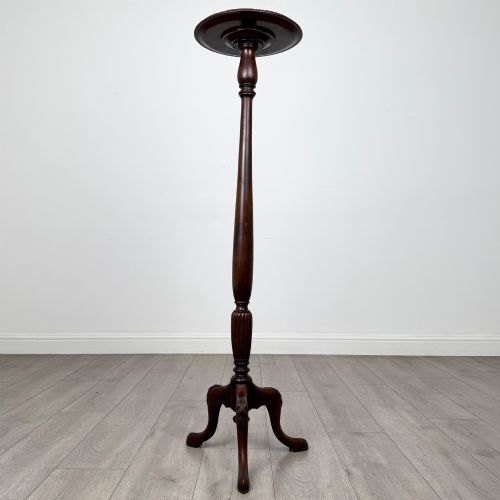
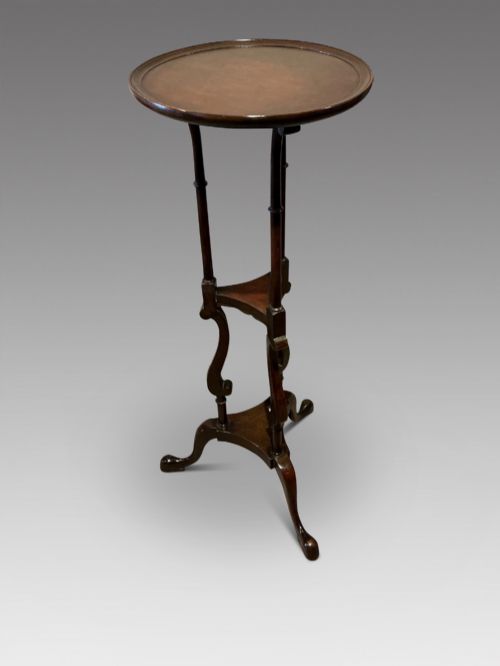



Georgian Mahogany Torchere
A georgian mahogany torchere is a tall slender stand built to elevate lighting, bringing height and structural elegance to any interior.
What They Are
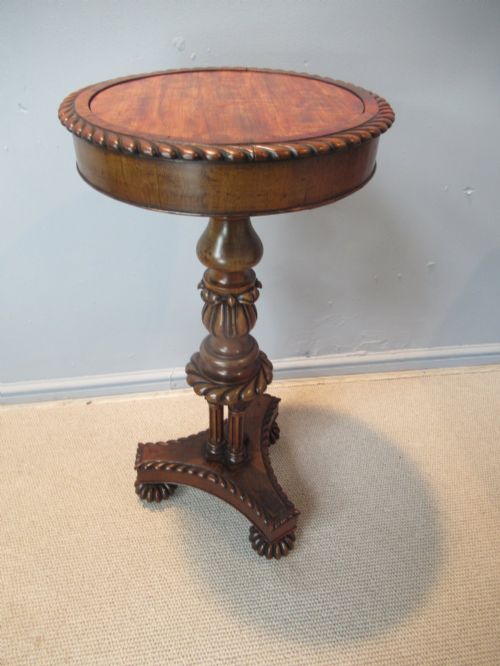
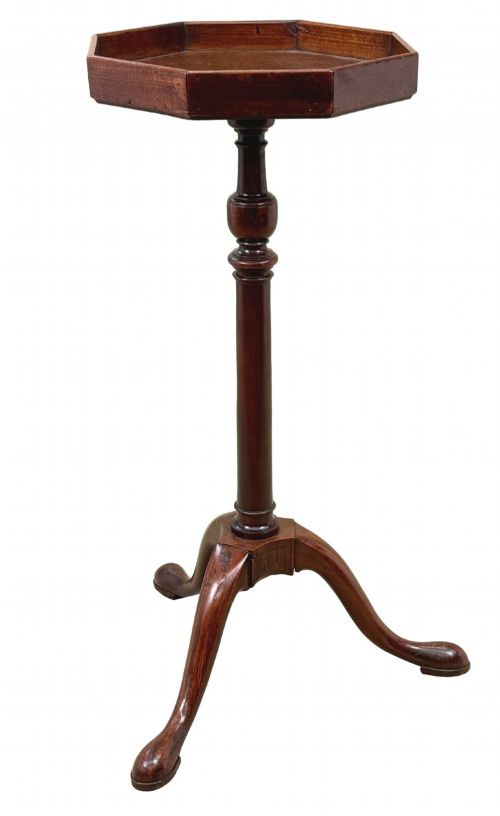
When you search for a georgian mahogany torchere, you uncover a lineage of tall stands primarily designed for candles, lighting or display. These pieces appear in forms ranging from traditional torcheres and candle stands to plant stands, pedestals, wine tables and standard lamps.
The pieces listed span the eighteenth century, the nineteenth century and nineteen hundred, with specific manifestations aligning with the Georgian era and Chippendale styles. Alongside standard timber designs, examples incorporate ebonised wood details.
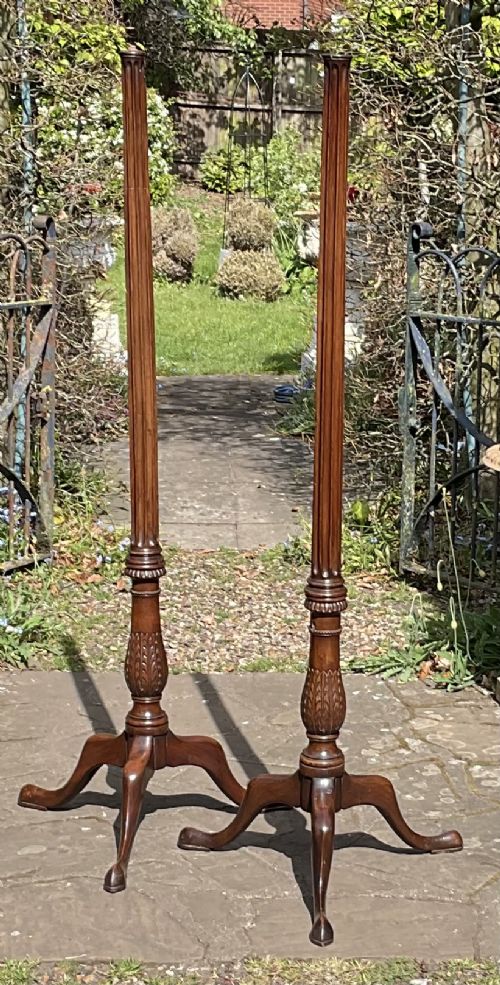
Most entries follow the classic tall columnar or pedestal format, serving as functional sculpture within domestic spaces. They provide a distinct vertical accent that contrasts with lower furniture forms.
How They Were Made
Makers constructed these stands using solid mahogany, harnessing the dense grain and rich tone characteristic of the timber. Some iterations integrate ebonised wood to create contrast against the natural reddish brown mahogany body.
Joinery and turning techniques created the slender columns, stable bases and supporting platforms. Carving appears on select examples, reflecting the decorative vocabulary of the Georgian and Chippendale styles.
Retail Price Guide 2026
Typical UK retail prices for georgian mahogany torchere, calculated from the Sellingantiques database of over a million retail prices indexed since 2003. This retail price guide relies exclusively on Sellingantiques data; no external sources or auction records are used, so the figures do not describe the wider market.
Mahogany dominates the material record across these listings, occasionally paired with ebonised wood for contrast.
What Varies in Quality
The distinction between standard examples and the finest pieces rests in the ambition of the carving and the purity of the timber selection. Finer pieces demonstrate crisp detail in turned columns and structural harmony across the base and top platform.
Proportion and stability separate exceptional stands from simpler utilitarian versions. The integration of ebonised elements or superior surface patination also elevates the visual weight of individual pieces.
The Georgian Mahogany Torchere Glossary
- Torchere
- A tall decorative stand designed originally to hold a torch or candle. It functions today as an elevated platform for lamps or plants.
- Mahogany
- A durable, heavy tropical hardwood prized for its deep reddish brown colour and fine grain. It forms the primary structural material for these stands.
- Ebonised wood
- Timber treated with a dark finish to mimic ebony. It appears alongside mahogany to create sharp tonal contrast.
- Chippendale
- A distinct eighteenth century furniture style associated with Thomas Chippendale. It introduces ornate carved details and refined proportions.
- Pedestal
- A vertical support structure or column. In this context, it serves as the main shaft carrying the display surface.
Frequently Asked Questions
What is a georgian mahogany torchere used for?
These stands were originally built to hold candles or lighting fixtures in large rooms. Today, they function effectively as display columns for plants, sculptures or modern lamps.
Their narrow footprint allows them to occupy awkward corners or tight spaces where standard tables do not fit.
How do I identify an eighteenth century piece?
Look closely at the timber patination, construction methods and joinery details. Eighteenth century items display hand turned columns and traditional framing.
Comparing the proportions against documented period forms helps confirm the era of manufacture.
Are these stands stable enough for modern lamps?
Most stands feature weighted or tripod bases designed to distribute weight evenly. They provide secure support for standard lamps and decorative objects.
Placement on level flooring ensures maximum stability for taller columnar designs.
What is the difference between a torchere and a plant stand?
While both share a tall vertical profile, torcheres traditionally accommodated lighting devices. Plant stands serve a similar structural purpose with platforms adapted for botanical displays.
In historical listings, the terms often overlap due to their shared form.