
Georgian Mahogany Secretaire
A georgian mahogany secretaire combines a functional writing drawer with domestic storage, offering fitted pigeonholes behind a drop-front surface.
Georgian Mahogany Secretaire
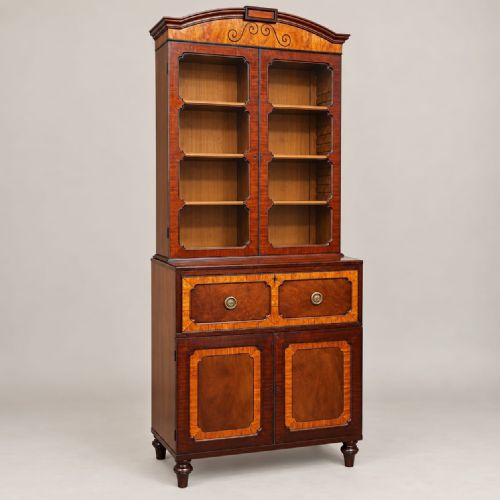
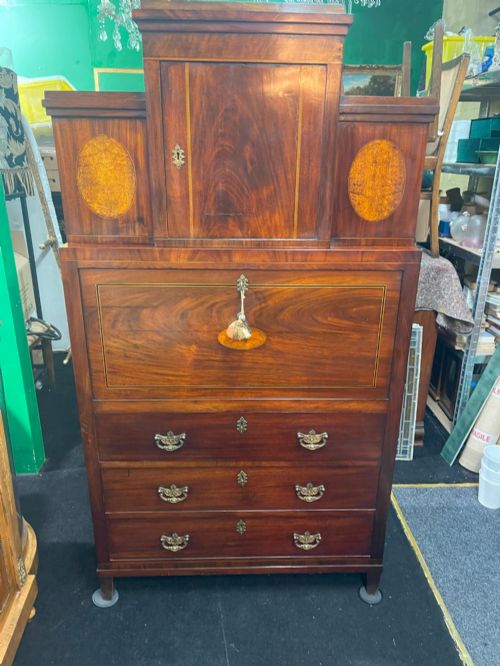
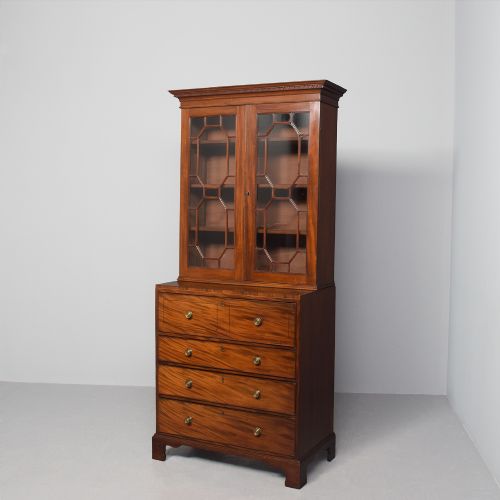
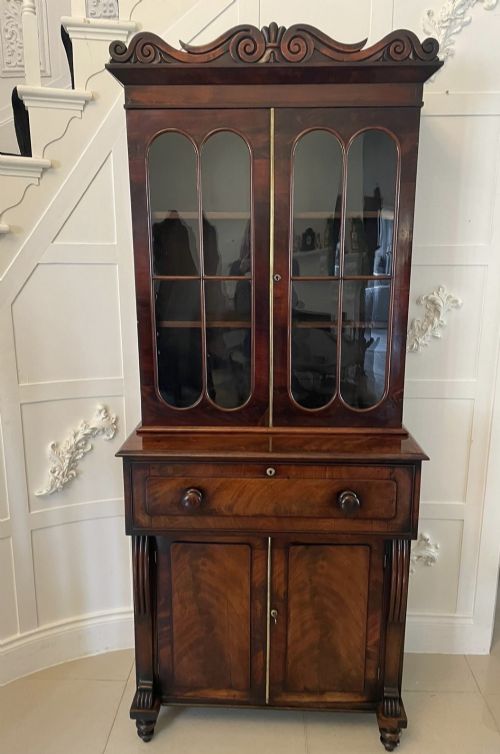
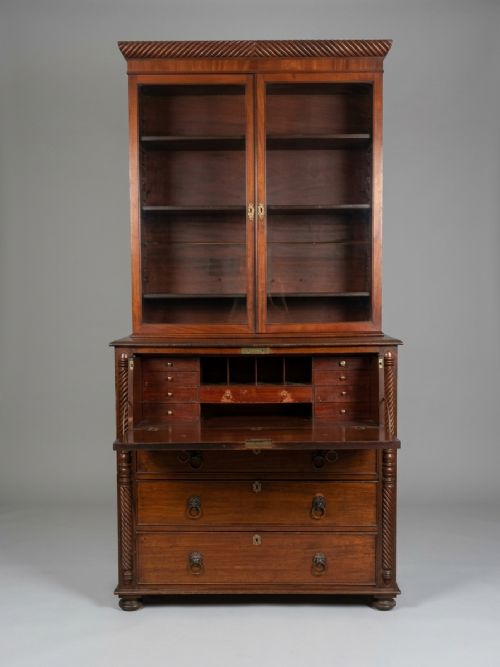
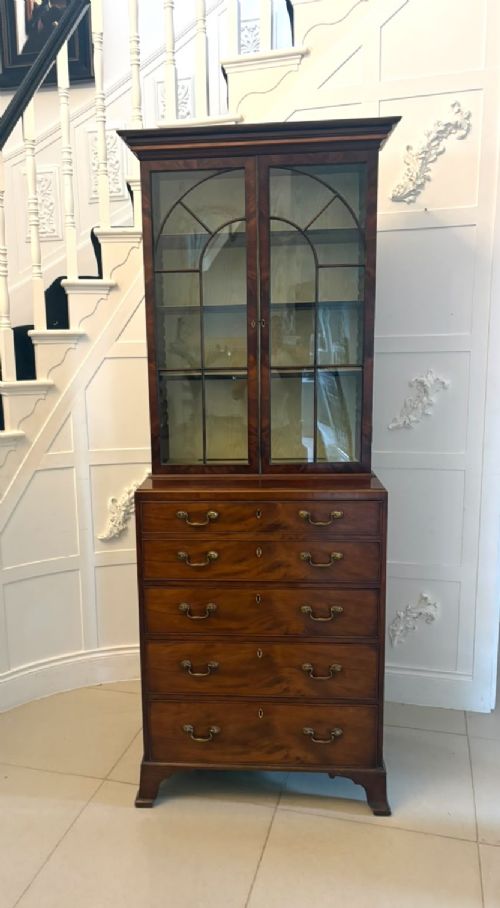
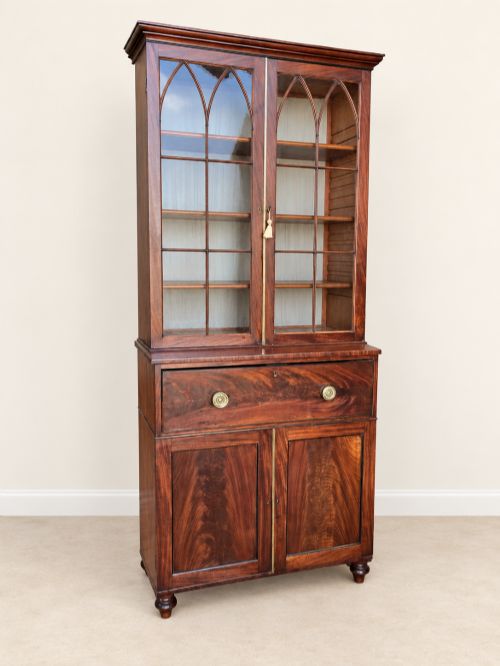
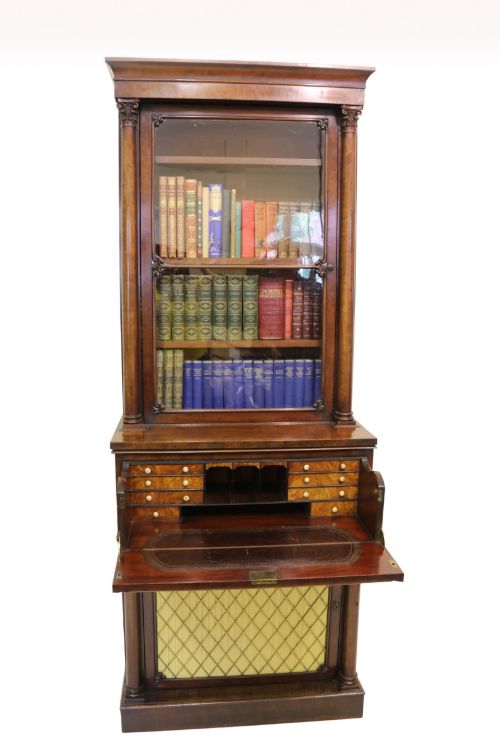
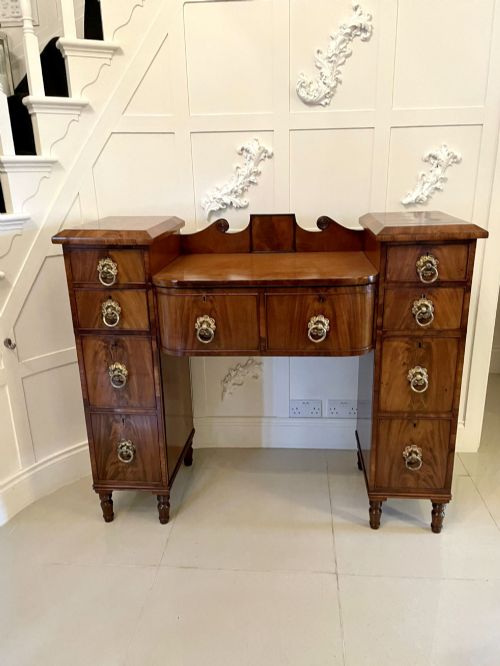
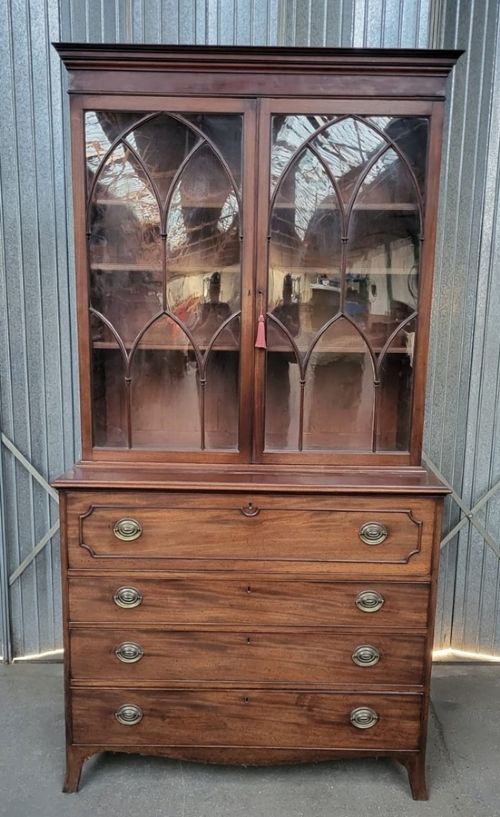
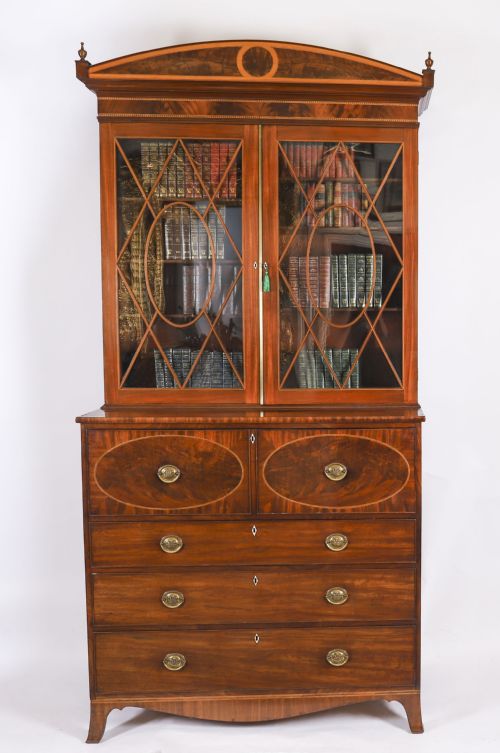
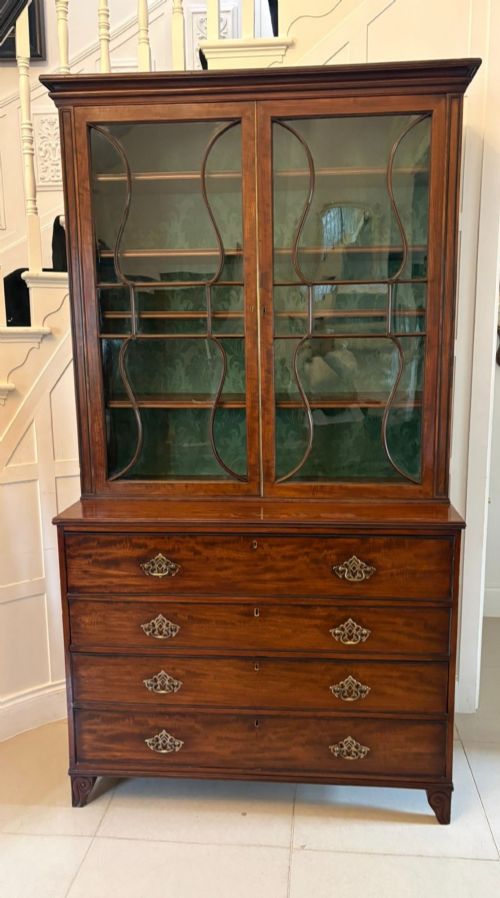
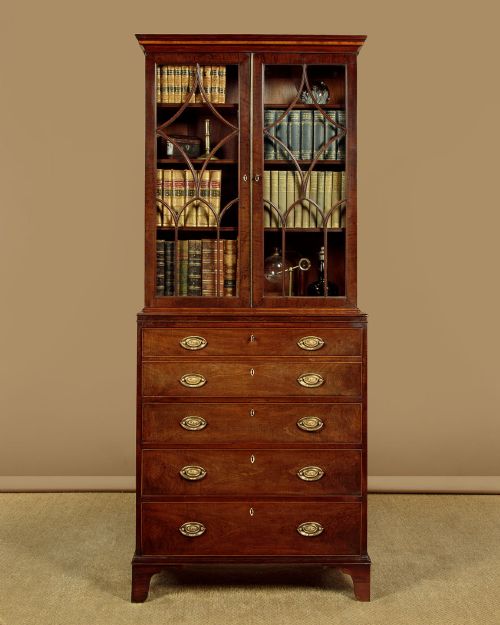
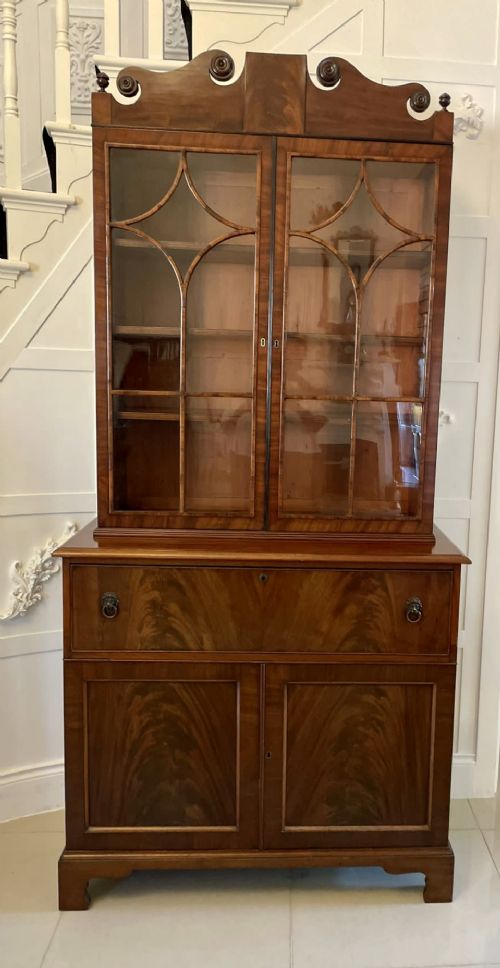
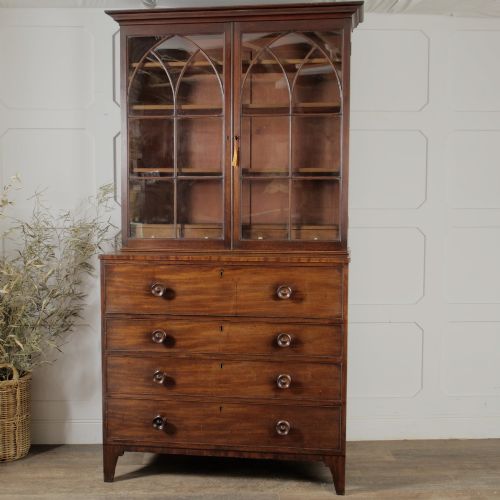
A georgian mahogany secretaire typically appears as a tall bookcase, a chest on chest, or a compact chest of drawers fitted with an intelligent pull-out writing surface. The drop-front drawer conceals small drawers and pigeonholes designed for correspondence and paperwork.
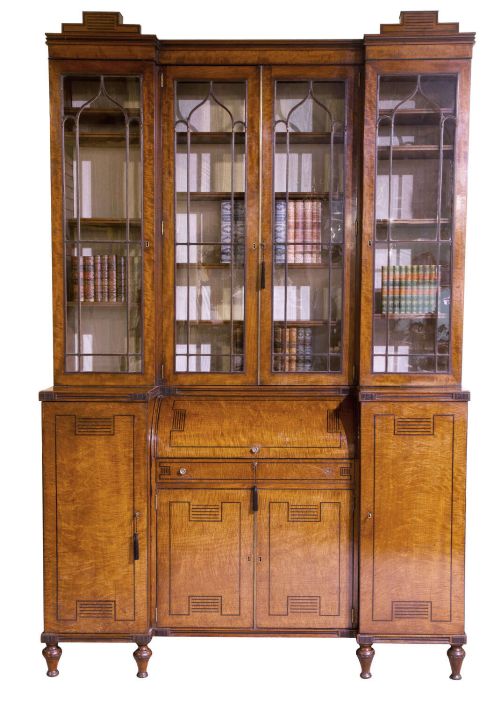
Most examples found here date from the eighteenth and nineteenth centuries, spanning the Georgian, Regency, and Victorian periods. Forms range from large library bookcases with glazed doors to smaller bedside chests and Pembroke work tables.
How they were made
Cabinet makers utilised dense timber, frequently selecting flame mahogany and figured mahogany to cover drawer fronts and primary surfaces. Oak serves as a sturdy secondary wood for drawer linings and internal divisions.
Brass handles, escutcheons, and hinges provide functional hardware, while interior compartments often incorporate satinwood detailing, green baize writing surfaces, and glass doors for upper bookcase sections.
Listings combine oak internal framing with flame mahogany and figured mahogany veneers, accented by brass hardware and leather or baize surfaces.
What varies in quality
The choice of timber grain dictates visual impact, with highly figured flame mahogany and subtle satinwood inlay marking out superior examples. The complexity of the internal cabinet work, including secret compartments and neatly turned pigeonholes, separates standard utility pieces from finer commissions.
Proportion and structural balance define the cabinet maker's success, particularly in tall forms like chest on chests and breakfront bookcases where drawer alignment and cornice detailing require exact execution.
Gillows of Lancaster·John Broadwood
The Georgian Mahogany Secretaire Glossary
- Secretaire
- A writing cabinet or chest featuring a disguised drawer that drops down to reveal a fitted desk interior. This form allows a piece of furniture to serve dual purposes without cluttering a room.
- Flame mahogany
- A veneer cut from the fork of the mahogany tree, displaying a characteristic flickering flame pattern. Cabinet makers reserved this timber for prominent surfaces such as drawer fronts.
- Astragal glazed
- A glass door divided into smaller panes by narrow wooden bars called astragals. This technique is typical of eighteenth-century and Regency bookcase doors.
- Tallboy
- A tall chest of drawers built in two sections, often taking the form of a chest on chest or a press cupboard. These pieces maximise vertical storage space in domestic interiors.
- Baize
- A coarse woollen fabric resembling felt, historically used to line writing surfaces and pull-out desk flaps. It provides a soft, flat pad for writing by hand.
Georgian Mahogany Secretaire: Frequently Asked Questions
What is a secretaire drawer?
A secretaire drawer looks like a standard deep drawer on the outside but conceals a drop-front panel and a fitted interior with small drawers and pigeonholes.
When opened, the front folds down to horizontal, creating a stable writing desk surface without altering the external proportions of the chest or bookcase.
How do I date a Georgian piece?
Dating relies on observing construction methods, timber choices, and stylistic details such as bracket feet, cornice mouldings, and inlay patterns.
Earlier eighteenth-century pieces often feature solid oak linings and simple cockbeading, while Regency examples incorporate brass mounts, figured veneers, and distinct classical proportions.
Where were these pieces used?
These cabinets belonged in formal libraries, private studies, and withdrawing rooms where gentlemen and ladies managed correspondence and estate accounts.
Bookcase variants housed bound volumes behind glass doors, while compact chest forms sat neatly in bedrooms as both storage and personal writing desks.
How do I care for mahogany?
Mahogany responds best to stable room temperatures away from direct heat sources and strong sunlight that can fade figured veneers over time.
Occasional light waxing maintains the natural lustre of the timber without building up heavy layers of residue on the polished surface.