
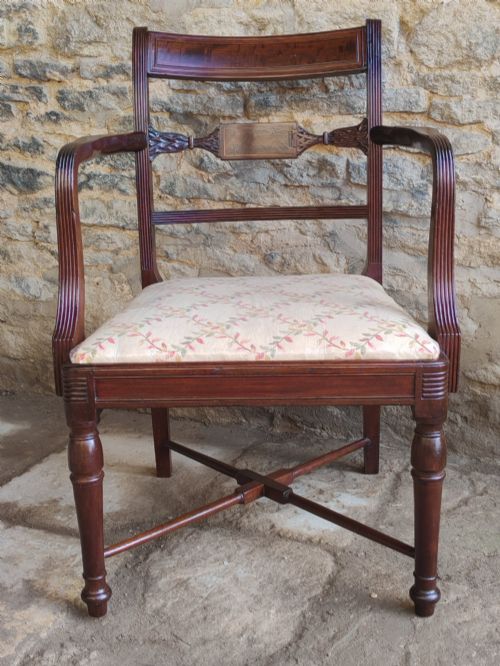
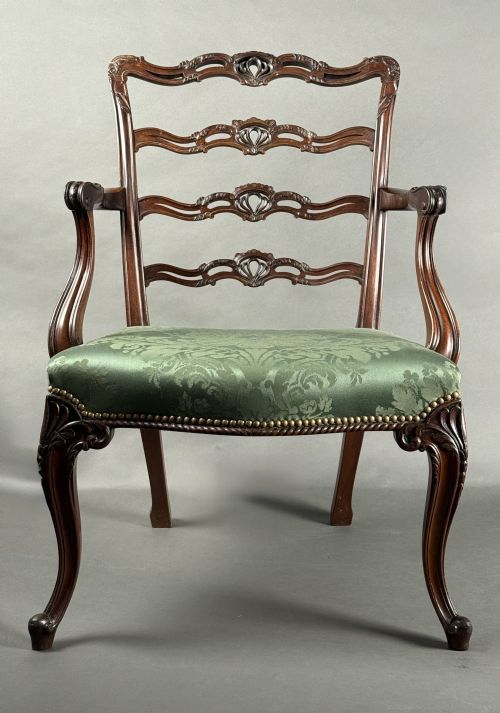
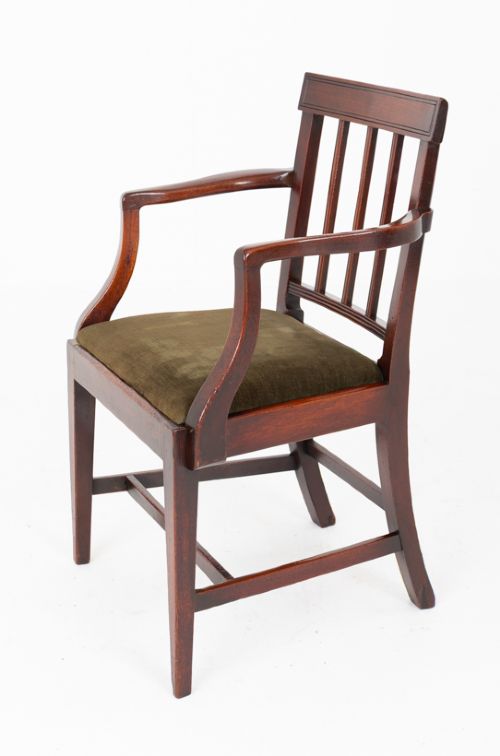
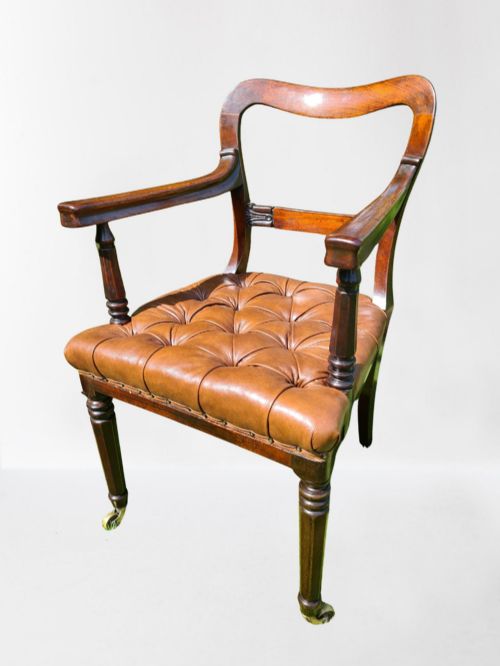
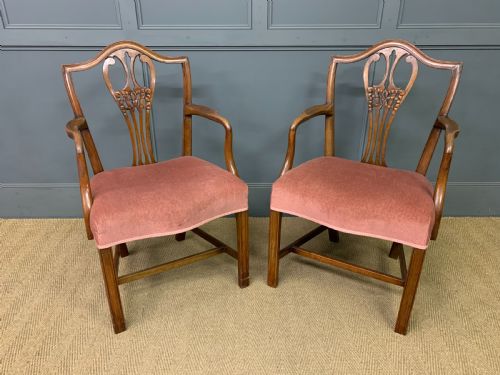
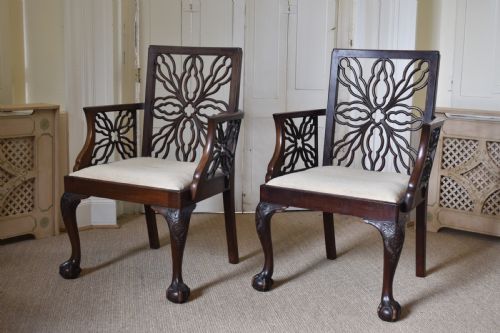
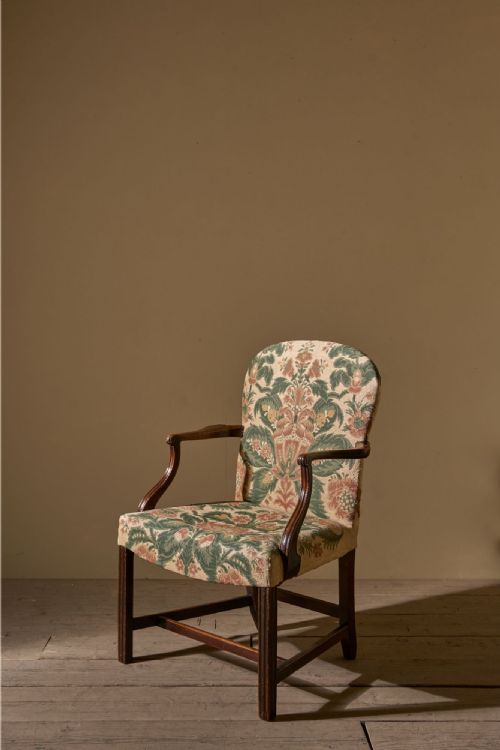
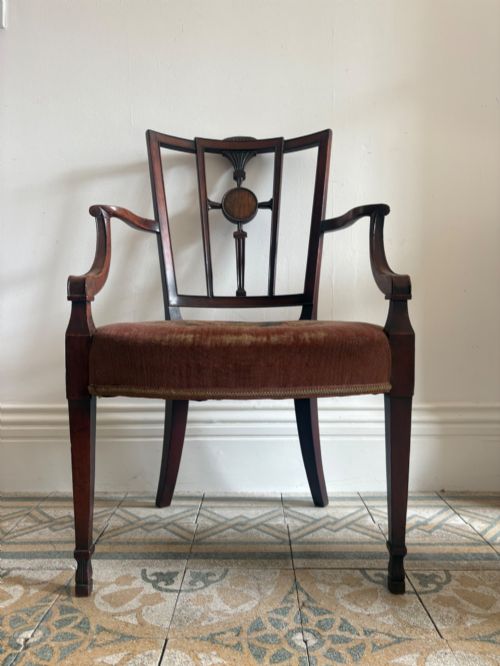
Georgian Mahogany Open Chair
When you search for a georgian mahogany open chair, you find a seating form designed for the library, writing desk or dining table during the eighteenth and early nineteenth centuries.
Georgian Mahogany Open Chair
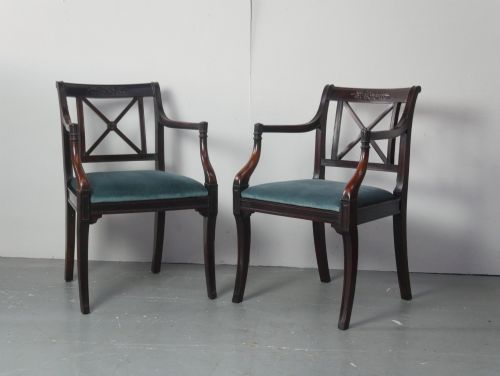
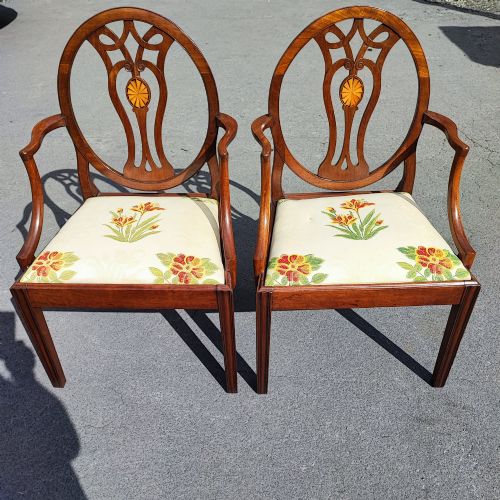
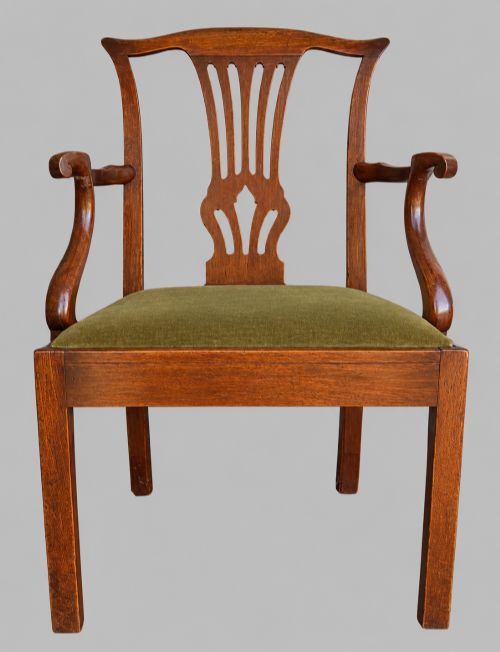
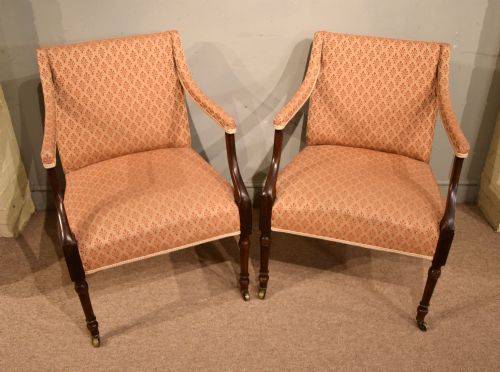
A georgian mahogany open chair functions as an armchair featuring open wooden arms rather than upholstered sides, making it suitable for a desk, library or dining setting. The pieces found here span the eighteenth century, the regency period and later revival eras, reflecting enduring design tastes.
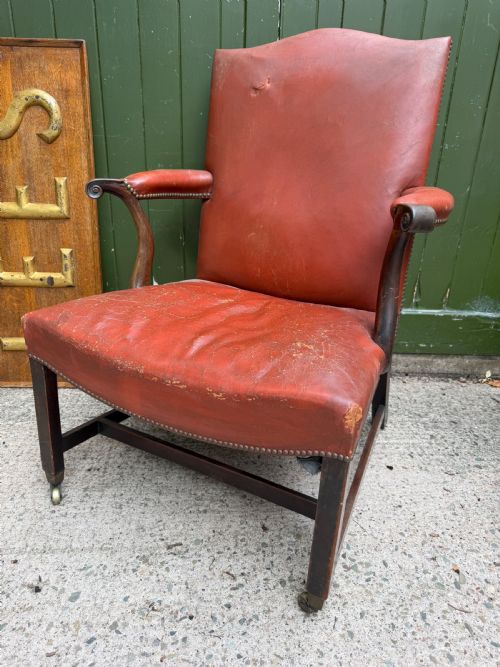
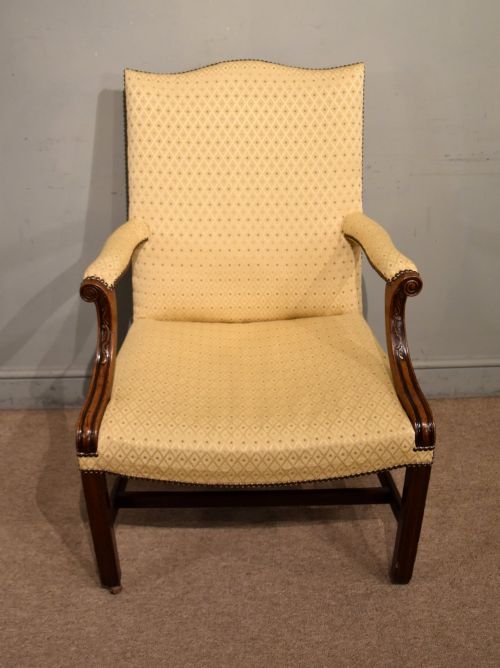
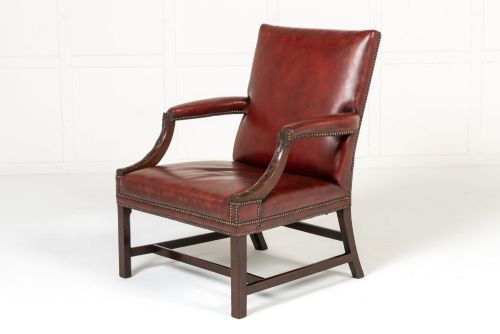
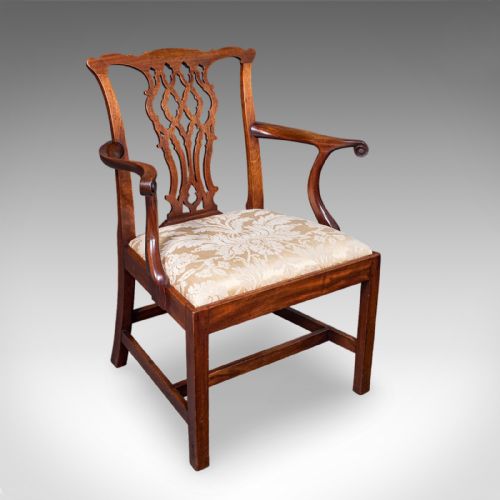
Makers produced these seats in various regional interpretations, including Scottish examples and pieces following Chippendale, Hepplewhite and Sheraton styles. Common forms include the low-seated Gainsborough library chair, the carver chair for the head of a dining table, and dedicated desk chairs.
Structural variations include ladder-back designs, bar-back frames and elaborate pierced splats. Upholstery ranges from original leather and horsehair to later tapestry fabric, velvet, woolwork and cane panels.
Materials and construction
Cabinet makers relied primarily on solid mahogany for its structural strength and responsiveness to intricate carving, occasionally incorporating secondary woods or decorative elements like rosewood roundels and brass inlay. Frames often feature joined construction with pinned mortise and tenon joints.
Carving techniques defined the decorative vocabulary, ranging from blind fretwork on Chippendale style chair rails to hipped cabriole legs. Upholstered elements utilised webbing, stuffing and coverings secured with brass tacks, while cane panels were woven directly into pierced wooden frames.
The inventory includes George III, Regency, and Chippendale style pieces configured as armchairs, desk chairs, and carvers.
Assessing craftsmanship and integrity
Quality rests in the crispness of the timber carving and the architectural balance of the frame, where superior examples exhibit fluid lines and deeply articulated details without softness in the execution. Original surface patination and minimal replacement of structural timber distinguish higher tier pieces.
The integration of the arms to the upright supports dictates overall durability, with finer chairs showing seamless joinery designed to withstand active daily use. The retention of period upholstery materials or appropriate traditional coverings further elevates the standing of an individual chair.
Gillows·Giles Grendey·Spillman And Co
The Georgian Mahogany Open Chair Glossary
- Carver chair
- An armchair designed to match a set of dining chairs, typically placed at the head of the table. These seats share stylistic details with the smaller side chairs in the set.
- Gainsborough chair
- A wide, low-seated library armchair with upholstered back and arm pads set over an open mahogany frame. This form gained popularity during the mid-eighteenth century.
- Splat
- The vertical wooden strip down the centre of a chair back. Makers shaped and pierced these elements according to prevailing styles like Chippendale or Hepplewhite.
- Blind fretwork
- Low-relief carved ornamentation applied to chair legs and rails. This technique mimics Chinese lattice designs popular in mid-eighteenth-century furniture.
- Hipped cabriole leg
- A furniture leg that curves outward at the hip before sweeping inward toward the foot. This form appears frequently on earlier eighteenth-century seating.
Georgian Mahogany Open Chair: Frequently Asked Questions
What is a georgian mahogany open chair?
It is an armchair featuring open wooden arms, produced during the Georgian and Regency eras for use at desks, in libraries or around dining tables.
These pieces typically showcase the rich grain of mahogany timber alongside distinct stylistic markers associated with designers like Chippendale, Hepplewhite and Sheraton.
How do I use one in a modern interior?
These chairs integrate well as dedicated desk seating, reading chairs in a study, or accent pieces in a living room.
Their open arm design maintains visual space in a room while providing functional seating derived from historical forms.
How can I tell the period?
Dating relies on examining construction methods, timber patination and stylistic cues such as leg profiles and back splat designs.
Earlier eighteenth-century pieces often feature cabriole legs and elaborate fretwork, whereas later regency examples lean toward classical lines and brass inlay.
Were these chairs meant for dining or working?
They served multiple functions depending on their specific form, operating as dining carvers, library armchairs or dedicated writing chairs.
Library versions like Gainsborough chairs offered wider proportions for comfort, while desk variants prioritized upright support and mobility.