
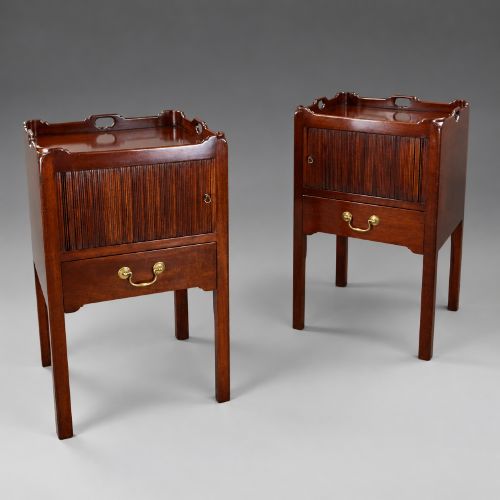
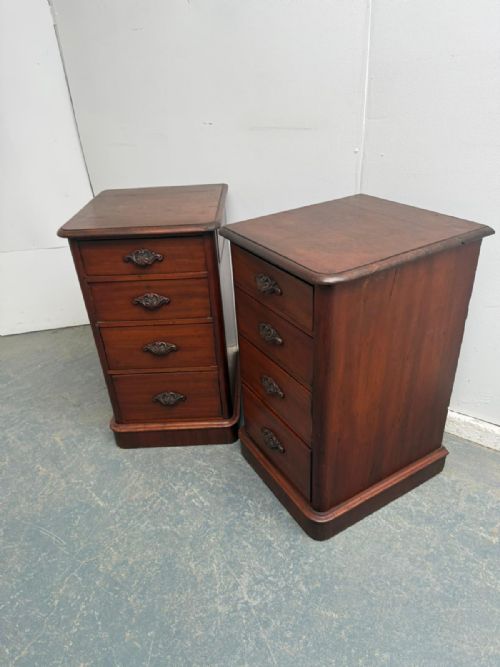
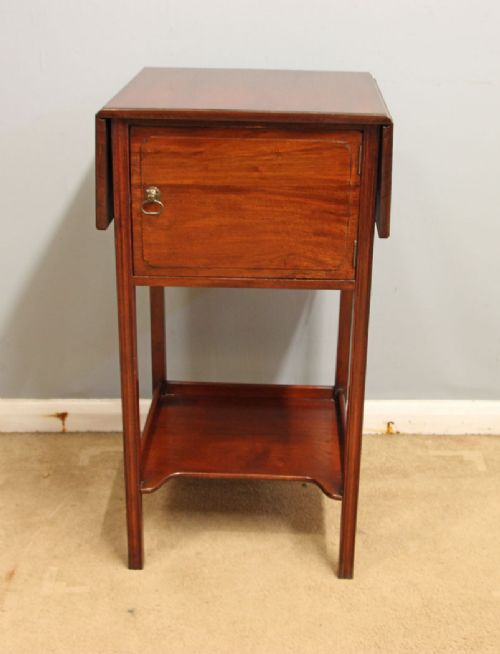
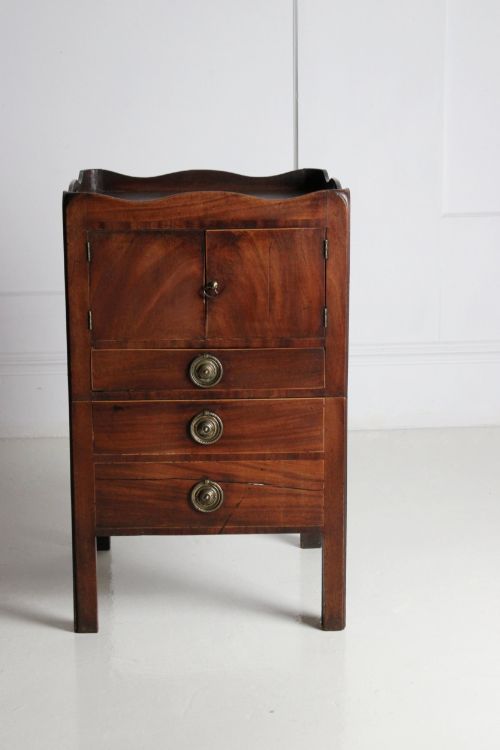

Georgian Mahogany Night Table
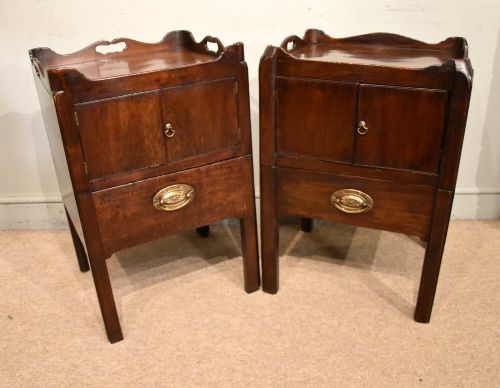
A georgian mahogany night table is a practical bedroom companion built to hold a candle, a chamber pot, or personal items during the eighteenth and nineteenth centuries.
Georgian Mahogany Night Table
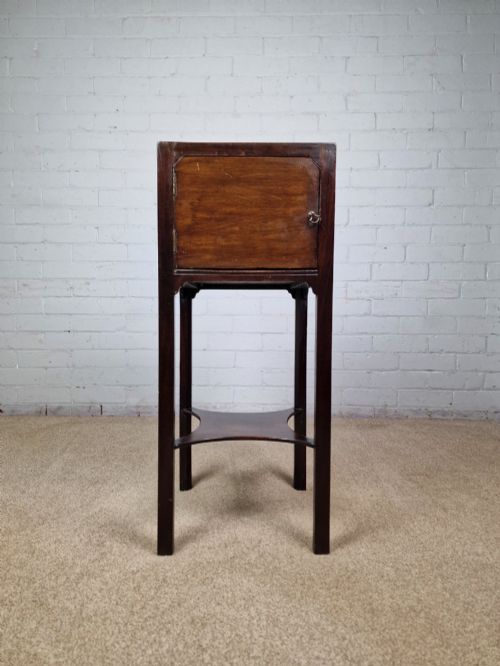
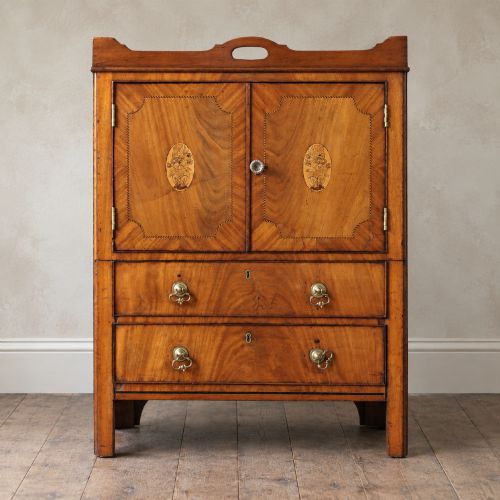
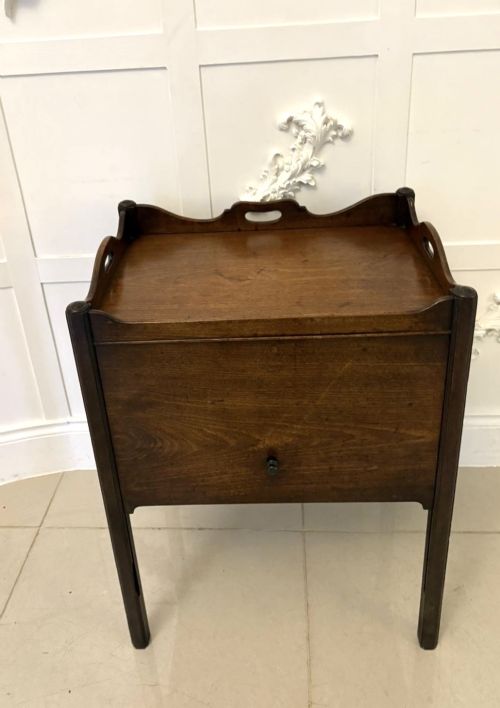
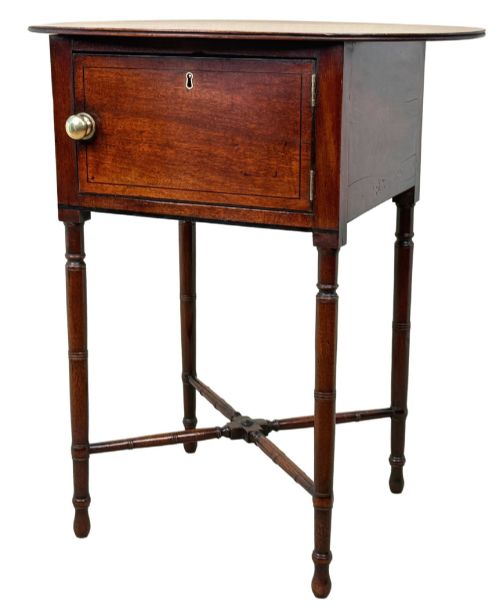
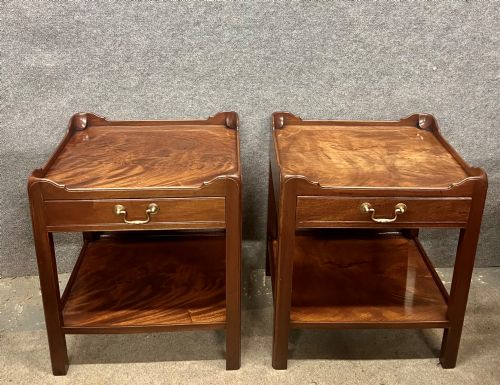
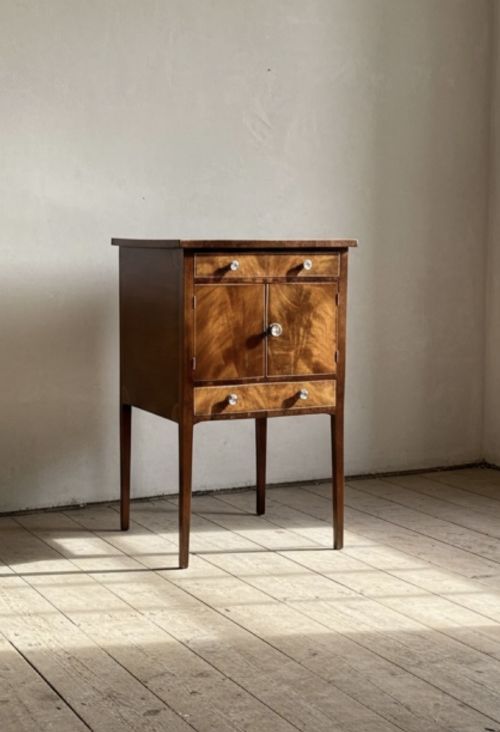
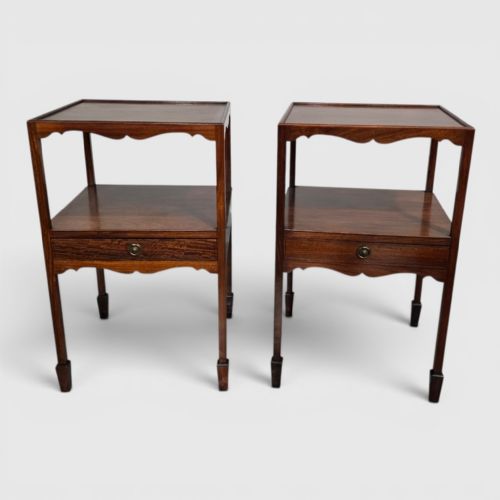
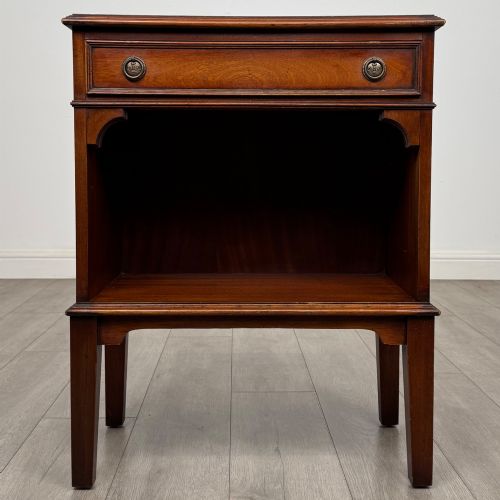
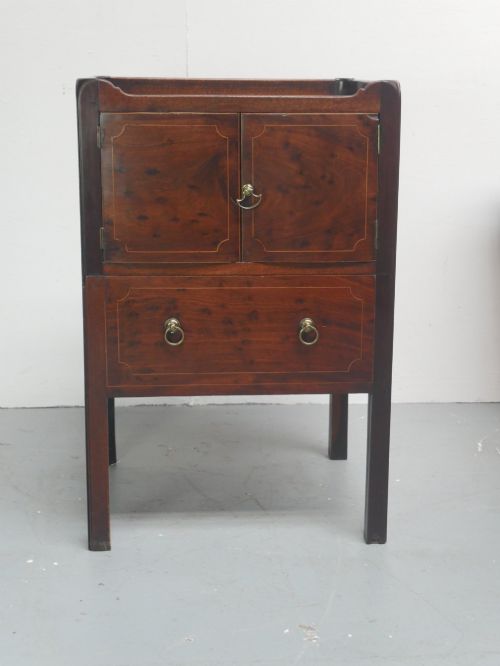
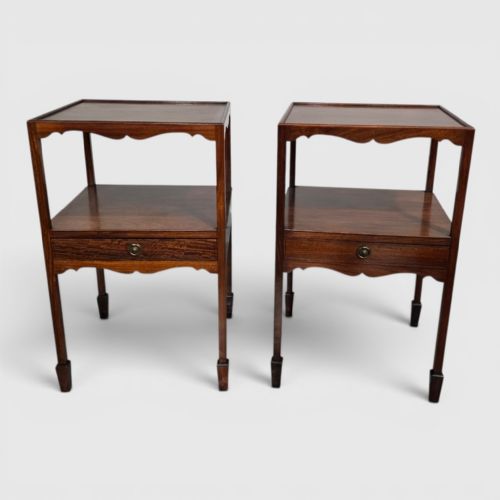
A georgian mahogany night table appears in various guises across this selection, including bedside cupboards, commodes, pot cupboards, and tray-top tables spanning the eighteenth century, the Regency period, and later revival eras.
The most frequent encounters on this page are compact wooden cabinets and lamp tables dating from the Georgian and Regency eras, alongside later twentieth-century interpretations in the Georgian and Sheraton revival styles.
These pieces serve as functional bedside furniture, frequently featuring enclosed lower compartments, drawers, or galleried tops designed to prevent items from rolling off the surface during use.
Judging the standard
Quality rests upon the choice of timber and the crispness of the secondary woods, where figured mahogany and carefully matched veneers distinguish superior examples from plain utility pieces.
The precision of the cabinetwork, the retention of original brass hardware, and the subtlety of details like tray tops or inlaid boxwood lines separate workshop output of the Georgian period from later revival iterations.
The Georgian Mahogany Night Table Glossary
- Tray top
- A raised gallery edge shaped around the top surface of the table to contain items such as lamps or washing equipment. This feature appears frequently on eighteenth-century examples.
- Commode
- A term applied in these listings to enclosed bedside furniture, often housing a cupboard space or drawer rather than chest drawers alone. Many date to the George III period.
- Tambour
- A flexible shutter door formed of narrow vertical strips of wood glued to a canvas backing, allowing smooth access to a concealed cupboard. This technique requires expert joinery.
- Flame mahogany
- A veneer cut from the fork of the mahogany tree where the branch meets the trunk, producing a distinctive flickering flame pattern. It decorates the door fronts of finer pieces.
- Sheraton revival
- A late nineteenth or early twentieth-century style imitating the lighter, refined neoclassical designs associated with Thomas Sheraton. These pieces often incorporate satinwood and boxwood inlay.
Georgian Mahogany Night Table: Frequently Asked Questions
What is a georgian mahogany night table used for?
These tables served primarily as bedside companions for holding a candle, watch, or personal items during the night.
Many incorporated enclosed lower cupboards designed specifically to house a chamber pot out of sight.
How do I spot a true eighteenth-century piece?
Examine the secondary timbers used inside the drawers and backboards, as period pieces typically employ oak or pine appropriate to the era.
Construction methods and hand-cut dovetails provide further clues to distinguish original Georgian work from later revival copies.
What is the difference between a commode and a night table?
In these listings, a commode generally refers to an enclosed cabinet with doors or drawers rather than an open bedside stand.
Both forms served similar functions in the bedroom, though commodes often display more decorative veneers and shaped fronts.
How do I style one in a modern bedroom?
Their compact dimensions allow them to function easily as bedside lamp tables or small side surfaces in contemporary spaces.
The rich tones of the mahogany pair naturally with neutral walls and modern lighting.