
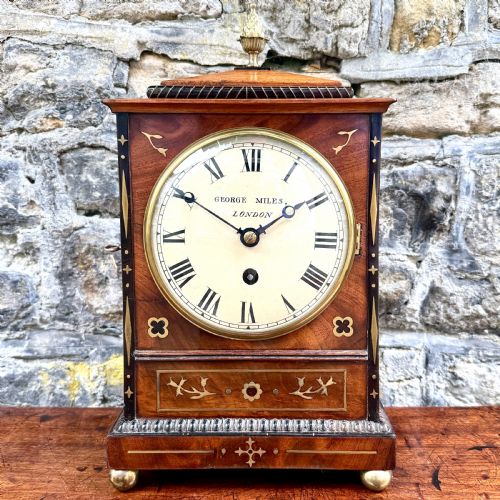
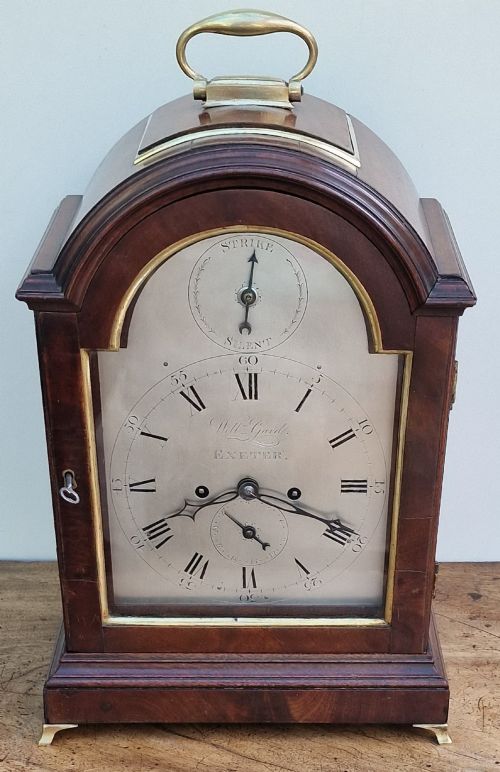
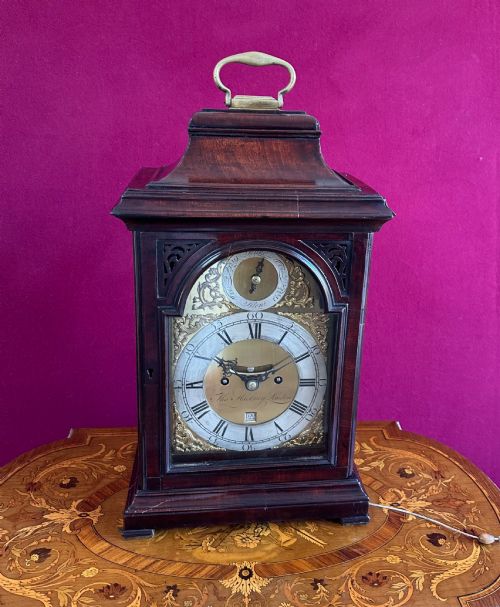

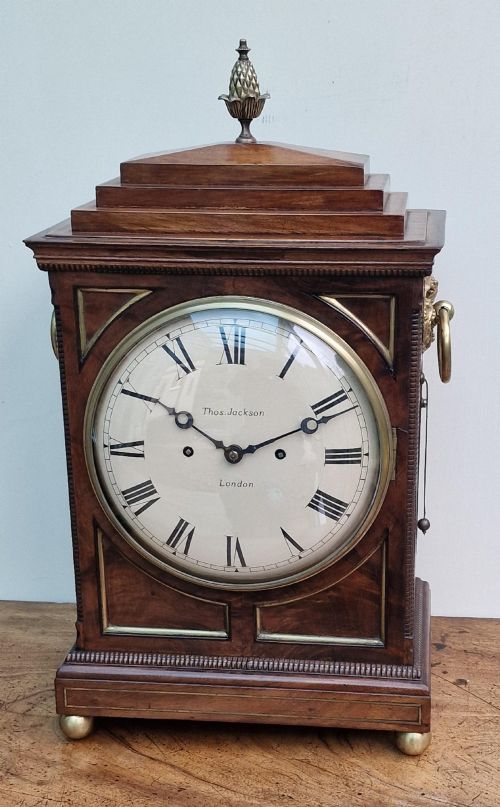


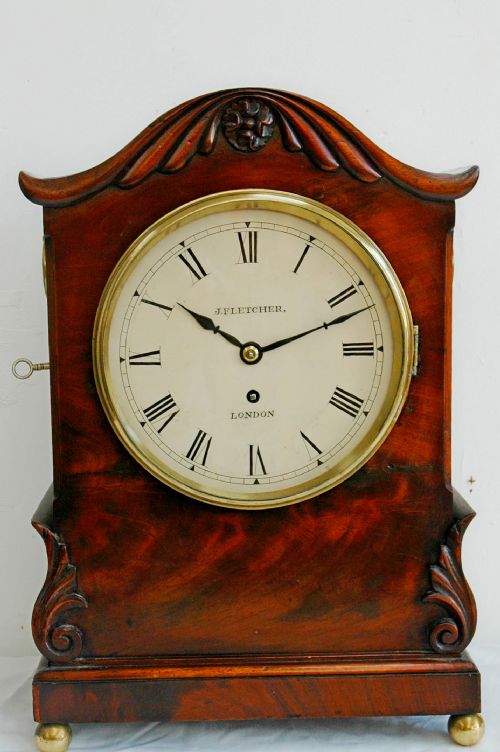


Georgian Mahogany Mantle Clock
A georgian mahogany mantle clock is a dependable timepiece housed in rich timber, prized for its classic proportions and mechanical ingenuity.
Georgian Mahogany Mantle Clock
The version most commonly met on this page is the traditional bracket clock featuring a mahogany case, often accented with brass details and enamel dials. Examples vary from diminutive pieces to substantial library clocks designed to sit securely on a shelf or table.
The selection encompasses periods from the eighteenth century and the Regency era alongside Edwardian interpretations built in earlier styles. Formats vary from bell-top and pad-top profiles to break arch and lancet shapes.
How they were made
Cases are constructed from solid mahogany, occasionally featuring ebony or satinwood inlay, enclosing brass mechanical movements driven by fusee or verge mechanisms. Dials are finished in white enamel with delicate hands, protected behind glazed doors.
Clockmakers utilised brass for the intricate gear trains and backplates, which are frequently engraved with the maker's signature and location. Silk suspension and bell-striking arrangements regulated the time and marked the hours.
Several clocks include functional alarm mechanisms, ensuring owners could be startled awake by their antiques just as Georgian households were.
What varies in quality
The distinction between standard production and superior work lies in the execution of the cabinetmaking and the refinement of the interior movement. Finely figured mahogany, crisp brass mounts, and signed engraved backplates separate workshop pieces from utilitarian timepieces.
Proportion and case architecture dictate visual success, where well-defined bell tops, clean arch mouldings, and intact original feet preserve the intended silhouette of the clock.
William Gard·Thomas Jackson·L. Vick·Webster Cornhill·Thomas Moss·Cording of London·Chater & Son·Perigal & Duterrau·Watson·Ganthony·Adams·Vulliamy·Mitchell & Russell
The Georgian Mahogany Mantle Clock Glossary
- Fusee
- A conical pulley used in clock movements to maintain an even pull on the gear train as the mainspring unwinds. This mechanism helps ensure accurate timekeeping throughout the duration of the winding cycle.
- Verge movement
- An early type of escapement that controls the release of power in a clock. It is typically paired with a pendulum or balance spring.
- Bell top
- A rounded, stepped superstructure on the upper case of a bracket clock. The design echoes the architectural domes popular during the Georgian period.
- Bracket clock
- A portable table clock designed to sit on a bracket or furniture surface. They frequently feature carrying handles and glazed side panels.
- Break arch
- A dial shape featuring a rounded arch rising above a square chapter ring. This format became standard for better quality clocks from the eighteenth century onwards.
Georgian Mahogany Mantle Clock: Frequently Asked Questions
How do I wind a fusee clock?
Use the appropriate key on the winding square located on the dial face, turning it gently until resistance stops the movement. Take care not to overwind the mainspring.
Ensure you handle the pendulum or movement with clean hands and consult an experienced horologist if the mechanism feels stiff.
How do I tell an 18th century clock from a later revival?
Examine the timber patina, the construction of the case joints, and the handwriting or engraving style on the brass backplate. Earlier movements display hand-cut teeth and specific signature formats.
Revival pieces often show uniformity in machine milling and use later fastening methods that differ from eighteenth-century workshop practices.
What is the difference between a mantel clock and a bracket clock?
Bracket clocks historically included carrying handles on top and were built to be lifted from room to room, often resting on a matching wall bracket. Mantel clocks evolved later as fixed ornaments designed specifically for the fireplace surround.
Many listings use the terms interchangeably, but traditional bracket clocks usually retain heavier brass movements and side frets for sound.