


English Horology Mantel Clock
These English horology mantel clock examples range from seventeenth-century brass lantern clocks to nineteenth-century mahogany fusee designs.
English Horology Mantel Clock
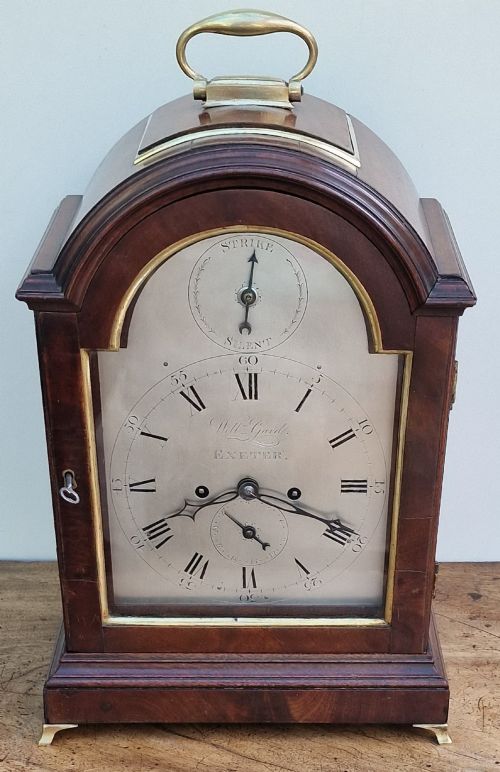
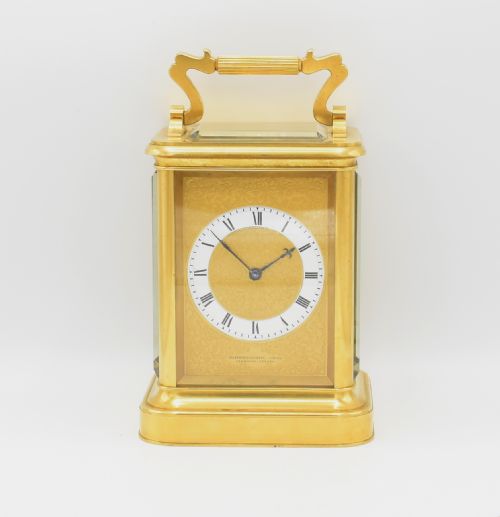
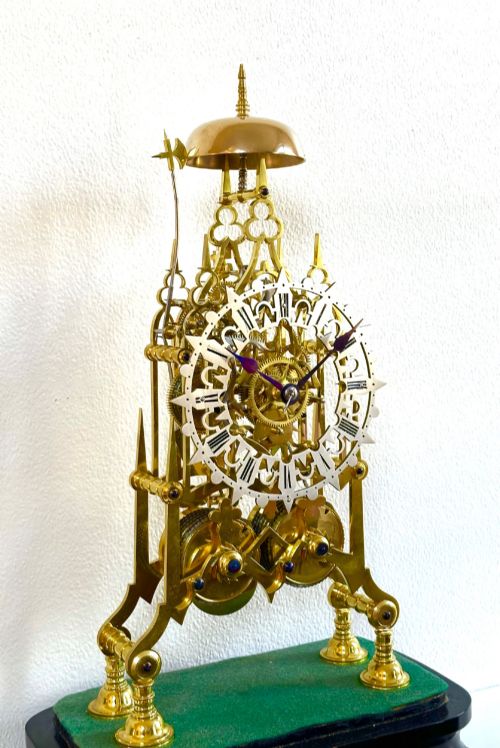
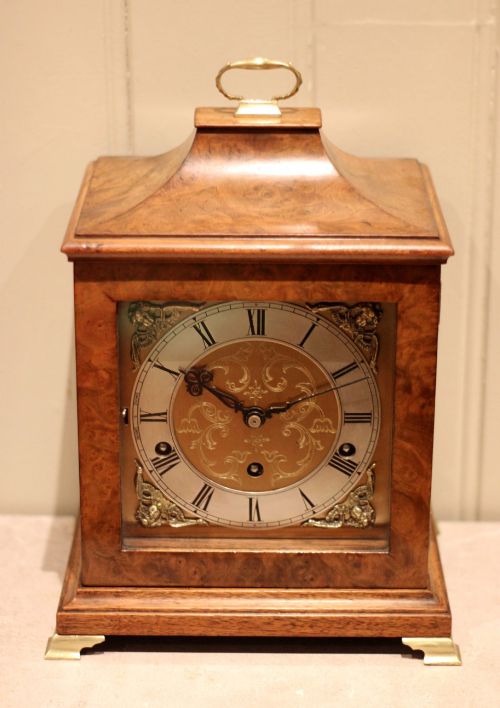
An English horology mantel clock encompasses various timekeeping forms made across multiple centuries, including lantern clocks, bracket clocks, and table clocks. The selection on this page leans heavily toward seventeenth-century lantern clocks and eighteenth- or nineteenth-century mahogany and ebonised bracket clocks.
Makers housed these movements in wood cases such as mahogany, walnut, and ebony, alongside brass frames for earlier lantern clocks. Buyers encounter domestic pieces designed for mantelpieces, tables, and libraries, spanning the Georgian, Regency, and Victorian periods.
The objects serve as functional timekeepers and demonstrations of historical British mechanical skill. The pieces represent centuries of workshop production, from provincial towns to London trade centres.
How they were made
Craftsmen built these clocks using brass and steel for the internal gear trains, escapements, and dials. Cases utilised dense timbers like mahogany, ebony, and walnut, frequently finished with silvered dials and gilt brass mounts.
Early periods relied on brass frames and iron work for lantern clocks, while later Regency and Victorian examples incorporated fusee movements housed in polished timber veneer cases. Makers utilised glass panels to protect delicate dials and expose the movement mechanics.
Several clocks preserve nineteenth-century railway provenance, having kept time for workers along the Great Western Railway.
What varies in quality
The sophistication of the mechanical movement dictates much of the distinction between standard and superior pieces, particularly regarding fusee setups and quarter-striking complications. Signed dials from notable makers carry greater weight than unsigned or provincial alternatives.
Case timber selection and secondary decorative details, such as silver mounts, engraved backplates, and fire gilding on brass, separate workshop output. The integrity of the original components and dial engravings governs the standing of an individual clock.
William Gard Exeter·Goldsmiths Alliance Ltd·Mappin and Webb·John Spershott·L Vick of Stroud·John Witherston·John Pepys London·William Speakman·Peter Closon·John Waller·James Ogden Senior·Henry Jones·J Batson and Son·Connell of London·John Barwise·Arnold and Frodsham·Perigal of London·Joseph Jump·J Condliff Liverpool·Brockbanks of London·Delépine·William Clement·Chater and Son·John Taylor·Dent
The English Horology Mantel Clock Glossary
- Fusee
- A conical pulley designed to equalise the power of the mainspring as it unwinds. This mechanism helps maintain consistent timekeeping accuracy throughout the power reserve.
- Lantern clock
- An early brass chamber clock driven by weights or springs, featuring strap-work frames and bell tops. These pieces represent seventeenth-century domestic timekeeping.
- Bracket clock
- A portable table clock originally built to sit upon a matching wall bracket. They typically feature arched or bell-top wooden cases enclosing spring-driven movements.
- Verge escapement
- An early type of clock escapement using a crown wheel and pallet impulses. It governs the speed of the gear train through regular oscillation.
- Quarter striking
- A mechanical function enabling the clock to strike the intermediate quarters of each hour on multiple bells or gongs. This feature adds complexity to the gear train.
English Horology Mantel Clock: Frequently Asked Questions
What is a fusee movement?
A fusee movement uses a conical pulley connected to the mainspring via a cord or chain. This design compensates for the decreasing torque of the spring as it runs down.
By evening out the force delivered to the escapement, the clock maintains steady amplitude and improved timekeeping precision throughout its running cycle.
Where were lantern clocks used?
Lantern clocks served as primary domestic timepieces in seventeenth-century homes, mounted on walls or placed on sturdy tables. Their brass construction and weight-driven mechanics suited main living spaces.
As spring-driven bracket clocks gained popularity, lantern clocks evolved into specialised decorative and functional items for wealthy households.
How do I identify a Victorian bracket clock?
Victorian bracket clocks usually feature mahogany, walnut, or ebonised wooden cases influenced by earlier Georgian or Gothic revival styles. Makers integrated robust double fusee movements and heavier brass dials into these nineteenth-century pieces.
Signatures from established retail firms or makers often appear on the dial face or backplate to confirm the production era.
How should I care for an antique clock?
Antique clocks require placement away from direct sunlight, central heating vents, and damp environments to protect wooden veneers and delicate metal components. Stable indoor temperatures prevent timber splitting and metal oxidation.
Professional servicing every few years ensures the gear trains remain clean and properly lubricated for continuous operation.