

Brass Fusee Mantel Clock
A brass fusee mantel clock harnesses a chain and cone pulley movement to keep steady time inside a traditional wooden or brass architectural case.
Brass Fusee Mantel Clock
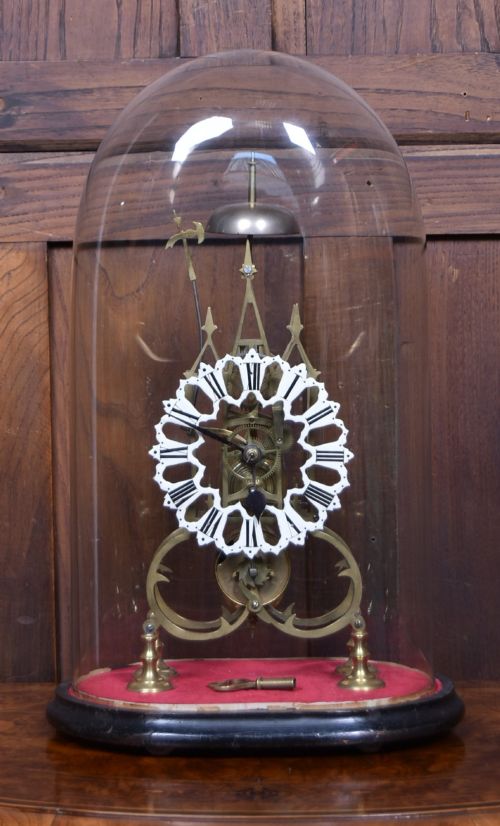
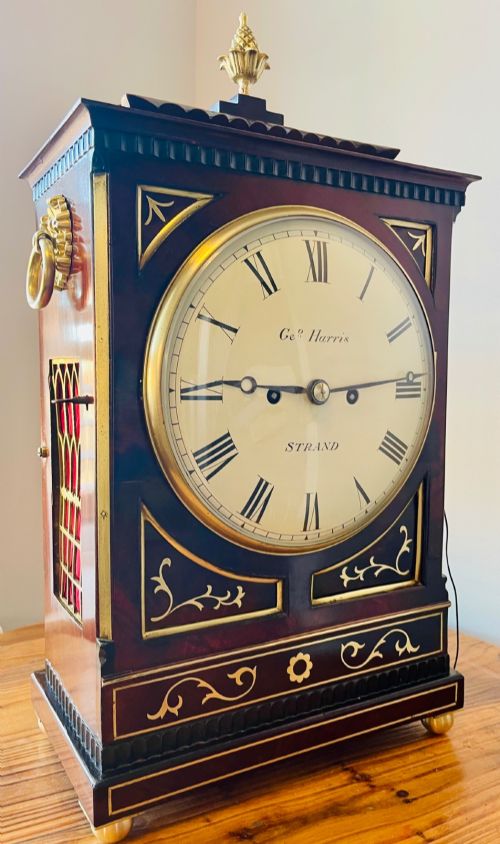
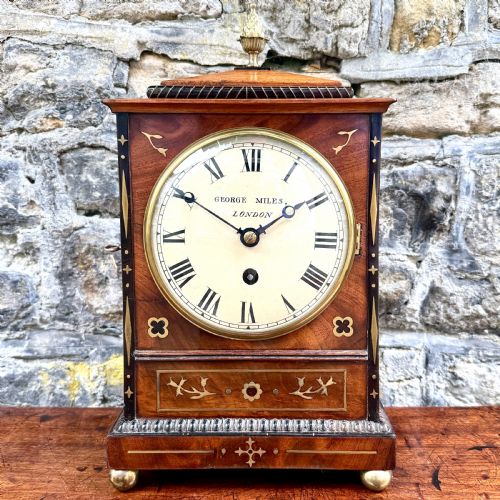
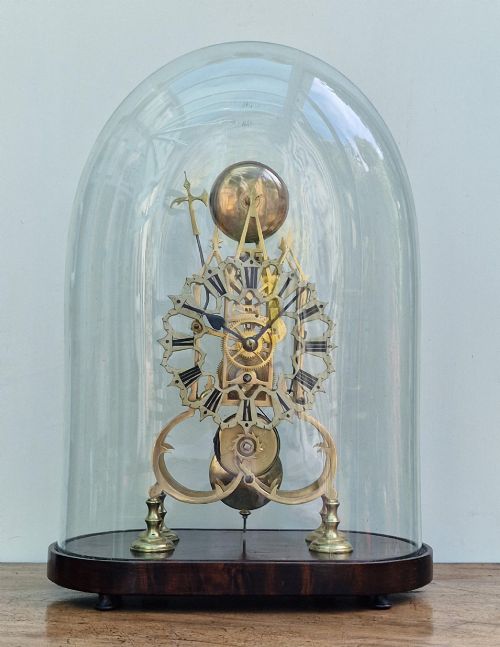
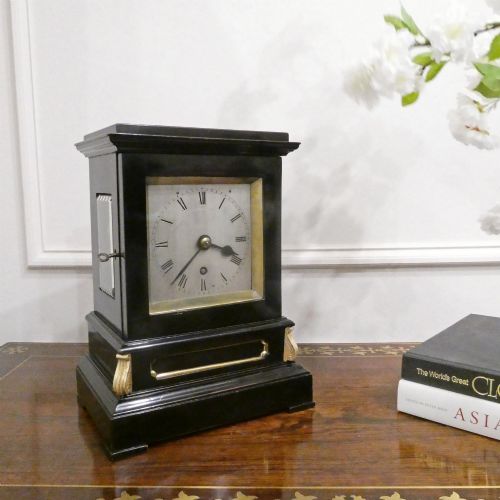
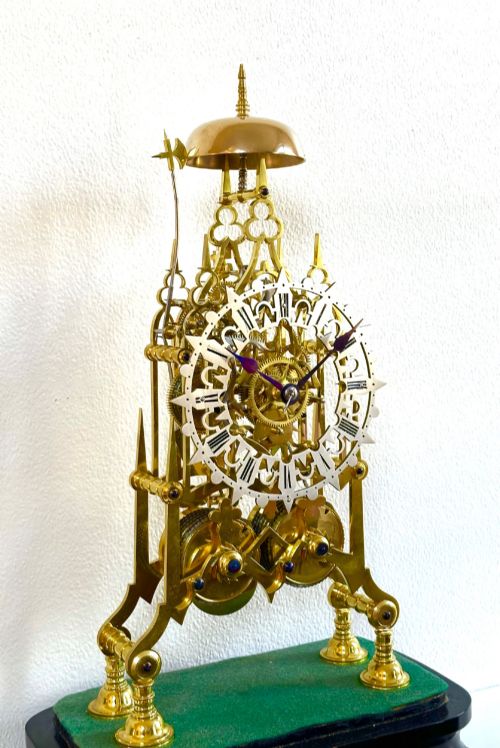
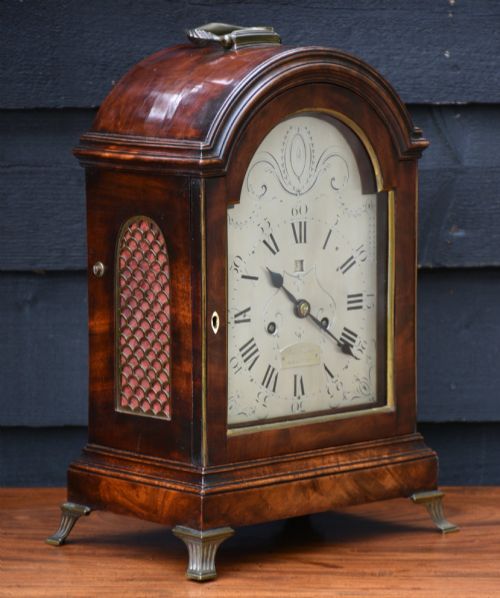
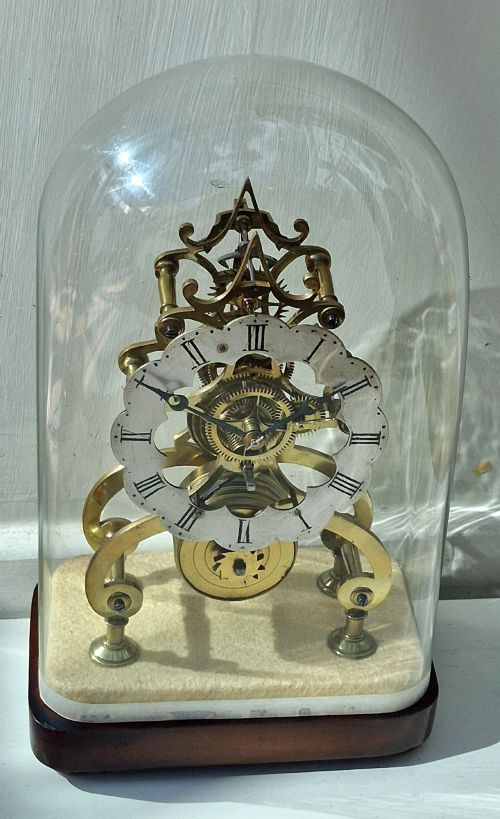
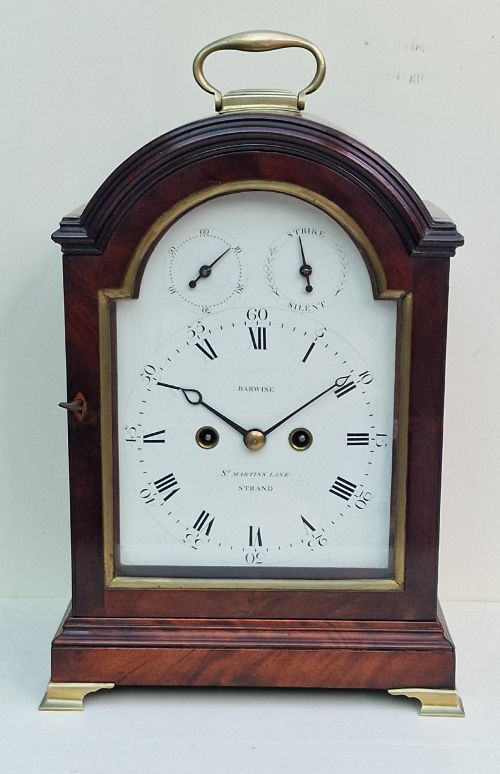
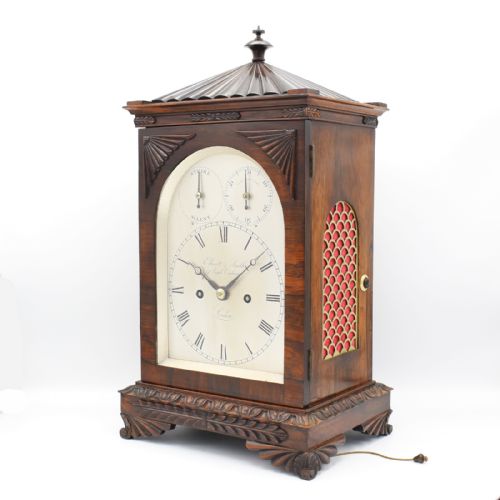
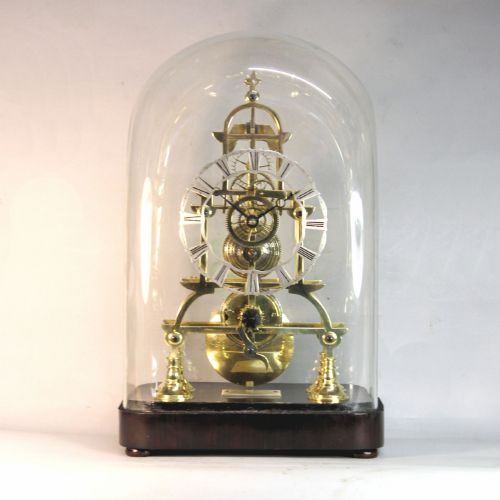
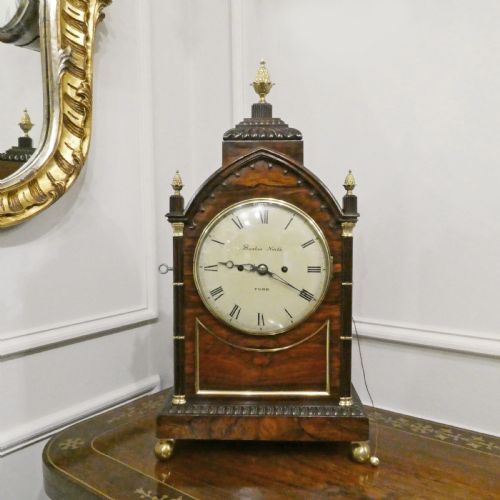
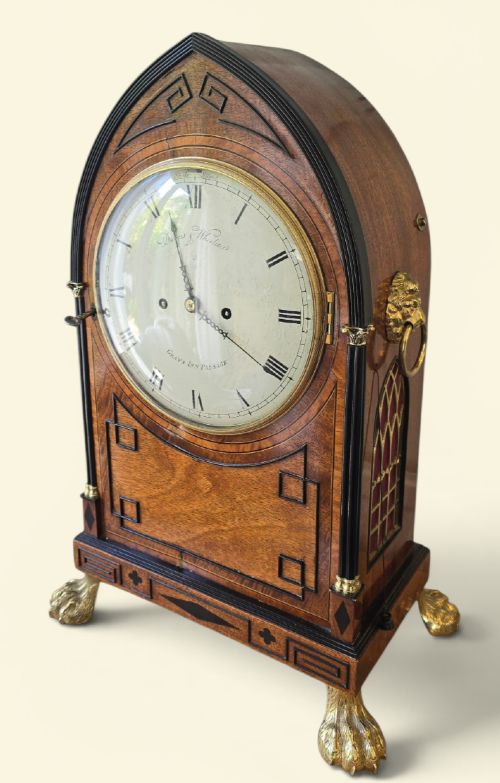
A brass fusee mantel clock represents a technical approach to portable horology, appearing in forms such as bracket clocks, library clocks, and skeleton clocks across this selection. The brass fusee mantel clock meets buyers primarily in nineteenth-century and Georgian iterations, ranging from simple mahogany timepiece boxes to elaborate skeleton movements exposed beneath glass domes.
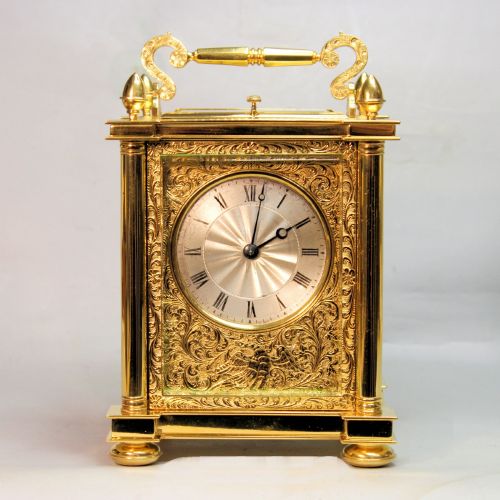
Makers housed these mechanisms in varied timber and metal housings, including ebonised wood, rosewood, and marble, often styled in the Regency, Victorian, or Gothic revival manners. A brass fusee mantel clock found here might take the shape of a lancet top, a pad top, or a miniature carriage design, reflecting the diverse domestic interiors of the nineteenth century.
Markers of quality
Quality reveals itself in the crispness of the brass engraving on the backplate, the precision with which the fusee cone is cut, and the structural integrity of the timber case joints. Higher-grade examples display refined dial work, original matching brackets where applicable, and signed movements by known workshops that maintain steady timekeeping.
The refinement of the movement layout and the selection of figured veneer timbers distinguish the workshop output of prominent London and provincial clockmakers from ordinary commercial production.
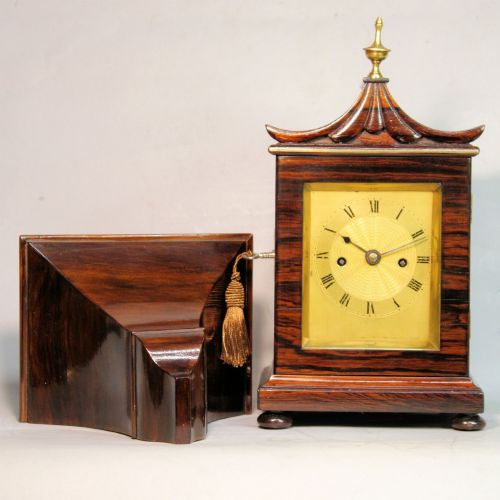
Some miniature bracket clocks include an optional wall bracket, ensuring the timepiece could hang securely off the floor when desk space ran short.
Cousens & Whiteside·Barwise·Ellicott & Smith·Richard Winter·Barber & North·Desbois & Wheeler·Webster·Spurge·Mappin & Webb·Thwaites·Cording·William Payne·John Barwise·W. Burton·Wilkinson·Barrett·Thomas Connold·Taylor·Richard Rooker·Payne & Co.·Thomas Cole·James Cole·Hunt And Roskell·Charles Fletcher
The Brass Fusee Mantel Clock Glossary
- Fusee
- A conical pulley used inside the clock to maintain even power from the mainspring as it unwinds. This device ensures consistent timekeeping across the whole duration of the winding cycle.
- Bracket clock
- A portable table clock originally designed to sit upon a matching wall bracket. Many examples retain this classical form despite resting directly on mantelpieces today.
- Skeleton clock
- A timekeeper stripped of its dial case to reveal the brass gear train in full view. These pieces sit beneath glass domes to protect the open mechanism from dust.
- Striking clock
- A mechanism that sounds the hours or quarters on a bell or gong. The addition of a striking train requires extra gear wheels and a second spring or weight.
- Silvered metal
- A brass dial plate treated with a silver compound to produce a pale, reflective surface for the engraved numbers. This finish tarnishes naturally over time unless protected.
Brass Fusee Mantel Clock: Frequently Asked Questions
What is a fusee movement?
A fusee is a conical pulley connected to the mainspring by a fine chain or gut line. It compensates for the dropping tension of the spring as it unwinds, delivering steady power to the gear train.
This clever mechanism helps the clock maintain accurate time over its eight-day or thirty-hour run without losing pace towards the end of the cycle.
How do I wind the clock?
Winding requires a matching key inserted into the winding square on the dial face, turning it gently until resistance increases. Care must be taken not to overwind the spring, which can cause internal strain.
Most fusee clocks require weekly winding, though specific timepieces vary depending on whether they include striking or repeating trains.
Where should I place a skeleton clock?
Skeleton clocks need a stable, level surface away from direct sunlight, draughts, and dampness. They rely on their glass domes to protect the exposed brass wheels from airborne dust.
Placing them on a sturdy mantelpiece or dedicated bracket prevents vibrations that might otherwise disrupt the delicate pendulum or balance wheel.
How can I tell the period?
Dating relies on stylistic clues within the woodwork, dial engraving, and movement architecture. Georgian and Regency pieces often feature classic mahogany cases with brass bracket feet, while Victorian examples introduce ebonised woods and Gothic brass motifs.
Signatures on the backplate or dial often link the piece to recorded working dates of specific makers.