


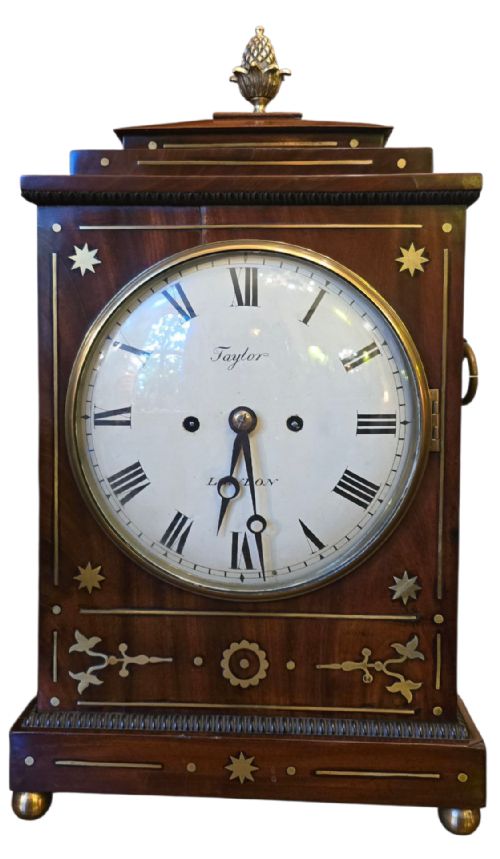


Georgian Chiming Mantel Clock
A georgian chiming mantel clock is a striking mechanical timekeeper designed for table or shelf placement, bringing period presence and acoustic character to a room.
Georgian Chiming Mantel Clock
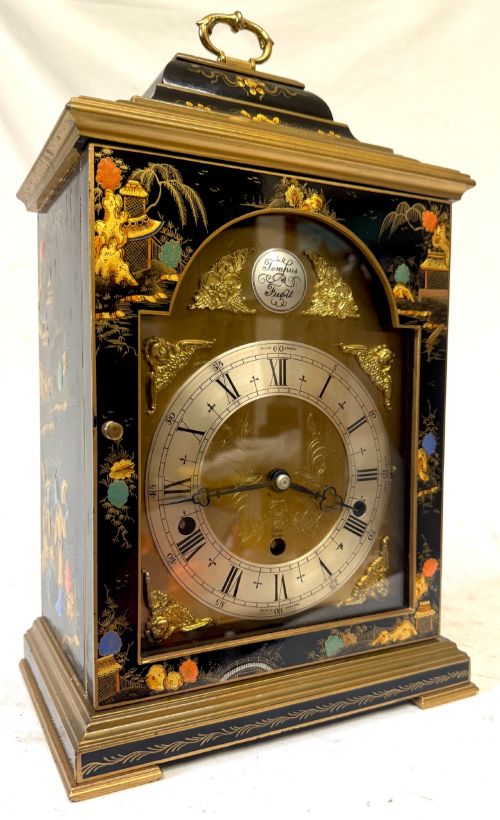
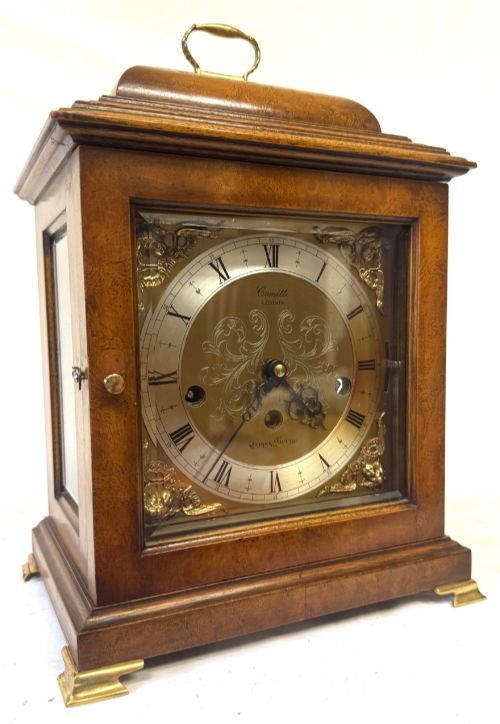
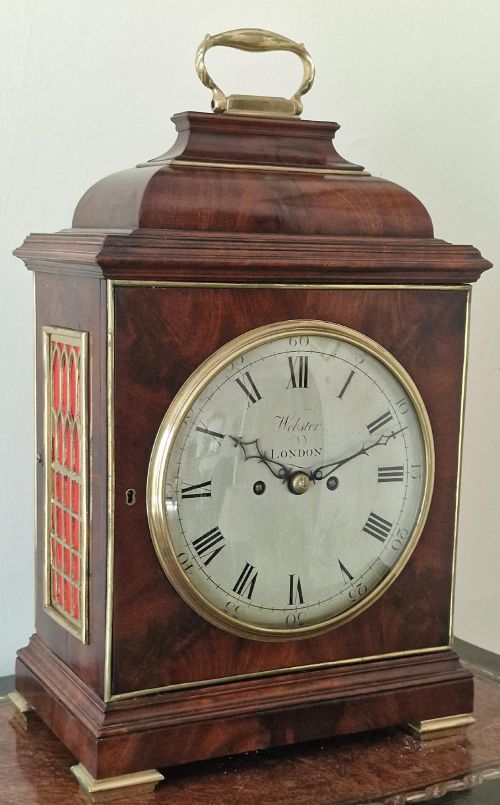
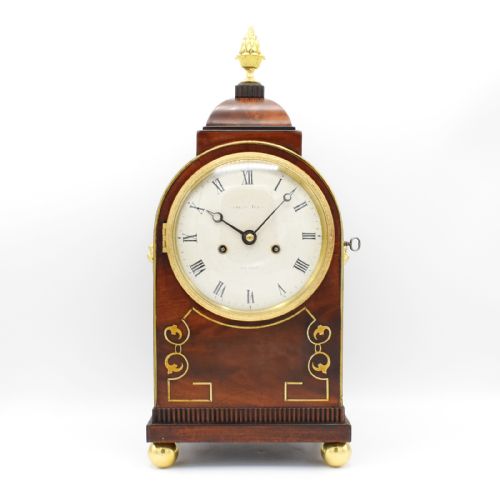
A georgian chiming mantel clock sits on tables and brackets, serving both as an accurate timekeeper and a prominent room feature. These mechanical pieces encompass bracket clocks, table clocks, and mantel clocks built during the eighteenth and nineteenth centuries, alongside later revivals.
Mahogany and ebonised wood dominate the visible structures, frequently embellished with brass mounts, glass panels, and ormolu details. Dial configurations include silvered metal and enamel surfaces that display the hours through intricate hands.
The horological mechanisms range from simple striking movements to complex three-train musical setups capable of playing multiple tunes. Surviving examples reflect both domestic London workshop production and later traditional English manufacturing methods.
What varies in quality
The refinement of the cabinetwork separates standard production from exceptional pieces, visible in the depth of the mahogany grain, precision of the brass mounts, and execution of lacquer or ebonisation. Finer examples retain their original surface finishes and harmonious proportions without heavy timber replacement.
Complexity and execution of the internal movement dictate distinction, particularly in multi-train musical setups or quarter-repeating mechanisms signed by notable makers. The crispness of dial engraving and the integration of original components further elevate the status of a clock.
Some models hide musical barrels inside their wooden chambers, ready to chime tunes across the centuries when wound.
Elliott London·Comitti Of London·Francis Perigal·Cording of London·Taylor of London·J. Condliff Liverpool·Berguer of the Strand·William Withers·John Taylor·Chater & Son·William Smith London·John Ellicott·Richard Peckover
The Georgian Chiming Mantel Clock Glossary
- Bracket clock
- A portable mechanical clock originally designed to sit on a wall bracket to aid sound projection. These pieces typically feature wooden cases with carrying handles and glazed access doors.
- Fusee
- A conical pulley connected to the mainspring by a cord or chain that equalises the driving force as the spring unwinds. This mechanism ensures consistent torque and accurate timekeeping across the power reserve.
- Chinoiserie
- A decorative style employing European interpretations of Chinese artistic motifs, often rendered in lacquer and gold paint. It appears on select clock cases alongside traditional wood finishes.
- Ting tang
- A striking sequence utilising two bells or gongs to sound the quarters before the hour. This acoustic arrangement offers a distinct alternative to standard hour-only striking.
Georgian Chiming Mantel Clock: Frequently Asked Questions
What is a bracket clock?
A bracket clock is a portable timepiece historically designed to sit upon a dedicated wall bracket to help project its sound throughout a room. These clocks feature enclosed wooden cases with glazed panels and protective carrying handles.
Over time, many of these pieces transitioned to resting directly on mantelpieces, tables, or desks while retaining their traditional name and structural form.
How do chiming movements work?
Chiming movements utilise internal gear trains separate from the timekeeping mechanism to sound bells or gongs at set intervals. Multi-train configurations can strike quarters, repeat previous hours, or play specific musical tunes.
Skilled makers coordinated these mechanisms with hammers and pins to ensure precise acoustic output alongside accurate visual time display.
Where should I place a mantel clock?
These clocks suit stable horizontal surfaces like mantelpieces, side tables, and sturdy bracket shelves away from direct heat sources and excessive moisture. Proper placement ensures the mechanical movement remains level for reliable operation.
Allowing sufficient clearance around the case also permits the chime and strike sounds to resonate clearly within the space.
How do I identify a Georgian clock?
Georgian clocks are identified through their period construction traits, including mahogany or ebonised timber cases, brass dial furniture, and traditional London maker signatures. Stylistic markers range from break-arch tops to restrained architectural proportions.
Examining the internal fusee movement and dial materials helps distinguish eighteenth-century production from later nineteenth-century revivals.