


Georgian Pendulum Table Clock
A georgian pendulum table clock is a precise timekeeper housing a swinging pendulum, built to sit on a bracket or surface and bring functional elegance to a room.
Georgian Pendulum Table Clock
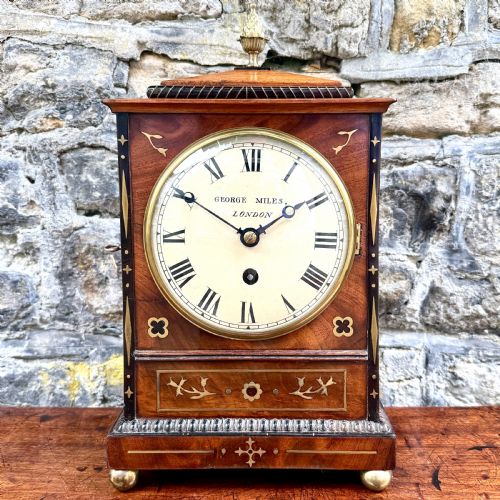
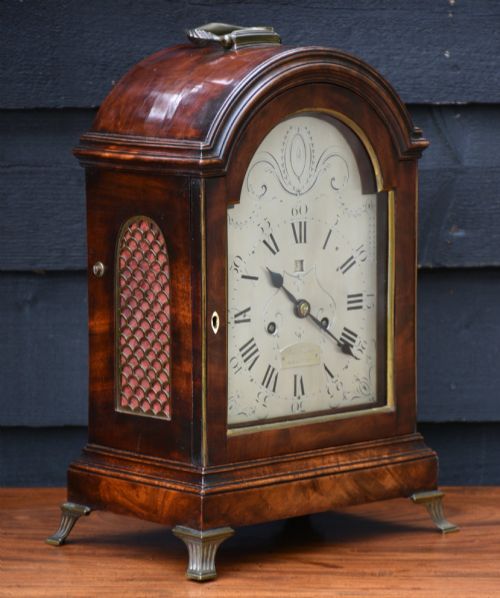
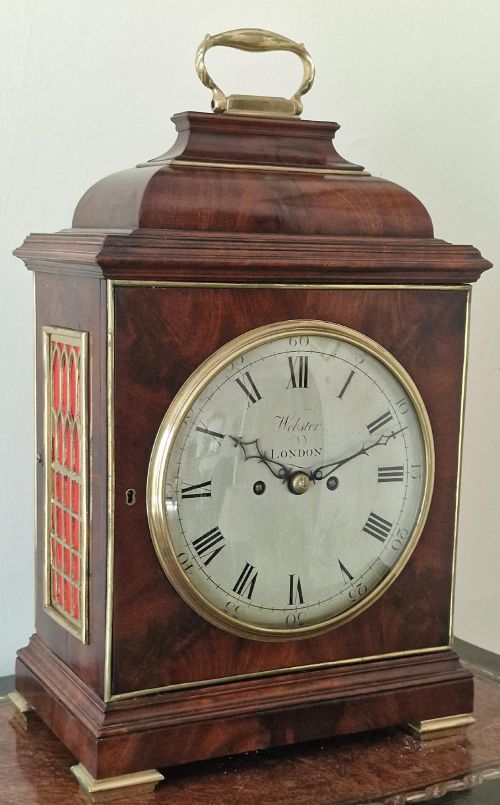
When you search for a georgian pendulum table clock, you encounter substantial mantel and bracket clocks spanning the Georgian, Regency, and Victorian periods alongside later revivals. These items take the form of table clocks, mantel clocks, and bracket clocks designed to stand securely on furniture rather than hang upon a wall.
The pieces listed on this page predominantly feature mahogany, burr walnut, and ebony cases, often enriched with brass mounts, silvered metal dials, and glass panels. Makers from London and provincial towns such as Perth produced these horological instruments to serve both practical timekeeping and domestic decoration.
Forms range from bell top silhouettes to architectural bracket designs influenced by Regency Egyptian Revival and Gothic Revival styles. You will find eight-day movements driven by fusee mechanisms, together with verge and tic tac escapements.
Materials and construction
Cabinetmakers constructed the wooden housings using dense timbers such as mahogany, burr walnut, and ebony, shaping them into bracket and mantel clock forms. Glass glazed doors protected the silvered metal or enamel dials while allowing a clear view of the face.
Brass mounts, ormolu, and silvered metal details decorated the exteriors, complementing the dark tones of the timber cases. Clockmakers fitted mechanical movements driven by fusee systems, incorporating specialised escapements like the verge or tic tac to regulate the swing of the pendulum.
Listings feature mahogany, burr walnut, and ebony cases paired with brass, enamel, and silvered metal components.
Distinctions in craftsmanship
Quality separates objects by the crispness of the timber carving, the choice of figured veneers like burr walnut, and the precision of the brass mounts. Finer examples display harmonious proportions and careful integration of architectural styles such as Gothic Revival or Regency Egyptian Revival.
On the mechanical side, the sophistication of the movement and the reputation of the horologist define the tier of the piece. Signed dials from notable London makers indicate a higher level of workshop output than unsigned provincial alternatives.
Webster London·Thomas Moss·Paul Philip Barraud·Christie of Perth·John Taylor of London·Vulliamy
The Georgian Pendulum Table Clock Glossary
- Bracket clock
- A portable table clock designed originally to sit upon a matching wall bracket or a piece of furniture. These pieces usually feature a carrying handle on top.
- Fusee
- A conical pulley used inside the clock to maintain an even pull on the drive chain or cord as the mainspring unwinds. This mechanism ensures consistent timekeeping.
- Verge escapement
- An early type of escapement mechanism that controls the release of the gear train using a rocking pallet axis and a crown wheel. It requires a swinging pendulum to regulate the beat.
- Tic tac escapement
- A specialised pendulum escapement designed to reduce recoil and improve accuracy in table and bracket clocks. It derives its name from the distinct sound of its pallets.
- Silvered metal
- A brass or copper dial plate treated with a silver solution to create a bright, readable surface for engraved numerals and maker signatures. These dials catch the light softly behind glass.
Georgian Pendulum Table Clock: Frequently Asked Questions
What is a fusee movement?
A fusee movement uses a conical pulley to equalize the power delivered by the mainspring as it loses tension. This clever mechanical device helps the clock maintain steady accuracy throughout its running cycle.
You will frequently encounter this system in older table timepieces where reliable timekeeping is paramount.
Where did these clocks sit?
Owners placed these timekeepers on wooden wall brackets, mantelpieces, or heavy tables in principal rooms. Their portable nature allowed staff to move them between apartments as needed.
They functioned both as reliable time sources and as status symbols in domestic interiors.
How do I spot a Regency style case?
Regency cases often incorporate classical architectural motifs, brass inlay, and restrained lines influenced by ancient Roman and Egyptian designs. Dark timbers like mahogany provide a dramatic backdrop for the metal mounts.
These details distinguish them from earlier Georgian or later Victorian interpretations.
What does bell top mean?
Bell top describes a rounded, stepped wooden roof shape on a bracket clock case that resembles the silhouette of a church bell. This profile was popular among eighteenth and nineteenth century cabinetmakers.
It adds vertical height and elegance to the overall composition of the clock.