
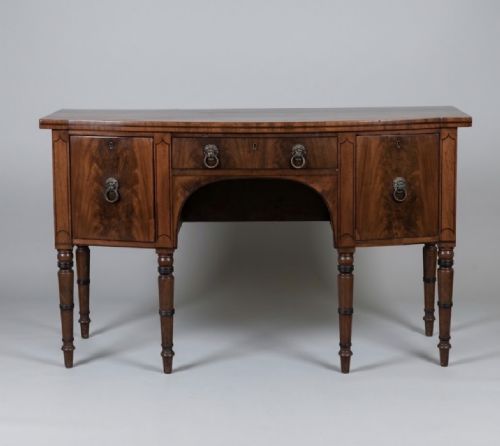
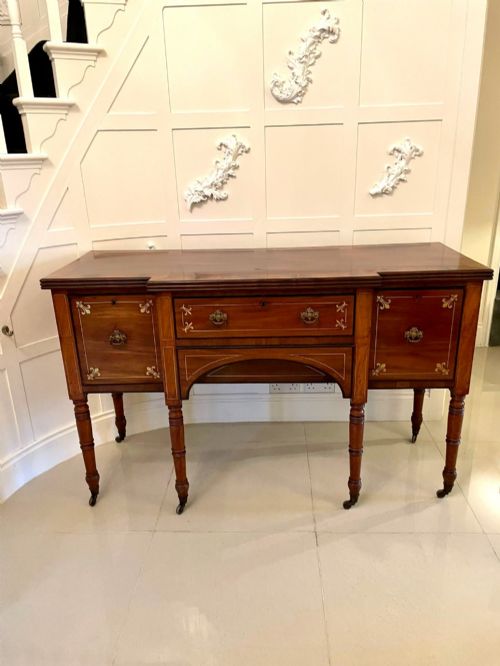
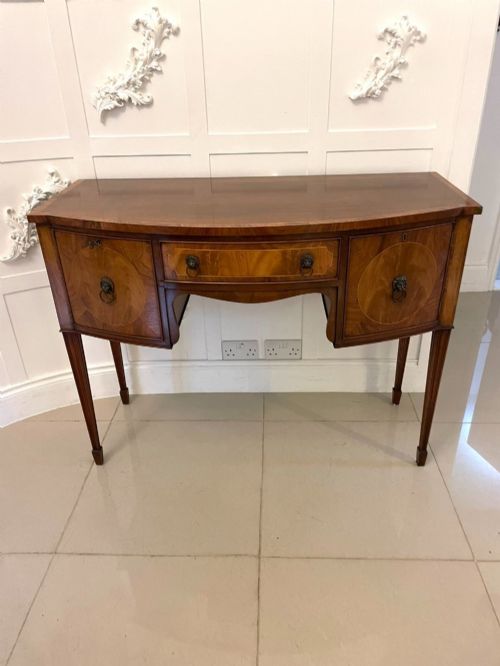
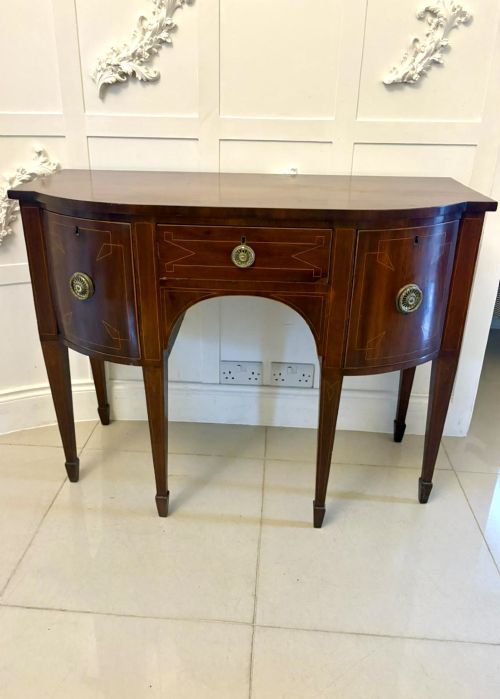
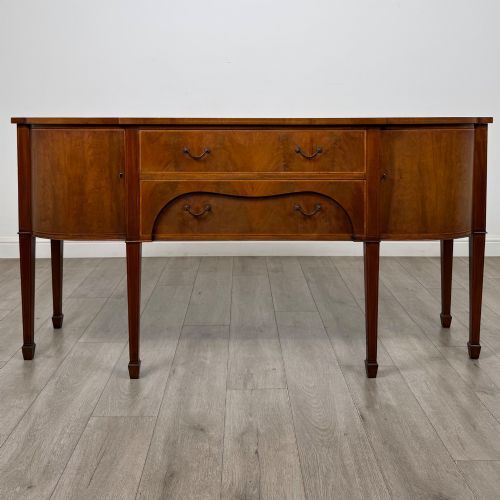
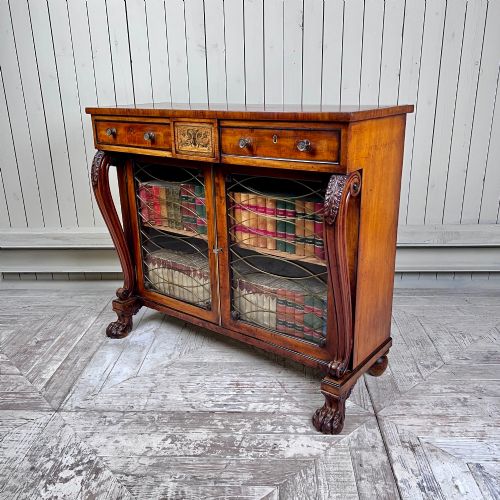
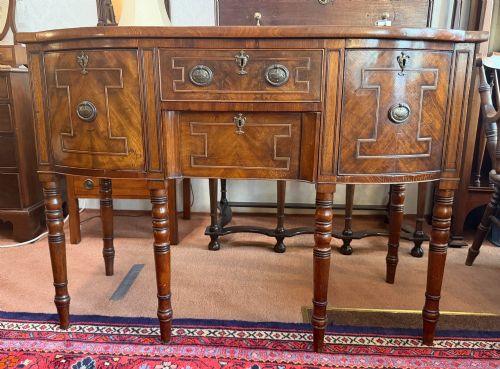
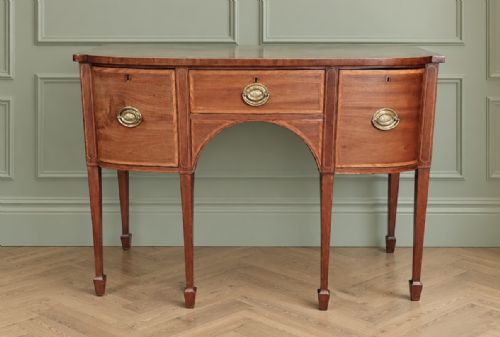
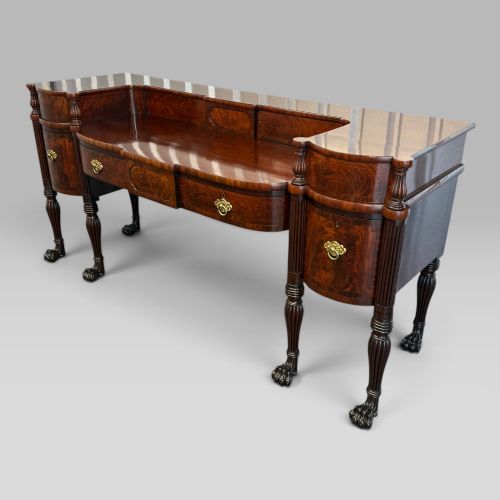
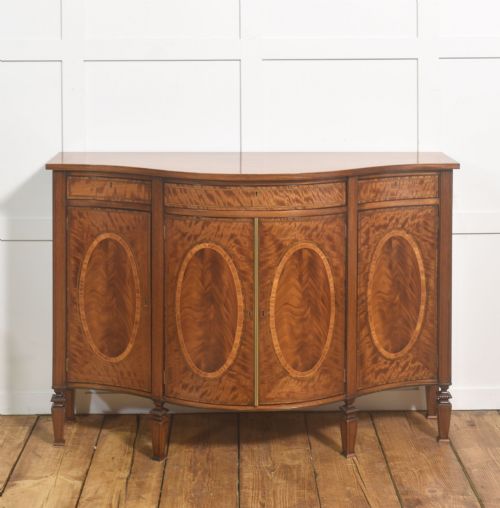
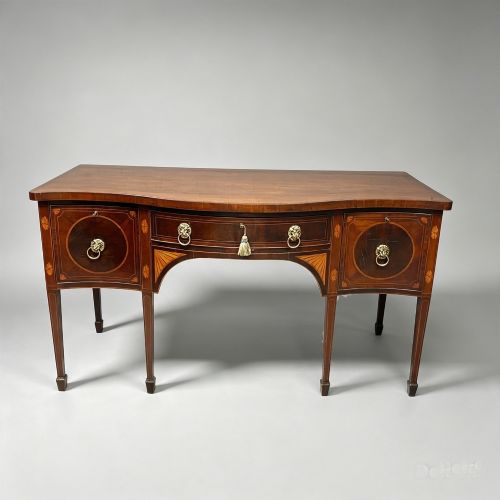
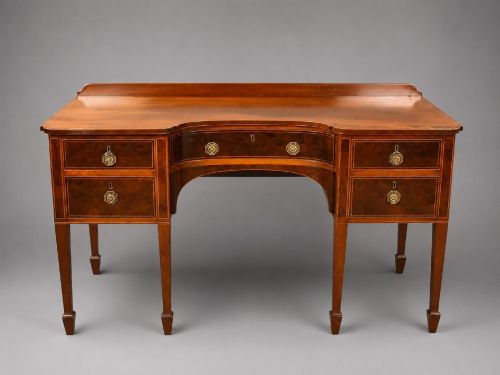
Georgian Mahogany Inlaid Credenza
A georgian mahogany inlaid credenza brings warmth and formal elegance to a dining room or hallway.
Georgian Mahogany Inlaid Credenza
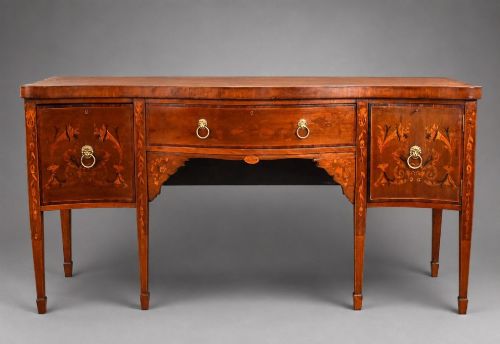
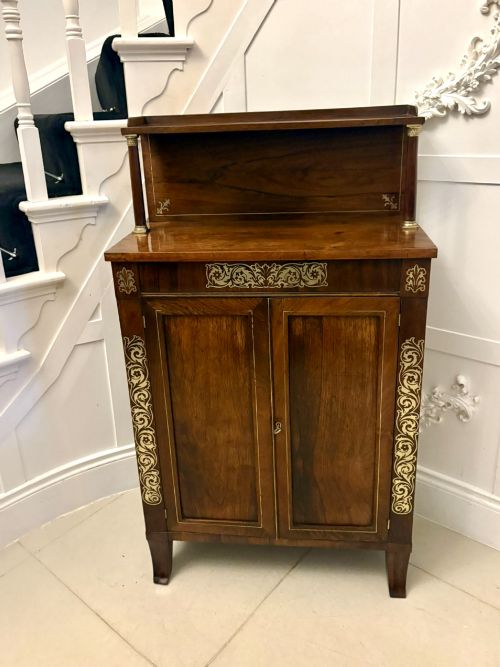
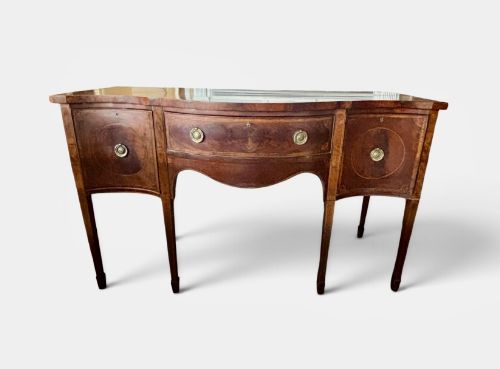
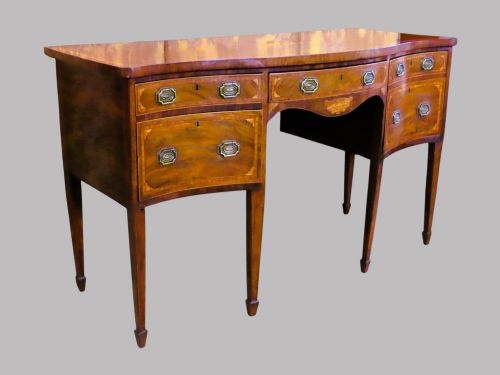
A georgian mahogany inlaid credenza represents a category of dining room and reception furniture that includes sideboards, side cabinets, and chiffoniers from the Georgian, Regency, and later revival periods.
Buyers searching this phrase encounter numerous variations, from George III serpentine and bow-front sideboards to later Sheraton Revival and Edwardian interpretations.
The primary forms serve as servers and storage pieces, featuring flanking cupboards, central drawers, and occasionally stage-backs or superstructure shelving.
How they were made
Cabinet makers utilised solid mahogany and flame mahogany veneers, building up robust carcases with shaped fronts such as serpentine and bow designs.
Decorative surfaces display intricate contrasting details through satinwood, boxwood, and ebony inlay, often enhanced by marquetry and brass mounts.
Materials recorded across the pieces include solid mahogany, flame mahogany, satinwood, boxwood, ebony, and brass.
What varies in quality
The hierarchy of quality rests upon the selection of timber figures, such as highly figured flame mahogany, matched against the precision of the contrasting satinwood and boxwood inlay.
Proportion and architectural harmony define superior examples, where curved drawer fronts, tapering legs, and original brass hardware integrate seamlessly without awkward lines.
The Georgian Mahogany Inlaid Credenza Glossary
- Serpentine
- A front shape curving outward at the centre and inward towards the ends, demanding high skill from the cabinet maker. This contour appears frequently on finer Georgian sideboards.
- Bow-front
- A convex curving front profile that softens the rectangular lines of a case piece. It is a common feature on both original Georgian servers and later revival pieces.
- Inlay
- A technique where contrasting materials like satinwood, boxwood, or ebony are inserted into recesses within the mahogany surface to create decorative patterns and borders.
- Chiffonier
- A low cabinet equipped with doors, sometimes featuring a small bookcase superstructure on top. These pieces emerged strongly during the Regency period.
- Flame mahogany
- A highly figured timber cut from the fork of the mahogany tree, producing a distinctive flickering flame pattern. Cabinet makers reserved this veneer for primary focal areas.
Georgian Mahogany Inlaid Credenza: Frequently Asked Questions
What is a credenza?
A credenza is a low storage cabinet traditionally used for serving food and displaying dining ware in formal rooms.
Over time, the term has been applied broadly to various sideboards and side cabinets across different periods.
How do I spot a revival piece?
Revival pieces, such as those from the Edwardian or Sheraton Revival eras, often show lighter secondary woods and standardised construction methods.
Examining the drawer linings and timber ageing helps distinguish these later interpretations from genuine Georgian originals.
Where should I place a sideboard?
These pieces suit dining rooms, large hallways, or spacious living areas where their length and storage capacity function effectively.
Ensure adequate wall space allows the curved serpentine or bow-front profiles to be viewed without obstruction.
What woods were commonly used?
Mahogany serves as the primary structural and surface timber across these listings, often selected in figured or flame varieties.
Details and contrasting borders rely on secondary woods like satinwood, boxwood, and ebony.