


Georgian Mahogany Chest Bookcase
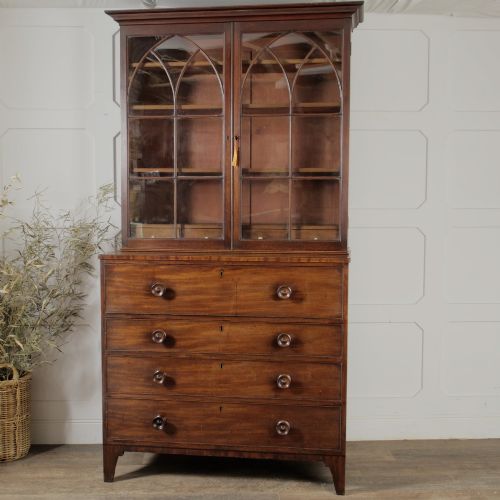
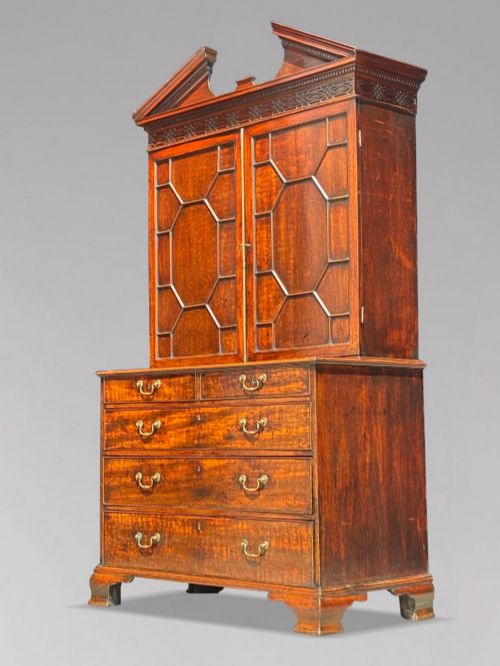
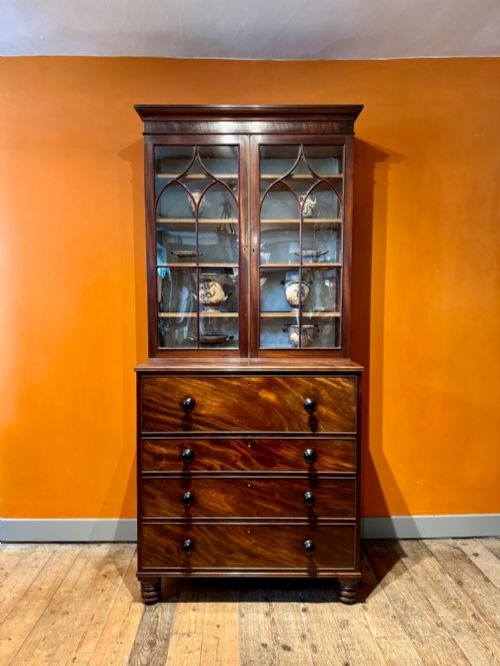
A georgian mahogany chest bookcase combines a lower chest of drawers with an upper glazed cabinet, offering grand proportions and practical storage.
Georgian Mahogany Chest Bookcase
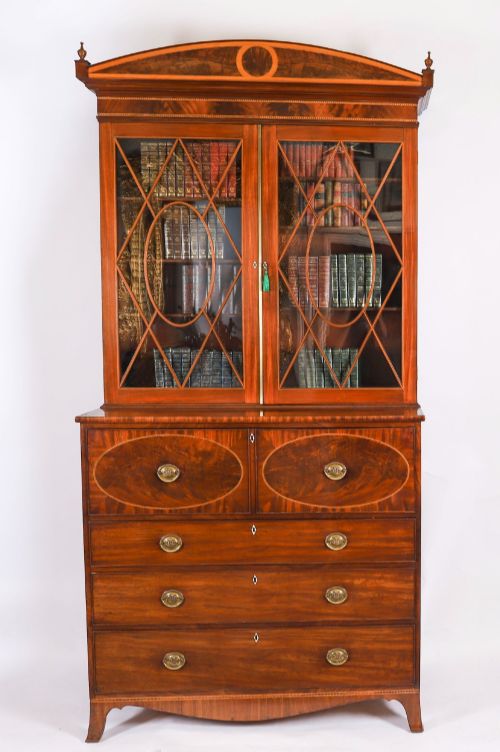
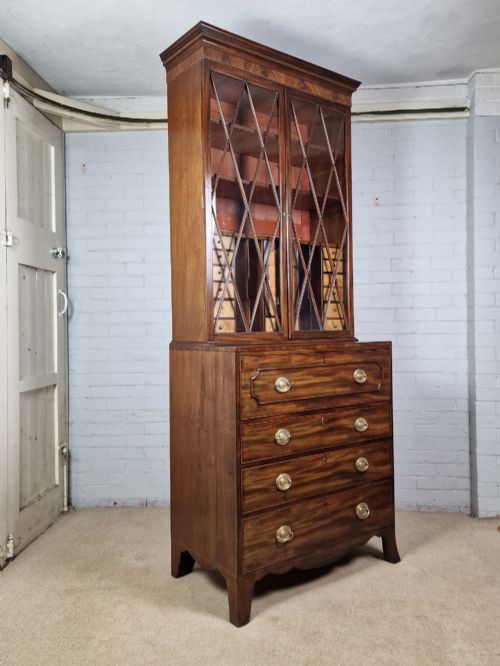
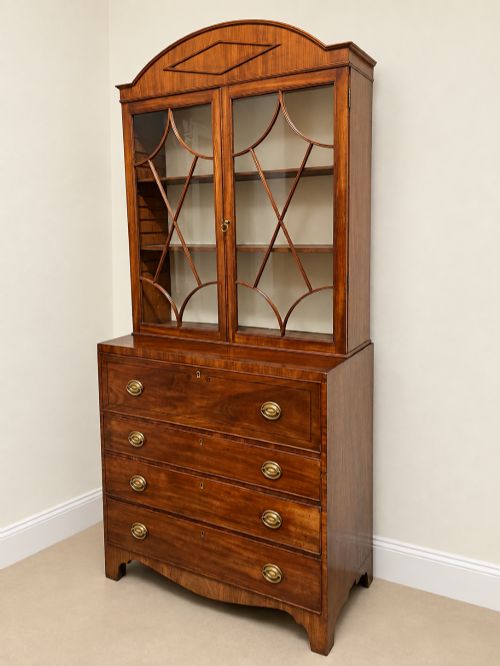
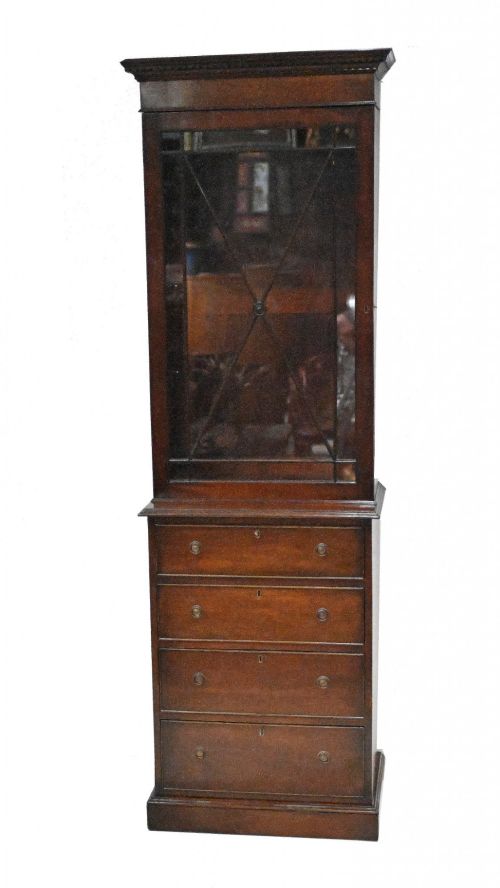
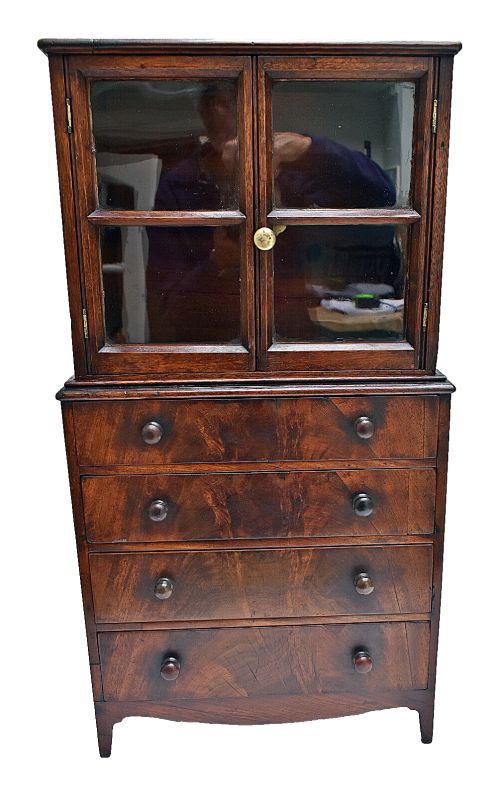
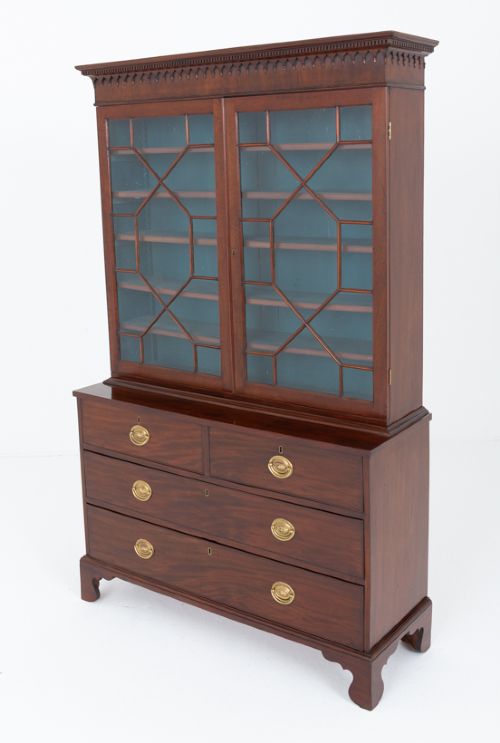
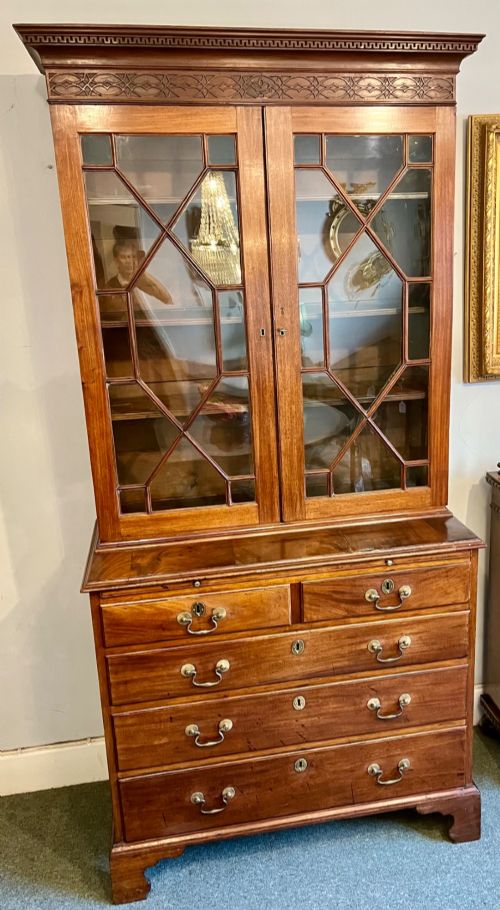
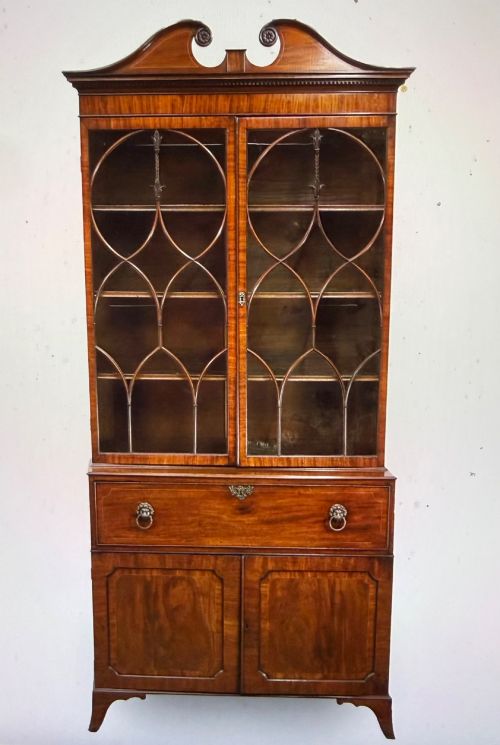
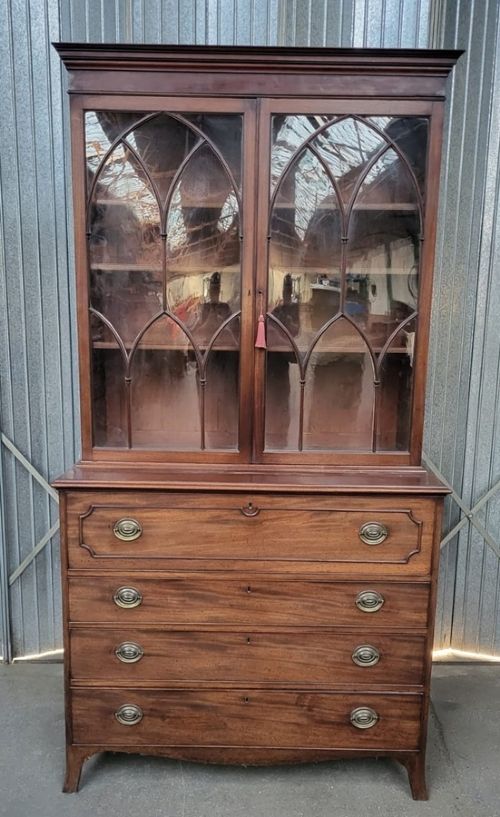
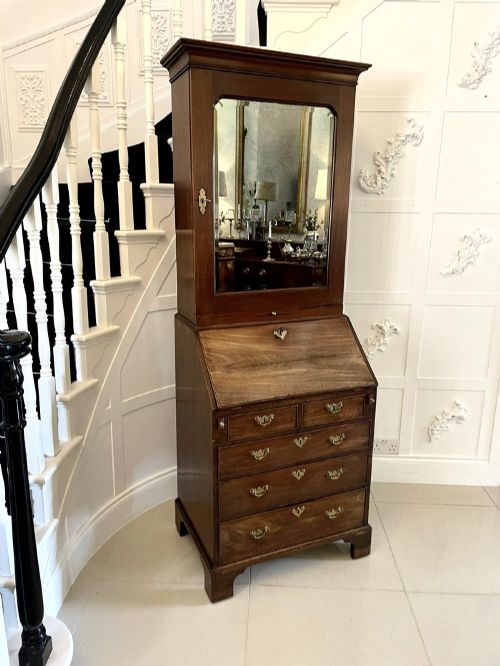
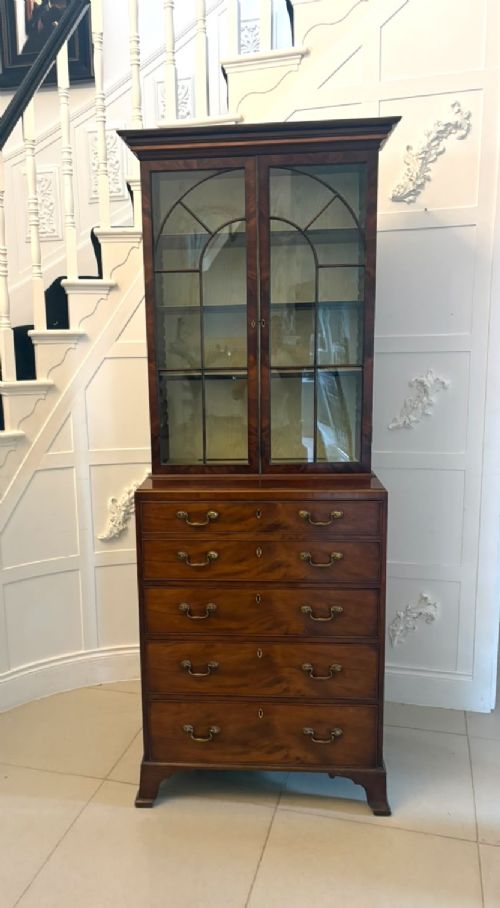
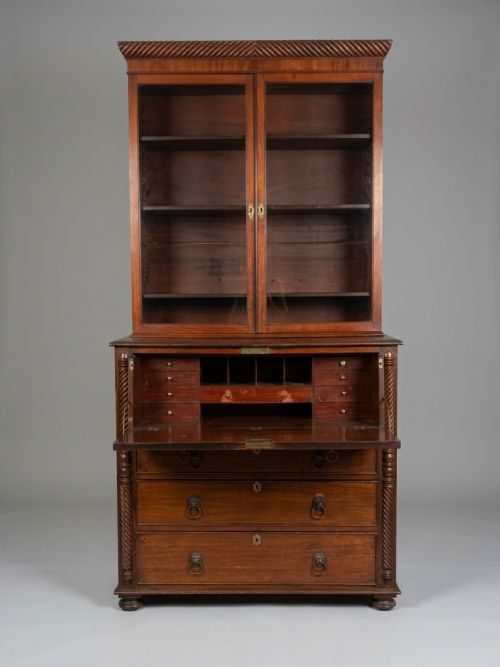
A georgian mahogany chest bookcase is a substantial two-part item featuring a lower section of drawers or a drop-front writing desk, topped by a glazed cabinet for books. The pieces on this page span the Georgian, George III, George II, and Regency periods, dating from the eighteenth century through the nineteenth century.
Most examples take the form of secretaire bookcases, where the central drawer pulls down to reveal a fitted writing surface and small pigeonholes. Other variants include library bookcases, bureau bookcases, and diminutive apprentice-made or miniature pieces.
Materials and Construction
Cabinetmakers utilised solid mahogany and flame mahogany veneer over secondary timbers such as oak, often embellishing surfaces with satinwood inlay and marquetry detail. Glazed upper doors typically feature intricate wooden astragal framing to hold individual panes of glass securely.
Brass hardware, including ring pulls, escutcheons, and cabinet hinges, provides functional contrast to the dark timber. Structural integrity relies on traditional dovetail joinery within the drawer construction and sturdy vertical framing to support the heavy upper bookcase.
Georgian Mahogany Chest Bookcase Retail Price Guide 2026
Typical asking prices for georgian mahogany chest bookcase among the pieces listed under this phrase on Sellingantiques today, from the lower quarter to the upper quarter. They describe what is for sale here now, not the wider market.
Listings incorporate items featuring flame mahogany veneer, satinwood inlay, and marquetry, spanning the eighteenth and nineteenth centuries.
Judging Quality
Quality rests upon the choice of timber and the dexterity of the cabinetmaker, seen in deeply figured flame mahogany veneers and balanced proportions. Pieces attributed to notable workshops display refined carving, such as crisp astragal mouldings and sophisticated interior desk fittings.
The architectural presence of the cornice and the integrity of the original glass panes separate standard storage furniture from high-status library pieces. Finer examples maintain crisp detailing across the inlay and drawer linings without excessive restoration.
Gillows·Thomas Chippendale·Thomas Bradshaw
The Georgian Mahogany Chest Bookcase Glossary
- Secretaire
- A cabinet or chest featuring a hinged drawer that drops forward to serve as a writing desk. It conceals a fitted interior of small drawers and pigeonholes.
- Astragal
- Moulding bars that divide a glazed door framework into smaller panes of glass. These can form simple grid patterns or intricate Gothic and intersecting arches.
- Marquetry
- Decorative veneer work arranged in pictorial or geometric patterns using various coloured woods. It creates contrasting surface designs on drawer fronts and panels.
- Cornice
- The ornamental mouldings running around the topmost edge of the upper bookcase cabinet. It crowns the architectural silhouette of the furniture piece.
Georgian Mahogany Chest Bookcase: Frequently Asked Questions
How do I use a secretaire drawer?
The drop-front drawer pulls forward on side brackets to create a flat writing surface at desk height. Inside, you find small drawers and compartments designed for stationery and letters.
When not in use, the fall front lifts back into place and locks to conceal the desk interior completely.
Are the upper and lower sections separable?
These cabinets are constructed in two distinct sections for transport and placement. The heavy glazed bookcase simply rests upon the top of the lower chest or bureau base.
Gravity and the weight of the upper cabinet keep the structure stable, though large pieces benefit from wall fixings.
How do I tell George III from Regency pieces?
George III furniture typically displays restrained classical proportions, often with subtle bracket feet and fine astragal glazed doors. Cabinetwork from this era leans toward traditional architectural lines.
Regency pieces often introduce bolder brass mounts, richer mahogany veneers, and heavier brass feet or sabre supports reflecting changing nineteenth-century tastes.
How do I care for mahogany timber?
Keep the wood away from direct sunlight and strong heat sources to prevent the mahogany and its delicate veneers from drying out. Regular dusting with a soft, dry cloth maintains the surface finish.
Application of traditional beeswax feeds the timber and preserves the deep lustre of the polished mahogany over time.